The best Morocco things to do rarely fit on a single postcard: a breakfast of msemen on a Fez rooftop, a sunset camel walk into the Erg Chebbi dunes, a mint tea on a Tangier cliff where the Atlantic meets the Mediterranean. That range is the reason the country keeps breaking its own records. Morocco welcomed a record 19.8 million visitors in 2025, according to the Ministry of Tourism figures reported by Ecofin Agency, more than any other country in Africa.
More visitors also means more noise. Search for things to do in Morocco and you get the same twenty photos: blue alleys, a tannery, a mosque by the sea. What those lists rarely tell you is how long each experience takes, what it costs, when to go, and how one city connects to the next. Those details decide whether a trip feels rich or rushed.
This guide is built around those details. It covers the top experiences in Marrakech, Fez, Rabat, Casablanca and Tangier, then moves out to the Sahara, the Atlas Mountains and the coast. Each section tells you what is worth your time, how many hours or days to give it, and which mistakes cost travelers the most.
You will also find ready-made routes for 7, 10 and 14 days, a season-by-season guide, and a budget breakdown. Use the table below to scan the top things to do in Morocco, then jump to the city or activity that matches your plans.
The goal is simple: by the end, you should be able to write your own list of Morocco things to do, put it in the right order, and know roughly what each day will cost before you land.
Why Most Lists of Things to Do in Morocco Fall Short
Most lists of things to do in Morocco are written as if every traveler has unlimited time and arrives in Marrakech. In reality, most visitors have 7 to 12 days, fly into Marrakech, Casablanca, Fez or Tangier, and spend a surprising share of their trip in vehicles. Morocco is bigger than it looks on a phone screen. The drive from Marrakech to Merzouga alone takes around nine hours without stops.
The second problem is that lists treat every city as equal. They are not. Marrakech and Fez reward two or three full days each. Rabat and Tangier are brilliant for a day or two. Casablanca works well as a half-day stop for one landmark. Planning as if they all need the same time is how itineraries fall apart.
The third gap is practical. A great experience can turn sour because of the wrong timing: a tannery visit at noon in July, a medina walk without a map on a Friday afternoon, a mosque tour that does not run during prayer times. Small details like these make the difference.
How this guide is organized
Each city section below covers the essential Morocco things to do in that place, a few lesser-known experiences, and practical notes on time and cost. After the cities, a separate section covers activities to do in Morocco outside urban areas, from desert camps to surf breaks. The route section then shows how to connect everything.
Prices are given in Moroccan dirhams (MAD) as rough ranges, because entry fees and tour prices change. Always confirm the current rate at the ticket office or on the official site before you go. As a guide, 10 MAD is close to 1 US dollar.
Morocco Things to Do at a Glance
This table compares the headline Morocco things to do by place, time needed and rough cost per person. Use it to see which ones fit your trip length before reading the detail.
| Experience | Where | Time needed | Rough cost |
|---|---|---|---|
| Jemaa el-Fna at dusk and medina souks | Marrakech | Half day to full day | Free to wander; food stalls 50-150 MAD |
| Jardin Majorelle and YSL Museum | Marrakech | 2-3 hours | About 315-330 MAD combined ticket |
| Fes el Bali medina with a guide | Fez | Full day | Official guide roughly 400-700 MAD per group |
| Chouara Tannery terraces | Fez | 30-45 minutes | Free entry; small tip to the shop guide |
| Kasbah of the Udayas and Hassan Tower | Rabat | Half day | Free |
| Hassan II Mosque guided tour | Casablanca | 1 hour | 130 MAD for foreign adults |
| Kasbah, Café Hafa and Cap Spartel | Tangier | Full day | Taxi to Cap Spartel 100-200 MAD |
| Sahara night in Erg Chebbi | Merzouga | 2-3 days from Marrakech | Shared tours from around 1,000-1,800 MAD |
| Day hike in the High Atlas | Imlil | Full day | Mountain guide roughly 300-500 MAD |
| Hammam and cooking class | Any major city | 2-4 hours each | 150-800 MAD depending on venue |
A few patterns stand out. The most memorable Morocco things to do are often free or cheap: walking the medinas, watching sunset from a rooftop, eating at a food stall. The costly items are transport and organized trips, which is why route planning matters more than ticket prices.
Things to Do in Marrakech Morocco: Souks, Gardens and Night Food
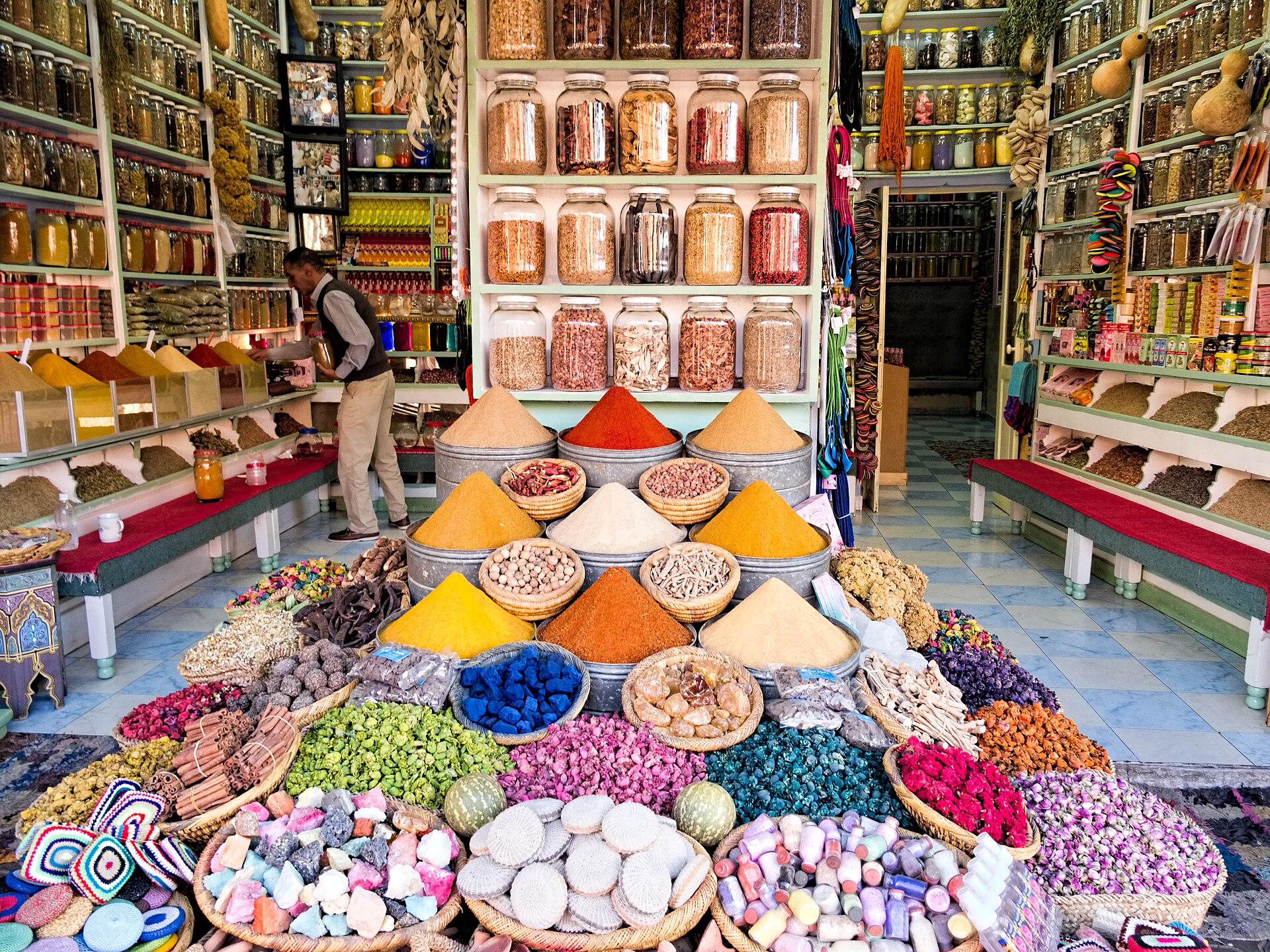
Marrakech is where most first trips start, and the things to do in Marrakech Morocco easily fill two full days. The city is loud, warm and crowded, and it is also full of quiet courtyards and gardens that make the chaos easier to enjoy. The trick is to alternate: medina in the morning, a garden or palace at midday, the main square at dusk.
The Medina of Marrakech has been a UNESCO World Heritage Site since 1985, and nearly every classic sight sits inside or just outside its walls. For a full city breakdown with more than a dozen sights, read our dedicated guide to the 15 best things to do in Marrakech. Here are the things to do in Marrakech Morocco that most travelers should not miss.
Jemaa el-Fna and the souks
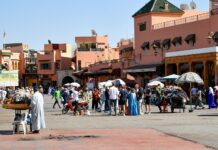
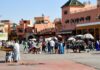
Jemaa el-Fna is the city’s main square, and its storytellers, musicians and performers are recognized by UNESCO as intangible cultural heritage. Visit twice: once in the late morning when it is quieter, and again around sunset when the food stalls fire up their grills.
The souks spread north from the square. Spices, leather, lanterns and carpets each have their own lanes. Expect to bargain; a first price can be two or three times what a seller will accept. Keep your hands to yourself around henna artists and animal handlers, since both expect payment once they engage you.
Palaces, madrasas and gardens
Bahia Palace, built in the late 19th century, is a maze of painted ceilings, tiled courtyards and orange trees. Entry costs around 100 MAD. Arrive at opening time, because tour groups fill it by mid-morning.
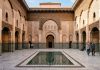
Ben Youssef Madrasa is a former Quranic school with some of the finest carved cedar and stucco in the country. Nearby, Le Jardin Secret offers a restored riad garden and a tower view over the rooftops.
Jardin Majorelle sits in the newer Gueliz district. The cobalt-blue villa and cactus garden were restored by Yves Saint Laurent and Pierre Bergé, and the Yves Saint Laurent Museum stands next door. A combined ticket costs roughly 315-330 MAD, and time slots are booked online, so reserve a day or two ahead.
Marrakech practical notes for things to do in Marrakech Morocco
- Time needed: two full days for the city, three if you add a day trip to the Atlas, Agafay or Ouzoud Falls.
- Getting around: walk inside the medina; use petit taxis or a ride app for Gueliz and the train station. Agree the fare before getting in if the meter is off.
- Best timing: palaces at opening, souks in the late morning, the square at dusk, and rooftop dinners after dark.
One more tip from experience: download an offline map before you enter the medina. Locals who offer directions to a “closed” street or a “festival today” usually lead you to a shop or ask for money. A polite “la, shukran” (no, thank you) and a confident walk solve most situations.
Marrakech also works as a base for many of the best activities to do in Morocco on a short trip. The Agafay stony desert is about 40 minutes away, the High Atlas villages are around 90 minutes, and Essaouira is roughly three hours by road.
Things to Do in Fez Morocco: The Great Medieval Medina
If Marrakech is the stage, Fez is the workshop. Fes el Bali, the old walled city, was the first Moroccan site added to the UNESCO list, inscribed in 1981, and it is often described as the largest car-free urban area in the world. Donkeys and handcarts still carry goods through more than 9,000 lanes. The UNESCO listing for the Medina of Fez explains why it is considered one of the best-preserved historic towns in the Arab-Muslim world.
The best things to do in Fez Morocco revolve around craft, scholarship and food. Plan two full days for them. One day covers the medina highlights with a guide; the second lets you wander, shop and eat at your own pace.
Hire an official guide for day one
Fes el Bali is genuinely hard to navigate. Map apps lose their signal under covered lanes, and dead ends are common. An official licensed guide, booked through your riad, costs roughly 400-700 MAD for a half or full day for a small group. That fee is the best money you will spend in the city.
Ask your guide for a route that includes metalworkers, weavers and woodcarvers rather than only shops. Make it clear at the start that you are happy to browse but are not committed to buying. Good guides respect that.
Highlights inside Fes el Bali: top things to do in Fez Morocco
- Bab Boujloud: the blue-tiled gate most visitors use to enter the medina. It is a good meeting point.
- Bou Inania Madrasa: a 14th-century Marinid school, open to non-Muslims, with carved stucco and cedar that rivals anything in Marrakech.
- Al-Attarine Madrasa: smaller and even more delicate, next to the spice and perfume market.
- Al-Qarawiyyin: founded in 859 by Fatima al-Fihri and widely cited as the oldest continuously operating university. Non-Muslims cannot enter the mosque, but you can look into the courtyard from the doorway.
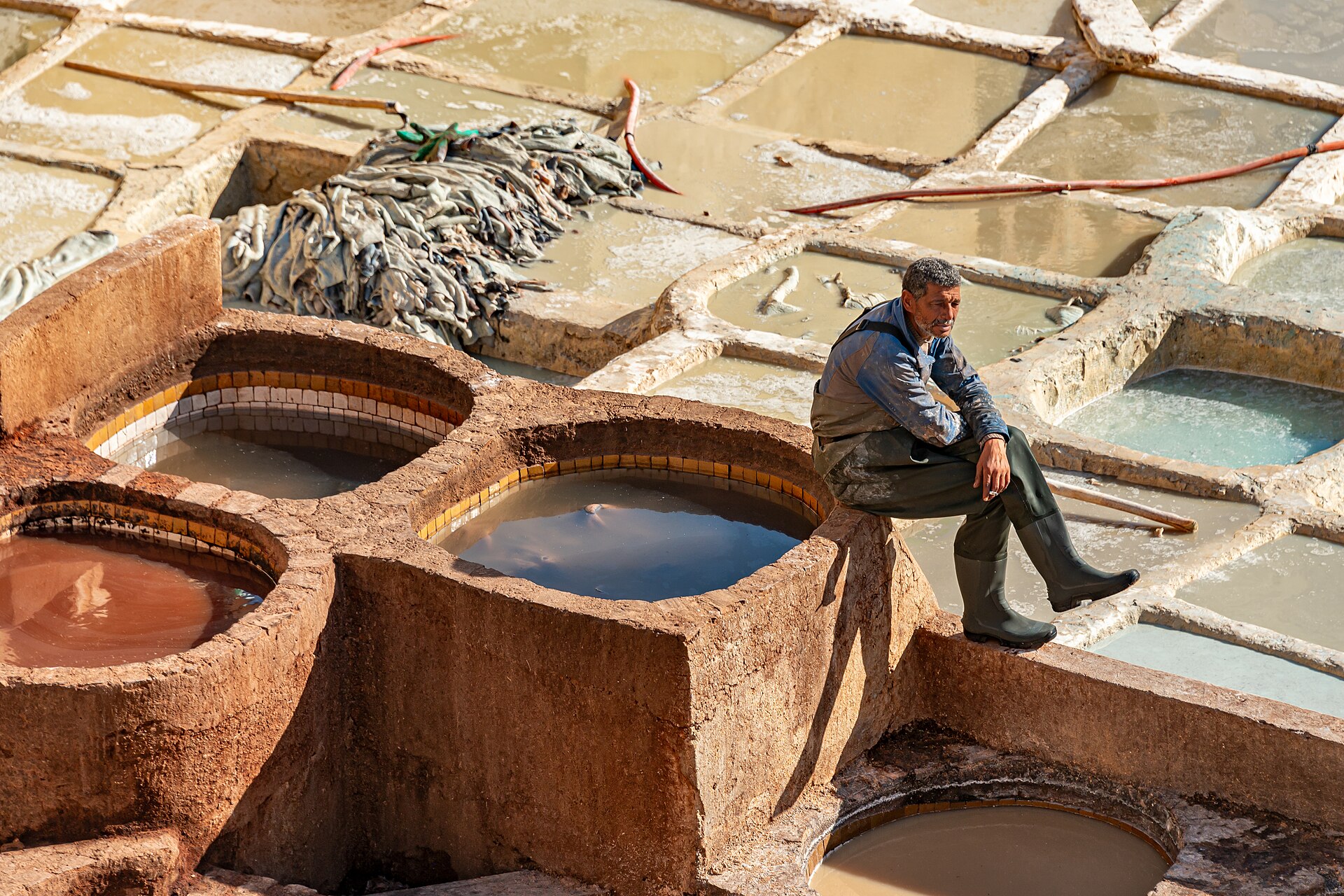
- Chouara Tannery: the honeycomb of dye pits seen from leather-shop terraces. Go in the morning, when the colors are brightest and the smell is lighter. Shops hand out a sprig of mint for your nose.
Food in Fez
Fez is often called the food capital of Morocco. Try bissara (fava bean soup) at a street counter for breakfast, pastilla (a sweet and savory pie) at lunch, and a slow-cooked tagine for dinner. A guided street-food walk, typically 300-500 MAD, is one of the best evening things to do in Fez Morocco because it takes you to stalls you would never find alone.
Day trips from Fez
Some of the most rewarding activities to do in Morocco sit just outside Fez. Meknes, another imperial city, is about 45 minutes away by train or car. Its Bab Mansour gate and Moulay Ismail Mausoleum make a calmer half day. Combine it with Volubilis, the Roman ruins with mosaics still in place, and the hilltop holy town of Moulay Idriss nearby.
Chefchaouen, the blue town in the Rif Mountains, is around four hours by road. It works better as an overnight stop than a day trip. For sunset on your last evening in Fez, walk or taxi up to the Merenid Tombs, where the whole medina glows below you.
Things to Do in Rabat Morocco: The Calm Capital
Rabat is the country’s capital and one of its most pleasant cities to walk. The streets are clean, the traffic is lighter than in Casablanca, and touts are rare. UNESCO added “Rabat, Modern Capital and Historic City” to its list in 2012, recognizing both its medieval monuments and its early 20th-century planned districts.
The main things to do in Rabat Morocco fit into a single relaxed day, but a night here lets you enjoy the old town after dark without the pressure of a bigger medina. For hotels, costs and a 3-day plan, see our full Rabat travel guide.
A one-day Rabat walking route
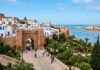
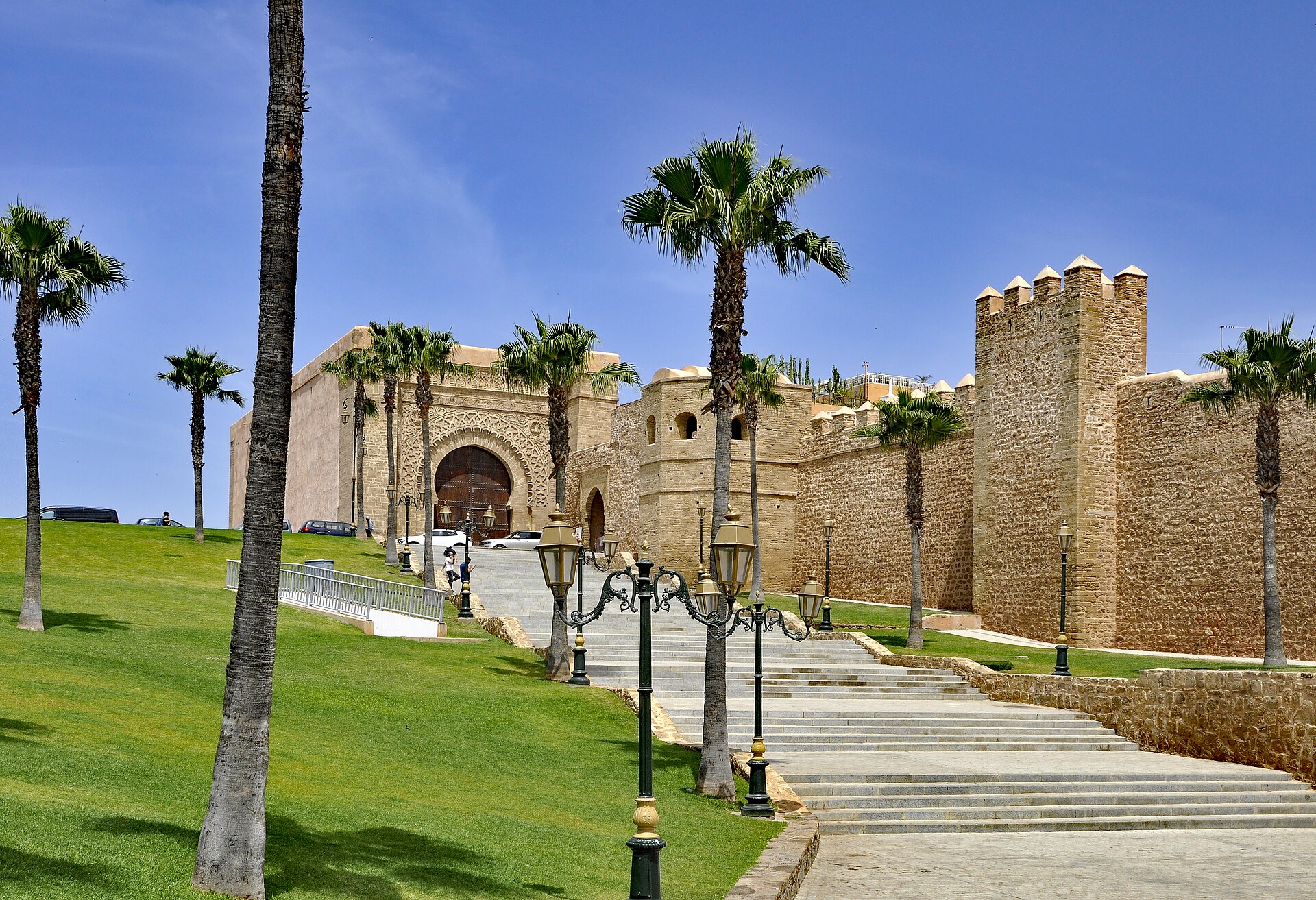
- Kasbah of the Udayas: start early in this 12th-century fortress above the river mouth. Its whitewashed and blue lanes lead to a terrace with views over the Atlantic and the surfers below. The Andalusian Gardens sit just inside the walls.
- Rabat medina: walk south through Rue des Consuls, known for rugs and crafts, and stop for fresh juice or msemen.
- Hassan Tower and the Mausoleum of Mohammed V: the unfinished 12th-century minaret stands over a field of broken columns. Across the esplanade, the mausoleum’s carved ceiling and white onyx tomb are open to visitors, guarded by royal sentries in ceremonial dress.
- Chellah: finish at this walled site that layers Roman Sala Colonia ruins with a Marinid necropolis and gardens. Storks nest on its minaret and walls.
Museums and modern Rabat
The Mohammed VI Museum of Modern and Contemporary Art hosts strong rotating shows, and the riverside Grand Theatre of Rabat is a striking piece of contemporary architecture. Rabat’s tram is cheap, clean and links the medina, the train stations and the river quickly.
Rabat practical notes
- Time needed: one full day, or two nights if you want a slower pace or a day trip to the beach at Témara.
- Getting there: the high-speed Al Boraq train stops at Rabat-Agdal, putting Rabat about 80 minutes from Tangier. Casablanca is under an hour away on regular trains. Check timetables on the ONCF national railway site.
- Cost: most major sights are free or charge a small fee, which makes Rabat one of the cheapest days of a Morocco trip.
Rabat is also a smart base for Morocco things to do on the coast if you want to avoid Casablanca’s traffic. You can visit the Hassan II Mosque on a morning train and be back in Rabat for dinner.
Things to Do in Casablanca Morocco: Ocean Mosque and Art Deco
Casablanca is Morocco’s largest city and its business hub. Many travelers only pass through its airport, and some lists of things to do in Morocco tell you to skip it. That is a mistake if you have half a day, because the city holds one of the most impressive buildings in the Islamic world and a downtown full of early 20th-century architecture.
The Hassan II Mosque
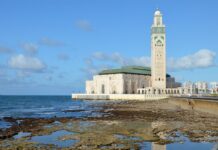
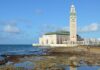
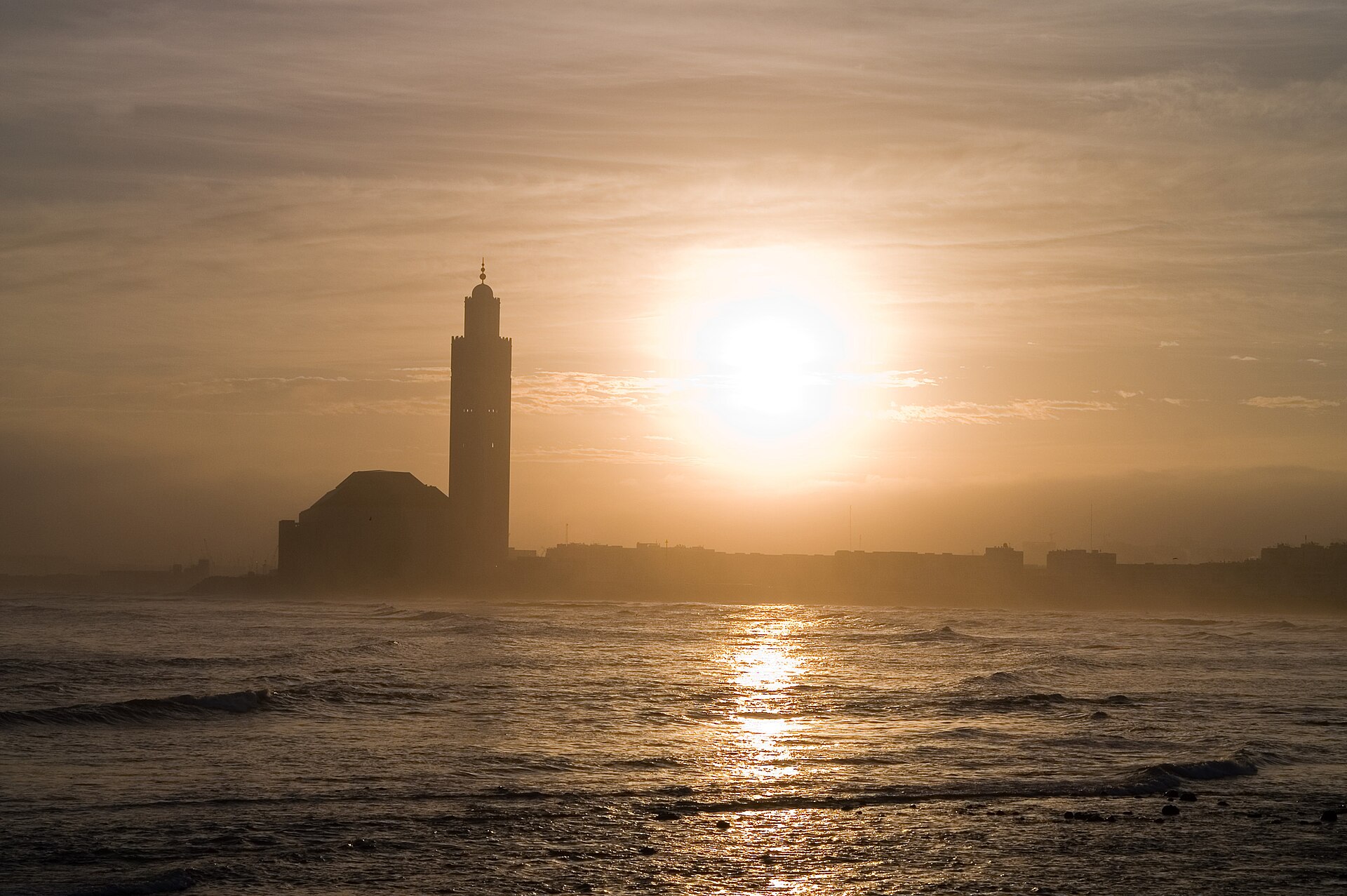
The Hassan II Mosque sits on a platform over the Atlantic. Completed in 1993, it has a minaret about 210 meters tall, among the tallest in the world, and space for roughly 105,000 worshippers inside and on its esplanade. It is one of the few mosques in Morocco that non-Muslims can enter, on a guided tour only.
Tours last about 45 minutes to an hour and run several times a day except during prayer times; Fridays have fewer slots. Tickets cost 130 MAD for foreign adults and are sold on site. Dress modestly, with shoulders and knees covered. You will remove your shoes inside, so wear socks you are happy to show.
Among all the things to do in Casablanca Morocco, this tour is the one to plan around. Arrive 20 minutes before the slot you want, especially in spring and autumn when cruise groups visit.
Beyond the mosque
- The Corniche at Ain Diab: a seafront promenade with beach clubs, cafés and fresh seafood. Late afternoon is best.
- Quartier Habous: the “new medina” built in the 1930s, with arcaded streets, olive stalls and some of the city’s best pastry shops.
- Art Deco downtown: walk Boulevard Mohammed V and around the Central Market to see facades from the French protectorate era. The Central Market itself is a great place for a cheap grilled-fish lunch.
- Rick’s Café: a restaurant styled after the classic film, near the old medina walls. It is touristy but fun for fans, and reservations help in the evening.
Casablanca practical notes
Casablanca works best as a half day or one night. The city is spread out, so use the tram or petit taxis, which run on meters. If your flight lands in Casablanca, consider seeing the mosque on arrival day and taking the train to Rabat, Fez or Marrakech the next morning.
Things to Do in Tangier Morocco: Two Seas and a Literary Past
Tangier sits on the northern tip of Africa, just 14 kilometers from Spain across the Strait of Gibraltar. For decades it was an international zone and a magnet for writers and artists, and that layered past gives the city a feel unlike anywhere else in the country. It has also been cleaned up and modernized, with a revitalized port and seafront.
The best things to do in Tangier Morocco fill one full day, or two if you add the Rif coast or Asilah. The high-speed Al Boraq train links Tangier to Casablanca in about 2 hours 10 minutes, making it easy to start or end your Morocco things to do list here.
The kasbah and old medina
Start at the top of the medina in the kasbah. The Kasbah Museum, set in the former sultan’s palace of Dar el Makhzen, covers the region’s history in a lovely tiled building. Wander down through the lanes to the Petit Socco, a small square ringed by cafés, then on to the Grand Socco, the busy plaza where the medina meets the newer town.
The Tangier American Legation Museum, inside the medina, is the oldest US diplomatic property in the world. It is a quiet, fascinating stop with exhibits on the city’s international era and its writers.
Cafés with a view
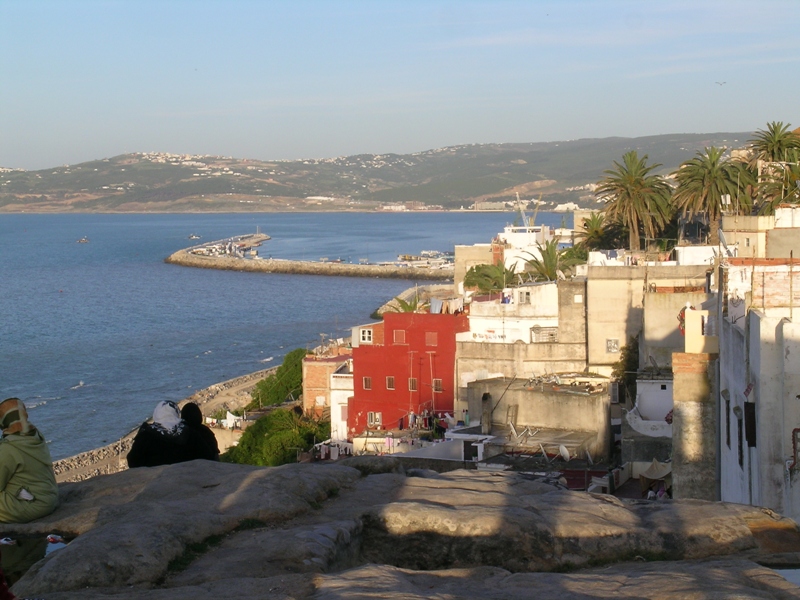
Café Hafa, open since the early 1920s, serves mint tea on terraces stepping down the cliff toward the strait. On a clear day you can see Spain. It is simple, cheap and one of the classic Tangier experiences. The Gran Café de Paris on Place de France is the other historic stop, popular with writers in the mid-20th century.
Cap Spartel and the Caves of Hercules
About 30 minutes west of the city, the Cap Spartel lighthouse marks the point where the Atlantic Ocean meets the Mediterranean Sea. A few kilometers south, the Caves of Hercules open onto the ocean through a sea-facing gap that many say resembles the shape of Africa. A taxi there and back costs roughly 100-200 MAD, or you can combine both on a half-day tour.
Tangier practical notes
- Time needed: one or two days.
- Onward travel: Chefchaouen is around two and a half to three hours by road, which makes Tangier the natural gateway to the blue town. Ferries to Tarifa in Spain take about an hour.
- Day trip: Asilah, a whitewashed seaside town with murals, is about 45 minutes south by train or taxi.
Activities to Do in Morocco Beyond the Cities
The cities give you culture and food, but the landscapes are what most travelers remember longest. Morocco moves from snow-capped peaks to Sahara dunes to Atlantic surf within a day’s drive. These are the outdoor activities to do in Morocco that repay the extra travel time, and they rank among the most memorable things to do in Morocco overall.
A night in the Sahara at Erg Chebbi
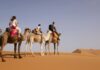
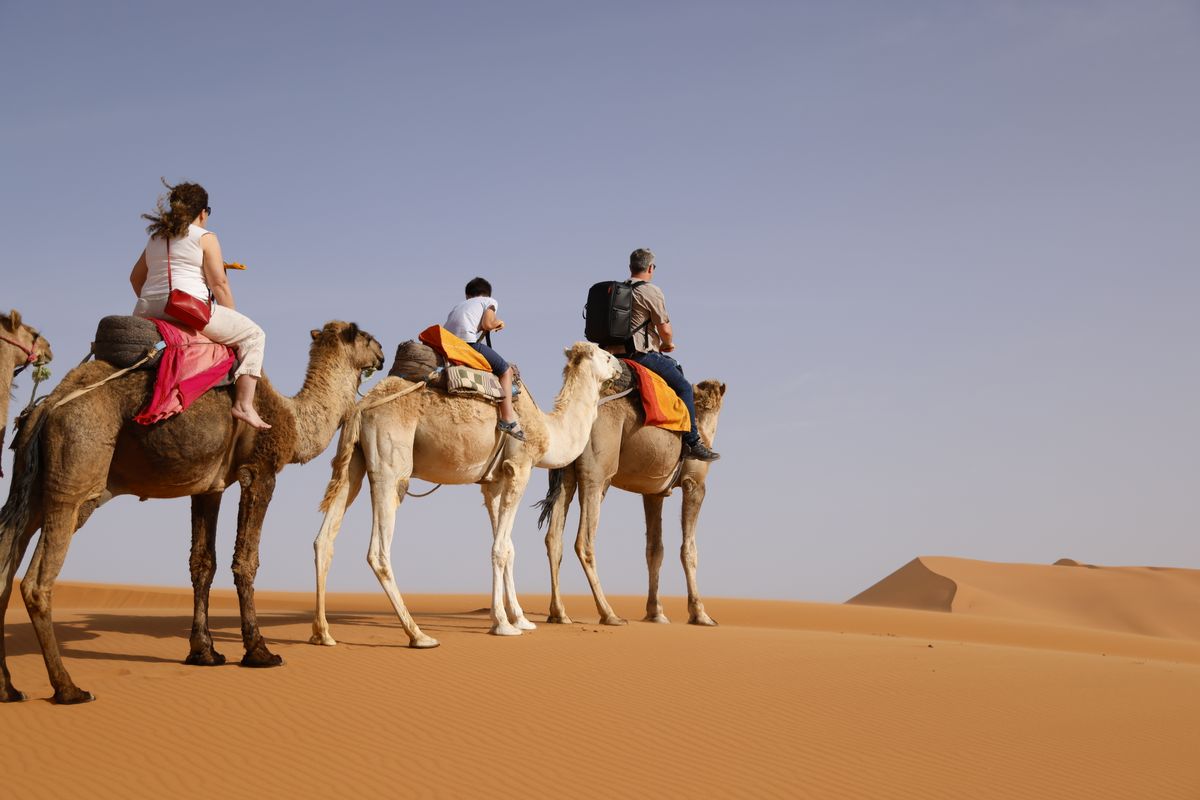
A desert night tops almost every list of Morocco things to do. Erg Chebbi, near the village of Merzouga, is the classic Saharan sea of dunes, with crests reaching around 150 meters. Most travelers reach it on a three-day tour from Marrakech that crosses the High Atlas, stops at Aït Benhaddou and the Dades Valley, and ends with a sunset camel ride to a desert camp.
Shared group tours start around 1,000-1,800 MAD per person, while private tours with upgraded camps cost much more. If you only have one night, the closer Zagora desert or the Agafay stony desert near Marrakech are alternatives, though neither has true high dunes. Our Morocco desert tour comparison breaks down the routes and prices in detail.
Take warm layers. Even after a hot day, desert nights can drop close to freezing between November and February.
Hiking in the High Atlas: active things to do in Morocco
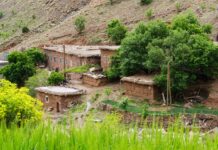
The High Atlas is one of the most rewarding Morocco activities to do for active travelers. Imlil, about 90 minutes from Marrakech, is the trailhead for valley walks between Amazigh (Berber) villages and for the climb of Jebel Toubkal, which at 4,167 meters is the highest peak in North Africa.
A day hike with a local guide costs roughly 300-500 MAD and often ends with lunch in a village home. The Toubkal summit usually takes two days, with a night in a mountain refuge. Authorities require hikers climbing Toubkal to be accompanied by a licensed mountain guide, so book through a reputable operator.
Gentler options include the Ourika Valley and the Ouzoud Falls, a series of cascades around 110 meters high about two and a half hours from Marrakech.
Aït Benhaddou and the road to the south
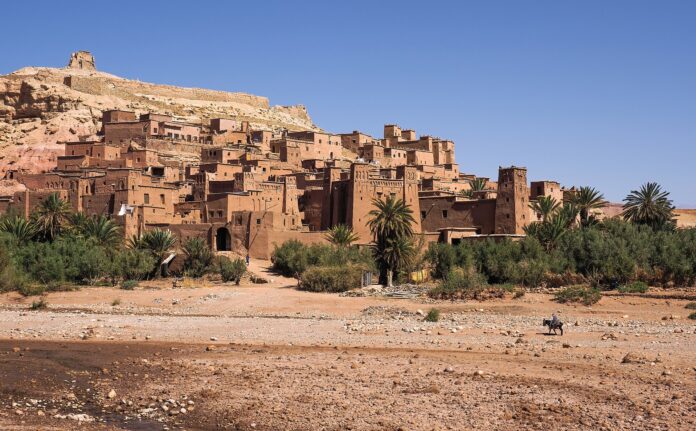
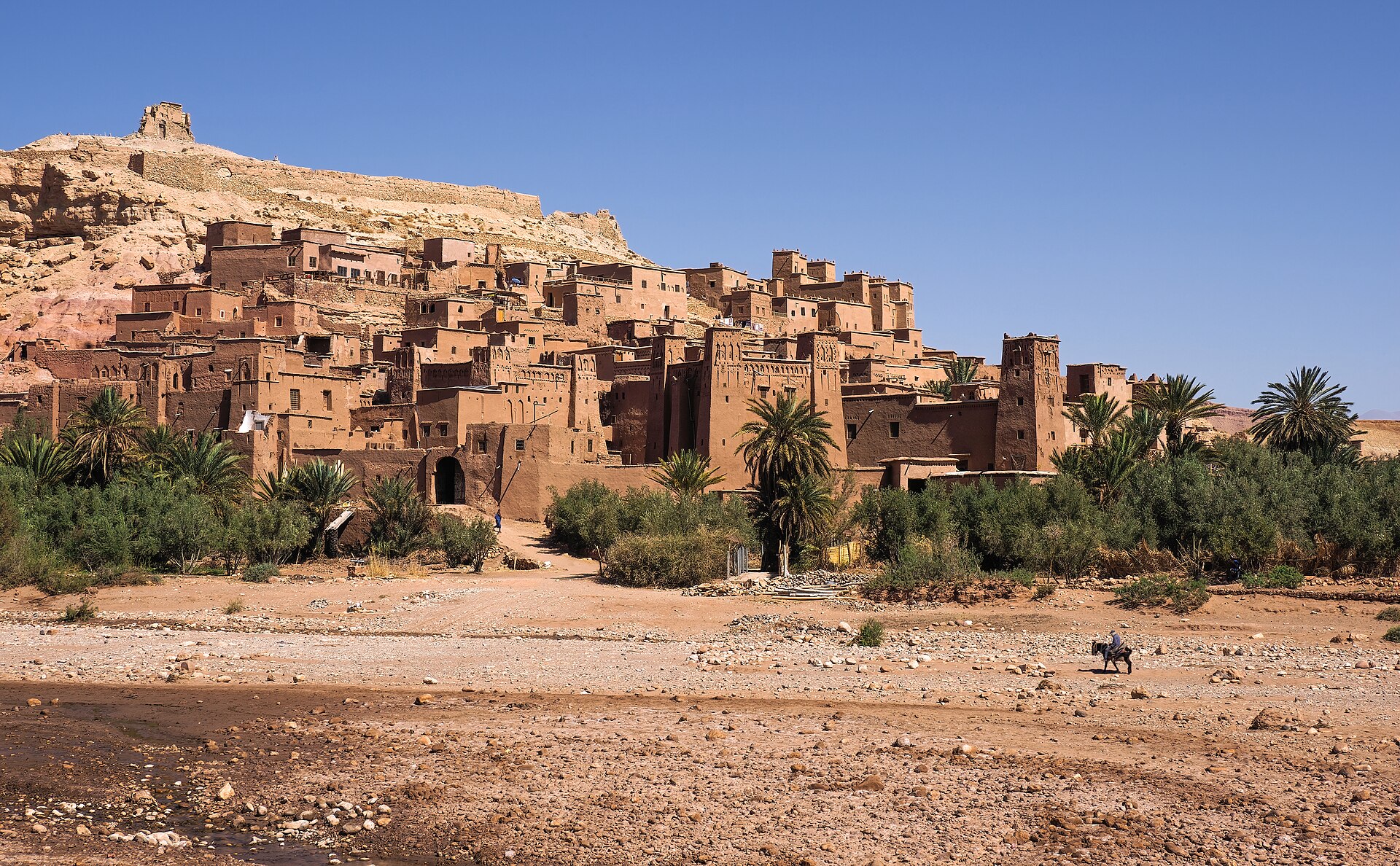
Aït Benhaddou is a fortified earthen village on the old caravan route between the Sahara and Marrakech. A UNESCO site since 1987, it has appeared in many films and series. Walk to the granary at the top for the view, ideally early in the morning or late in the afternoon.
The road from Marrakech crosses the Tizi n’Tichka pass at about 2,260 meters, one of the most scenic drives in the country. Nearby Ouarzazate hosts film studios you can tour.
Chefchaouen and the Rif
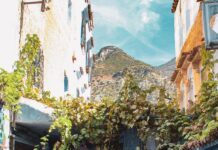
Chefchaouen is one of the gentler activities to do in Morocco after the big cities. Its blue-washed lanes are among the most photographed places in Morocco, and the town is relaxed by Moroccan standards. Stay overnight so you can explore early, before day-trippers arrive. Hike 30 minutes up to the Spanish Mosque for sunset, and consider a half-day trip to the Akchour waterfalls and the natural rock arch called God’s Bridge.
Essaouira, Agadir and the surf coast
The Atlantic coast adds water sports to your activities to do in Morocco. Essaouira is a breezy port town with a UNESCO-listed medina, sea ramparts and some of the best grilled fish in the country. Strong winds make it a hub for kitesurfing and windsurfing. It hosts the Gnaoua World Music Festival each June.
Further south, Agadir offers a long sandy beach, a hilltop kasbah reached by cable car and year-round sun, while nearby Taghazout is Morocco’s surf capital. Surf lessons with board hire start around 250-400 MAD. Our guide to visiting Agadir in Morocco covers beaches, prices and day trips such as Paradise Valley.
Morocco Activities to Do Anywhere: Hammam, Cooking and Riads
Some of the best things to do in Morocco are not tied to one place. These cultural Morocco activities to do work in almost any city and are often the moments travelers talk about afterward.
Sleep in a riad
A riad is a traditional house built around an inner courtyard or garden. Staying in one, especially in Marrakech, Fez or Chefchaouen, is part of the experience. Breakfast on the roof terrace is usually included. Prices range from about 400 MAD a night for a simple guesthouse to several thousand for a luxury property.
Ask your riad to arrange airport pickups. Medina lanes can be too narrow for cars, and a porter will often meet you at the nearest gate to carry your bags.
Visit a hammam
The public hammam is a weekly ritual for many Moroccans: steam, black olive soap and a vigorous scrub with a kessa glove. A local public hammam costs very little, while spa hammams in riads and hotels charge 150-800 MAD with massages. First-timers often find a spa version easier, then try a neighborhood one with a guide or local friend.
Take a cooking class
Cooking classes usually start with a market visit to buy spices and vegetables, then move to a kitchen to make a tagine, a salad selection and bread. Expect 400-700 MAD per person for half a day. It is one of the most practical souvenirs, because you take the recipes home.
Learn the tea ritual and the music
Mint tea, poured from a height into small glasses, is a sign of hospitality. Accepting a glass in a shop does not oblige you to buy. Look out for Gnawa music, rooted in spiritual traditions brought from sub-Saharan Africa. Performances at Jemaa el-Fna, in Essaouira and in some riads are an easy way to hear it.
Buy directly from cooperatives
Women’s argan cooperatives, many along the Marrakech-Essaouira road and around Agadir, let you see how argan oil is made and buy at fair prices. In Fez and Marrakech, government-run craft centers sell at fixed prices, which helps you calibrate before you bargain in the souks.
How to Combine Morocco Things to Do Into One Route
The best order for your Morocco things to do depends on where you fly in and out. Booking an open-jaw ticket, arriving in one city and leaving from another, saves a full day of backtracking. Here are three routes that link the top things to do in Morocco without backtracking.
7 days: Marrakech, Atlas and the desert
- Days 1-2: Marrakech. Medina, palaces, Majorelle, and dinner at Jemaa el-Fna.
- Days 3-5: three-day tour over the High Atlas to Aït Benhaddou, the Dades Valley and an Erg Chebbi camp, returning to Marrakech.
- Days 6-7: a day trip to Essaouira or Imlil, then fly home.
This route covers the headline Morocco things to do but involves long drives. It suits travelers who want the desert above everything else.
10 days: the imperial cities and the Sahara
- Days 1-2: Casablanca arrival, Hassan II Mosque, train to Rabat.
- Day 3: Rabat walking route, then train to Fez.
- Days 4-5: Fez medina with a guide, day trip to Meknes and Volubilis.
- Days 6-8: drive from Fez to Merzouga via the cedar forests of the Middle Atlas, a night in the dunes, then on through the Todra Gorge and Dades Valley.
- Days 9-10: arrive in Marrakech via Aït Benhaddou, explore the city, fly home.
This is the most balanced route for first-timers, covering the main things to do in Fez Morocco and things to do in Marrakech Morocco in one sweep. It moves in one direction, so you never repeat a road.
14 days: the full loop from Tangier
- Days 1-2: Tangier, Cap Spartel and Asilah.
- Days 3-4: Chefchaouen and the Akchour waterfalls.
- Days 5-7: Fez, plus Meknes and Volubilis.
- Days 8-10: the desert crossing to Merzouga, the gorges and Aït Benhaddou.
- Days 11-12: Marrakech.
- Days 13-14: Essaouira, then return to Marrakech for your flight.
If you prefer someone else to handle the driving, our guide to Morocco private tours compares routes and costs by group size.
Morocco What to See and Do by Season and Budget
Knowing what to see and do in Morocco is only half the plan. When you go shapes your Morocco things to do as much as where you go.
Best seasons
| Season | Weather | Best for | Watch out for |
|---|---|---|---|
| Spring (March-May) | Warm days, cool nights | Cities, desert, hiking, gardens in bloom | Busy at Easter and spring breaks |
| Summer (June-August) | Hot inland, mild on the coast | Essaouira, Agadir, Tangier, high mountain treks | Fez, Marrakech and the Sahara above 40°C |
| Autumn (September-November) | Warm and stable | Almost everything | Rising prices in October |
| Winter (December-February) | Cool, sunny days; cold nights | Marrakech, the south coast, snow on the Atlas | Freezing desert nights, closed high passes after snow |
Also check the dates of Ramadan, which move each year. Travel is still easy, but some restaurants close by day and opening hours shift. The evening atmosphere after sunset, when families break the fast, is a memorable experience in itself.
A realistic daily budget
- Budget: 500-800 MAD per person a day with guesthouses, street food, trains and free sights.
- Mid-range: 1,000-2,000 MAD with a good riad, restaurant meals, guides and some tours.
- Luxury: 3,000 MAD and up with boutique riads, private drivers and spa treatments.
The biggest variables in the cost of activities to do in Morocco are accommodation and private transport. Trains between Tangier, Rabat, Casablanca, Fez and Marrakech are comfortable and good value, while the desert and mountains usually need a car, a driver or a tour.
Stay safe and avoid common traps
Morocco is a welcoming country, and serious problems are rare. Most frustrations come from unofficial guides, overpriced taxis and pushy sales tactics. Agree prices before any service, use licensed guides, and keep small change for tips. For a full list of pitfalls and how to handle them, read Morocco travel safety: the worst mistakes tourists make.
Morocco Things to Do FAQ
What are the best things to do in Morocco?
The best things to do in Morocco are exploring the medinas of Marrakech and Fez, spending a night in the Sahara at Erg Chebbi, hiking in the High Atlas, touring the Hassan II Mosque in Casablanca, and wandering the blue lanes of Chefchaouen. Add a hammam, a cooking class and a riad stay for culture.
What are some things to do in Morocco on a short trip?
With five days or fewer, base yourself in Marrakech. See the medina, Bahia Palace and Jardin Majorelle, then take a day trip to the Atlas villages or the Agafay desert. If you fly into Casablanca, pair the Hassan II Mosque with Rabat and Fez by train.
What are things to do in Morocco for free?
Many of the best Morocco things to do cost nothing: watching dusk fall over Jemaa el-Fna, walking the medinas, visiting the Kasbah of the Udayas and Hassan Tower in Rabat, strolling the Casablanca Corniche, and watching sunset from the Merenid Tombs in Fez or the Spanish Mosque in Chefchaouen.
What are some fun things to do in Morocco with family or friends?
Fun activities to do in Morocco include a camel ride and sandboarding in the dunes, quad biking in Agafay, a surf lesson in Taghazout, a hot-air balloon flight over the palm groves near Marrakech, and a food tour in Fez. Families often enjoy the Agadir beach, the water parks around Marrakech and Essaouira’s relaxed harbor.
How many days do you need in Morocco?
Seven days covers the main things to do in Marrakech Morocco and the desert. Ten days lets you add Fez and Rabat comfortably. Two weeks is ideal for a full loop including Tangier, Chefchaouen and the coast.
Is it better to see the desert from Marrakech or Fez?
Erg Chebbi sits roughly between the two, so either works. Fez to Merzouga is a little shorter. Many travelers use the desert crossing to link the cities, entering from Fez and leaving toward Marrakech, or the reverse.
Do I need a guide for the medinas?
You do not need one in Rabat, Tangier or Essaouira. In Fez, an official guide is strongly recommended for the first day of things to do in Fez Morocco. In Marrakech, a guide helps but an offline map is usually enough.
What should I wear when visiting Morocco?
For most things to do in Morocco, dress modestly, especially in the medinas and at religious sites. Light, loose clothes that cover shoulders and knees work for both men and women. Bring a warm layer for desert nights and mountain trips.
Planning Your List of Morocco Things to Do
The difference between a good trip and a great one is rarely the list of Morocco things to do itself. It is the order, the timing and the pace. Marrakech and Fez deserve unhurried days. Rabat, Tangier and Casablanca reward shorter, well-planned stops. The desert and mountains need travel time, so build your route around them rather than squeezing them in.
When you shape your own list of Morocco things to do, start with the two or three experiences that matter most to you, then choose arrival and departure cities that make those easy. Fill the gaps with free moments: a rooftop sunset, a mint tea, a slow walk through a souk.
Your next step is simple: pick one of the three routes above, check flights into and out of the matching cities, and book your first two nights in a riad. Everything else will fall into place around that frame.
For more ideas on where to go and when, browse our complete guide to Morocco holidays and the official tourism site, Visit Morocco. Morocco rewards travelers who plan a little and leave room to be surprised.