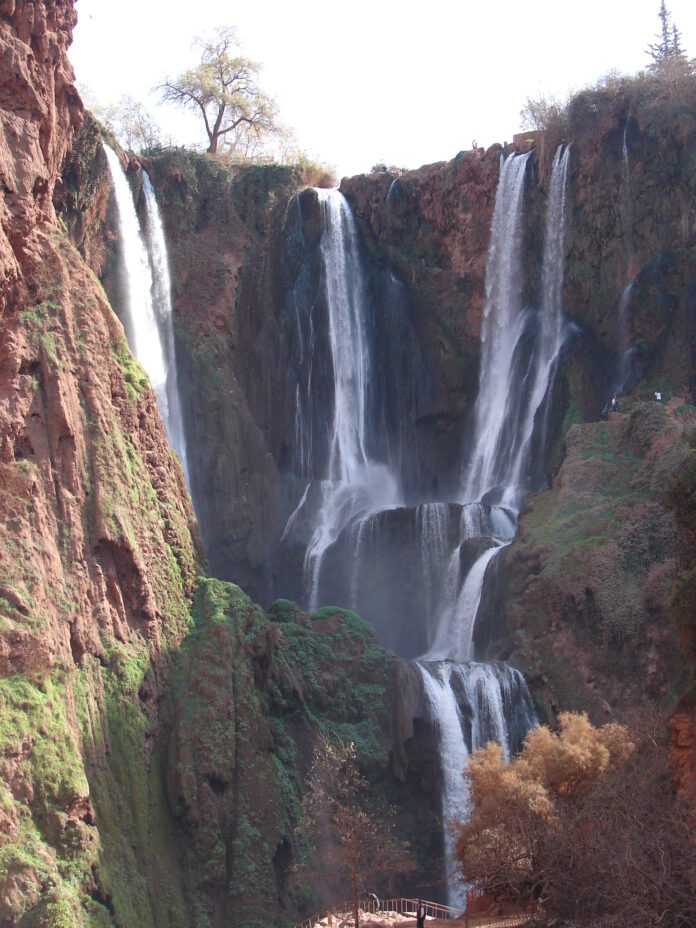
The Ouzoud waterfall drops about 110 meters off a red limestone cliff into the gorge of the El Abid river, which makes it the tallest waterfall in Morocco and one of the highest in North Africa. It sits roughly 150 kilometers northeast of Marrakech, close enough for a day trip and far enough that the drive shapes the whole day.
Most visitors meet the falls the same way: a minivan from Marrakech at 8 a.m., a fast loop down through olive groves, a boat ride into the spray, a tagine on a terrace, and a long ride home. That version works. It also leaves people wondering afterwards whether they paid too much, missed the best viewpoint, or should have stayed the night when the crowds had gone.
This guide is built for the person still deciding. If you are in Marrakech with one free day and you keep seeing Ouzoud excursions on every riad noticeboard, you want three things settled before you book: where the falls actually are, how long the trip takes, and what it should cost. With those answers you can choose between a shared tour, a private driver, public transport or your own car, and walk into the site knowing what is free, what is optional and what is a hustle.
Why the Ouzoud Waterfall Deserves a Full Day
Morocco sells itself on medinas, desert dunes and kasbahs, so a waterfall can feel like a side note. It is not. Ouzoud is one of the most visited natural sites in the country, and GetYourGuide alone lists dozens of day trips to it from Marrakech, with tens of thousands of combined reviews. Moroccan families drive in from Beni Mellal, Casablanca and Rabat on weekends, which tells you the place matters to locals as well as tourists.
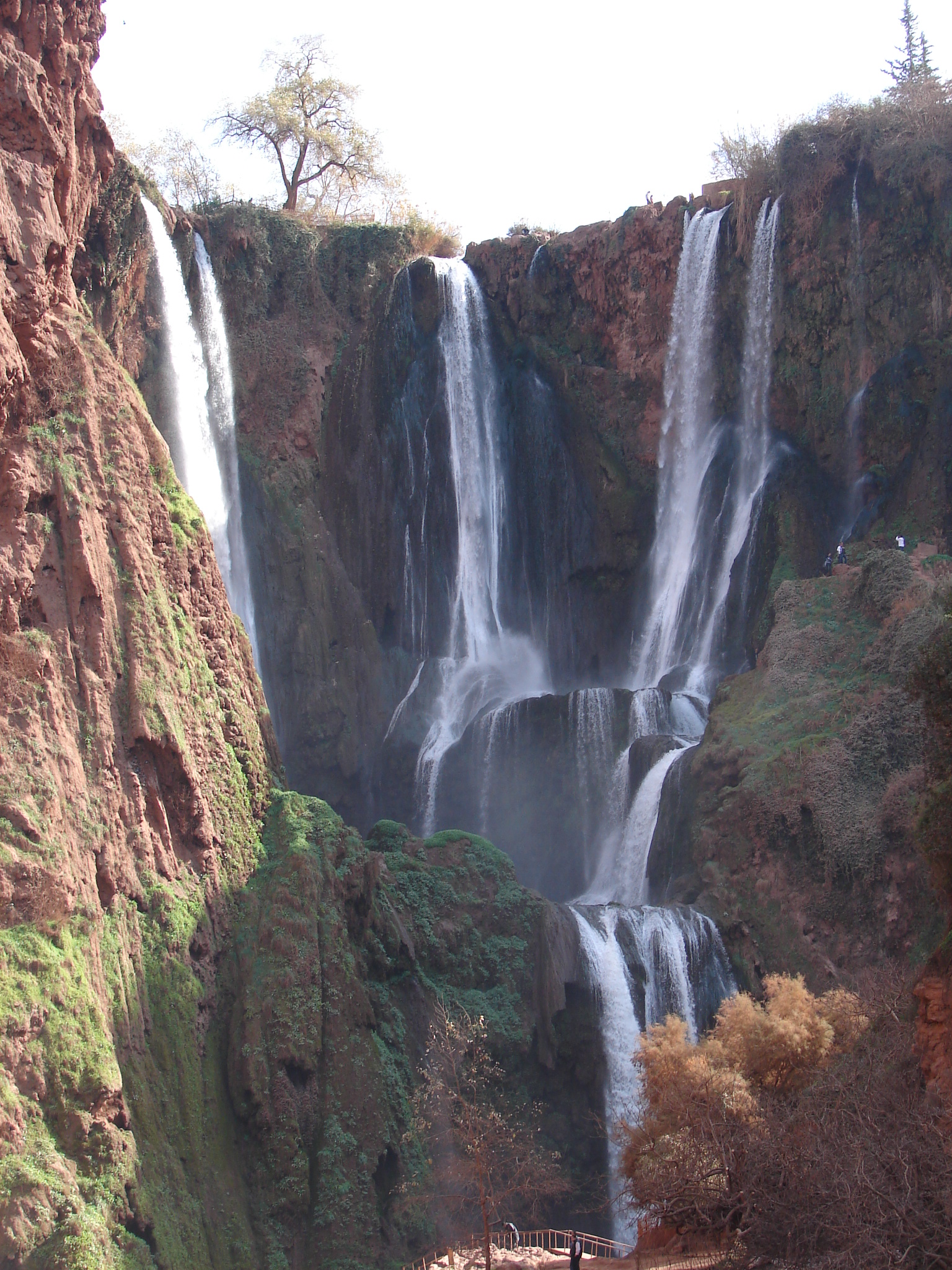
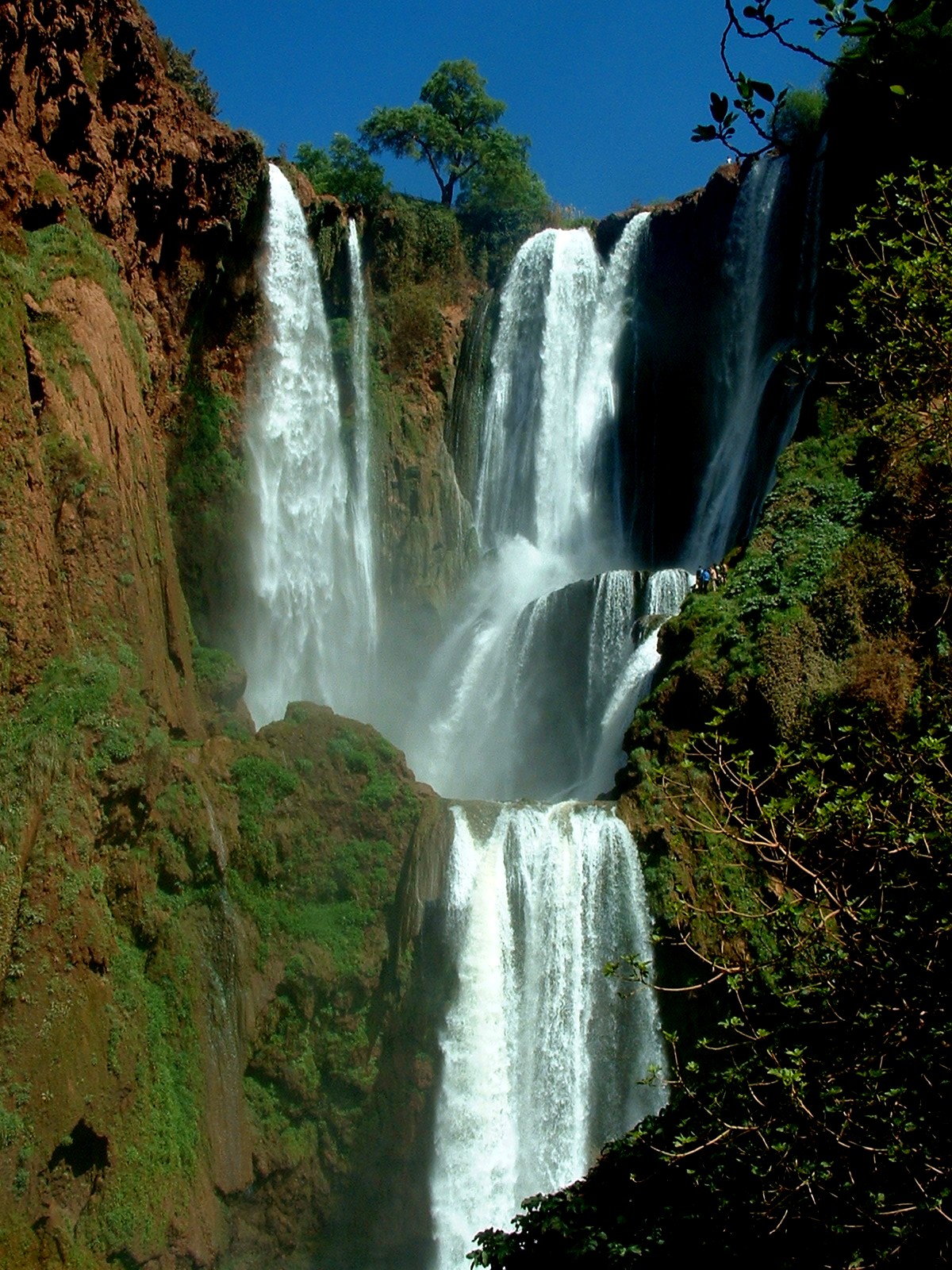
The appeal is contrast. You leave the flat, dusty Haouz plain around Marrakech and climb into hills covered in olive, almond and carob trees. Then the ground simply ends, and a wide curtain of water falls in several stages into a turquoise pool ringed by cafés, rowing boats and wild monkeys. Spray drifts across the gorge, and on sunny mornings a rainbow hangs over the lower basin.
What this guide covers
You will find the exact location of the falls and how they relate to the Atlas Mountains, real travel times and prices for every way of getting there from Marrakech, and a costed day budget. After that come the walks and viewpoints worth your time, the best season and hour to arrive, where to sleep if you stay over, and the scams and safety points that catch first-time visitors.
If you are still building the rest of your trip, our guide to the best things to do in Marrakech pairs well with this one, since almost every Ouzoud trip starts and ends in the Red City.
Where Is the Ouzoud Waterfall? Location and Region
The quick answer: the falls sit next to the small village of Tanaghmeilt, in Azilal Province, part of the Beni Mellal-Khenifra region of central Morocco. The nearest town of any size is Azilal, about 36 kilometers away by road, and Beni Mellal lies roughly 120 kilometers to the northeast.
Most travel sites file Ouzoud under Marrakech because that is where tours depart, which confuses people. The waterfall is not in the Marrakech-Safi region at all. You cross a regional boundary on the way, and the landscape changes with it.
Where are the Ouzoud waterfalls exactly?
On a map, look for the point where the Ouzoud stream (called the Oued Tissakht in some sources) reaches the edge of the deep El Abid canyon. The top of the falls sits at roughly 1,060 meters above sea level. A cluster of guesthouses, cafés and souvenir stalls has grown up along the rim and down the paths to the base.
The coordinates are approximately 32.01° N, 6.72° W. If you search “Cascades d’Ouzoud” in Google Maps or Maps.me, the pin lands on the main car park above the falls, which is where every visit starts. Download the area for offline use before you leave Marrakech, because mobile signal drops in the hills between Tamelelt and Azilal.
Is Ouzoud waterfalls in the Atlas Mountains?
Yes. The Ouzoud falls sit in the foothills where Morocco’s Middle Atlas meets the Central High Atlas. You will see both labels used, and both are fair: travel brochures often say “Middle Atlas”, while geologists and the M’Goun Geopark place the site within the Central High Atlas range.
What matters for a visitor is what this means on the ground. The air is cooler than in Marrakech, the hills are greener, and the road climbs and twists for the last hour. If you get carsick, take something before you set off rather than halfway there.
What does “Ouzoud” mean?
In Tamazight, the Amazigh (Berber) language of the region, “Ouzoud” is usually translated as “the act of grinding grain”. The name comes from the small water mills that line the stream above the falls. A few of these stone mills still work, using the current to turn heavy millstones for flour and olives.
Some guides offer another meaning linked to olives, and the hillsides are certainly full of them. Either way, the name points to the same thing: this was a working agricultural valley long before it became one of the busiest day trips in the country.
Ouzoud Falls by the Numbers: Height, Tiers and Geology
Numbers get repeated loosely online, so here is what the more careful sources agree on.
| Fact | Detail |
|---|---|
| Total height | About 110 meters (360 feet) |
| Structure | Several stepped drops into a plunge pool, not one sheer fall |
| Elevation at the top | Around 1,060 meters |
| River system | Ouzoud stream flowing into the El Abid river gorge |
| Nearest village | Tanaghmeilt |
| Province / region | Azilal / Beni Mellal-Khenifra |
| Protected status | Geosite inside the M’Goun UNESCO Global Geopark |
| Entry fee | None |
How the Ouzoud cascades formed
The water does not just fall over hard rock; it builds rock as it goes. Calcium-rich spring water drops minerals as it tumbles and splashes, creating tufa, a soft and porous limestone. Over thousands of years these deposits have formed ledges, overhangs and the stepped shape you see today, which is why the falls look like a wide staircase rather than a single ribbon.
That process is also why the base area has caves and moss-covered shelves where water seeps out of the cliff. Showcaves, a site that catalogs karst features worldwide, classes Ouzoud as a tufa geotope for exactly this reason.
Part of a UNESCO Global Geopark
The falls are one of the listed geosites of the M’Goun Geopark, which UNESCO recognized as a Global Geopark in 2014. It was the first geopark in Africa and the Arab world to join the network. The geopark covers a huge stretch of Azilal Province, including dinosaur footprints, rock engravings, the Imi n’Ifri natural bridge and Bin El Ouidane lake. The M’Goun Geopark’s report to the Global Geoparks Network lists the Ouzoud cascades among its key sites.
Geopark status is not a national park. It does not mean ticket gates, rangers or strict rules. It means the area is recognized for its geology and that local tourism is supposed to support conservation. In practice you will notice the gap between that ideal and the litter near some cafés, which is a good reason to carry your rubbish back up with you.
How Far Is Ouzoud Waterfalls From Marrakech?
By road, the Ouzoud waterfalls are about 150 to 160 kilometers from Marrakech, and the drive takes around two and a half to three hours each way. That means five to six hours in a vehicle for a round trip, so the real question is how you want to spend that time.
Here is how the main options compare.
| Option | Typical cost | Time each way | Best for |
|---|---|---|---|
| Shared group tour | About $10–$25 per person | 2.5–3 hours | Solo travelers and budget trips |
| Private driver or private tour | About $90–$170 per vehicle | 2.5–3 hours | Couples, families, flexible timing |
| Rental car | Car hire plus fuel and parking | 2.5 hours | Independent travelers staying overnight |
| Grand taxi via Azilal | Roughly 75–100 MAD per seat | 3.5–5 hours | Backpackers with time to spare |
| Bus to Beni Mellal plus taxi | Bus fare plus taxi | 5+ hours | Travelers continuing north |
Prices are a guide only. Tour rates on booking platforms swing with season and demand, and taxi fares rise when drivers wait for empty seats.
Option 1: Shared group tour
This is how most people do it. A minivan collects you from your riad or a meeting point near Jemaa el-Fna around 7:30 to 8 a.m., stops once for coffee, and reaches the falls before lunch. Most tours hand you to a local guide for a two- to three-hour walk, offer the boat ride and a set lunch, then head back mid-afternoon. You are home by early evening.
The upside is price and zero planning. The downside is pace and pressure: tours often add an argan cooperative stop with a sales pitch, and the lunch restaurant is chosen for you. Read the inclusions carefully. “Boat ride included” and “lunch optional” mean very different final bills.
Option 2: Private driver
A private car costs several times more but buys back control. You can leave at 7 a.m. to beat the vans, stop at a roadside fruit stand, skip the cooperative, and stay at the falls until the light turns gold. For two or more people, the price per head drops fast. If you are weighing operators, our guide to Morocco private tours explains what a fair private-day price includes and how to vet a driver.
Option 3: Driving yourself
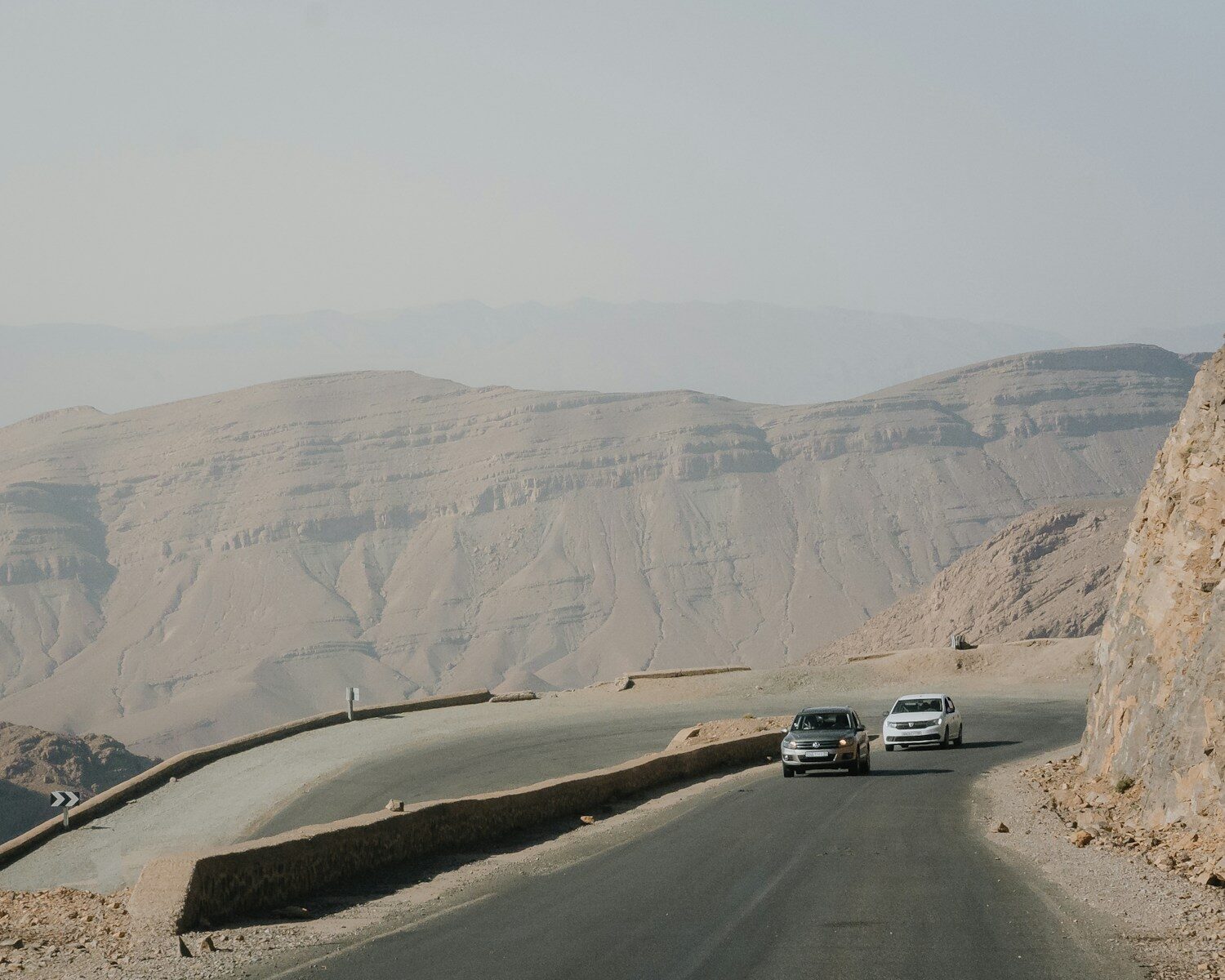
Roads are paved all the way, and the route is simple: head northeast out of Marrakech on the N8 toward Beni Mellal, then branch onto the R208 and follow signs through Tanant to Ouzoud. Plan two and a half hours without stops. Watch for children, donkeys and fruit sellers in the villages, and for sharp bends on the final climb.
Parking attendants work the lots above the falls and charge a small fee, usually 10 to 20 MAD for the day. Park close to the main entrance rather than at the first lot you see, where touts sometimes wave cars in early so they can walk you down as an unrequested guide.
Option 4: Grand taxi or bus
Public transport is possible, just slow. Shared grand taxis leave Marrakech for Azilal from the Bab Doukkala area once all six seats are full; from Azilal, a second taxi covers the last stretch to Ouzoud. Travelers have reported fares of around 50 MAD to Azilal and 25 MAD onward, though you should expect a little more now. You can also pay for empty seats to leave sooner.
The alternative is a CTM or local bus to Beni Mellal, then a taxi to the falls. It only makes sense if you are traveling on toward Fes or the Middle Atlas anyway. Either public route eats most of the day, so pair it with at least one night at Ouzoud.
Ouzoud Waterfall Costs: A Realistic Day Budget
The good news first: there is no ticket to see the Ouzoud waterfall. The site is open around the clock, and you can walk every main path for free. What costs money is getting there and the extras you choose once you arrive.
| Item | Typical price | Notes |
|---|---|---|
| Entry to the falls | Free | No gate, no ticket |
| Parking | 10–20 MAD | Paid to the lot attendant |
| Local guide (optional) | About 30 MAD each in a group; 100–150 MAD solo | Agree the price first |
| Boat ride at the base | About 20 MAD per person | Short trip into the spray |
| Fresh orange juice | 10–15 MAD | Sold all along the paths |
| Tagine lunch with view | 60–150 MAD | Check the menu price before sitting |
| Shared tour from Marrakech | About $10–$25 | Lunch and boat often extra |
For a typical traveler on a shared tour, the full day lands somewhere between $25 and $45 per person once you add the boat, lunch, drinks and a tip for the guide. Travelers on GetYourGuide frequently mention lunch being served automatically, even when it was not part of their package, so ask before you sit down.
How to keep the bill honest
Carry small notes and coins. Boatmen and juice sellers rarely have change for a 200-dirham note, and “no change” quietly becomes a bigger payment. Agree every price before the service starts, whether it is a guide, a boat or a photo with someone’s pet. If a restaurant has no printed menu, ask for the price of the tagine and the drinks out loud.
A packed lunch from Marrakech is perfectly acceptable. Plenty of Moroccan families picnic on the rocks above the river, and nobody will object if you buy a juice or a mint tea to say thanks for the seat.
Things to Do at the Ouzoud Falls
Most people spend two to four hours at the site. You can see the main viewpoints in 90 minutes, but the place rewards slowing down.
Walk the classic loop
From the car park, head past the souvenir stalls to the first lookout over the top of the falls. The usual route then drops down the left side of the gorge on a path through olive groves, past cafés with terraces facing the water, to the plunge pool. You cross the river at the bottom by a footbridge, a boat or, in summer, a short swim, then climb back up the other side on a stepped path with more viewpoints.
The descent takes about 20 to 30 minutes at an easy pace. The climb back is steeper, with plenty of stairs, so give it 30 to 45 minutes in summer heat. The paths are clear and mostly paved or stepped, so you do not need a guide to find your way.
Take the boat into the spray
Small, brightly painted rafts wait in the main pool and ferry people right up to the curtain of water. It costs about 20 MAD per person and lasts a few minutes. You will get wet, so put phones in a zip bag and expect your shirt to come back damp. On sunny mornings this is the best spot to catch the rainbow.
Swim in the river pools
In summer, the water warms up enough for swimming, and you will see local teenagers jumping from the rocks. The main pool is busy with boats, so the better swimming is in the calmer pools a short walk downstream. Never swim directly beneath the falling water, where currents are strong, and skip it altogether after heavy rain, when the river turns brown and fast.
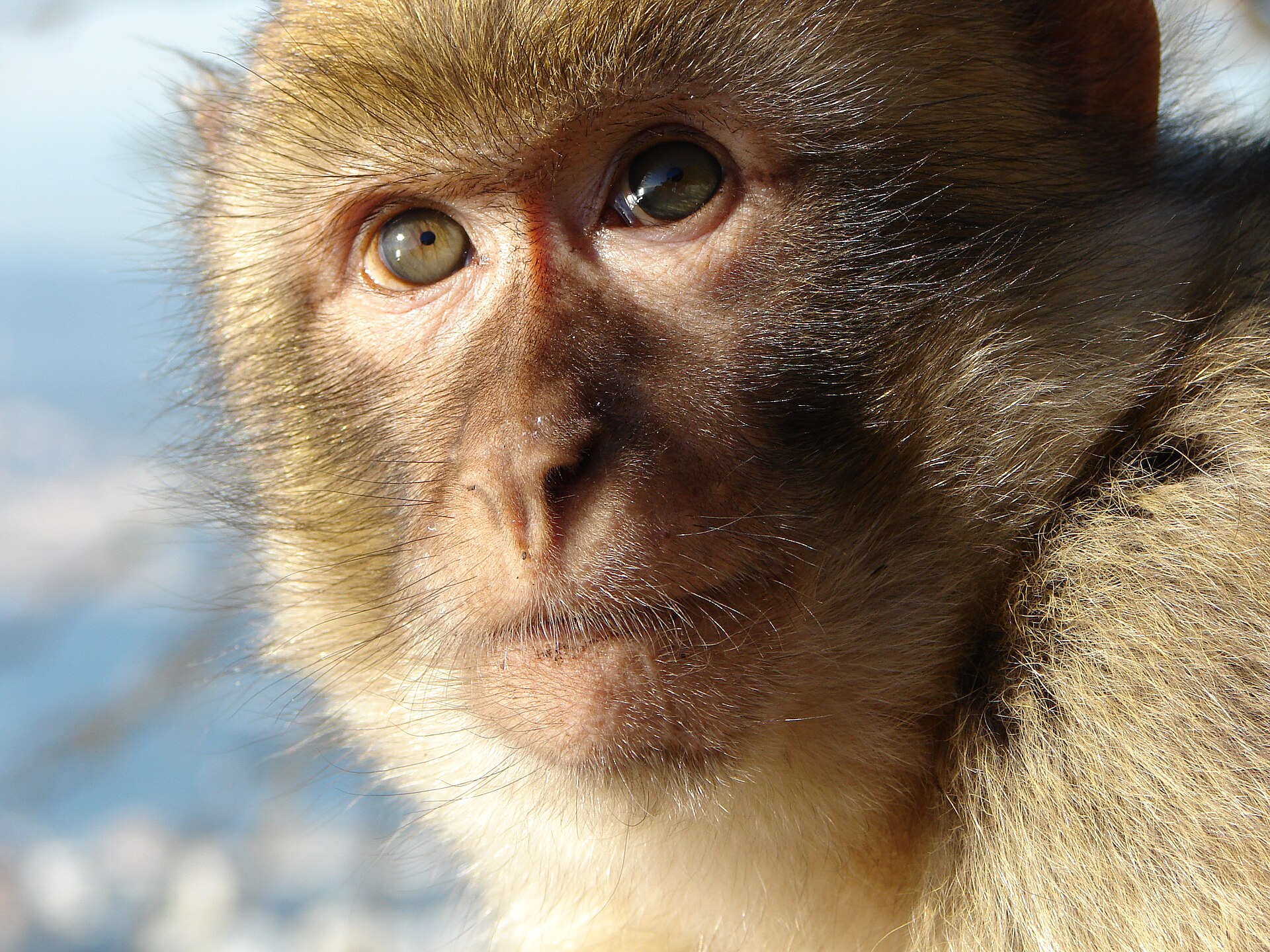
Meet the Barbary macaques, without feeding them
Troops of wild Barbary macaques live in the trees around the gorge, especially on the climb back up the far side. They are the only macaque species living outside Asia, and the IUCN lists the Barbary macaque as Endangered, threatened mainly by habitat loss and illegal capture for the pet trade.
Vendors sell peanuts for feeding them, and plenty of visitors do. Please don’t. Human food makes the monkeys aggressive and sick, and it teaches them to grab bags. Keep food zipped away, watch from a few meters, and never let a monkey sit on you for a photo. The Natural History Museum in London has a clear explainer on why the species has declined so sharply.
See the old water mills
Above the falls, look for the small stone mill houses where the stream is diverted through wooden channels. These are the mills that gave Ouzoud its name. Some guides will show you inside one for a small tip, which is one of the few paid extras that feels genuinely worth it.
Hike beyond the main falls
If you want to leave the crowds, keep walking. Trails continue downstream into the El Abid gorge, where the river cuts deep red walls and the noise of the falls fades fast. Upstream, a path from Tanaghmeilt leads a couple of kilometers to the Ouzoud springs. Longer routes to smaller cascades take around two hours round trip and need proper shoes.
A One-Day Ouzoud Waterfall Itinerary From Marrakech
If you are going independently, with a private driver or your own car, this timing gets you to the falls ahead of the tour vans and home before dark. It assumes a spring or autumn day; in summer, shift everything an hour earlier to dodge the midday heat on the climb.
- 7:00 a.m. Leave Marrakech. Grab msemen and coffee from a corner café, or ask your riad for an early breakfast box.
- 8:15 a.m. Short stop around the halfway point for fuel, a stretch and fresh orange juice.
- 9:45 a.m. Arrive at the car park above the falls. Walk straight to the top viewpoint while the light is soft and the paths are quiet.
- 10:15 a.m. Walk down the olive-grove path to the base, stopping at the café terraces for the classic front-on view.
- 11:00 a.m. Take the boat into the spray, then cross to the far side of the river.
- 11:30 a.m. Climb the stepped path slowly, with stops at the side viewpoints and the macaque area.
- 12:30 p.m. Early lunch on a terrace facing the water, ahead of the tour crowd.
- 2:00 p.m. Short walk downstream into the El Abid gorge, or upstream to the old water mills.
- 3:30 p.m. Drive back to Marrakech, arriving around 6:30 p.m.
Adjusting the plan for a shared tour
On a group tour you do not control the clock, but you can still shape the day. Use the free time at the bottom for the gorge walk rather than a second drink, and skip the set lunch if the menu price does not appeal; a juice and a snack will carry you home. Ask your guide which side of the river the group will climb, and save your best photos for that route.
Combining Ouzoud with another stop
Some operators pair the Ouzoud waterfall with a quick visit to the Imi n’Ifri natural bridge near Demnate, or with a lunch stop at Bin El Ouidane lake. Both work, but each adds an hour or more of driving. On a single day from Marrakech, keep it to Ouzoud alone unless you are happy with a 12-hour excursion.
Visiting the Ouzoud Falls With Kids, Seniors or Limited Mobility
The Ouzoud falls are family-friendly, as long as you plan around the stairs. The descent to the base is gentle and mostly shaded, which suits young children and older travelers. The climb back up is the hard part: hundreds of uneven steps, often in full sun, with few railings in places.
Tips for families
Children love the boat ride and the monkeys, but both need close supervision. Hold small hands near every viewpoint at the top, keep snacks out of sight to avoid a monkey ambush, and pack a change of clothes, because someone always ends up soaked. Café terraces near the base make easy rest stops with fresh juice and simple food.
Tips for seniors and travelers with limited mobility
You can enjoy the falls without doing the full loop. The top viewpoint near the car park gives a wide panorama, and several cafés partway down the left-hand path offer excellent views with a seat and a mint tea. A private driver helps here, since you set the pace and can stop the walk wherever it feels right.
The site is not wheelchair accessible beyond the upper area. Paths are steep and stepped, and there are no lifts or ramps to the base. If mobility is a concern, ask your guesthouse or driver to suggest the flattest route to a viewpoint before you start.
Photography tips for the Ouzoud cascades
Bring a wide-angle lens or use your phone’s 0.5x mode, since the falls are broad and you are often close. A small cloth for wiping spray off the lens is worth more than any filter. For the rainbow, stand with the sun at your back in the morning, near the boats. For the whole waterfall in one frame, the terraces on the left bank and the upper viewpoint near the hotels on the rim give the cleanest angles.
Best Time to Visit the Ouzoud Falls Morocco
The Ouzoud falls run all year, but the experience changes a lot by season.
| Season | Water flow | Crowds | Good for |
|---|---|---|---|
| Spring (March–May) | Strongest, fed by rain and melting snow | Moderate, busy at Easter | Photography, green hills, walking |
| Summer (June–August) | Lower but steady | Highest, Moroccan holidays | Swimming and boat rides |
| Autumn (September–November) | Lowest before the rains | Moderate | Mild walking weather |
| Winter (December–February) | Can surge after storms | Lowest | Quiet visits, dramatic flow |
Spring is the sweet spot for most people. The water is at its fullest, the almond and olive groves are green, and temperatures suit the climb back up. Summer brings the most life to the pools, along with heat, crowds and full car parks, especially on weekends and during the Moroccan school holidays.
Autumn is pleasant for walking, though the falls can look thinner before the first big rains. Winter is the quietest time; mornings are cold, swimming is out of the question, and paths can be slippery after rain, but a storm can turn the cascades into a roaring wall.
Best time of day
Time of day matters more than season. Tour vans from Marrakech arrive between about 10:30 a.m. and noon, and the site is at its busiest until mid-afternoon. Arrive before 10 a.m. or after 3:30 p.m. and you will share the viewpoints with far fewer people. Morning light also tends to put the rainbow over the main pool, while late afternoon warms the red cliffs. Both are reasons to sleep nearby.
Staying Overnight Near the Ouzoud Waterfalls Morocco
A night at Ouzoud changes the trip completely. Once the day-trip vans leave in the afternoon, the village quiets down, the cafés empty, and you can walk to the base in the evening with mostly locals around you. The next morning you get the falls almost to yourself before the first minibus arrives.
Where to stay
The village has a good spread of simple guesthouses, family-run auberges and a few more comfortable hotels along the rim, several with terraces facing the falls. There are also campsites under the olive trees. Prices run well below Marrakech for similar comfort, and many places include dinner and breakfast. Book ahead for spring weekends and the summer holidays, when Moroccan families fill the village.
Add Bin El Ouidane or the Happy Valley
Staying over also opens up the rest of the region. Bin El Ouidane, about an hour’s drive away, is a huge reservoir framed by mountains, with lakeside lodges, kayaking and boat trips. Azilal town hosts a small museum for the M’Goun Geopark, with fossils and dinosaur tracks. Further south, the Ait Bouguemez valley, nicknamed the Happy Valley, is one of the best areas in Morocco for gentle trekking between Amazigh villages.
This makes Ouzoud a natural first stop on a longer route. Travelers heading from Marrakech toward Fes, or toward the Sahara via the mountains, can break the journey here rather than doing a rushed day trip. Our Morocco desert tour guide compares the main Marrakech-to-Merzouga and Marrakech-to-Fes routes if you want to build that in.
Ouzoud Waterfall Tips: Scams, Safety and What to Pack
Ouzoud is a safe, friendly place overall. The problems visitors run into are small annoyances, and almost all of them are avoidable.
The fake-guide routine
The most common complaint is a “mandatory” guide. Drivers sometimes drop groups away from the main entrance, where a man introduces himself as the official guide and later asks every person for a fee. There is no requirement to hire a guide at Ouzoud. If your tour includes one, fine; if it does not, you can politely decline and walk the loop yourself.
Ask your operator in writing before booking whether a local guide is included, and whether any other payment is expected on site. Our broader guide to Morocco travel safety covers the other common hustles, from unofficial guides in the medina to taxi meters that never get switched on.
Stay back from the edge
The viewpoints at the top of the falls have low or no railings, and the rock near the lip is often wet. Every year visitors lean out for selfies over a 110-meter drop. Keep children close, stand back from the edge, and treat the stepped paths on the far side with care after rain, when they get slick.
Respect local customs
Ouzoud is a conservative rural area, even if the base of the falls feels like a beach on summer weekends. Swimwear is fine in and right next to the water, but cover up with a T-shirt and shorts or trousers on the paths and in the cafés. Ask before photographing people, especially women and children, and accept a no without argument.
What to pack
- Shoes with real grip, such as trainers or hiking sandals, since flip-flops are a bad idea on the climb
- Swimwear and a quick-dry towel in summer
- A light rain jacket or zip bag for the boat ride
- Sunscreen, a hat and at least a liter of water per person
- Small notes and coins for boats, juice, parking and tips
- Motion sickness tablets if twisty roads bother you
- Snacks or a packed lunch if you want to avoid set-menu restaurants
Planning the bigger trip
If Ouzoud is one stop on a longer itinerary, our overview of things to do in Morocco gives you city-by-city ideas, and the Morocco tours guide explains how to choose between group trips, private drivers and self-drive across the country.
Ouzoud Waterfall FAQ
Where are the Ouzoud waterfalls?
The Ouzoud waterfalls are in Azilal Province, in the Beni Mellal-Khenifra region of central Morocco, beside the village of Tanaghmeilt. They lie about 150 kilometers northeast of Marrakech and roughly 36 kilometers from the town of Azilal.
Where is Ouzoud waterfalls on a map of Morocco?
Look for the foothills of the Atlas Mountains between Marrakech and Beni Mellal. The falls sit at the edge of the El Abid river gorge at about 32.01° N, 6.72° W. Searching “Cascades d’Ouzoud” in any maps app takes you to the main car park above the falls.
Is Ouzoud waterfalls in the Atlas Mountains?
Yes. The Ouzoud falls are in the Atlas foothills, where the Middle Atlas and Central High Atlas ranges meet. They are also a protected geosite within the M’Goun UNESCO Global Geopark.
How far is Ouzoud waterfalls from Marrakech?
The falls are about 150 to 160 kilometers from Marrakech by road. The drive takes around two and a half to three hours each way, so a day trip involves five to six hours of travel in total.
How tall are the Ouzoud falls?
The Ouzoud falls are about 110 meters (360 feet) tall in total, falling in several stepped drops. That makes them the highest waterfall in Morocco.
Is there an entrance fee for the Ouzoud cascades?
No. Visiting the Ouzoud cascades is free and the site is open all day. You only pay for optional extras such as parking, a boat ride, a guide, food and drinks.
Can you swim at the Ouzoud waterfall?
Yes, in summer, when the water is warm enough. Swim in the calmer pools downstream rather than under the falling water, and avoid swimming after heavy rain, when the river runs fast and muddy.
What is the best way to visit the Ouzoud waterfalls Morocco from Marrakech?
For solo travelers on a budget, a well-reviewed shared tour is the simplest option. Couples and families usually get better value and more freedom from a private driver. If you rent a car, drive yourself and stay one night to see the Ouzoud waterfalls Morocco at their quietest.
Are the Ouzoud cascades very crowded?
They can be. The Ouzoud cascades are busiest between late morning and mid-afternoon, on weekends and during Moroccan summer holidays. Arrive before 10 a.m., stay until after 3:30 p.m., or visit in winter for a calmer experience.
Do I need a guide at the Ouzoud waterfall?
No. The paths at the Ouzoud waterfall are clear and easy to follow, and no one is required to hire a guide. A local guide can add stories about the mills and villages, but agree the price before you start walking.
Is a day trip to the Ouzoud falls worth it?
For most travelers, yes. It is the easiest way to see green, mountainous Morocco from Marrakech. If you can, stay one night at Ouzoud falls Morocco to see the site after the crowds leave.
Plan Your Ouzoud Waterfall Day With Confidence
The Ouzoud waterfall is easy to reach and easy to enjoy, but the details decide whether it feels like a rushed tick-box or the highlight of your time around Marrakech. The geography is simple once you know it: an Atlas foothill village in Azilal Province, two and a half to three hours from the city, inside a UNESCO geopark. The costs are low and mostly optional. The crowds follow a clock you can step around.
Your next step is to pick your format today. If you are traveling alone on a budget, book a well-reviewed shared tour and confirm in writing what is included. If you are two or more, price a private driver and leave early. If you have a car or a free night, sleep in Tanaghmeilt and see the falls at sunrise.
However you go, carry your rubbish out, leave the monkeys’ diet to the monkeys, and give yourself time at the bottom of the gorge. The spray, the rainbow and the sound of the water are the reason everyone makes the drive.