A Morocco Sahara desert tour is the trip most visitors put at the top of their list, and the one they most often book badly. The same “3-day Sahara experience” can cost 1,200 MAD ($120 USD) or 7,000 MAD ($700 USD) per person, end at a roadside camp or deep in the dunes, and leave from a city 470 km or 560 km away. Those gaps are where the good trips and the disappointing ones split apart.
The short answer: yes, you can visit the Sahara Desert in Morocco, and a 3-day tour from Marrakech or a 2- to 3-day tour from Fes is the most common way to do it. The real dunes sit in the far southeast, around Merzouga (Erg Chebbi) and M’Hamid (Erg Chigaga). Anything closer to the big cities is a different landscape.
This guide covers the planning stage of a Morocco Sahara desert tour, before you pay a deposit. It answers the questions travelers actually type into Google: how much a tour costs, which city is closest, whether it is safe, which tour is best, and whether the long drive is worth it.
How to Use This Guide Before You Book
Most articles about the Moroccan desert describe one trip in detail. That is useful once you know what you want, but it does not help you choose. Here, each section settles one decision, in the order you need to make it:
- Which desert: Erg Chebbi, Erg Chigaga, Zagora or Agafay
- Which starting city: Marrakech, Fes, Ouarzazate or a flight to the southeast
- How long: one evening, 2 days, 3 days, or 4 to 5 days one-way
- Which budget and camp level: shared, private, standard or luxury
- How to stay safe and avoid the common traps
Work through them in order and you end up with a Morocco Sahara desert tour that fits your dates, your budget and your comfort level, rather than the first offer you hear in the souk.
If you already know you want the classic loop from Marrakech, our Morocco desert tour route comparison walks through the 3-day and 5-day itineraries stop by stop. This article sits one step earlier: it helps you decide whether that route is the right one for you at all.
All prices below are per person unless stated otherwise, quoted in Moroccan dirhams (MAD) with an approximate US dollar figure. Operators often price in euros, so expect the dirham amount you actually pay to move a little with exchange rates.
Is There a Trip to the Sahara Desert in Morocco?
Yes. Morocco holds the northwestern edge of the Sahara, and it is one of the easiest places in the world to sleep among real sand dunes. The catch is geography: the dunes lie on the far side of the High Atlas, close to the closed border with Algeria, so every trip involves a long drive or a domestic flight.
The Sahara desert in Morocco is not one continuous sea of sand. Most of the south is rocky plateau, called hamada. Sand seas, called ergs, appear in a few pockets. Only two of them are big enough to feel like the Sahara of the postcards.
| Desert area | Type of landscape | Nearest town | Distance from Marrakech | Real Sahara dunes? |
|---|---|---|---|---|
| Erg Chebbi | Tall orange dunes up to about 150 m | Merzouga | About 560 km, 9–10 hours | Yes |
| Erg Chigaga | Wide, remote dune field, lower dunes | M’Hamid | 7–9 hours to M’Hamid, then 4×4 track | Yes |
| Tinfou and Zagora area | Small, scattered dunes | Zagora | About 360 km, 6–7 hours | Partly |
| Agafay | Stone desert, rocky hills | Marrakech | 30–35 km, under an hour | No |
That table answers the most common confusion. If a listing promises “the Sahara” and the drive is under an hour, you are going to Agafay. It is a lovely evening out, and our Agafay Desert guide explains exactly what it offers, but it has no sand dunes.
If a listing promises the Sahara on a 2-day trip from Marrakech, you are almost always going to Zagora. The dunes there are real but small, and they are closer to a large sandbox than an endless sea.
For tall dunes, silence and a proper desert sunrise, you need Erg Chebbi or Erg Chigaga, and every Morocco Sahara desert tour worth booking heads to one of the two. Everything else in this guide assumes one of those two, unless stated otherwise.
Erg Chebbi or Erg Chigaga: Choosing Your Moroccan Desert
The two great dune fields of the Moroccan desert feel quite different, and the right one depends less on which is “better” and more on how you are traveling. Think of Erg Chebbi as the well-equipped national park and Erg Chigaga as the backcountry.
Erg Chebbi and Merzouga
Erg Chebbi rises right behind the village of Merzouga in the province of Errachidia. The dunes are the tallest in the country, often quoted at around 150 m, and their color shifts from pale gold at noon to deep copper at sunset. A paved road runs all the way to the edge of the sand.
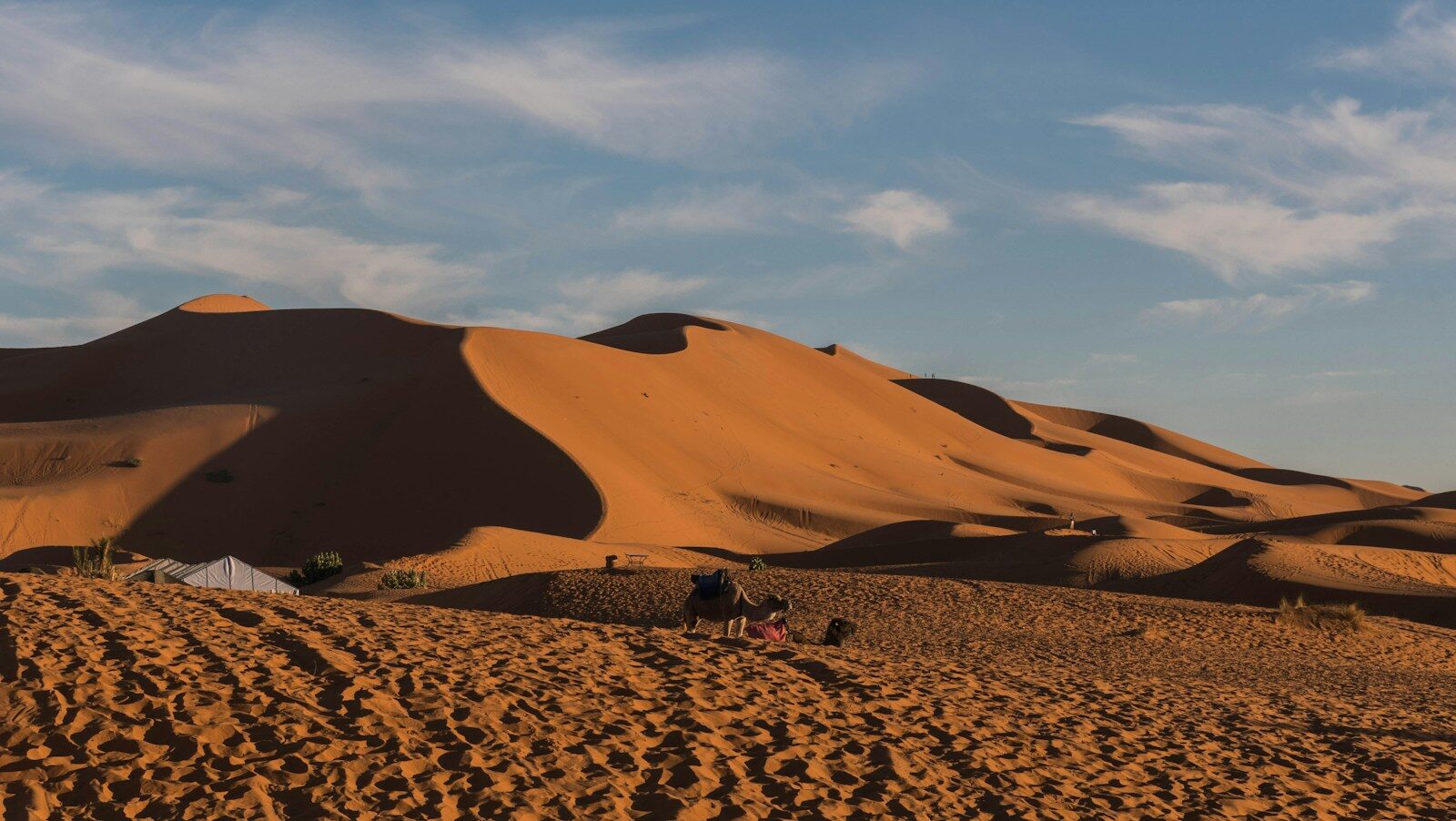
That access is its strength and its weakness. You can reach a camp by a 45- to 90-minute camel ride or a short 4×4 transfer, and there are camps at every price level, from simple shared tents to suites with private bathrooms and heated floors. On the other hand, the most popular stretch of the dunes holds dozens of camps, and at sunset you will share the main ridges with other groups. It is also where almost every shared Morocco Sahara desert tour ends up.
Erg Chebbi fits you if:
- This is your first time in the desert and you want a smooth, well-tested experience
- You are traveling between Marrakech and Fes, because Merzouga sits on that route
- You want a luxury camp, or a wide choice of camps
- You have only 3 days
Erg Chigaga and M’Hamid
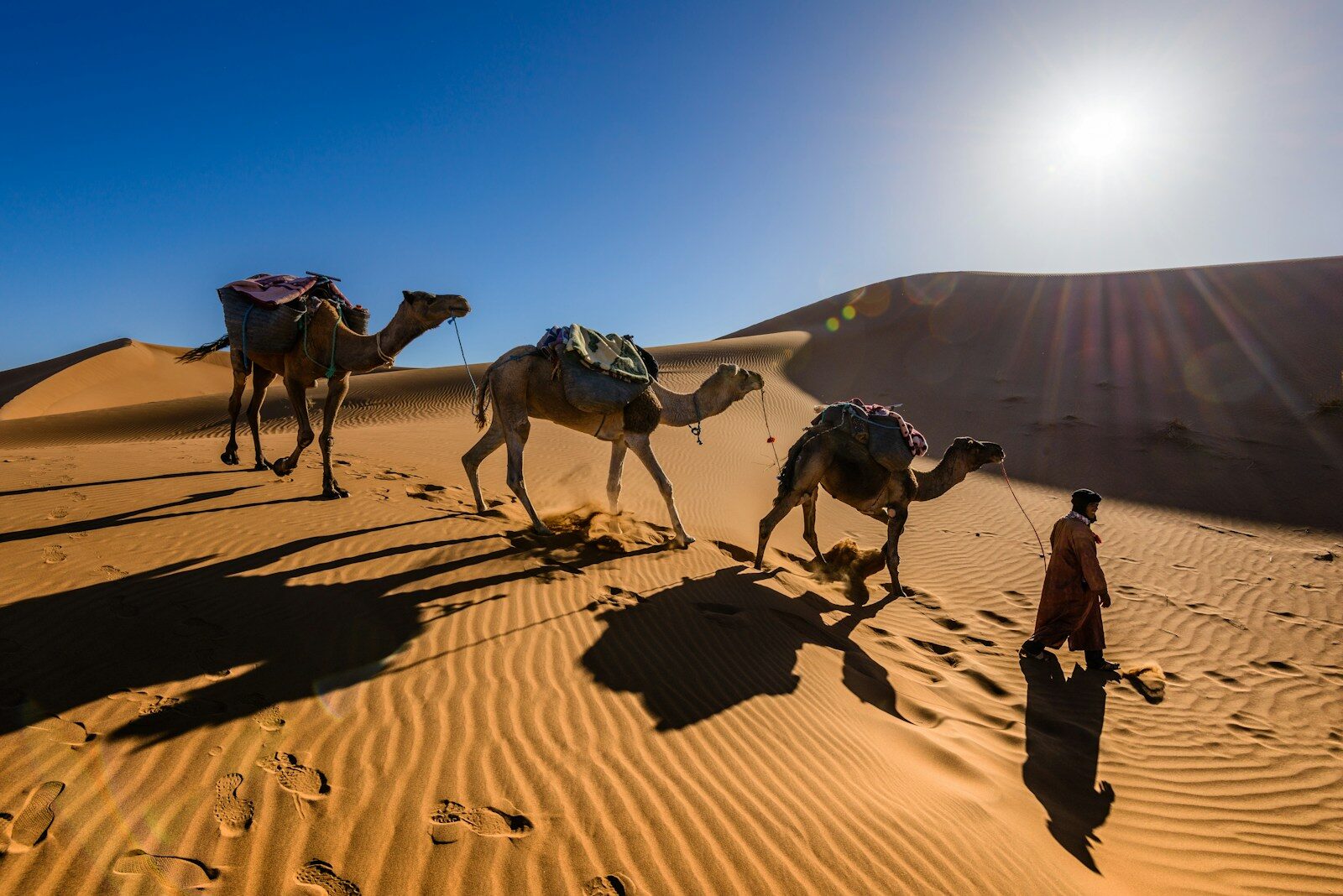
Erg Chigaga lies west of M’Hamid El Ghizlane, the last village of the Draa Valley. There is no paved road into the dunes. After the tarmac ends, you continue roughly 60 km on desert tracks by 4×4, which usually takes 1.5 to 2.5 hours. Some travelers make part of the journey by camel, which turns it into a multi-day trek.
Its highest dunes are lower than Erg Chebbi’s, but the field is wide and empty, with far fewer camps and almost no light pollution. Photographers and repeat visitors often prefer it for exactly that reason, and it is the quietest corner of the Moroccan desert you can still reach on an organized trip.
Erg Chigaga fits you if:
- You have already seen Erg Chebbi, or you dislike crowds
- You are happy to pay more for a private 4×4 and driver
- You are starting from Marrakech, Ouarzazate or even Agadir, rather than Fes
- You want a sense of remoteness more than tall dunes
Zagora and the smaller dunes
Zagora is the compromise you will see on every 2-day tour from Marrakech. The town sits in a beautiful palm valley, and the drive through the Draa Valley is a highlight in its own right. The dunes near Tinfou and on the edge of town are small, though, and the camps are often within sight of the road.
Zagora is worth it if you can spare only two days and accept small dunes as the trade-off. If you can find a third day, Erg Chebbi or Erg Chigaga shows you the Sahara desert in Morocco at its best for very little extra money.
Which desert should you choose?
For a first Morocco Sahara desert tour, Erg Chebbi is the right call. It has the tallest dunes, the most camp choice and the easiest logistics. Choose Erg Chigaga when remoteness matters more to you than height, and treat Zagora as a two-day fallback rather than a first choice.
Which City in Morocco Is Closest to the Sahara Desert?
The honest answer depends on which part of the Sahara desert in Morocco you mean, and on whether you count small towns or only the cities travelers fly into.
The closest towns to Erg Chebbi
The closest town to the Merzouga dunes is Rissani, about 35 km away, followed by Erfoud, about 50 km away. The closest real city is Errachidia, roughly 130 km and about 2 hours by road. Errachidia has an airport, Moulay Ali Cherif (ERH), with domestic flights from Casablanca and a handful of other cities.
Flying to Errachidia is the fastest way to reach the Moroccan desert if you are short on time. The flight replaces a full day of driving, though you still need a transfer to Merzouga, and you miss the Atlas crossing and the kasbah valleys along the way.
The closest towns to Erg Chigaga
For Erg Chigaga, the gateway is M’Hamid, with Zagora about two hours north and Ouarzazate further up the Draa Valley. Ouarzazate has a regional airport and sits on the main road from Marrakech, so many Erg Chigaga trips start there.
Fes vs Marrakech: which big city is closer?
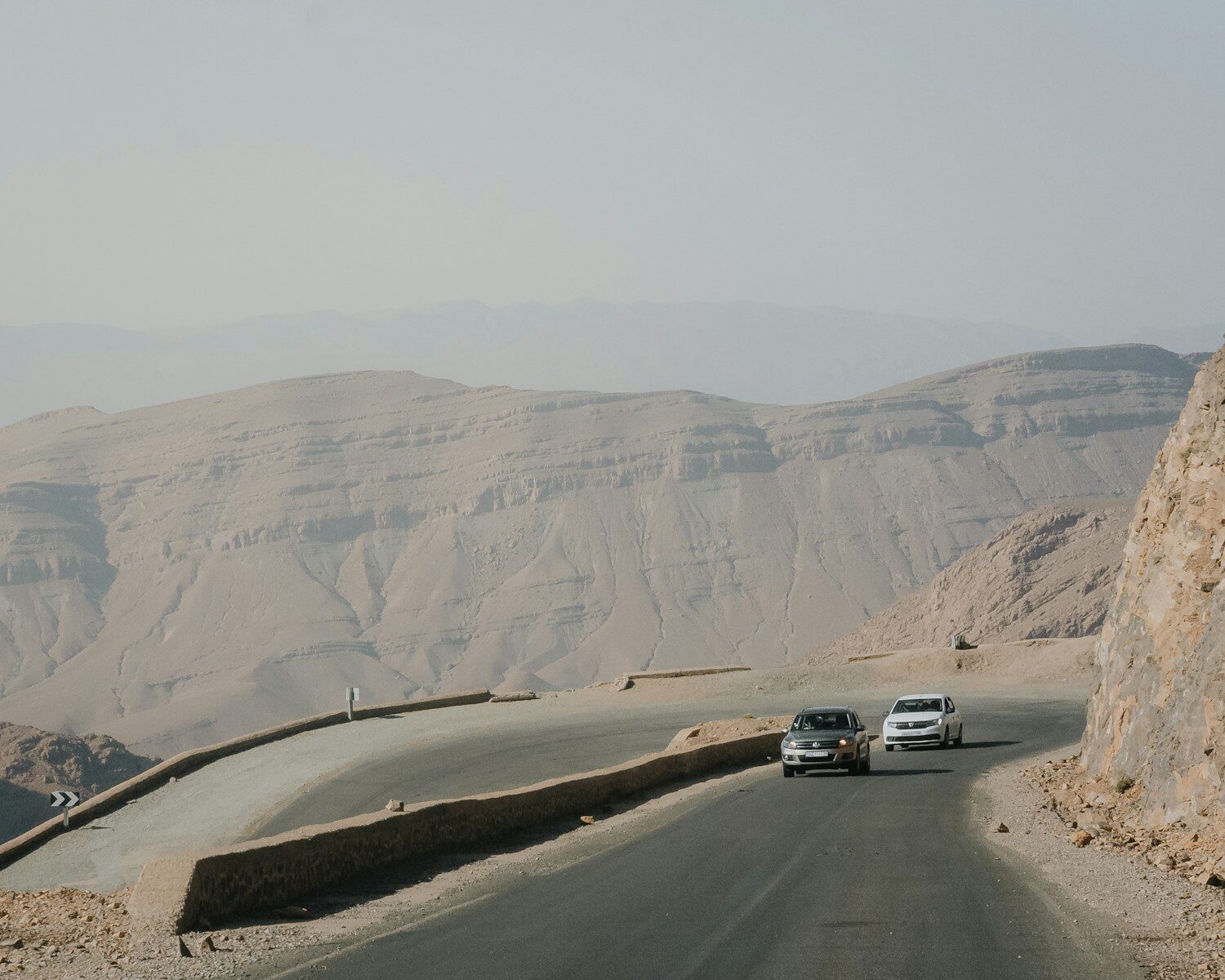
Of the cities most travelers actually stay in, Fes is closer to the Sahara than Marrakech. Fes to Merzouga is about 470 km, or 7–8 hours of driving. Marrakech to Merzouga is about 560 km, or 9–10 hours, with the Tizi n’Tichka pass in between.
| Starting point | Desert | Approximate distance | Driving time | Best tour length |
|---|---|---|---|---|
| Fes | Erg Chebbi | 470 km | 7–8 hours | 2–3 days |
| Marrakech | Erg Chebbi | 560 km | 9–10 hours | 3 days minimum |
| Marrakech | Erg Chigaga | 7–9 hours to M’Hamid, plus 4×4 track | Full day plus | 3 days minimum |
| Ouarzazate | Erg Chigaga or Zagora | Shorter, along the Draa Valley | Half to most of a day | 2 days |
| Errachidia | Erg Chebbi | 130 km | About 2 hours | 1–2 nights |
The practical takeaway: if your trip starts in Tangier, Chefchaouen or Fes, start your Sahara tour from Fes. If you fly into Marrakech, plan at least 3 days for your Morocco Sahara desert tour, or route it one-way so it ends in Fes. Our Morocco itinerary guide shows how to fit the desert into a 7- or 10-day route without doubling back.
Desert Tours Marrakech: What Leaves the City Each Morning
Marrakech is where most travelers book a Morocco Sahara desert tour, so it is also where the choice is widest and most confusing. Walk through the medina and you will be offered every format below within an hour. Knowing how they differ saves you from paying for one thing and receiving another. Here is how the main desert tours Marrakech agencies advertise compare.
The Agafay evening
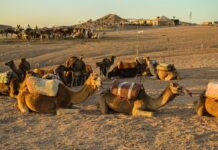
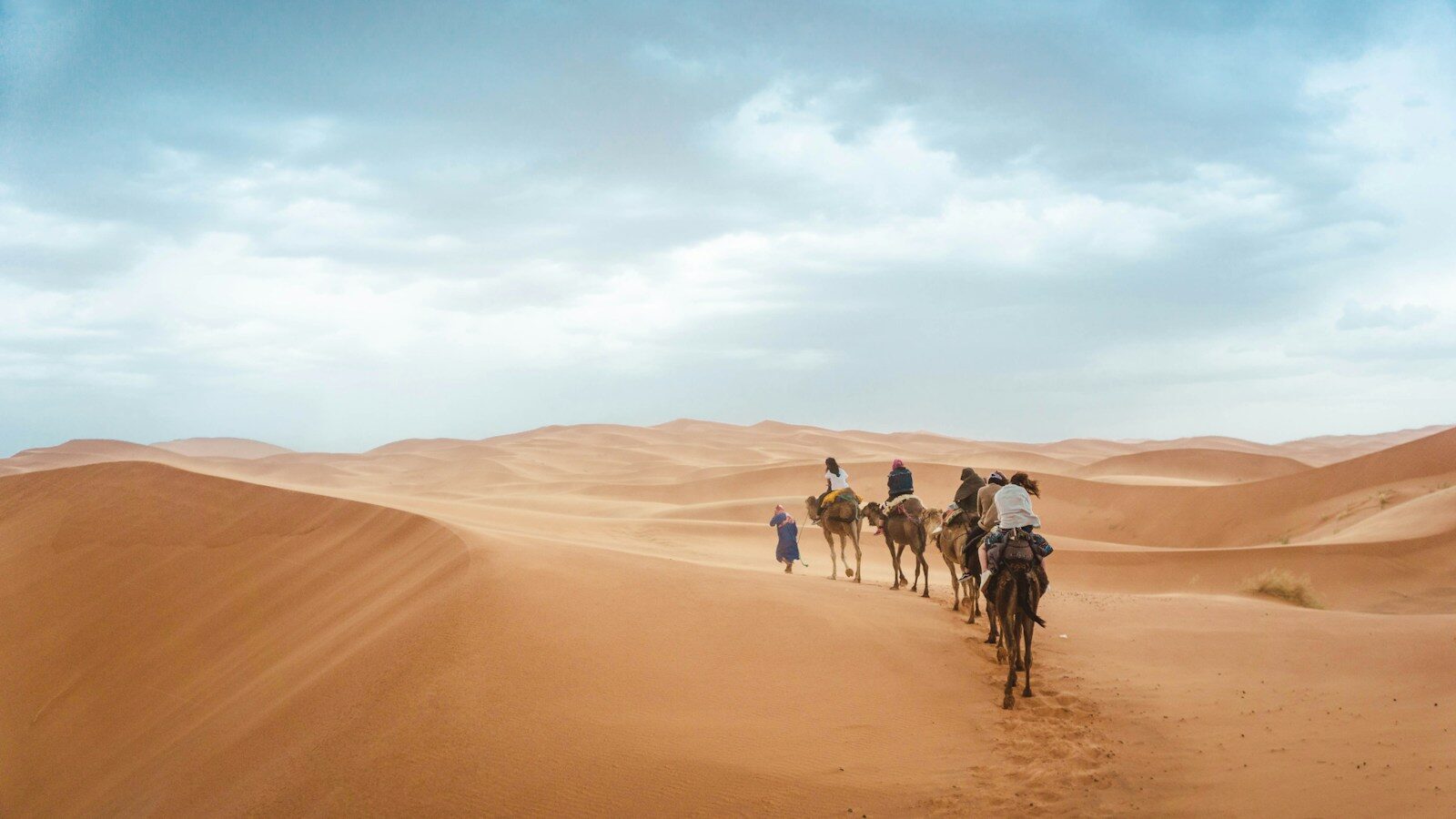
Pickup mid-afternoon, a short camel ride on a stony plateau, sunset tea, dinner at a camp with music, then back to your riad. Expect roughly 450–850 MAD ($45–$85 USD) with transport and dinner. It is a good choice for families, short stays and anyone who wants a taste of desert life without a long drive. It is a glimpse of the Moroccan desert, not the Sahara, so do not expect dunes.
The 2-day Zagora tour
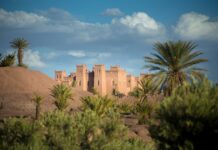
You leave early, cross the Atlas, visit Aït Benhaddou, continue down the Draa Valley and ride camels to a camp near Zagora. You return the next day. Shared versions start around 630 MAD ($64 USD). It works if two days is all you have, but it means roughly 12–14 hours in a vehicle for one night among small dunes.
The 3-day Merzouga loop
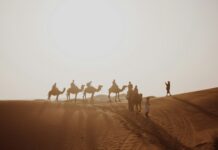
This is the classic among desert tours Marrakech agencies sell. Day 1 crosses the Atlas to the Dades Valley, Day 2 continues through the Todra Gorge to Merzouga and a camel ride into Erg Chebbi, and Day 3 is the long drive back. It reaches the real dunes and gives you a sunset and a sunrise there. The price of that is a very long final day.
The 3-day Erg Chigaga trip
Fewer operators run it, and it is usually private. You drive via Ouarzazate and Zagora to M’Hamid, then continue by 4×4 or camel into the dunes. Expect a higher price, a quieter camp and more time on rough tracks.
The 4- to 5-day one-way tour to Fes
Many desert tours Marrakech operators offer can end in Fes instead of returning. You cross the Atlas, spend one or two nights in the dunes, then head north through the Middle Atlas cedar forests. It costs more overall, but it removes the worst day of the loop: the 560 km drive back to Marrakech.
Shared or private?
Shared tours put up to about 17 people in a minibus on a fixed schedule. Private tours cost two to three times more per person for a couple, less for a family or group, but you choose the stops, the pace and the camp. You can also ask for longer stops at Aït Benhaddou and the Todra Gorge, which shared desert tours Marrakech operators tend to keep short. If you are comparing operators for a private trip, our guide to Morocco private tours covers what a good one includes.
How Much Does a Morocco Sahara Desert Tour Cost?
Prices for a Morocco Sahara desert tour are wide because three things move them: how many people share the vehicle, what kind of camp you sleep in, and what is quietly left off the inclusions list. The ranges below come from operator and booking-platform listings, converted at about 9.8 MAD to the dollar and 11 MAD to the euro.
| Tour type | Typical price per person | What usually stays extra |
|---|---|---|
| Agafay evening from Marrakech | 450–850 MAD ($45–$85) | Quad bikes, drinks, tips |
| Shared 2-day Zagora tour | From about 630 MAD ($64) | Lunches, drinks, tips |
| Shared 3-day Merzouga, standard camp | 1,200–1,650 MAD ($120–$170) | Lunches, guides at stops, tips |
| Shared 3-day Merzouga, luxury camp upgrade | About 2,750 MAD ($280) | Lunches, drinks, tips |
| Private 3-day Merzouga | 2,750–4,750 MAD ($280–$480) | Lunches, drinks, tips |
| Private 2- to 3-day Erg Chigaga | 3,300–6,600 MAD (€300–€600) | Varies widely by operator |
| Private 5-day Marrakech to Fes | 6,000–8,800 MAD ($610–$900) for two | Drinks, tips |
| High-end private trip with luxury camp | 6,000–7,000 MAD ($600–$700) and up | Sometimes nothing |
Camp prices if you book Merzouga on your own
If you reach Merzouga yourself, by bus, rental car or a flight to Errachidia, you can book a camp night directly. Listings on major platforms show three clear tiers, each usually including dinner, breakfast and the camel or 4×4 transfer:
- Shared tent with shared bathrooms: from about 460 MAD ($47)
- Private tent with a shared bathroom block: around 1,250 MAD ($128)
- Private tent with its own bathroom: around 1,780 MAD ($181)
The most exclusive camps, deep in the dunes with only a handful of tents, start around 2,000 MAD per person per night and go well above that.
The extras that change your real total
Budget for these on top of the headline price:
- Lunches at roadside restaurants, roughly 55–145 MAD ($5–$15) each
- Local guides at Aït Benhaddou or the Todra Gorge, often 20–50 MAD
- Quad bikes or buggies in Merzouga, often 400–600 MAD ($40–$60) an hour
- Sandboarding or a sunrise 4×4 circuit, if they are not included
- Bottled water and soft drinks, which cost more the closer you get to the dunes
- Tips for your driver and camel guide
A realistic total for a shared 3-day Morocco Sahara desert tour from Marrakech, with lunches, water and tips, is closer to 1,700–2,200 MAD ($175–$225) than the advertised price. For a full trip budget, including hotels and transport before and after, see our Morocco travel guide.
Why the cheapest Morocco Sahara desert tour is rarely the cheapest trip
The lowest street prices in Marrakech are real, but the margin has to come from somewhere. On the cheapest trips it tends to come from commission stops at rug shops, overpriced set lunches, “optional” guides you did not know you were paying for, and camps far from the dunes. Paying 200–300 MAD more for a well-reviewed operator often costs less by the end of day three.
Choosing a Desert Camp: Standard, Comfort or Luxury
The camp shapes your night in the Sahara desert in Morocco more than any other single choice. Two travelers on the same route can have completely different experiences depending on where they sleep.
Standard camps
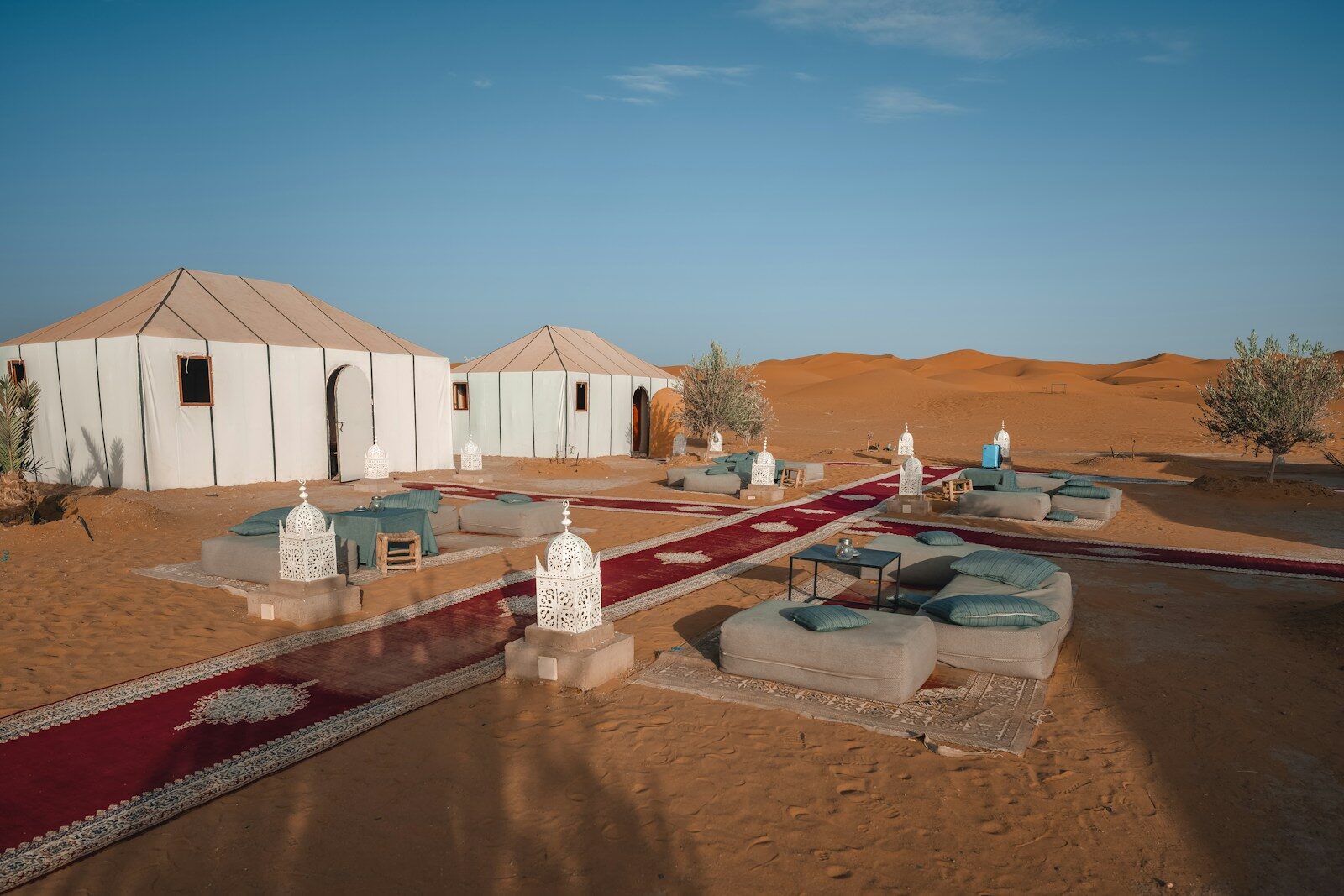
These are the camps included in most shared desert tours Marrakech agencies sell. Expect a Berber-style tent for two to six people, simple beds with blankets, and a shared toilet and shower block, sometimes without hot water. Dinner is usually soup, tagine and fruit, followed by drumming around a fire. Comfort is basic, but the stars are the same everywhere.
Comfort camps
A step up gives you a private tent for your party, often with a proper bed, electricity for charging, and a shared but clean bathroom block with hot water. This tier is the best value for many couples. It removes the stranger-in-the-next-bed problem without luxury prices.
Luxury camps
Luxury camps add private bathrooms inside each tent, real mattresses, heating in winter, sometimes air conditioning in summer, and much better food. A few sit far enough into the dunes that you see no other camp, and at least one in Erg Chebbi has a pool. These camps usually require a 4×4 transfer rather than a camel ride, so ask how you arrive. For many couples, they are the most comfortable way to experience the Moroccan desert.
Five questions to ask about any camp
Before you choose a camp, or a tour that includes one, ask the operator:
- Is the tent private or shared with other travelers?
- Is the bathroom inside the tent, or in a separate block?
- Is there hot water, electricity and heating?
- Is the camp inside the dunes or near the road?
- Do we arrive by camel, 4×4 or both, and can we switch if someone cannot ride?
Get the answers in writing. “Luxury camp” is not a regulated term, and photos on booking pages are not always of the camp you will actually sleep in.
Is It Safe to Go to the Sahara Desert in Morocco?
For most visitors, yes. Millions of tourists travel in Morocco each year, and the desert routes around Merzouga, Zagora and M’Hamid are well-trodden tourist circuits. Most trips are trouble-free, and a well-run Morocco Sahara desert tour has fewer weak points than driving the route yourself. That said, “safe” is not the same as “risk-free,” and the risks on a Sahara trip are specific enough to plan for.
Before you go, read the official UK Foreign Office travel advice for Morocco. It covers the current terrorism threat level, road safety, the closed Algerian border and advice for women travelers, and it is updated whenever conditions change. Canada’s travel advice adds a useful desert-specific rule: stay in designated tourist areas in the south, and use only official guides recommended by hotels, licensed agencies or local tourist authorities.
Road safety is the biggest real risk
The most dangerous part of a desert tour is usually the drive, not the desert. Morocco has a poor road safety record, and the Tizi n’Tichka pass combines hairpin bends, slow trucks and drivers in a hurry. A good operator uses a well-maintained vehicle, a rested driver and seat belts that work. Ask about all three, and speak up if your driver is speeding.
Heat, cold and the sun
Summer afternoons in Merzouga regularly pass 40°C (104°F), and winter nights in the dunes can drop close to 0°C (32°F). Dehydration and heat exhaustion are the most common health problems in the Moroccan desert in summer. Carry more water than you think you need, wear a hat and a scarf, and avoid long camel rides in the middle of the day.
Scams and pressure selling
The most common problem on a Morocco Sahara desert tour is not danger but money. Expect commission stops, pressure to buy a scarf “required for the desert,” and the occasional promise that does not hold, such as a transfer to Fes that turns out to cost extra. Book through a licensed agency or a reputable platform, keep the itinerary and inclusions in writing, and never pay a street tout in full up front. Our Morocco travel safety guide covers the common scams in the cities too.
Safety for women and solo travelers
Several well-known travel writers have described harassment by guides on cheap desert tours, so this deserves a direct answer. Thousands of women take a Morocco Sahara desert tour without problems, and the risk drops sharply when you choose carefully:
- Book an operator with a long record of recent reviews, and read what solo women say
- Choose a private tent rather than a shared one
- Stay with the group after dark, and decline invitations to walk off alone “to see the stars”
- Keep your phone charged and share your itinerary with someone at home
- Report bad behavior to the agency and the booking platform, which is far easier when you booked online
The border and remote areas
Merzouga and M’Hamid both lie close to the Algerian border, which is closed and patrolled. Never wander off into the desert without a guide, and never try to drive desert tracks alone toward the border. On an organized tour you will not go near it.
What Is the Best Morocco Sahara Desert Tour for You?
There is no single best desert tour in Morocco, but there is a best Morocco Sahara desert tour for each kind of trip. Match yourself to the closest profile below.
First-time visitors starting in Marrakech
Book a 3-day trip to Erg Chebbi, private if your budget allows, with a comfort or luxury camp. If Fes comes next on your route, make it a 4- or 5-day one-way tour instead and skip the long drive back.
Travelers starting in Fes or the north
A 2- or 3-day round trip from Fes to Merzouga is the most efficient Morocco Sahara desert tour of all. The drive is shorter, the Middle Atlas scenery is beautiful, and you can continue to Marrakech instead of returning if your route runs south.
Couples and honeymooners
Spend the extra on a private tour and two nights in a luxury camp deep in Erg Chebbi. The second night is when the trip changes from a schedule into a stay: a slow morning, a camel ride with no one else around, a visit to the Gnawa musicians of Khamlia.
Families with children
Keep driving days short. Either fly to Errachidia and stay two nights near Merzouga, or break the road from Marrakech into three days. Ask for a 4×4 transfer to camp so younger children do not need to ride a camel for an hour.
Adventurous and repeat travelers
Head for Erg Chigaga. A private 3-day trip from Marrakech or Ouarzazate, with one or two nights in a small camp, gives you the most remote version of the Moroccan desert that is still easy to organize.
Travelers with only two days
Go to Zagora and accept smaller dunes, or skip the overnight and take an Agafay evening instead. Trying to cram Merzouga into two days from Marrakech means roughly 18–20 hours in a vehicle, and it is almost never worth it.
9 Tips for Booking a Morocco Sahara Desert Tour
These are the habits that separate a smooth trip into the Sahara desert in Morocco from a frustrating one. None of them cost much, and most cost nothing.
- Book before you arrive, or through your riad. Street touts in Jemaa el-Fna are the riskiest channel. A licensed agency, a reputable platform or your riad’s trusted partner gives you a record of what you paid for.
- Check the licence. Travel agencies in Morocco are regulated under Law 11-16. A legitimate company can give you its registered name and licence details.
- Ask which desert you will actually reach. “Sahara” can mean Merzouga, Zagora or Agafay. Ask for the name of the dune field and the town.
- Get the inclusions in writing. Lunches, entry fees, local guides, sandboarding and the transfer to camp should be listed one by one.
- Choose your camp deliberately. Confirm a private tent and the bathroom type, and ask how far the camp is from the road.
- Avoid the long return if you can. A one-way tour from Marrakech to Fes, or the reverse, turns the hardest day into a scenic one.
- Pick your season. March to May and late September to November are the most comfortable. Summer is brutal at midday, and winter nights are freezing.
- Carry cash. Card machines are rare on this route. Bring enough dirhams for lunches, water, tips and extras.
- Read the cancellation terms. Many booking platforms offer free cancellation up to 24 hours ahead. Direct operators often ask for a 10–30% deposit.
If you are still deciding between a desert-focused trip and a broader circuit, compare options in our Morocco tours guide, which covers multi-day tours that include the Sahara as one stop among several.
Best Time to Visit the Sahara Desert in Morocco
The season changes a Morocco Sahara desert tour more than most travelers expect. The dunes are the same all year, but the heat, the cold and the light are not.
Spring (March to May) and autumn (late September to November) are the most comfortable months. Days are warm, nights are cool rather than freezing, and long camel rides are pleasant. These are also the busiest months, so book good camps a few weeks ahead.
Summer (June to August) brings afternoon temperatures above 40°C (104°F) in Merzouga. Camel rides move to early morning and late evening, and full-day treks are usually replaced with shorter outings. Prices can be lower, but choose a camp with air conditioning or at least good ventilation.
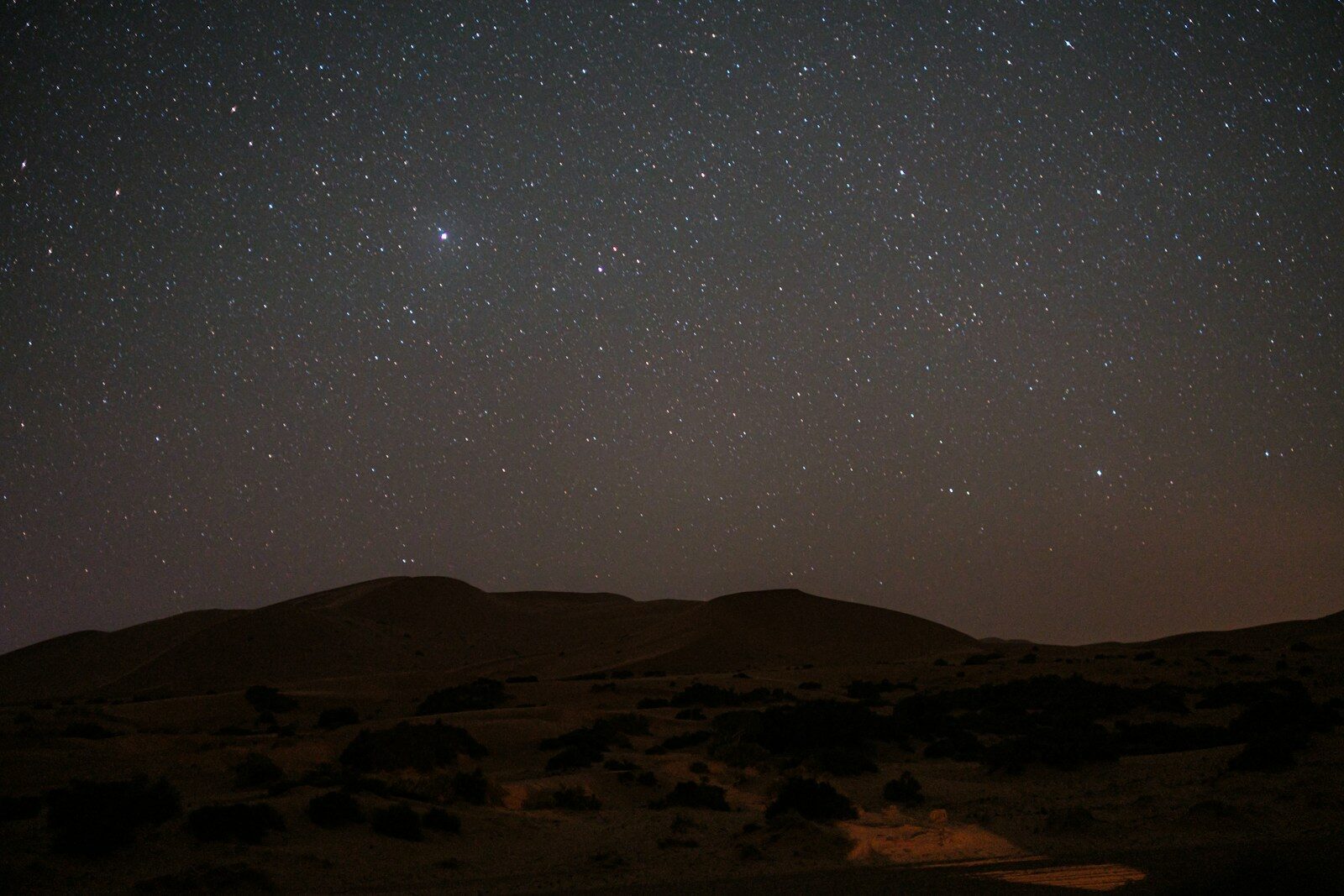
Winter (December to February) gives clear skies, sharp stars and quieter dunes. Nights in the Moroccan desert can drop close to freezing, so choose a camp with heaters and thick blankets, and pack a proper jacket. The Tizi n’Tichka pass occasionally closes after snow, so leave a spare day in your plans.
Sandstorms are most likely in spring, when strong winds can hide the dunes for an afternoon. They rarely cancel a trip, but a scarf and sunglasses make them far more bearable. Ramadan dates move each year, and while tours still run, some roadside restaurants close during daylight hours.
Is a Desert Tour Worth It in Morocco?
For most travelers, a Morocco Sahara desert tour is worth it by a wide margin. Ask people what they remember most from a trip to Morocco and the night in the dunes comes up again and again: the silence after the generators switch off, a sky so dark the Milky Way casts a glow, the sand turning red at sunrise.
It is not worth it for everyone, though. Be honest with yourself about these trade-offs:
- Time: from Marrakech, a 3-day trip spends most of its hours on the road. If you have five days in Morocco, the desert may crowd out everything else.
- Comfort: budget camps are basic, and camel rides are uncomfortable for many people after 30 minutes.
- Motion sickness: the Atlas roads are long and winding. Bring medication if you are prone to it.
- Expectations: the stops on the way are often rushed, and some exist mainly to sell you things.
A desert tour is clearly worth it if you have at least seven days in Morocco, if Fes or Marrakech is already on your route, and if you choose the trip deliberately rather than taking the first offer. It is harder to justify if you have four or five days and would spend half of them in a minibus.
When it is not the right moment, an Agafay evening is a fine substitute, and the Sahara will still be there on your next trip. You can find more ways to fill a short stay in our list of things to do in Marrakech.
Morocco Sahara Desert Tour FAQ
Is there a trip to the Sahara Desert in Morocco?
Yes. Organized trips to the Sahara desert in Morocco leave every day from Marrakech and Fes, and smaller numbers start in Ouarzazate, Zagora and even Agadir. The most popular trip is a 3-day tour from Marrakech to the Erg Chebbi dunes near Merzouga, with one night in a valley hotel and one night in a desert camp.
How much does a tour of the Sahara Desert cost?
A shared 3-day Morocco Sahara desert tour from Marrakech costs about 1,200–1,650 MAD ($120–$170 USD) per person with a standard camp. Private 3-day tours run about 2,750–4,750 MAD ($280–$480 USD) per person. Two-day Zagora trips start around 630 MAD ($64 USD), and high-end private trips with luxury camps can reach 6,000–7,000 MAD ($600–$700 USD) or more. Lunches, drinks and tips are usually extra.
Is a desert tour worth it in Morocco?
For most visitors, yes. A night in the Moroccan desert, with a camel ride at sunset, a quiet camp and a sunrise over the dunes, is the highlight of many trips. It is less worth it if you have only four or five days in the country, because a tour from Marrakech spends most of its time on the road. In that case, an Agafay evening is a good alternative.
What is the best desert tour in Morocco?
For most first-time visitors, the best desert tour in Morocco is a 3-day Morocco Sahara desert tour to Erg Chebbi near Merzouga, ideally with a private tent. If you are traveling between Marrakech and Fes, a 4- or 5-day one-way tour is even better because it avoids the long drive back. Experienced travelers who want fewer crowds often prefer a private trip to Erg Chigaga near M’Hamid.
Which city in Morocco is closest to the Sahara Desert?
The closest city to the Erg Chebbi dunes is Errachidia, about 130 km from Merzouga, with an airport that has domestic flights. The closest towns are Rissani and Erfoud. Of the main tourist cities, Fes is closer than Marrakech: about 470 km from Merzouga, compared with about 560 km from Marrakech. For Erg Chigaga, the gateway towns are M’Hamid, Zagora and Ouarzazate.
Is it safe to go to the Sahara Desert in Morocco?
Yes, for most travelers the Sahara desert in Morocco is safe to visit on an organized tour. The real risks are road accidents on mountain passes, heat in summer, cold nights in winter, scams on cheap tours and, for some women, harassment by guides. Book a licensed, well-reviewed operator, choose a private tent, stay with your group at night and check official travel advice before you go.
What should I pack for a night in the Sahara?
Moroccan desert nights are cool even in summer, so pack a warm layer in every season, a hat, a scarf for wind and sand, sunscreen, sunglasses, a headlamp, a refillable water bottle and cash in dirhams. Take only a small overnight bag to camp and leave larger luggage in the vehicle or at your hotel. Closed shoes or sandals that do not fill with sand make the dune walks much easier.
Plan Your Trip to the Sahara Desert in Morocco
The right Morocco Sahara desert tour starts with three decisions: which dunes, which city, and how many days. Settle those first, and the price, the camp and the operator become much easier to choose.
For most travelers, that means Erg Chebbi, a start in Marrakech or Fes, and at least three days, with a one-way route if Fes or Marrakech is next on your trip. Spend a little more on a private tent and a well-reviewed operator, and read the official travel advice before you leave.
Your next step is simple: pick your starting city, then compare two or three operators side by side using the nine booking tips above. When you are ready to map the full route, our Morocco desert tour route comparison has the day-by-day plans, and our Morocco itinerary guide shows where the desert fits in a one- or two-week trip.