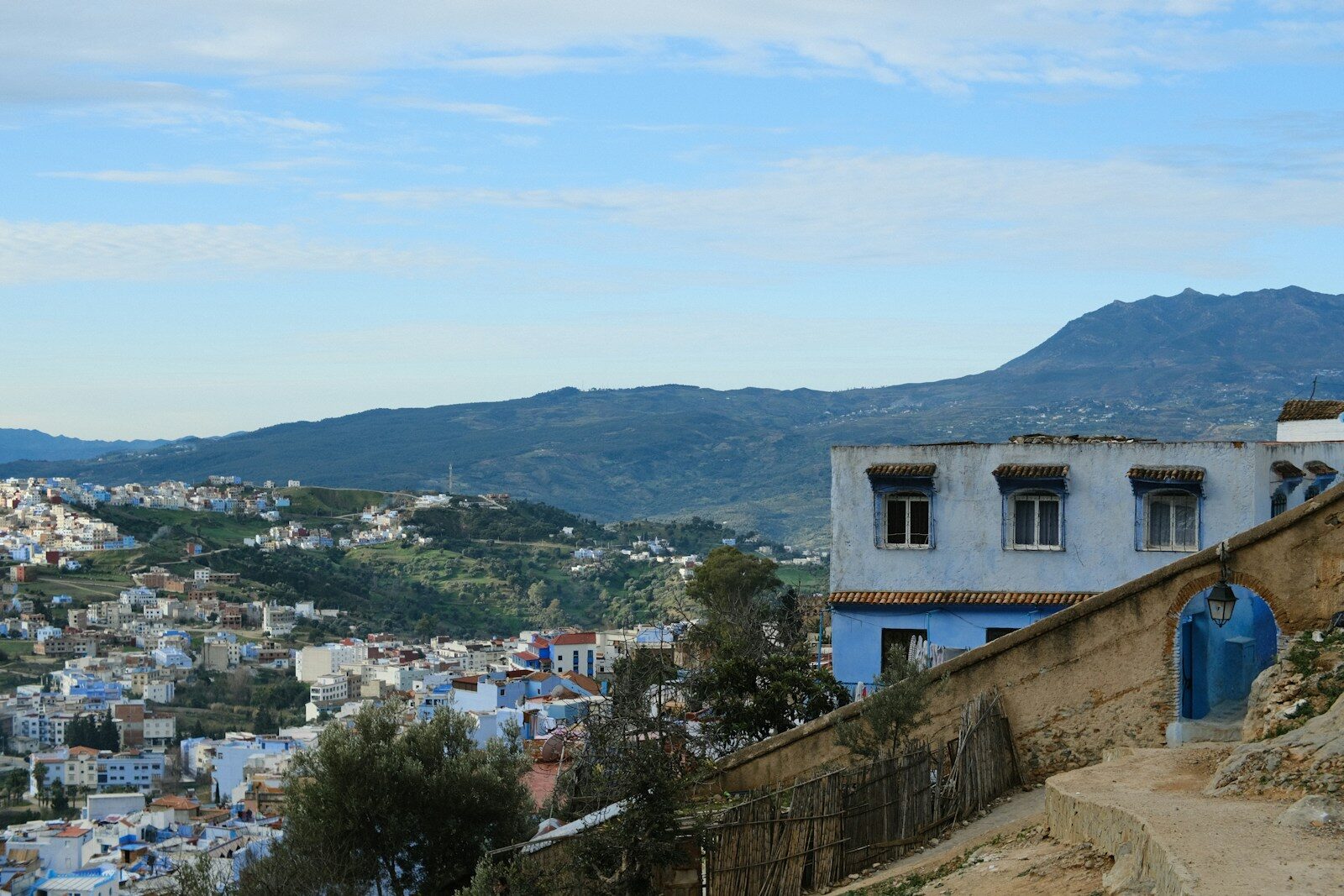
Chefchaouen sits at roughly 600 meters in Morocco’s Rif Mountains, and from the hillside above town its old medina looks like someone spilled a tin of sky-blue paint down the slope. For more than five centuries this was a closed mountain refuge. Today it is one of the most photographed small towns in North Africa, and still one of the calmest places to spend a few days in the country.
That calm is the real surprise. After the noise of Marrakech or the maze of Fes, the blue city feels slow, cool and walkable. Shopkeepers say hello and then let you browse. Cats sleep on painted steps. In the evening the main square fills with families, not tour groups.
This guide is for travelers who have seen the photos and now need the practical version: why the walls are blue, what to see, where to sleep, where to eat, how to get there and how long to stay. It also covers the parts most blog posts skip, such as the kasbah museum, the old medina gates, real costs in dirhams and the day trips into Talassemtane National Park.
Chefchaouen at a Glance
Before the details, here is the short version. Chefchaouen is a small town of around 40,000 people in northwest Morocco, about two hours by road from Tangier and four to five hours from Fes. Locals usually call it Chaouen, or Chefchaouen in full on road signs.
| What you need to know | Quick answer |
|---|---|
| Where it is | Rif Mountains, northern Morocco, Tangier-Tetouan-Al Hoceima region |
| Founded | 1471, as a fortress against Portuguese raids |
| Nickname | The Blue Pearl, or the blue city |
| Ideal stay | 2 nights; 3 if you want to hike |
| Best months | April to June and September to October |
| Nearest airports | Tangier, Tetouan and Fes |
| Getting around | On foot; cars cannot enter the medina |
| Daily budget | About 500 to 1,500 MAD per person, mid-range |
Who Chefchaouen suits best
The town rewards slow travelers, photographers, hikers and anyone who wants a break between the big imperial cities. It suits couples and families with older children who can manage steep steps. It is a weaker fit for travelers who want nightlife, beaches or big monuments. If that sounds like you, pair it with Tangier or Tetouan rather than giving it three full days.
How it fits into a wider trip
Most visitors slot Chefchaouen into a northern loop: Tangier, Chefchaouen, then Fes, before heading south to the Sahara or Marrakech. If you are still shaping your route, our Morocco itinerary guide lays out tested routes from five days to three weeks, including the best place to add the blue city without long backtracking.
Why Is Chefchaouen Blue? The Story Behind the Walls
This is the question every visitor asks, and the honest answer is that nobody knows for certain. The paint has several origin stories, and locals will happily tell you a different one at each café. What historians do agree on is the timeline: the town was not always blue, and the color spread mainly in the twentieth century.
A fortress first, a refuge second
Chefchaouen was founded in 1471 by Moulay Ali Ben Rachid, a local leader of the Banu Rachid, as a hidden base for fighting Portuguese forces on the coast. The site was chosen because it was hard to find and hard to reach. That isolation is the reason the town feels so different from the rest of Morocco.
Within a generation the fortress became a town. After the fall of Granada in 1492, Muslim and Jewish families expelled from Andalusia settled here. They brought whitewashed walls, tiled roofs, wrought-iron window grilles and courtyard houses. Look up at the red-tiled roofs today and you are looking at Andalusia, not the Sahara.
The Jewish quarter theory
The most repeated explanation links the blue to Chefchaouen’s Jewish community. In Jewish tradition, blue recalls the sky and the divine, and a blue thread appears in the prayer shawl. Jewish families who arrived in the 1930s, many fleeing persecution in Europe, are often credited with painting the mellah, or Jewish quarter, blue.
Older residents have told travel writers that much of the medina was white until fairly recently, with blue concentrated in the Jewish streets. Most of the community left after 1948, and the last Jewish family is reported to have left in 1968. The blue stayed, then kept spreading.
Other theories you will hear
- Mosquitoes. Some locals say the blue keeps insects away. There is no strong evidence for it, but you will hear it often.
- Keeping cool. Others say pale blue limewash makes houses feel cooler in summer. Limewash itself reflects heat, whatever the tint.
- Water and sky. Some link the color to the Ras El Maa spring or to the Mediterranean, which is not far to the north.
- Tourism. The least romantic answer, and partly true: once photos of the blue alleys spread, residents and the municipality had every reason to keep painting.
How the Morocco blue city look is kept alive
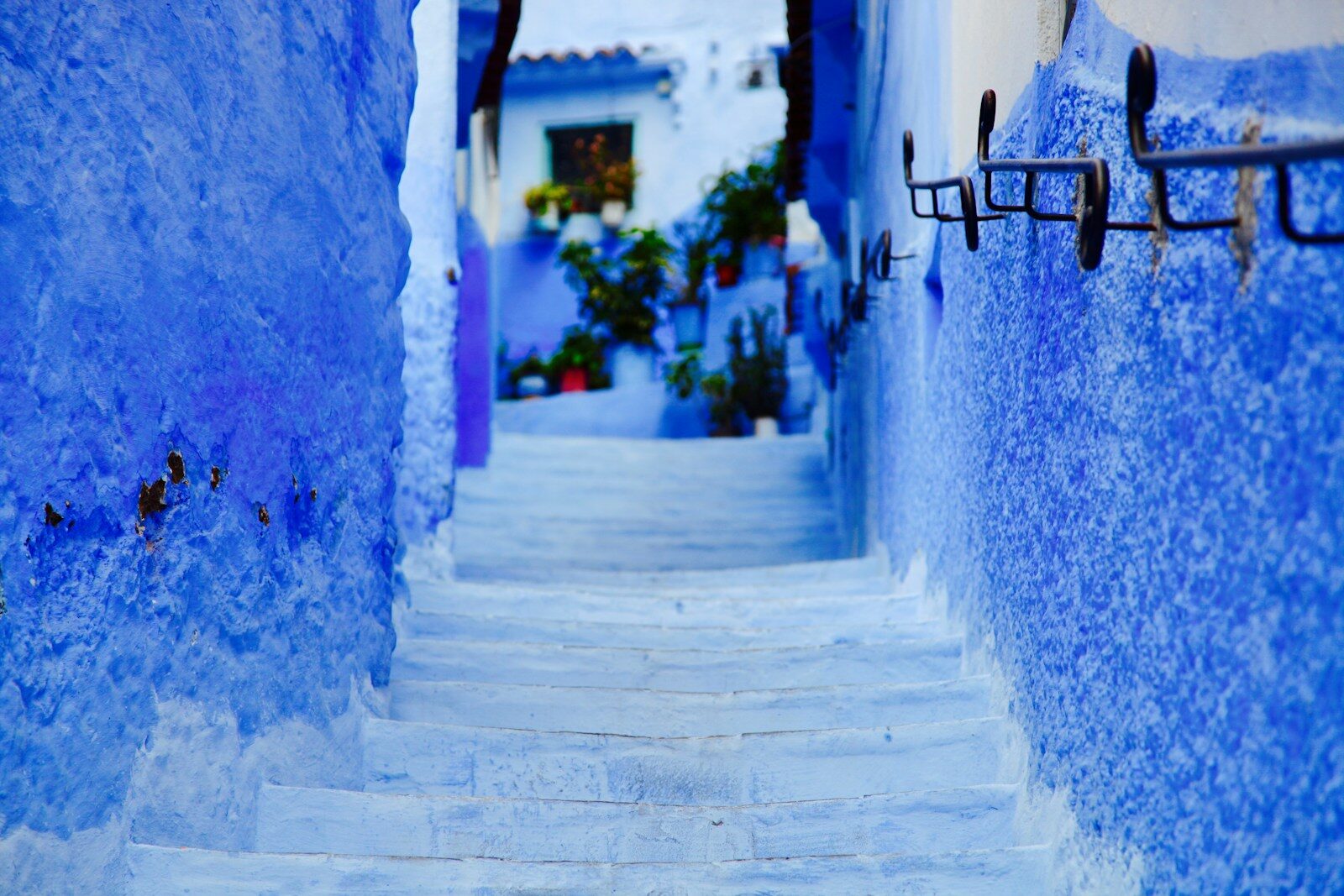
Today the blue is maintained, not inherited. Households repaint walls and steps regularly, many before Ramadan or ahead of the spring season, using limewash tinted with powdered pigment. You can see the pigment for sale in small shops, piled in bright blue cones.
The result is that no two alleys match. Some are a deep cobalt, others close to turquoise or periwinkle. The town feels like a living painting precisely because ordinary people keep repainting it. Respect that: it is their front door, not a set.
The Chefchaouen Kasbah and Outa el Hammam Square
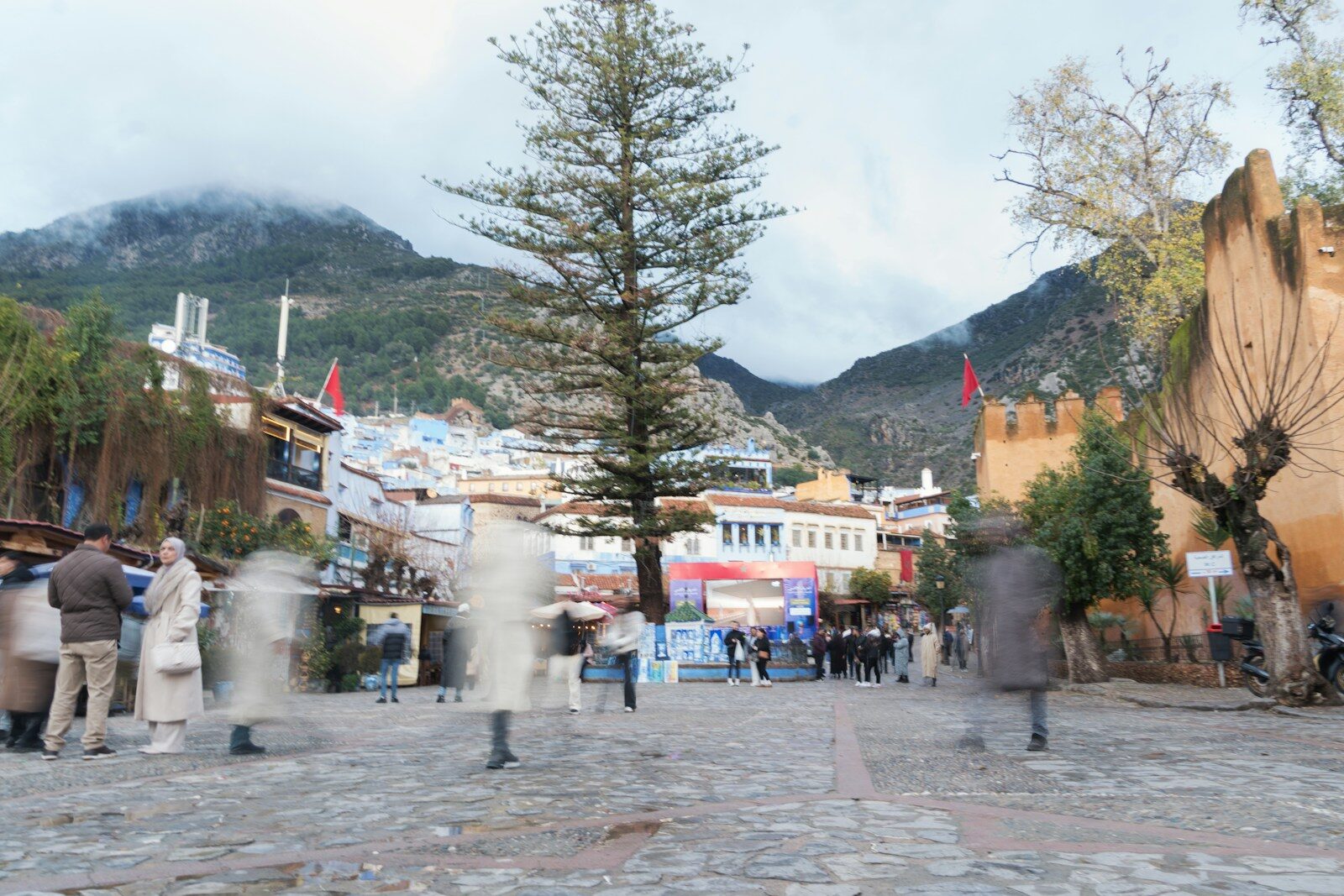
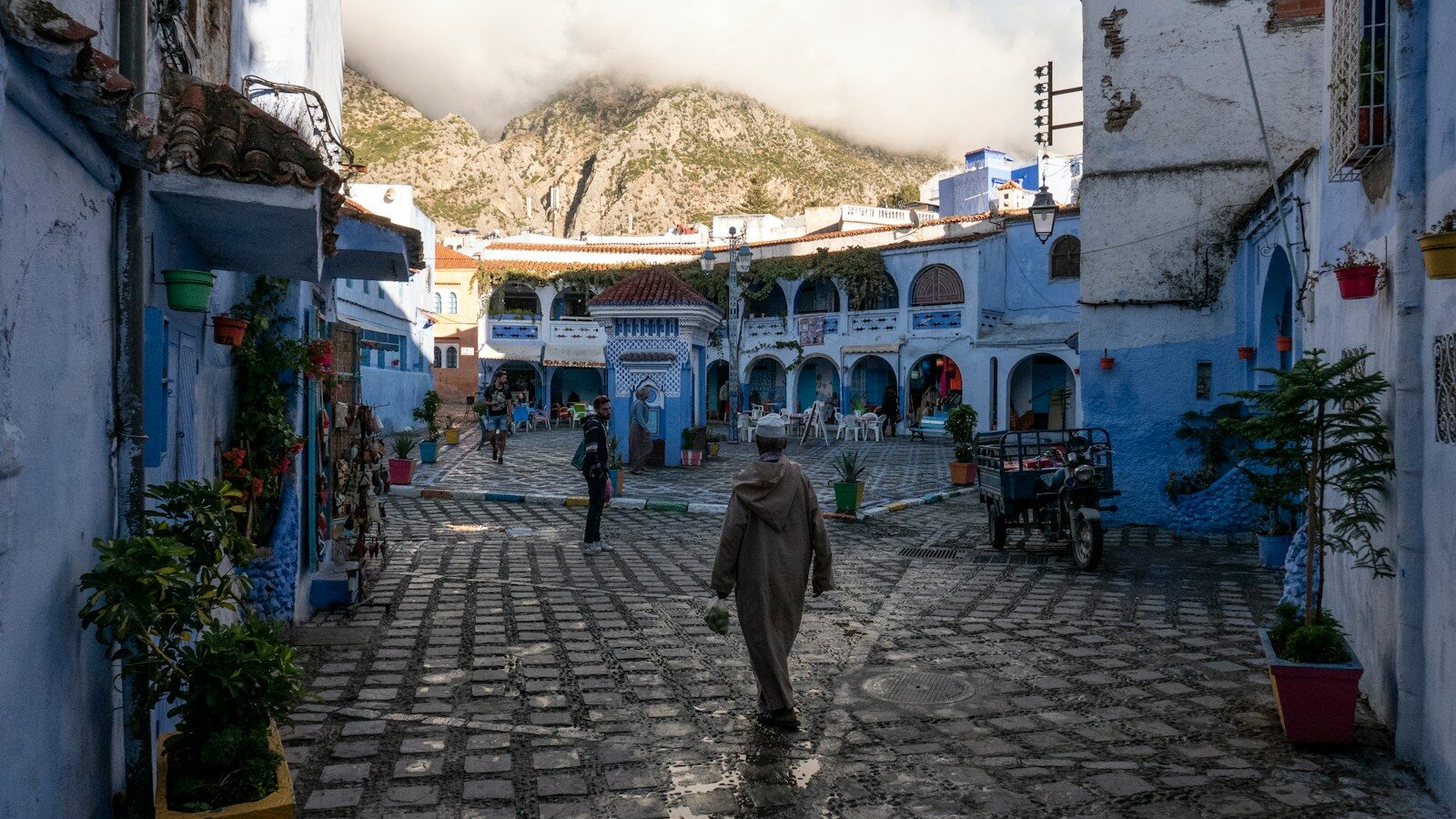
Every walk through the medina eventually lands in Plaza Outa el Hammam, the shaded main square. On one side stands the red-walled kasbah, on another the Grand Mosque with its unusual octagonal minaret, and around the edges a ring of cafés and restaurants with terraces.
What you will find inside the Chefchaouen kasbah
The Chefchaouen kasbah is the fortress the town grew around. Its outer walls form a rough rectangle of about 72 by 52 meters, with square towers and bastions, and a taller tower on the west side. The building is the oldest part of town, and its earthy red walls are a striking contrast to the blue all around it.
Inside you will find:
- An Andalusian-style garden with orange trees and benches, one of the quietest spots in the medina.
- The Ethnographic Museum, opened in 1985, with regional costumes, musical instruments, old weapons, pottery and photographs of the town.
- The old prison cells, small and dark, a reminder of the kasbah’s role as a jail.
- The main tower, which you can climb for a view over the rooftops toward the mountains.
Opening hours, tickets and whether it is worth it
Opening hours are usually around 9 am to 1 pm and 3 pm to 6 pm, every day, but they change, so check at the gate. Travelers report foreign-visitor tickets of roughly 60 to 70 MAD, much higher than the old local price.
Is it worth it? If you enjoy history and want the tower view, yes, especially early in the morning when the garden is empty. If you only want photos, the free viewpoints above town are better. Budget 45 minutes.
The Grand Mosque and the square at night
The Grand Mosque dates from the fifteenth century. As in most of Morocco, non-Muslims cannot enter, but the eight-sided minaret is easy to admire from the square. Come back after dark, when the terraces light up, local families stroll and the call to prayer echoes off the mountains. It is the best free show in town.
Chefchaouen Gate by Gate: Walking the Old Medina Walls
The medina is small, but it is steep and full of dead ends. The simplest way to understand it is to walk its edges, using the old gates as markers. Each Chefchaouen gate, or bab, marks a historic way in, and several are still the names locals use for their neighborhoods.
The gates worth knowing
Local guides usually count seven historic gates. You do not need to find all of them, but these five are the ones you will hear about most:
- Bab El Ain. The main gate and the most common way into the medina from the new town. Taxis drop you nearby, and the arch makes a natural meeting point.
- Bab El Souk. Historically the market gate, close to the busy shopping lanes.
- Bab El Onsar. At the top of the medina, near the Ras El Maa spring and the path to the Spanish Mosque. The Onsar quarter around it is one of the bluest and most photographed areas.
- Bab El Mahrouk. Its name means the burnt gate, and it gives onto the outer edge of the old town.
- Bab El Hammar. A quieter gate in the residential part of the medina, with fewer shops and more everyday life.
A self-guided gate walk
Start at Bab El Ain around 8 or 9 am, when the light is soft and the lanes are still empty. Walk uphill through the souk toward Outa el Hammam, then continue up to Bab El Onsar and the spring. From there, loop back down through the quieter residential lanes toward Bab El Hammar and Bab El Mahrouk.
The full loop takes about 90 minutes at an easy pace with photo stops. Wear shoes with grip: the painted steps get slippery after rain. If you get lost, walk downhill. In Chefchaouen, downhill almost always leads you back to a gate or the main road.
Should you hire a guide?
You do not need one to enjoy the medina. Still, a licensed local guide for two hours can point out the mellah, the old hammams, the communal bread ovens and the stories behind each gate. Ask your riad to book one, agree on the price and length in advance, and avoid men who offer to “show you the way” in the street.
Things to Do in Chefchaouen Morocco: 15 Best Experiences
So, what to do in Chefchaouen once you have seen the square? The list below mixes the classic sights with the quieter experiences that make the town worth an overnight stay. Most are free, and nearly all can be done on foot.
1. Get lost in the blue medina
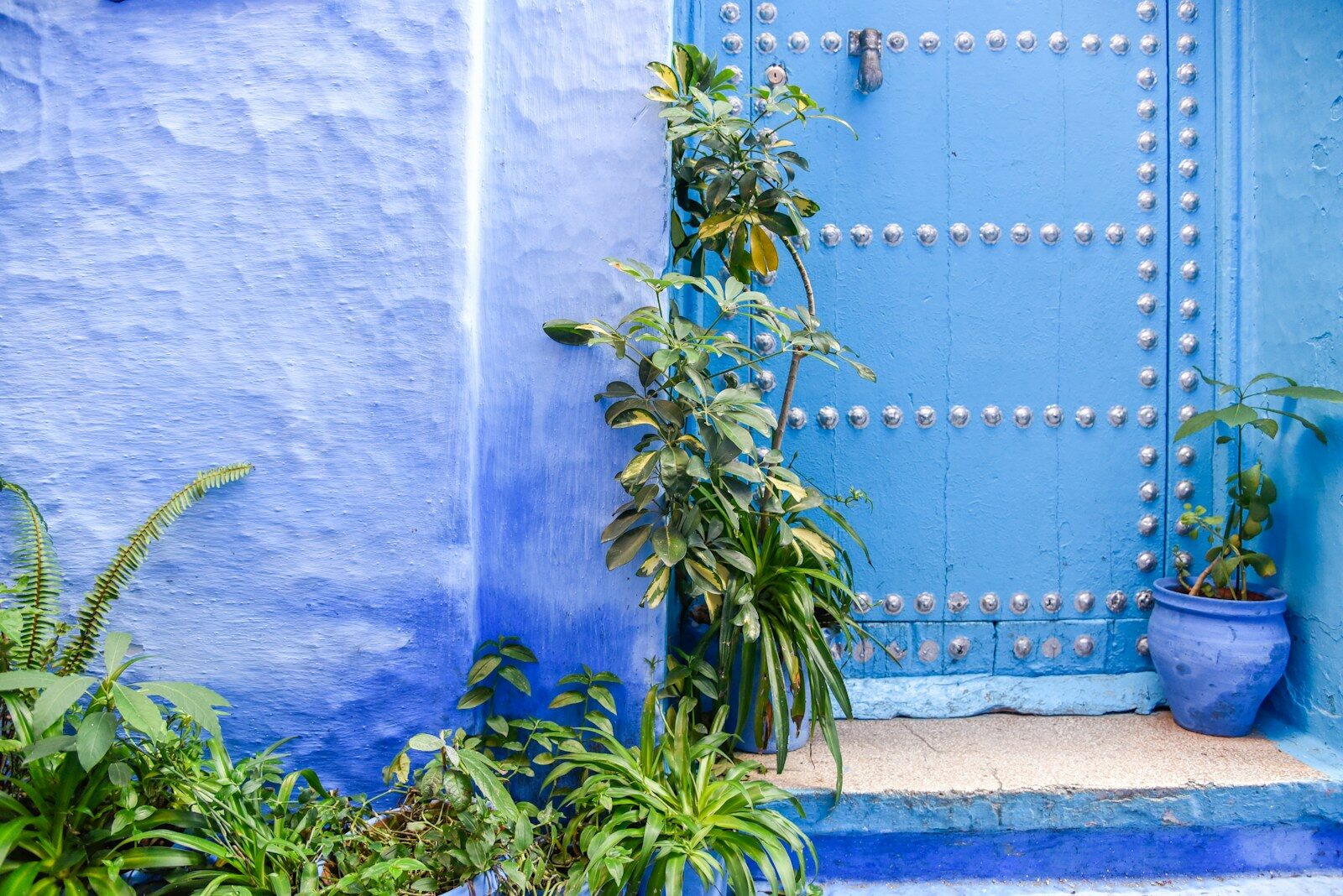
This is the main event. Put the map away for an hour and wander. The Onsar and Souika quarters have the deepest blues, the prettiest doors and the most potted plants. Mornings before 10 am are best for empty lanes and soft light.
2. Watch sunset from the Spanish Mosque
The Spanish Mosque, also called the Bouzafer Mosque, was built by the Spanish in the 1920s on a hill east of town and never really used for worship. The walk takes 20 to 30 minutes from Ras El Maa on a clear path. Go an hour before sunset; it gets crowded, but the view over the whole blue city is unbeatable.
3. Visit the Ras El Maa spring
Ras El Maa, meaning “head of the water,” is where mountain water tumbles down beside Bab El Onsar. Women still wash laundry in the stone basins, children splash in summer and small cafés line the stream. It is the coolest spot in town on a hot afternoon.
4. Climb the kasbah tower
Covered above, but worth repeating: the tower gives a free-standing view over the square, the minaret and the rooftops. Pair it with a slow coffee in the kasbah garden.
5. Sit in Plaza Outa el Hammam
Order mint tea on a terrace and watch the square. It costs about 10 to 15 MAD and is the best way to feel the rhythm of the town, especially after 6 pm.
6. Shop for wool blankets and woven goods
Chefchaouen is known for hand-loomed wool blankets, striped Rif textiles, leather bags and woven baskets. You will still see looms working in small ground-floor workshops. Prices are calmer than in Marrakech, but polite bargaining is normal.
7. Taste fresh Rif goat cheese
The mountains around town are goat country, and fresh goat cheese is the local specialty. Order it in salads or simply with bread and olive oil. More on food further down.
8. Explore the old mellah
The former Jewish quarter sits close to the kasbah. There is little signage, so a guide helps, but even alone you will notice the different window shapes and balconies. It adds depth to the “why blue” story.
9. Try a traditional hammam
A local hammam is a steam bath with a vigorous scrub. Neighborhood hammams cost very little and run separate hours for men and women. Many riads can arrange a gentler private version.
10. Photograph the doors and stairways
The famous photo spots shift as residents repaint, so there is no single map. Look for blue stairways with potted plants and wooden doors with brass knockers, and always ask before photographing people or their homes. Some residents now ask a small tip for staged shots at their doorstep.
11. Take a cooking class
Several riads and small schools offer half-day classes where you shop in the souk and cook a tagine, salads and bread on a rooftop. It is a great rainy-day plan.
12. Hike to Jebel El Kelaa
The mountain behind town rises to about 1,600 meters. The trail starts above Ras El Maa and climbs through pine forest to wide views of the Rif. Allow five to six hours return, start early and take a guide if you are not an experienced hiker.
13. Visit the Akchour waterfalls
Akchour is the classic day trip. See the next section for details on getting there, the trails and God’s Bridge.
14. Watch the town wake up
Get up early once. Bakers carry trays of bread to the communal ovens, shopkeepers repaint steps and the mountains glow above the rooftops. It is the side of town that day-trippers never see.
15. Slow down on a rooftop
Many visitors rate this as their favorite activity: doing nothing on a riad terrace with a view. Chefchaouen is a place to rest between busier stops, and that is a valid plan. For more ideas across the country, see our list of things to do in Morocco, organized city by city.
What to See Beyond the Medina: Day Trips Into the Rif
The blue alleys are only half of the story. The town sits at the edge of Talassemtane National Park, a protected area of limestone peaks, river gorges and fir and cedar forest that is home to Barbary macaques. If you have a third day, spend it outside town.
Akchour waterfalls and God’s Bridge
Akchour is a small village about 45 minutes by car from town. From the parking area, two trails follow the river. One leads in about two hours to the main Akchour waterfall and its green pools. The other leads in roughly an hour to God’s Bridge, a natural rock arch high over the gorge.
A grand taxi for the whole car usually costs around 200 to 250 MAD each way, so share with other travelers if you can. Agree on a pickup time with the driver. Bring water, a swimsuit and shoes that can get wet. Simple cafés along the trail serve tagines and fresh orange juice.
Talassemtane hikes and villages
For a longer trip, local agencies run guided treks of two to four days through Berber villages, staying in simple mountain guesthouses. These walks are one of the best-kept secrets of northern Morocco and far quieter than the High Atlas.
Tetouan, Ouezzane and the coast
Tetouan, about an hour away, has a UNESCO-listed medina with strong Andalusian roots and far fewer tourists. On the way south to Fes, Ouezzane is a quiet pilgrimage town worth a coffee stop. In summer, the Mediterranean beaches near Oued Laou are a two-hour drive.
Hotels in Chefchaouen: Where to Stay for Every Budget
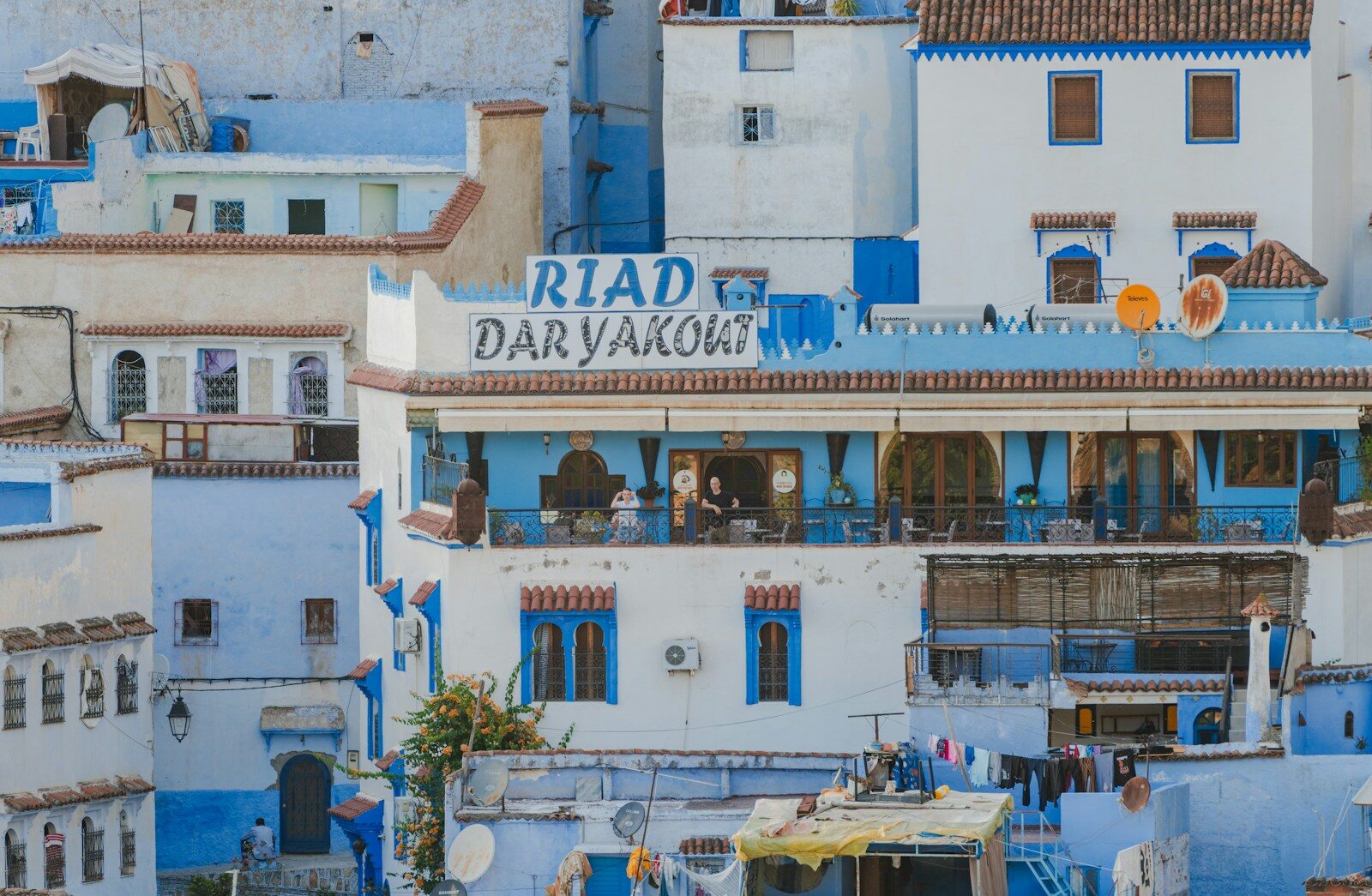
The choice of where to stay matters more here than in most towns, because the medina is steep and cars cannot enter. The best hotels in Chefchaouen are small riads and guesthouses, usually called dar, with a handful of rooms and a rooftop terrace.
Choosing your area
- Inside the medina is the most atmospheric choice. You wake up in the blue lanes and walk everywhere. The trade-off is carrying luggage up steps.
- Near Ras El Maa and the Onsar quarter puts you close to the spring and the Spanish Mosque path, at the top of town.
- Just outside the walls, near Avenue Hassan I or the road to Ras El Maa, gives easier taxi and car access and often a pool.
- In the countryside, a few rural inns offer space, fireplaces and silence, but you need a car or taxi.
Luxury and upscale stays
- Lina Ryad & Spa. A large, polished riad on the edge of the medina with an indoor pool, spa, steam room and rooftop views. One of the most comfortable options in town.
- Riad Cherifa. A small, stylish riad with around a dozen rooms and an outdoor pool set against a rock wall.
- Dar Echchaouen. A hotel on the road up to Ras El Maa with gardens, a seasonal outdoor pool and easy parking, a short walk from the medina.
Expect roughly 1,200 to 3,000 MAD per night for a double in this group, depending on season.
Mid-range riads with character
- Casa Perleta. A friendly guesthouse on Avenue Hassan I with traditional rooms and an easy location near Bab El Souk.
- Dar Zman. A restored guesthouse with brightly painted rooms and a well-loved rooftop breakfast.
- Hotel Casa Miguel. A comfortable mid-range hotel in the Andalusian quarter.
- Dar Besmellah. A family-run riad praised by travelers for warm hosts and home cooking.
Most mid-range riads cost around 500 to 1,100 MAD per night for a double, usually with breakfast.
Budget and backpacker options
- Casa Sabila. A simple, central guesthouse with private rooms, mint tea and a terrace breakfast.
- Hostel Baraka. A long-running backpacker favorite with a social atmosphere and private rooms.
Budget rooms often run 200 to 450 MAD per night. Rates are a guide only; prices rise sharply at weekends and during Moroccan holidays.
Outside town: Auberge Dardara
On the road toward Ouezzane, about 10 km from town, Auberge Dardara is a rural inn with rustic suites, fireplaces and an excellent restaurant. It suits road-trippers and families who want space and quiet.
Chefchaouen booking tips
A few rules make Chefchaouen booking simpler and avoid the most common surprises:
- Book ahead for weekends and holidays. Moroccan visitors from Tangier, Tetouan and Fes fill the town on Fridays and Saturdays, and in summer.
- Ask how far the walk is. Message the riad and ask how many minutes, and how many steps, from the nearest taxi drop-off. Many will send someone to carry your bags.
- Check heating in winter. From December to February nights are cold and damp, and not every room is heated.
- Confirm parking. If you drive, ask exactly where to park. Paid guarded lots near Bab El Ain and the Ras El Maa road are common.
- Read cancellation rules. Small riads often have strict policies, and some prefer cash on arrival.
- Compare direct prices. Many guesthouses reply quickly on WhatsApp and may offer a better rate or a free airport-transfer quote.
Chefchaouen Restaurants and What to Eat
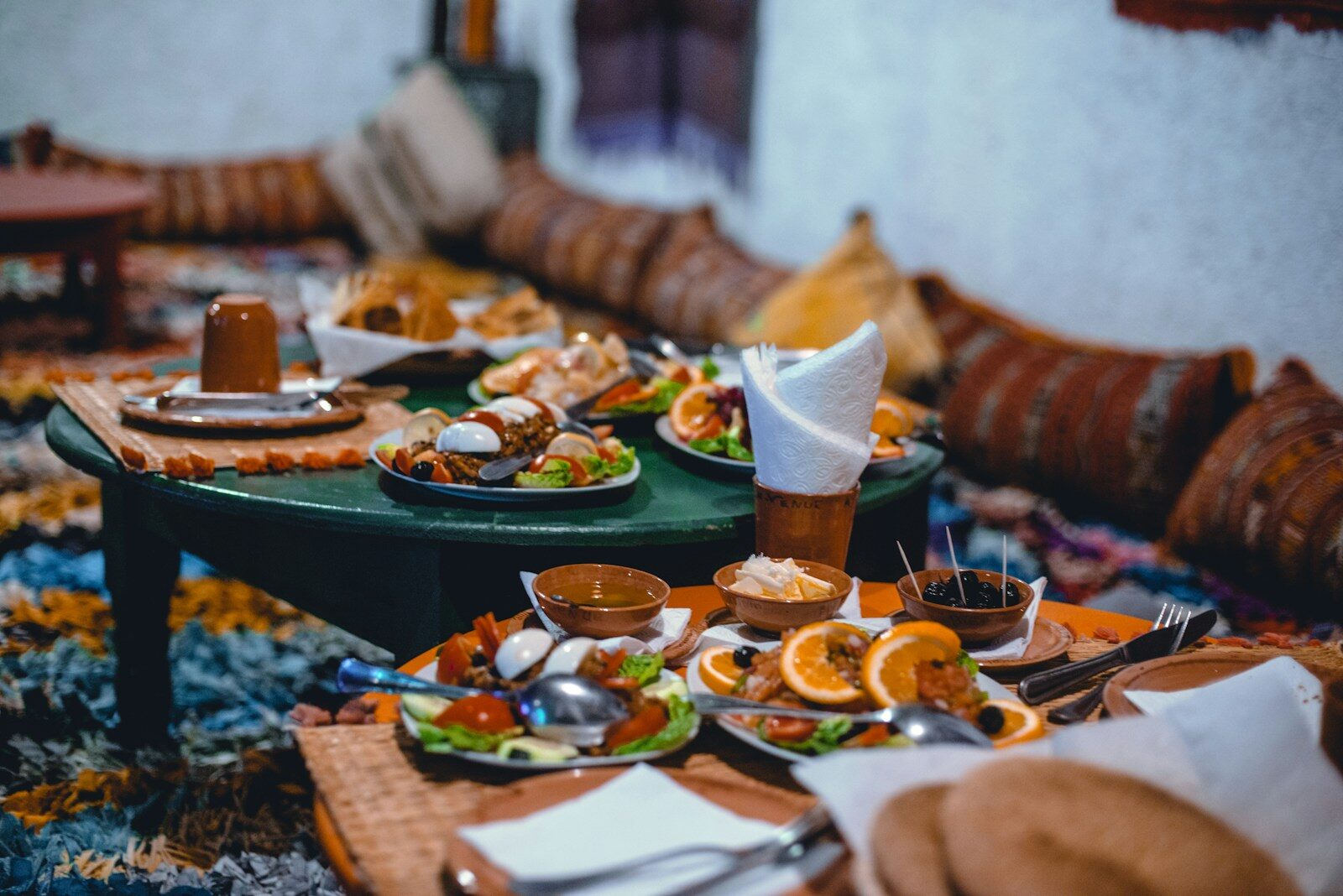
The food scene is small, but it is honest and good value. Chefchaouen restaurants lean toward Rif mountain cooking: goat, fresh goat cheese, olive oil, beans and slow-cooked tagines. Most places do not serve alcohol, and many close earlier than in big cities.
Dishes to look for
- Fresh goat cheese, called jben, in salads or with honey and bread.
- Goat or lamb tagine, often with prunes, almonds or vegetables.
- Bissara, a warming fava bean soup with olive oil and cumin, ideal on cold mornings.
- Rfissa or couscous, often served on Fridays.
- Fresh orange juice and mint tea everywhere, at very low prices.
Restaurants travelers love
- Restaurant Beldi Bab Ssour. Small, simple and consistently recommended for traditional dishes at fair prices. Expect a short wait at peak times.
- Casa Aladdin. A multi-level restaurant with a rooftop terrace overlooking the square and the kasbah. Go for the view at lunch or sunset.
- Restaurant Tissemlal (Casa Hassan). A long-standing address with a cozy dining room and a fireplace in winter, attached to the guesthouse of the same name.
- Twins Café-Restaurant. On the square, good for coffee, fresh juice and goat cheese plates.
- Chez Hicham. Known for its terrace and its generous goat cheese salad.
- Bab el-Ansar Café. A relaxed stop near Ras El Maa for tea after the Spanish Mosque walk.
What a meal costs
In tourist restaurants, a main course usually costs 60 to 110 MAD and a full meal with salad and tea about 100 to 160 MAD. Local snack stalls near the market sell sandwiches and soup for 20 to 40 MAD. Card payment is patchy, so carry cash.
Getting to Chaouen Morocco by Bus, Taxi or Car
There is no train or airport in town, which is part of why it stays calm. Getting to Chaouen Morocco means a road journey of two to six hours, depending on where you start. The good news is that every option is simple.
From Tangier
- CTM bus. Several departures a day, taking about 2.5 to 3 hours, with tickets usually 45 to 80 MAD.
- Private transfer. About 1 hour 45 minutes to 2 hours by car, the easiest choice if you land at Tangier airport. Expect roughly 700 to 900 MAD for the car.
- Grand taxi. Shared taxis run via Tetouan; you change cars there.
From Fes
The CTM bus takes about 4 to 5 hours on winding mountain roads, and the ticket costs roughly 80 to 110 MAD. Take motion sickness tablets if you are sensitive. A private driver takes about 3.5 hours and lets you stop in Ouezzane.
From Casablanca, Rabat and Tetouan
From Casablanca the bus takes around 6 to 6.5 hours. From Rabat it is about 4.5 to 5 hours by road; many travelers combine it with our Rabat travel guide for a few nights in the capital first. Tetouan is the closest city, about 1 to 1.5 hours away by bus or grand taxi.
Arriving in town
The bus station sits below the medina, a steep 20-minute walk from Bab El Ain. A petit taxi up the hill costs about 10 to 15 MAD. If you are driving, park in a guarded lot and walk in. For a fully organized trip with a driver, our guide to Morocco private tours explains routes, real costs and how to choose an operator.
Best Time to Visit and How Many Days You Need
The town’s mountain setting gives it a different climate from Marrakech or the coast. Summers are warm but rarely brutal, while winters are cold, wet and sometimes snowy on the peaks.
Season by season
- Spring (March to May). Green hills, wildflowers and mild days. The best overall season, though early March can be rainy.
- Summer (June to August). Hot afternoons, busy with Moroccan families, great for swimming at Akchour.
- Autumn (September to November). Warm, stable weather and fewer crowds. Excellent for hiking.
- Winter (December to February). Cold, damp nights, fewer visitors and cozy fireplaces. Pack warm layers.
How to beat the crowds
Tour buses from Fes and Tangier usually arrive between 11 am and 1 pm and leave by late afternoon. That leaves the early morning and the evening almost empty, even in high season. Plan your photo walks before 10 am, eat a late lunch when the day-trippers crowd the terraces, and save the Spanish Mosque for the hour before sunset, arriving early to get a good spot on the wall.
Weekends are busier than weekdays because Moroccan families drive up from the coast. If your dates are flexible, a Tuesday to Thursday stay gives you quieter lanes, easier restaurant tables and more choice of rooms at the same price.
One day in Chefchaouen
On a day trip, arrive by 10 am, walk the medina to Outa el Hammam, visit the kasbah, eat lunch on a terrace, walk up to Ras El Maa and finish at the Spanish Mosque before your driver leaves. It works, but you will miss the quiet mornings and evenings that make the town special.
Two days in Chefchaouen
Day one: medina wander, kasbah, square, Ras El Maa and sunset at the Spanish Mosque. Day two: early photo walk, the gate loop, shopping for blankets, a hammam or cooking class, and a long dinner on a rooftop. This is the ideal stay for most travelers.
Three days or more
Add a full day at Akchour and God’s Bridge, or the Jebel El Kelaa hike. With four or five days, add a night in Tetouan or a multi-day trek through Talassemtane. For help weighing this against the rest of your trip, our Morocco travel guide covers how many days first-time visitors really need.
Is the Blue City Morocco Safe? Costs, Etiquette and Scams
Many travelers rate the blue city Morocco’s most relaxed town for first-timers, and the reputation is deserved. Violent crime against visitors is rare, solo women generally report feeling comfortable and street hassle is mild compared with Fes or Marrakech.
Daily costs
| Item | Typical cost |
|---|---|
| Mint tea on the square | 10–15 MAD |
| Main course in a restaurant | 60–110 MAD |
| Kasbah museum ticket | about 60–70 MAD |
| Petit taxi in town | 10–15 MAD |
| Grand taxi to Akchour (whole car) | 200–250 MAD each way |
| Mid-range riad, double room | 500–1,100 MAD |
| Two-hour licensed guide | 200–400 MAD |
Etiquette and dress
Dress modestly: covered shoulders and knees are respectful for everyone, and you will attract less attention. Ask before photographing people, especially women and children. Keep your voice down in residential lanes at night; these are homes, not a theme park. During Ramadan, avoid eating or drinking openly in the street during daylight.
Common hassles to expect
- Hashish offers. The Rif is a cannabis-growing region, and you may be offered hashish in the street. Buying or carrying it is illegal for recreational use in Morocco. Say no and keep walking.
- Unofficial guides. Young men may offer to lead you to a viewpoint or your riad, then ask for money. A polite “la, shukran” (no, thank you) is enough.
- Doorstep photo fees. Some residents ask a small fee for photos at their decorated doors. It is fair to pay or move on.
- Slippery steps. The biggest real risk is a twisted ankle on wet, painted stairs.
For more advice that applies across the country, read our guide to Morocco travel safety, which covers the most common tourist mistakes and how to avoid them.
Official information
The Moroccan National Tourist Office keeps an official Chefchaouen page with background on the town, its crafts and nearby nature sites. It is a useful starting point for regional contacts and seasonal events.
Chefchaouen FAQ
Why is Chefchaouen blue?
Nobody knows for sure. The most common explanation is that Jewish residents painted their quarter blue, a color tied to the sky and the divine, especially from the 1930s. Other theories credit mosquitoes, cooling or tourism. Today residents repaint the walls regularly to keep the look.
What is the best way to see Chefchaouen in one day?
Arrive early, walk the medina to Outa el Hammam, visit the kasbah and its tower, eat lunch on a terrace, then walk to Ras El Maa and up to the Spanish Mosque for the panoramic view.
What are the best things to do in Chefchaouen Morocco?
Wander the blue medina, watch sunset from the Spanish Mosque, visit the kasbah museum, relax at the Ras El Maa spring, shop for wool blankets, eat fresh goat cheese and take a day trip to the Akchour waterfalls.
How many days do you need in Chefchaouen?
Two nights is ideal for most travelers. Stay three nights if you want to hike to Akchour or Jebel El Kelaa.
Which gate should I use to enter the medina?
Bab El Ain is the main gate and the easiest entry from the new town and taxi drop-off. Bab El Onsar is best if your riad is near Ras El Maa at the top of town.
Are hotels in Chefchaouen expensive?
No. Budget guesthouses start around 200 MAD a night, mid-range riads usually cost 500 to 1,100 MAD and the most upscale stays run up to about 3,000 MAD, with breakfast often included.
Is Chefchaouen worth visiting?
Yes, if you enjoy slow travel, photography and mountain scenery. It is less suited to travelers who want nightlife or major monuments.
Can you drive into the Chefchaouen medina?
No. Cars cannot enter the medina. Park in a guarded lot outside the walls and walk, or ask your riad to send a porter.
Plan Your Chefchaouen Trip
The blue walls are what bring people here, but the reasons to stay are quieter: cool mountain mornings, a square that belongs to locals at night, a spring where laundry still gets washed by hand and trails that climb straight into the Rif. Chefchaouen works best when you give it time and let the town set the pace.
If you take one action today, choose your nights. Book two nights in a medina riad, ask how far it is from the nearest taxi drop-off and plan your arrival from Tangier or Fes around daylight. Everything else, from the kasbah to the Spanish Mosque, falls into place once you are inside the walls.
Planning the rest of your route? Start with our Morocco itinerary ideas and fit two nights in the blue city between Tangier and Fes. It is the easiest way to see the north without long backtracking.