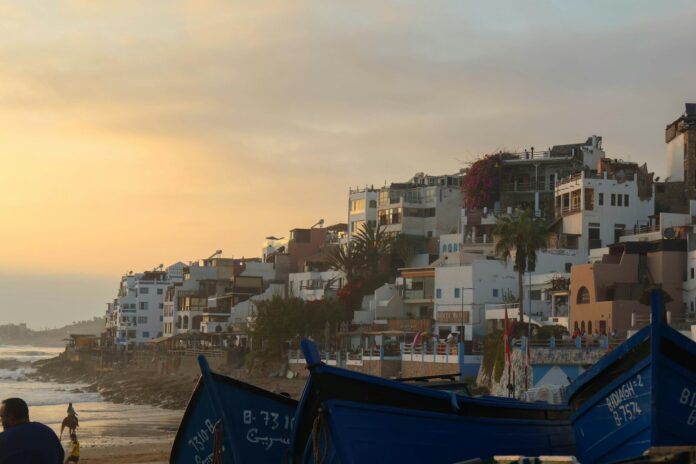
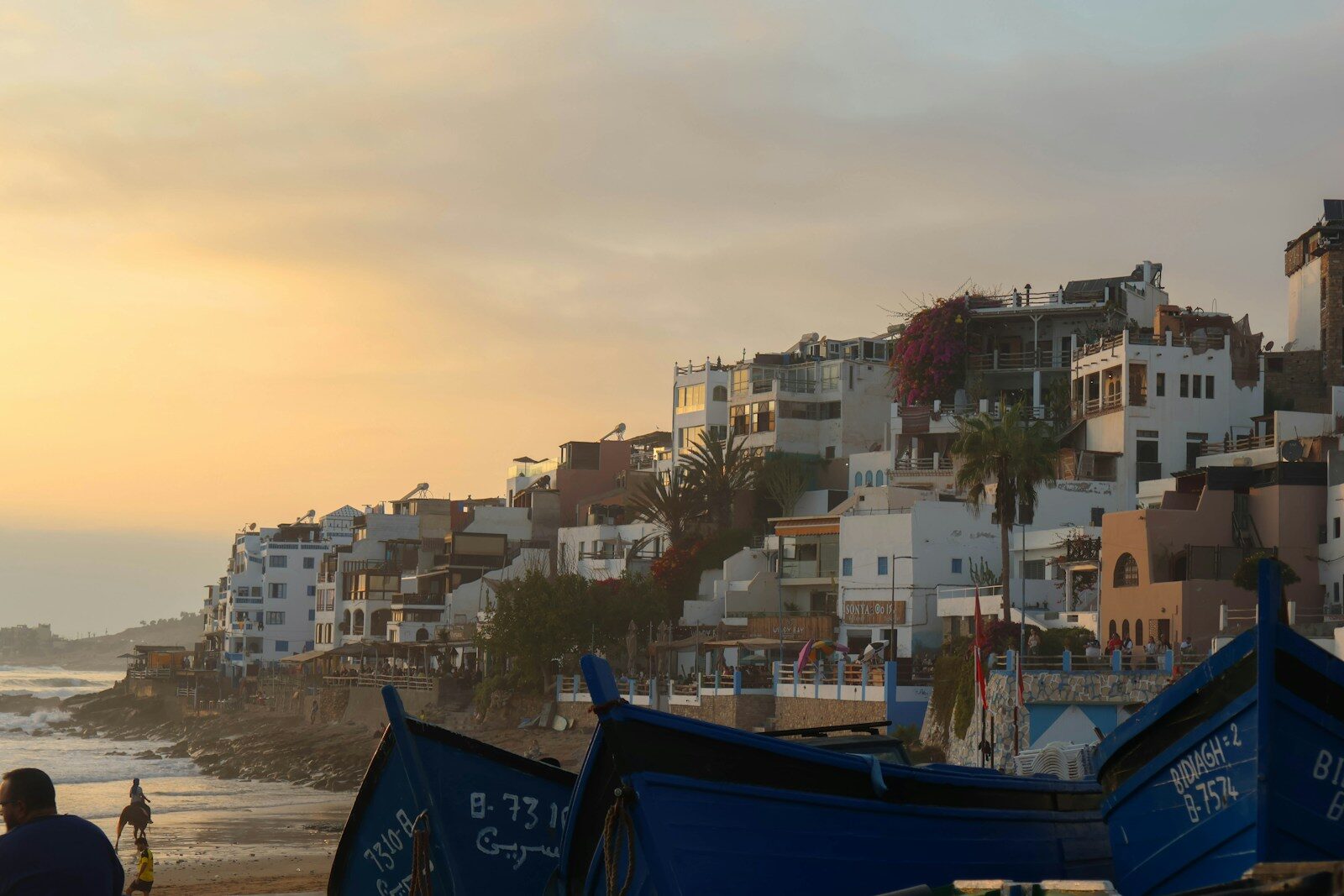
Taghazout sits 19 kilometers north of Agadir, and in that short stretch of coastline you get two completely different trips. One is a whitewashed fishing village where surfers eat tagine on plastic chairs above a right-hand point break. The other is a manicured resort bay with a Fairmont, a Hyatt Regency, a Marriott, a Hilton and an 18-hole cliff-top golf course.
Most guides blur the two. That is how travelers end up booking a quiet all-inclusive when they wanted to walk to the surf at dawn, or a noisy hostel bunk when they wanted a spa and a heated pool. This guide separates them clearly, so you can pick the version of the coast that fits the trip you actually want to take.
You will find the real travel times and costs from Agadir airport, Marrakech and Essaouira, a surf-spot breakdown by level, honest notes on where to stay at every budget, where to eat in the village and on the bay, and what to do once you have had your fill of waves. There is also a straight answer on safety, plus a ready-made plan for three, five and seven days.
Why Taghazout Deserves More Than a Day Trip
Plenty of visitors see the village for an afternoon on a tour from Agadir, take a photo of the painted boats and leave. That is a mistake, because the coast only shows its rhythm over several days: early glassy surf, a long lunch, a nap through the midday heat, then the whole village climbing the hill to watch the sun drop into the Atlantic.
The draw has always been the waves. Winter swells from the North Atlantic wrap around a string of rocky headlands and peel along them for hundreds of meters, which is why surfers have come here since the hippie-trail days. What changed over the last decade is everything around the waves.
The village and the bay are not the same place
The original village is compact: a main road, a maze of steep lanes, a small square, a fishing harbor and a beach lined with cafes. Accommodation here means guesthouses, surf houses, hostels and rented apartments.
Taghazout Bay is the planned resort zone that starts a few kilometers south, built under Morocco’s national tourism strategy and managed by the state developer SAPST. It runs along the beaches toward Tamraght and holds the international hotel brands, the golf course, residences and a promenade. A petit taxi or a 10-minute drive links the two, and many visitors happily split their time.
Who will love it, and who should skip it
The coast suits surfers of every level, yoga travelers, remote workers, couples who want sun without a big-city resort, and families who prefer a calmer base than central Agadir. Golfers increasingly come for a week of rounds and beach time.
It suits fewer people who want nightlife, big shopping or historic monuments. There are no grand medinas or palaces here, and alcohol is limited in the village itself. If you want a souk, Agadir’s Souk El Had is 30 minutes away, and Marrakech is a long half-day’s drive. Read our Agadir in Morocco guide if you are weighing the city as a base instead.
Where Is Taghazout in Morocco and How Far Is It From Agadir?
Taghazout in Morocco belongs to the Agadir-Ida-Outanane prefecture in the Souss-Massa region. It sits on the N1 coast road that runs north from Agadir to Essaouira, roughly halfway between Agadir and Cap Ghir, with the foothills of the High Atlas rising directly behind the beaches.
The short answer to the distance question is about 19 to 20 kilometers from central Agadir, or 20 to 30 minutes by car outside rush hour. From Agadir Al Massira airport it is a longer run, because the airport lies well south-east of the city. The Marriott on the bay lists the airport at 43 kilometers from the resort, and most drivers quote 45 to 60 minutes door to door.
Distances and times at a glance
| From | Distance | Typical time | Best option |
|---|---|---|---|
| Agadir city center | 19–20 km | 20–30 min | Bus 32/33 or taxi |
| Agadir Al Massira airport | 40–45 km | 45–60 min | Pre-booked transfer or grand taxi |
| Essaouira | about 155 km | 2.5–3 hours | Intercity bus or private car |
| Marrakech | about 260 km | 3–3.5 hours | Shuttle, bus via Agadir or private car |
| Paradise Valley | about 40 km | about 1 hour | Tour or taxi |
A quick geography lesson that saves money
Hotels in the resort zone usually give their address as kilometer 16 or 17 on the Route d’Essaouira, while the village itself sits closer to kilometer 19 or 20. Locals often name places by these markers, so “K17” in a booking can mean you are a few kilometers from the surf village, not in it. Check the map pin before you pay.
How to Get to Taghazout: Every Route and What It Costs
Getting here is easy, and you have options for every budget. The right one depends mostly on when your flight lands and how much luggage, or how many surfboards, you are carrying.
From Agadir airport
The simplest choice is a pre-booked transfer or a grand taxi from the rank outside arrivals. Expect roughly 250 to 350 dirhams for the whole car, with most fares settling around 300 dirhams. Agree the price before you load bags, and say up front if you have a board bag, since some drivers add a fee.
Most guesthouses and all the large resorts arrange airport pickups. This is worth it for late arrivals, because the public buses stop in the evening. Note that the Marriott states it does not run a shuttle, so ask your hotel directly rather than assuming one is included.
The budget route is a bus into Agadir followed by a local bus or shared taxi north. It costs well under 100 dirhams but takes 60 to 90 minutes or more, and it is painful with a surfboard.
From Agadir city
City buses 32 and 33, run by the operator ALSA, leave from near Souk El Had and the main bus station and run the coast road through Aourir and Tamraght to the village. They depart roughly every 30 minutes from early morning until around 8 p.m., take about 45 minutes and cost a handful of dirhams.
A private taxi from central Agadir usually runs 150 to 250 dirhams. A shared grand taxi is cheaper per seat, but you may need to change in Aourir. Agadir’s small orange petit taxis cannot legally leave city limits, so do not expect one to take you all the way.
From Marrakech and Essaouira
From Marrakech, the classic route is a CTM or Supratours coach to Agadir, then the local bus north. Surf shuttles such as Souk to Surf run direct, shared services for those who want to avoid the change. A private car costs around 1,200 dirhams and takes about three hours on the motorway and coast road.
From Essaouira, regular intercity buses on the coast route stop on the main road through the village, and you can flag one along the way. Our Morocco itinerary routes show how to slot the coast into a wider loop.
Driving yourself
Renting a car at Agadir airport gives freedom for day trips to Paradise Valley, Imsouane and Cap Ghir. The N1 is in decent shape, but drive defensively: overtaking on blind bends is common and trucks are slow on the climbs. Parking in the village is tight, so choose accommodation with a space or use the paid areas near the entrance.
Taghazout Surf Camp Guide: Spots, Seasons and Prices
Surfing is the reason the village exists on the travel map, and choosing the right Taghazout surf camp is the biggest decision most visitors make. The good news is that the area works for every level, as long as you match the spot to your skill.
The main surf spots, from north to south
The headlands around the village form one of the best collections of right-hand point breaks in Africa. Here are the breaks you will hear about most:
- Killer Point: the farthest north of the main breaks, reached by a track across the cliffs. It is a fast, powerful right named after the orcas once seen offshore, and it is for experienced surfers only.
- La Source and Mysteries: reef and point waves between Killer and Anchor that can work well when the famous spot is crowded.
- Anchor Point: the most famous wave in Morocco, a long right peeling along a boulder-lined point just north of the village. On a solid winter swell it connects for several sections and draws a crowd.
- Hash Point: a softer right in the heart of the village, popular with improvers. You can watch it from the cafe terraces with a mint tea.
- Panorama and Devil’s Rock: friendlier waves just south of the village that suit improvers and confident beginners.
- Banana Point and the Tamraght beaches: mellow, sandy-bottomed waves toward Aourir that are a favorite for lessons.
When to surf
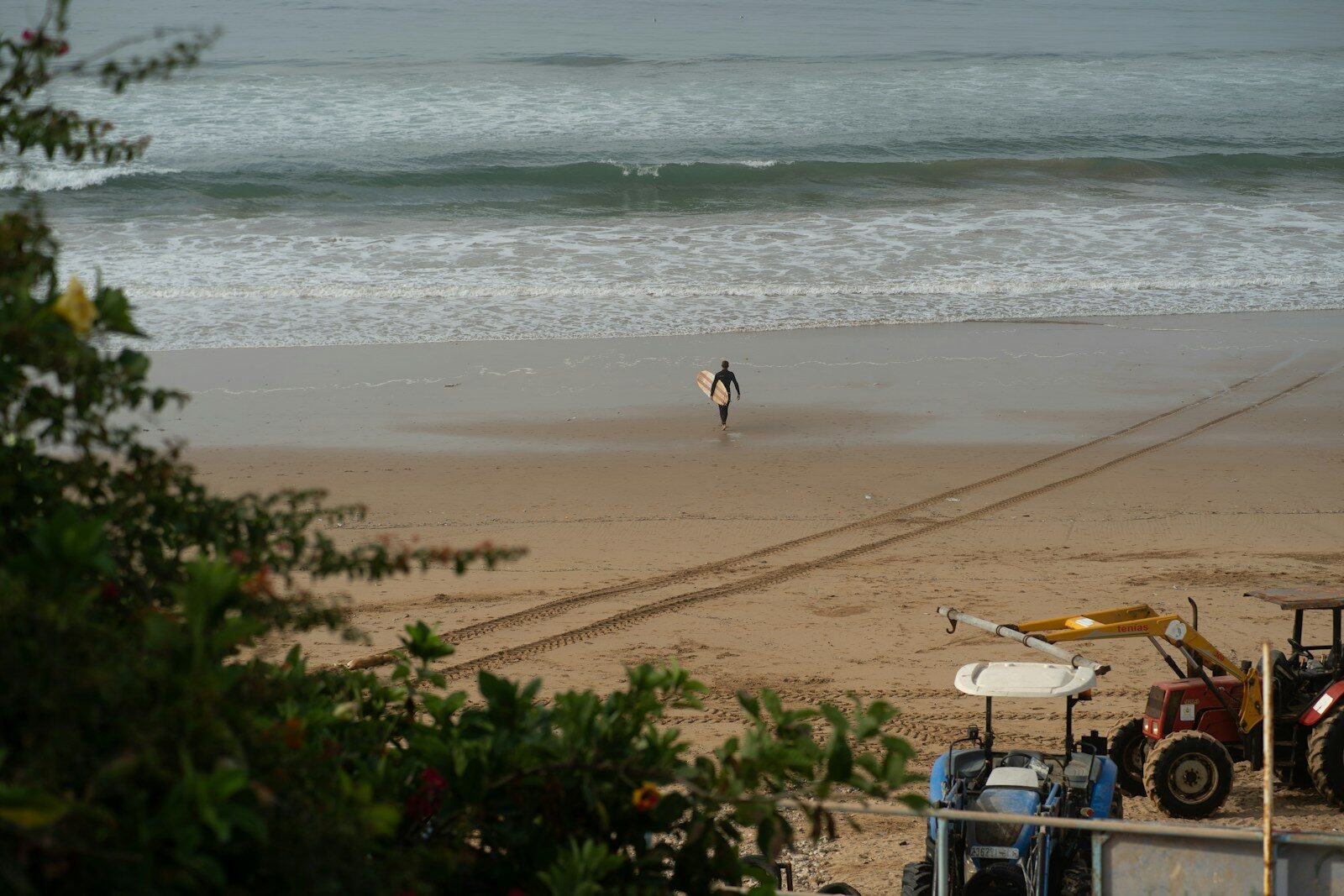
The prime season runs from October through March or April, when consistent north-west swells light up the points and the trade winds often blow offshore in the mornings. This is when Anchor and Killer are at their best, and when surf camps fill up.
Summer brings smaller, gentler waves that suit beginners perfectly. Water temperatures stay roughly between 17°C and 22°C through the year, so a 3/2 mm wetsuit covers most of it, with a 4/3 mm welcome on the coldest winter mornings.
What a surf camp includes and what it costs
A typical camp week bundles a bed, breakfast and dinner, daily lessons or guiding, board and wetsuit hire, and van transport to whichever beach has the best waves that day. Many add rooftop yoga and a trip to Paradise Valley.
Price depends more on the room than the surfing. As a guide from published packages, a shared or quad room in a well-reviewed camp starts around €450 to €550 per week, a private double can run €600 to €1,000 or more for two, and a premium surf hotel goes higher still. A single day lesson with lunch and transfer from Agadir sits around $65 to $70 per person.
How to choose a camp you will not regret
Ask how many students each instructor takes in the water, since four to six is a good ratio for beginners. Check whether lessons are on beginner beaches rather than the crowded points. Read recent reviews for safety comments, and confirm the camp is licensed, because the area has seen unauthorized hostels closed down.
Well-known names include Surf Maroc, which runs several properties including the Amouage surf hotel, Lapoint, Amayour, Mint Surf and Original Surf Morocco. Surfing etiquette matters at the points: wait your turn, do not drop in, and leave Anchor and Killer to the locals and experienced riders until you are ready.
Taghazout Beach and the Best Beaches Nearby
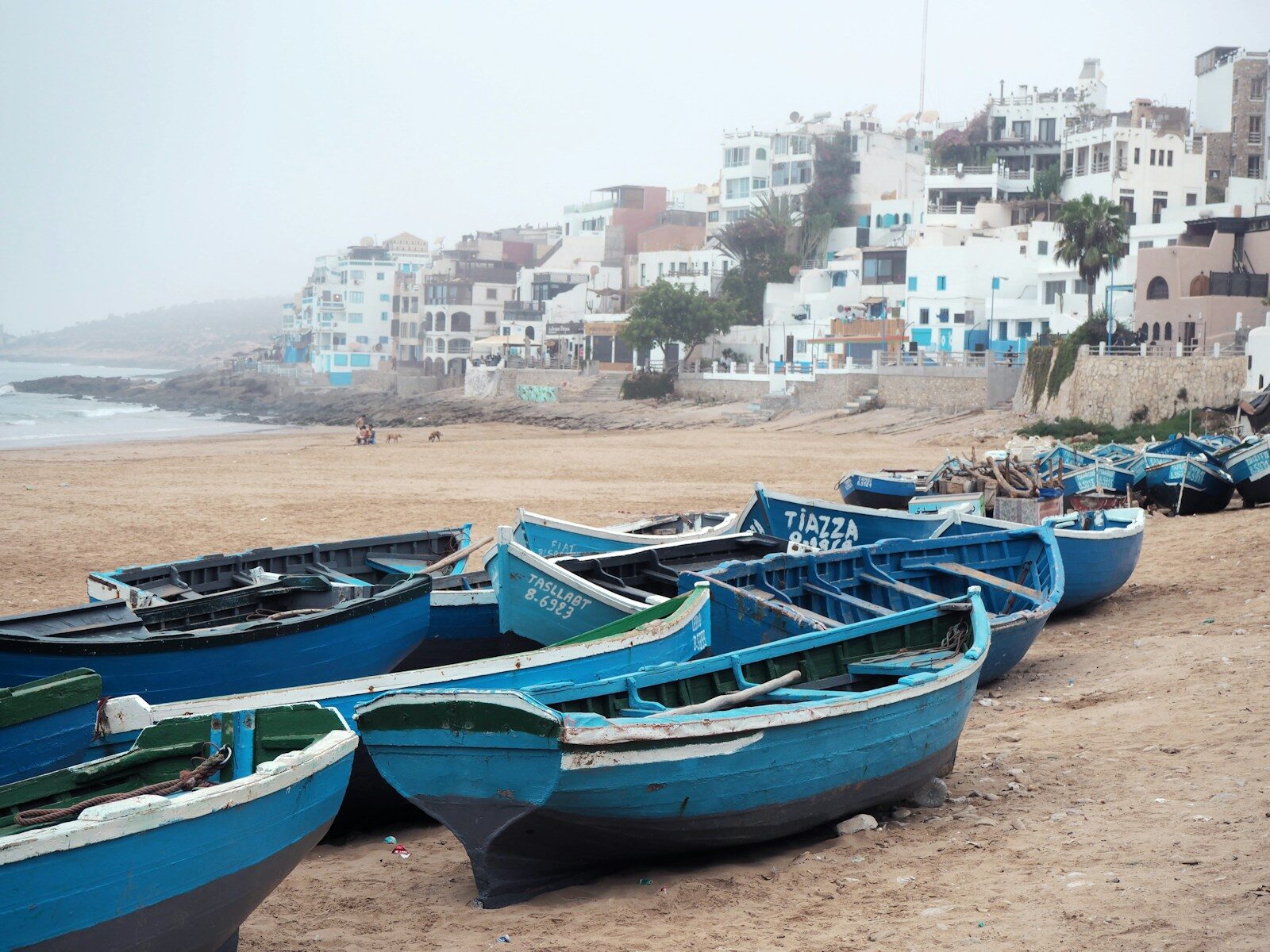
Taghazout beach is a gentle crescent of golden sand right in front of the village, framed by fishing boats, cafe terraces and colorful umbrellas. It is the social center of the town and, on small days, a decent place for beginners to catch white water.
The beach faces the open Atlantic, so swimming conditions change with the swell. On calm summer days families paddle in the shallows; in winter the shore break can be strong. There are few lifeguards, so swim near other people and stay out of the water near the rocky points.
Beaches to know along the coast
- Panorama Beach: just south of the village, quieter, with a beach-break and space for lessons and horse rides.
- Imourane Beach: the long stretch in front of the resort zone, backed by the big hotels and a beach promenade. Good for walks at sunset.
- Tamraght and Banana Beach: the sandy bays near the neighboring village, popular with surf schools and less crowded than the village beach.
- Aourir: known as Banana Village for its plantations, with a lively Sunday market a short drive south.
Beach etiquette in a conservative village
The village is relaxed but still traditional. Swimwear is fine on the sand, but cover up with a shirt or wrap when you walk to a cafe or through the lanes. Topless sunbathing is not acceptable anywhere, and asking before you photograph fishermen or local families will always be appreciated.
Where to Stay in Taghazout: Village Guesthouses vs Bay Resorts
Where you stay shapes the whole trip, so decide first whether you want the walkable village or the polished bay. Here is how the main options compare.
| Base | Best for | Typical style | Walk to the surf? |
|---|---|---|---|
| Village center | Surfers, solo travelers, couples on a budget | Surf houses, guesthouses, apartments | Yes |
| The bay resorts | Families, golfers, spa lovers | International five-star resorts | No, short drive |
| Tamraght | Longer stays, remote workers | Surf hostels, villas, quieter guesthouses | To beginner beaches |
The Taghazout Munga Guesthouse and other village favorites
For a boutique stay in the village, the Taghazout Munga Guesthouse is the name that comes up again and again. Built by owners Mounir and Gabriela, it has 15 individually designed rooms that make heavy use of salvaged wood and local stone, so no two rooms look alike.
Munga sits about two minutes’ walk from the sand and is known for its rooftop restaurant, the Favela, and for Munga Kitchen, which serves Italian-leaning lunches and dinners. Unusually for the village, both are licensed to serve beer and wine. Guest scores on major booking sites sit around 9.6 out of 10.
The trade-off is typical of the village: lots of stairs, no lift, and some noise from street-facing rooms and the bar. Nightly rates are often quoted around $150 to $250. If that is above your budget, the village is full of smaller surf houses and simple guesthouses where a private room can cost a fraction of that.
Taghazout Bay resorts at a glance
The bay now holds a lineup of major hotel brands along the beach between the village and Tamraght:
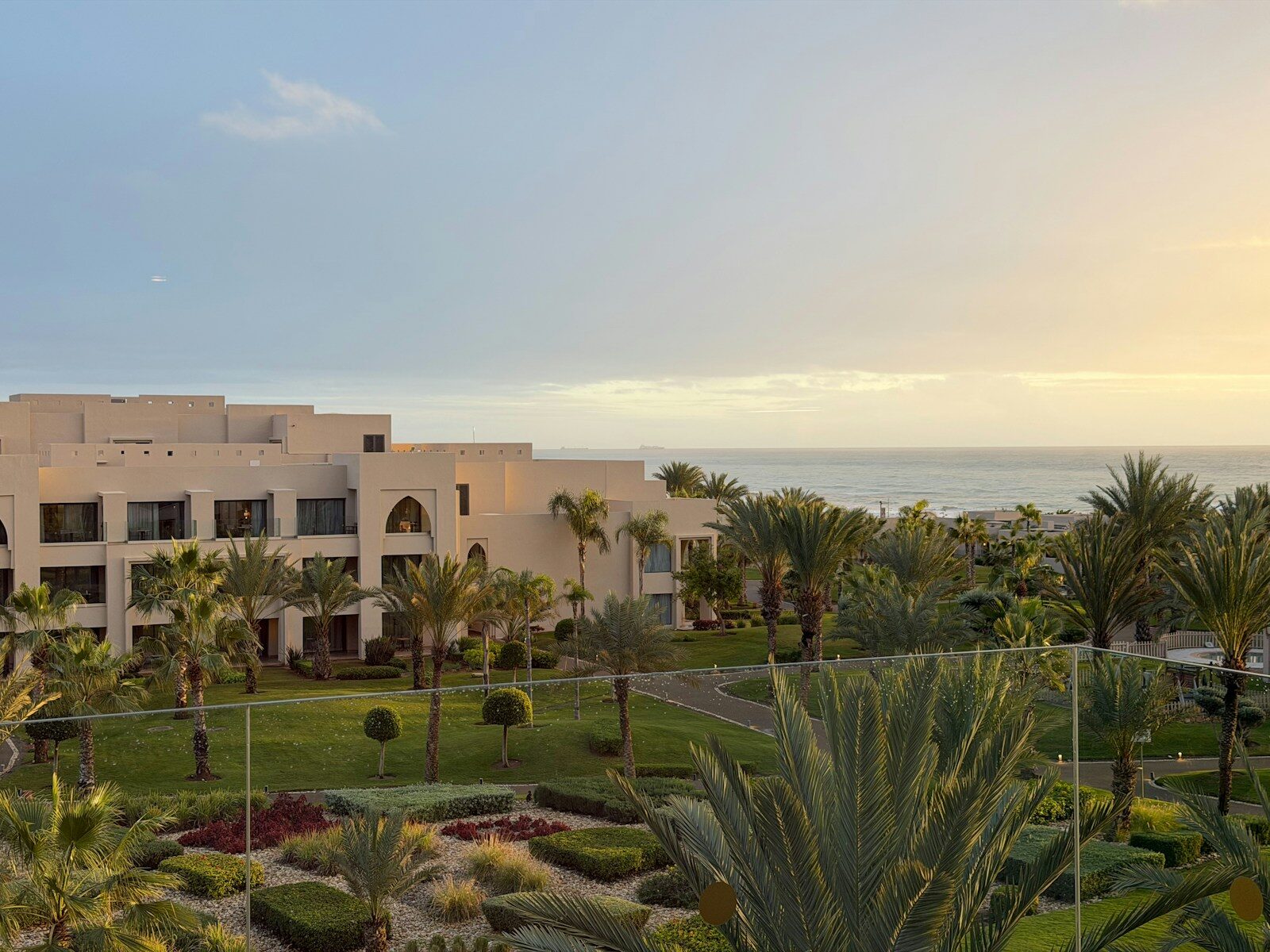
- Fairmont Taghazout Bay: spread over about 45 acres with 153 rooms, suites and villas, the largest villas having their own heated infinity pools and butler service. Dining includes Paper Moon Italian and the Tapa Wine Bar.
- Taghazout Bay Marriott Resort: the newest arrival, with five restaurants and bars, including the Mediterranean-style Rivage and the beachfront Chiringuito by Salt&Lime, plus pools, padel courts and the Saray spa.
- Riu Palace Tikida: a large all-inclusive with 504 rooms on 18 hectares, cascading pools and several themed restaurants.
- Hilton Taghazout Bay Beach Resort & Spa and Radisson Blu Surf Village: solid, family-friendly options closer to the surf scene.
- Hyatt Place: a lower-priced sister to the Hyatt Regency, popular with golfers.
The Taghazout Hyatt hotel in detail
The Taghazout Hyatt hotel most people mean is the Hyatt Regency, a five-star beachfront resort at kilometer 17 near Imourane Beach. It has about 190 rooms and suites, two restaurants and two bars, a spa with around ten treatment rooms, a kids’ club, a playground and three outdoor pools.
The Regency’s big advantage is its position right beside the Tazegzout course, which makes it the obvious pick for a golf-and-beach week. It is roughly a 6 to 10-minute drive from the village center, so you will need a taxi or the hotel’s help for surf lessons and dinners in town.
Booking tips that save money
Prices across the coast are lowest in January and in the shoulder months, and highest at Christmas, Easter and in August when Moroccan families arrive. Book the resorts early for school holidays. In the village, long-stay discounts are common, and many surf houses knock a good percentage off for a week or more.
Things to Do in Taghazout Beyond the Waves
Even dedicated surfers need rest days, and there is far more to do here than most people expect. These are the experiences worth planning around.
Watch the sunset at the Taghazout skatepark
The Taghazout skatepark sits on the hill just above the village and has become its unofficial evening meeting point. It was built by roughly 100 volunteers in about three weeks, led by the non-profit Make Life Skate Life together with local skaters and the municipality.
Every evening, kids, travelers and local skaters gather to ride the concrete bowls while the sun sinks over the ocean behind them. The local association that runs the park lends boards and pads to children who cannot afford them and offers regular classes. Visitors can book surf-skate sessions there, usually about 90 minutes for around $30, which are a clever way to practice surf movements on dry land.
Play a round of Taghazout golf at Tazegzout
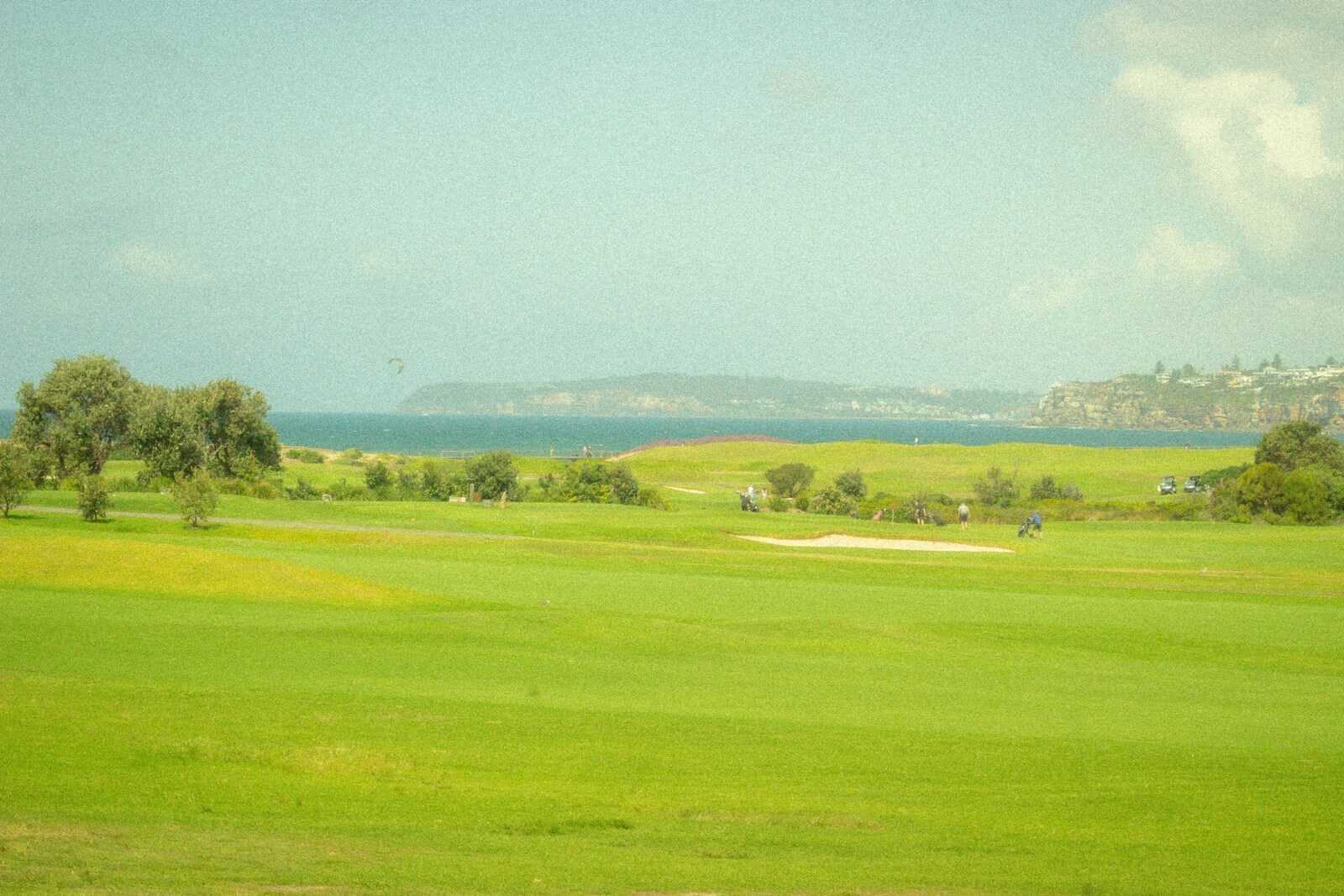
Taghazout golf means Tazegzout Golf, a course designed by Kyle Phillips on a bluff about 80 meters above the sea. The championship layout is a par 72 of roughly 6,730 meters across 76 hectares of argan-dotted hills, with an extra nine holes added more recently.
The course offers ocean views from almost every hole, and its closing holes on each nine are the ones golfers talk about. You do not need to be staying at a resort to play, clubs can be rented, and hotel concierges can book tee times. Reviews are mixed on pace of play in peak months, so book an early slot.
Yoga, hammams and slow mornings
Rooftop yoga is almost as common as surf lessons, and many camps include daily classes. For a hammam, the big resorts have full spas, while smaller hammam and massage studios in the village and Tamraght offer simpler, cheaper treatments. A scrub and massage after a week in salt water is hard to beat.
Day trips from the coast
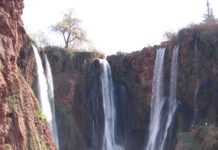
- Paradise Valley: about an hour inland, a palm-filled gorge with natural rock pools for swimming and cliff jumps. Go early on weekends.
- Imsouane: a fishing village about 80 kilometers north with one of the longest waves in Africa, perfect for longboarders.
- Cap Ghir and Tamri: dramatic lighthouses and cliffs, and a lagoon where you might spot the endangered northern bald ibis.
- Agadir: the Kasbah cable car, Souk El Had and the marina are all a short drive south.
More beach activities
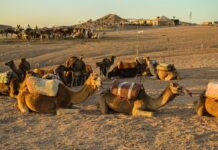
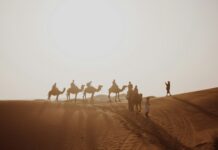
Horse and camel rides along Panorama Beach are easy to arrange, though prices vary wildly, so agree a fee first. Quad bikes and sandboarding trips head into the dunes south of Agadir, and jet skis are available on the bay. For more ideas across the country, see our list of things to do in Morocco.
Taghazout Restaurants: Where to Eat in the Village and the Bay
Taghazout restaurants range from plastic-chair grills to Italian fine dining, and the best plan is to mix both. Eating well here is cheap, the fish is very fresh, and the cafe culture is a big part of the appeal.
Village cafes and local favorites
- Dar Josephine: often called the best cafe on the main street, with tables under a grape arbor, Moroccan and French dishes, and a resident troop of friendly cats.
- Cafe Mouja: a stylish cafe behind the Surf Maroc shop with big windows over the ocean, good for breakfast and sunset drinks.
- Le Spot: a reliable, cheerful choice for pizza and quick meals.
- Tayought Cafe: a tiny beachside place where you can watch the sunset over tagine.
- Zan Zan, Teapot and Red Clay Vegan Cafe: laid-back spots beloved by surfers for smoothies, bowls and long breakfasts.
Eat like a local: grilled fish from the square
The most memorable meal in town costs very little. Buy fish or meat at the small market by the square, then have a nearby grill cook it on the spot with bread, salad and spicy sauce. Ask the price per kilo before you choose, and go at lunchtime when the catch is freshest.
Dining on the bay
The resorts are where you go for a big night out. At the Fairmont, Paper Moon serves refined Italian dishes and an excellent breakfast buffet, while the Tapa Wine Bar upstairs does inventive small plates. The Marriott’s Rivage and beach bar, and the Hyatt Regency’s restaurants, add Mediterranean and Moroccan menus with wine lists.
Practical tips on food and drink
Most village cafes do not serve alcohol, so plan accordingly. Munga’s restaurants and the resorts are the main exceptions. Card payments are accepted at the hotels and some newer cafes, but carry cash for the village. A main course in a local cafe often costs 50 to 90 dirhams, and a tagine lunch for two rarely tops 200 dirhams.
Is Taghazout Safe? An Honest Look
Yes, for the vast majority of visitors the village and the bay feel safe and relaxed. Violent crime against tourists is rare, the community is small, and the surf industry depends on visitors feeling welcome. The UK Foreign, Commonwealth & Development Office notes that most visits to the country are trouble-free, while reminding travelers to stay alert and respect local laws. You can read the official Morocco travel advice from the UK government before you go.
The real risks, and how to handle them
- The ocean: the biggest danger is the sea itself. Rocks at the points, strong currents and crowded line-ups cause most injuries. Surf within your level and take lessons on beginner beaches.
- Petty theft: keep valuables out of sight on the beach and do not leave phones on the sand while you surf.
- Roads: the FCDO highlights Morocco’s poor road safety record. Avoid driving the coast road at night, and walk facing traffic on the main road.
- Overcharging: agree prices for taxis, camel rides and guides before you start.
Solo and women travelers
Solo travelers of all genders visit in large numbers and generally report a comfortable experience, helped by the international surf community. Dressing modestly away from the beach reduces unwanted attention. Our full Morocco travel safety guide covers scams and local customs in more depth.
The Best Time to Visit Taghazout
The coast is a year-round destination, but the best month depends on what you want to do.
| Season | Weather | Surf | Who it suits |
|---|---|---|---|
| October to March | Warm days, cool evenings, around 20–25°C | Best and biggest | Intermediate and advanced surfers, golfers |
| April to June | Sunny, pleasant, fewer crowds | Moderate, good for learning | Beginners, couples, yoga trips |
| July and August | Hot inland, breezy on the coast | Small and gentle | Families, beginners |
| September | Warm sea, quieter | Swells start returning | Everyone |
Weather notes
Agadir’s coast is famous for its mild climate, with sunshine on most days of the year. Winter nights can drop to around 10°C, so pack a sweater. Summer brings coastal fog some mornings that usually burns off by midday. Occasional heavy rain in winter can close roads briefly, so check the forecast before long drives.
Ramadan and holidays
During Ramadan the village slows down by day, and some cafes close until sunset, while resorts continue as normal. Moroccan school holidays and August are the busiest periods on the bay, so book well ahead.
Practical Basics: Money, Connectivity and What to Pack
A few practical details make a big difference on this coast, mostly because the village is small and the nearest big shops are in Agadir.
Money and costs
The local currency is the Moroccan dirham, and cash still rules in the village. There are a couple of ATMs on the main road, but they sometimes run dry on busy weekends, so withdraw enough in Agadir or at the airport. Resorts, larger surf camps and newer cafes accept cards.
As a rough daily budget, a backpacker in a shared surf-house room can get by on 300 to 450 dirhams a day, including food. A mid-range traveler in a private guesthouse room with lessons and cafe meals should plan on 900 to 1,500 dirhams. Resort stays on the bay vary widely by season, so compare rates across several weeks before you book.
Phones, internet and remote work
Wi-Fi is standard in guesthouses and camps, though speeds drop when a whole surf house is uploading videos at sunset. For reliable data, buy a local SIM from Maroc Telecom, Orange or inwi at the airport, or use an eSIM. Coverage is good along the coast road and patchy only on the cliff tracks to the northern breaks. Several coworking spaces and laptop-friendly cafes have opened for digital nomads, many with ocean views and good coffee.
What to pack
- Wetsuit and surf gear: camps rent everything, but bring your own wetsuit if you are fussy about fit. Reef booties help at the rocky points.
- Sun protection: high-factor reef-safe sunscreen, a wide-brimmed hat and sunglasses. The Atlantic breeze hides how strong the sun is.
- Layers: a fleece or light jacket for winter evenings, when the temperature drops quickly after sunset.
- Modest clothes: loose trousers, a long skirt or a shirt for the village lanes, the market and day trips inland.
- Small cash and a reusable bottle: many guesthouses offer filtered water refills, which cuts plastic waste.
Respecting the community
The village has changed fast, and residents appreciate visitors who notice. Greet shopkeepers with a simple salam, dress modestly away from the sand, keep music low late at night and take your rubbish with you from the beach. Ask before photographing people, especially women and children. During the Friday prayer the village is noticeably quieter, so plan your noisy group lunch for another day.
Supporting local businesses helps too. Book lessons with licensed local instructors, buy argan oil from women’s cooperatives rather than roadside stalls, and eat at family-run cafes as well as the resort restaurants. Small choices like these keep more of your holiday spending in the community that makes the coast so welcoming.
A Sample Plan for 3, 5 and 7 Days
Three days: the taster
Day one: arrive, settle in and catch sunset at the skatepark. Day two: take a morning surf lesson at Banana or Panorama, lunch on grilled fish, then a hammam. Day three: walk to Anchor Point to watch the experts, and enjoy a final dinner on a rooftop.
Five days: the balanced break
Add a half-day trip to Paradise Valley and a round of golf or a horse ride along Panorama Beach. Book two or three surf sessions so you can see real progress, and try one resort dinner on the bay.
Seven days: the full surf week
Book a full surf camp package with daily lessons, then add a day trip to Imsouane and an afternoon in Agadir. A week is the sweet spot for beginners, who usually go from white water to green waves in that time. If you would rather someone else handle the logistics, our guide to Morocco private tours explains how to add the coast to a driver-led route.
Taghazout FAQ
How far is Taghazout from Agadir?
It is about 19 to 20 kilometers north of central Agadir, a 20 to 30-minute drive. From Agadir Al Massira airport, allow 45 to 60 minutes for the roughly 40 to 45-kilometer trip.
How do I get to Taghazout from Agadir airport?
The easiest way is a pre-booked transfer or grand taxi, usually around 250 to 350 dirhams. On a budget, take a bus into Agadir and then bus 32 or 33 north along the coast.
Is Taghazout safe for tourists?
Yes. Most visits are trouble-free. The main risks are strong surf, petty theft and road traffic, so surf within your level, watch your belongings and avoid driving at night.
What is the best Taghazout surf camp for beginners?
Look for a camp that teaches on beginner beaches, keeps small groups and includes equipment and transport. Surf Maroc, Lapoint, Amayour and Original Surf Morocco are long-running options with strong reviews.
Where should I stay in Taghazout?
Stay in the village if you want to walk to the surf and cafes. Choose the bay for international resorts, pools and golf, or Tamraght for a quieter, longer stay.
What are the best Taghazout restaurants?
Dar Josephine, Cafe Mouja, Le Spot and the beachside Tayought Cafe are village favorites. For fine dining, try Paper Moon at the Fairmont or the restaurants at Munga Guesthouse.
Can you drink alcohol in the village?
Most village cafes do not serve alcohol. Munga Guesthouse’s restaurants and the big resorts on the bay are the main places where beer, wine and cocktails are available.
Is there golf near the village?
Yes. Tazegzout Golf, designed by Kyle Phillips, sits on cliffs above the bay with ocean views from nearly every hole. Non-guests can play and rent clubs.
Is it good for beginner surfers?
Very good. Beaches such as Banana, Panorama and the sandy bays near Tamraght offer soft, slow waves, and dozens of schools run daily lessons with boards and wetsuits included. Leave the famous points to experienced riders and you will progress quickly and safely.
How many days do you need?
Three days give you a taste of the village, the beach and a couple of lessons. Five days let you add golf, Paradise Valley or a resort dinner. A full week is ideal for a surf camp, because it gives beginners enough sessions to stand up and ride green waves with confidence.
Is the village good for families?
Yes, especially if you stay on the bay, where the resorts have kids’ clubs, shallow pools and calm beach areas. Families staying in the village should pick a guesthouse with few stairs and keep young children close to the shore, since the surf can be strong.
Plan Your Trip to Taghazout
The coast rewards people who choose deliberately. If your days revolve around waves, cafes and sunsets on the hill, base yourself in the village and give it a week. If you want pools, spas, golf and wine with dinner, the bay delivers a polished resort holiday with the surf scene a short taxi ride away. Many of the happiest visitors do both, splitting a few nights in each.
Whichever you pick, the coast is at its best when you slow down to its pace: surf early, eat late and spend at least one evening watching the sun go down from the skatepark.
Your next step is simple. Decide on your base, then lock in your airport transfer and your first surf lesson, since those two bookings shape everything else. When you are ready to build the rest of your route, start with our Morocco travel guide for the essentials on money, transport and how many days you need.