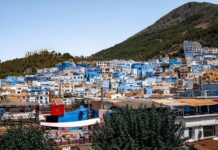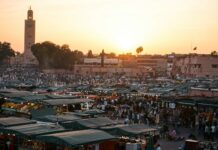
Agadir tourist attractions are easy to underestimate. Most visitors arrive for the 10 kilometers of sand and the 300-odd days of sunshine, then discover a hilltop kasbah reopened after decades of ruin, one of the largest walled markets in Morocco, a fishing port that still runs on muscle and ice, and a coastline of surf villages, palm gorges and bird lagoons within an hour’s drive.
The problem is that most guides list the same five sights and stop. You get “visit the beach” and “see the souk,” with no idea which day the souk is closed, what the cable car costs, or whether you can actually swim in the Atlantic here. That gap is what this guide fills.
We cover the 15 best places to visit in Agadir Morocco, grouped by where they sit: inside Agadir city, on its edges, and on day trips. For each one you get what it is, why it’s worth your time, how long to spend, what it costs in dirhams, and the mistake most first-timers make. Prices are what we’ve seen quoted at the counter; they shift, so treat them as a guide rather than a promise.
If you’re still deciding whether this coast deserves a place on your route, our broader guide to Agadir in Morocco covers hotels, neighborhoods and the city’s overall feel. This article goes deep on one question: what to actually see and do once you’re here.
Agadir Tourist Attractions at a Glance
Here is the short version before the detail. Times include getting there from the beachfront hotel zone.
| Attraction | Type | Time needed | Typical cost |
|---|---|---|---|
| Agadir Oufella Kasbah + cable car | History, views | 2–3 hours | About 130 DH round trip by cable car |
| Agadir Beach and promenade | Beach, walking | Half a day | Free |
| Souk El Had | Market | 2–3 hours | Free entry |
| Medina Polizzi (Medina d’Agadir) | Architecture, crafts | 1–1.5 hours | 40 DH, drink included |
| Marina and fishing port | Food, local life | 1–2 hours | Free |
| Agadir Art Museum | Culture | 1 hour | 40 DH |
| Mémoire d’Agadir museum | History | 45 minutes | Small fee |
| Vallée des Oiseaux and Jardin Olhão | Parks | 1 hour | Free |
| Crocoparc | Family, wildlife | 2–3 hours | About 11–12 USD online |
| Taghazout and Tamraght | Surf, beaches | Half to full day | Free; lessons extra |
| Paradise Valley | Nature, swimming | Half day | Free; transport extra |
| Imouzzer waterfalls | Mountains | Full day | Free; transport extra |
| Souss-Massa National Park | Birds, wild coast | Half day | Guide or tour extra |
| Taroudant | Walled town | Full day | Free to wander |
| Argan cooperative | Culture, shopping | 1 hour | Free; products extra |
Agadir Morocco Africa: Why This City Feels Different
People who search for Agadir Morocco Africa are often surprised by what they find. The city sits on the southwest Atlantic coast, roughly 250 kilometers southwest of Marrakech, where the High Atlas and Anti-Atlas ranges come down to the sea. Inland lies the Souss plain, Morocco’s citrus and argan heartland. Offshore runs one of the richest sardine fisheries in the world.
What makes Agadir unlike Fez or Marrakech is its age, or rather its lack of it. On the night of 29 February 1960, a shallow earthquake lasting about 15 seconds flattened most of the town. Estimates of the dead range from 12,000 to 15,000, roughly a third of the population at the time, according to the record of the 1960 Agadir earthquake. The old kasbah on the hill and the Talborjt district below it were almost wiped out.
A city rebuilt from scratch
King Mohammed V decided the city would be rebuilt a little to the south, and planners started almost from zero. The result is the Agadir city you see today: wide boulevards, modernist concrete, a long seafront corniche and very little of the tangled medina that defines older Moroccan towns.
That history matters for sightseeing. The best things to see in Agadir are not centuries-old palaces. They are places that tell the story of loss and rebuilding (the kasbah, the memory museum, the reconstructed medina), places that show how the region lives (the souk, the port, the argan cooperatives), and the natural landscapes on the doorstep.
Who Agadir suits best
Agadir works well for travelers who want Morocco at a slower pace. Families like the calm bay and wide pavements. Couples like the sunsets and the hotels. Surfers base themselves just north in Taghazout. Culture seekers can fill three days without trying, as long as they leave the beach.
It suits people less if they want the sensory overload of a medina like Marrakech’s. If that’s you, pair the two cities; our Moroccan Marrakech guide covers the other half of that trip.
The Best Places to Visit in Agadir City
These eight Agadir tourist attractions sit within the city limits. You can reach all of them by petit taxi (the small orange-red cabs) in 5 to 20 minutes from the hotel zone, or on foot for the beach, marina and port.
1. Agadir Oufella Kasbah and the cable car
Agadir Oufella means “upper Agadir,” and it is the signature sight of Agadir city and the first name on most lists of things to see in Agadir. The Saadian sultan Mohammed ech-Cheikh built a fortress here around 1540 to watch over the bay and counter Portuguese attacks. For centuries it was a small walled town with a mosque, a hammam and houses. The 1960 earthquake reduced it to walls and rubble.
After several years of restoration, the inner kasbah reopened to visitors in early 2024. You now walk raised wooden boardwalks that follow the line of the old lanes, with information panels and audioguides in Arabic, Tachelhit, English, French and Spanish. The visit inside takes around 50 minutes. The views across the bay, the port and the hills are the best in the area.
Getting up: the cable car runs about 1.7 kilometers from the Pont Tildi station on Rue Echouhada, a short taxi ride from the center. The ride takes around 12 minutes each way. Expect to pay about 130 dirhams for an adult round trip at the counter; fares have changed several times since it opened, so check on the day. You can also take a taxi straight to the top or walk the marked 2.8-kilometer hiking path.
Tip: go in the last two hours before sunset. The light turns the walls gold and the city lights come on below you. Buy the cable car ticket yourself at the station; tours that bundle “a cable car experience” sometimes don’t include the ticket at all.
2. Agadir Beach and the promenade
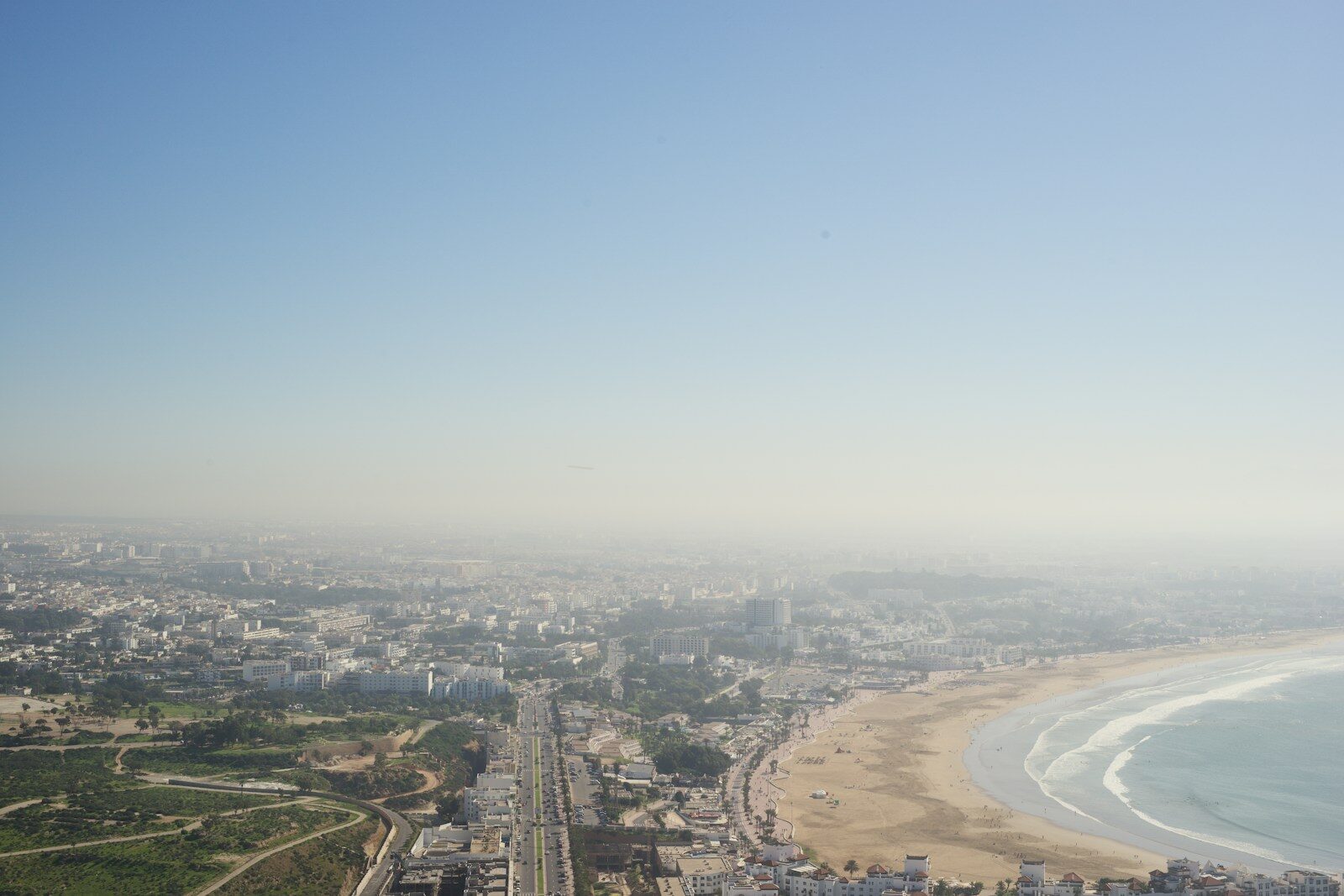
The beach is the reason Agadir exists as a resort, and it is one of the finest urban beaches in Africa. Of all the Agadir tourist attractions, it is the one you’ll return to every day. The main crescent runs for several kilometers from the port and marina south toward Founty and the Souss river mouth, with fine sand and a gentle slope.
The promenade behind it is where Agadir city comes to life in the evening. Families walk, teenagers play football, couples eat ice cream and vendors sell roasted corn. Restaurants and cafés line the inland side, and the path is flat and wide enough for strollers and wheelchairs.
What to do there: walk it end to end once (allow 90 minutes at an easy pace), rent a sunbed at one of the beach clubs, take a beginner surf lesson on the gentler sections, or book a horse or camel ride near the southern end. The beach is swept early each morning and is well patrolled by police.
Tip: the morning sea mist that rolls in during late spring and summer usually burns off by late morning. Don’t write off a gray start.
3. Souk El Had
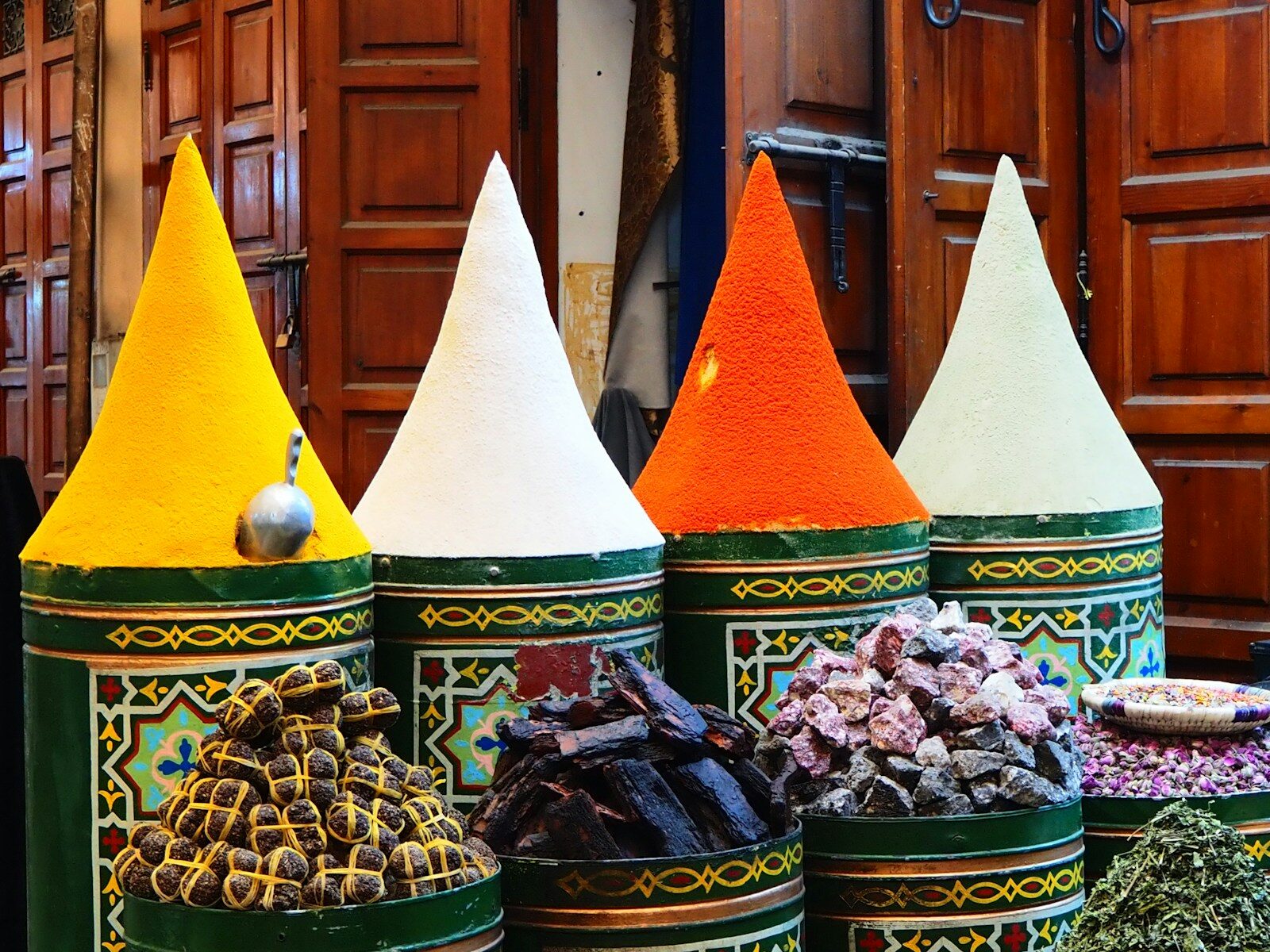
Souk El Had means “Sunday market,” but it opens six days a week. Spread across around 13 hectares behind high walls with numbered gates, it is often described as one of the largest markets in Morocco, with thousands of stalls. Locals shop here for everything from vegetables and olives to furniture, gold, phone cases and wedding clothes.
For visitors, this is one of the most authentic Agadir tourist attractions in the city. The atmosphere is calmer than the souks of Marrakech, and stalls are grouped by trade, so the spice section, the pottery rows and the leather area are easy to find once you’re inside. Stop for a fresh orange or pomegranate juice and a plate of grilled sardines at the food stalls.
Practical details: Souk El Had is closed on Mondays for cleaning. Many stalls close for two to three hours around Friday midday prayers. Sunday is the busiest day. Prices are not fixed, so haggle with a smile and be ready to walk away.
Tip: note the number of the gate you came in by. With more than ten entrances, it is surprisingly easy to exit on the wrong side.
4. Medina Polizzi (Medina d’Agadir)
When the old medina disappeared in 1960, Italian-born architect Coco Polizzi spent years recreating one. Built in the 1990s on the southern edge of the city near Ben Sergao, the Medina d’Agadir uses local stone, earth and wood and the building traditions of the Anti-Atlas and Atlas. It feels like an open-air museum of southern Moroccan architecture.
Inside you’ll find stone alleys, carved doors, courtyards, a small restaurant and workshops where artisans make jewelry, pottery, leather and woodwork. The number of craftspeople has dropped over the years, so it is quieter than a working medina. Some visitors love that calm; others find it a little static.
Practical details: entry is 40 dirhams for adults and includes a drink such as mint tea or orange juice. It opens around 9 am and closes around 6 pm. Allow 60 to 90 minutes, and take a taxi, as it sits about 10 minutes’ drive from the center.
Tip: pair it with Souk El Had on the same afternoon. One shows how a medina was built; the other shows how a market still works.
5. The marina and fishing port
At the north end of the beach, the marina is Agadir’s polished face: yachts, apartments, cafés with outdoor terraces and a good spot for a slow coffee. A few hundred meters north, the fishing port is the opposite. Trawlers unload crates of sardines, nets dry on the quay and seabirds circle overhead.
Fishing is one of the core industries of Agadir city, and eating fresh fish near the port is one of the simplest pleasures in Agadir. Around the port gates, grill stalls cook the day’s catch in front of you. Pick your fish, agree the price per kilo before it goes on the grill, and eat at shared tables.
Tip: the port is a working area. Wear closed shoes, watch for forklifts and ask before you photograph people.
6. Agadir Art Museum
The municipal museum on Boulevard Hassan II, near Place Ait Souss, once focused entirely on Amazigh (Berber) heritage. It reopened as an art museum and now mixes contemporary and colonial-era Moroccan painting with a smaller collection of traditional Amazigh jewelry, carpets and objects.
It is small, but the contrast between how foreign painters saw Morocco and how Moroccan artists see it is well curated. It is one of the few indoor things to see in Agadir, which makes it useful on a hot afternoon or a rare gray day.
Practical details: entry is around 40 dirhams. It typically opens 10 am to 6 pm and closes on Tuesdays.
7. Mémoire d’Agadir and the earthquake story
Near Jardin Olhão in the Talborjt district, the small Mémoire d’Agadir museum uses photographs, maps and models to show the city before and after the 1960 earthquake. Newer exhibitions on the reconstruction expand on how Agadir city was redesigned afterward.
It is a short visit, but it changes how you see everything else. After 45 minutes here, the modern boulevards and the empty slopes below the kasbah make sense. Opening hours are usually morning to late afternoon, with Monday closures; the fee is modest.
Tip: visit this before the kasbah. Standing on the hill after seeing the old photos is a far more powerful experience.
8. Vallée des Oiseaux and Jardin Olhão
Two green spaces give the center of Agadir city a breather, and both are free things to see in Agadir. The Vallée des Oiseaux (Valley of the Birds) is a narrow free park running between the beach and the town, with aviaries, flamingos, a few mammals and a children’s playground. It is a cool, shaded shortcut on a hot day.
Jardin Olhão, named after Agadir’s twin town in Portugal, is a quiet garden with Amazigh-style walls, fountains and benches. It sits right next to the memory museum, so the two make an easy one-hour stop.
Agadir Places to Visit Just Outside the City
The real strength of this region is what surrounds the city. Many of the best Agadir tourist attractions are actually outside it. These seven Agadir places to visit sit between 15 minutes and 90 minutes from the beach, and each one shows a different side of the Souss.
9. Crocoparc
Crocoparc is the most popular family attraction around Agadir and one of the easiest Agadir places to visit with children. On about 4 hectares near Drarga, east of the city on the RN8, it houses roughly 300 Nile crocodiles along with tortoises, iguanas, snakes and a few monkeys, set in themed botanical gardens with cacti, aquatic plants and palm groves.
It is well kept, shaded and easy with young children, with playgrounds, snack areas and feeding sessions. Allow two to three hours. Prepaid tickets online run around 11 to 12 US dollars per adult, and a white grand taxi from the city costs a fixed fare each way.
Tip: go in the morning, when the crocodiles are more active and the gardens are cooler.
10. Taghazout and Tamraght
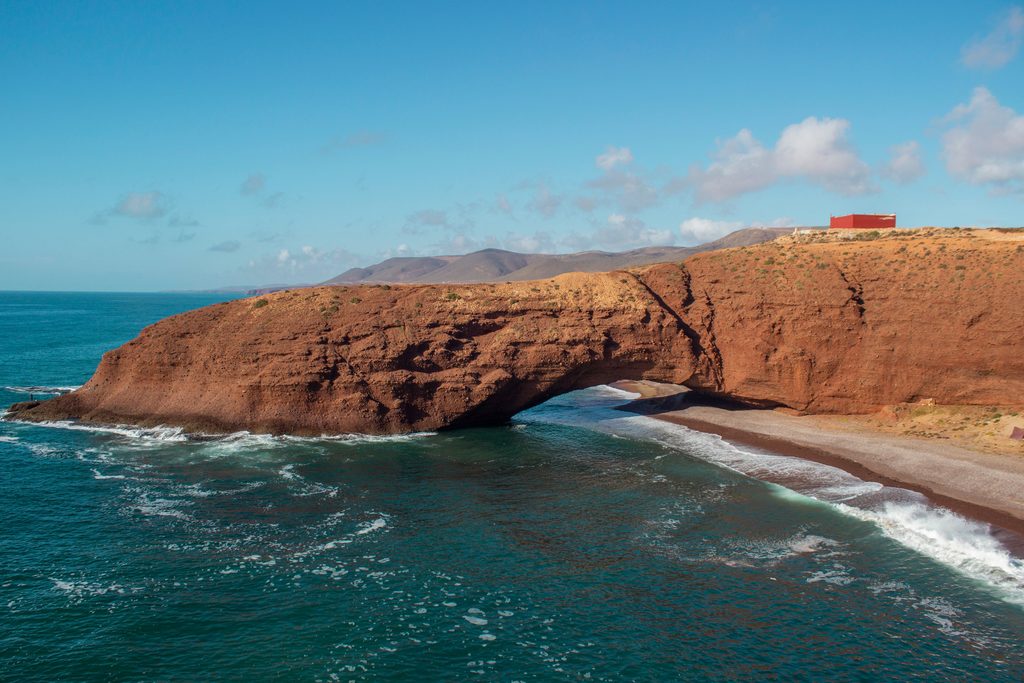
Twenty minutes north of Agadir, the fishing villages of Tamraght and Taghazout have become one of the best-known surf coasts in Africa. Point and reef breaks such as Anchor Point and Killer Point attract experienced surfers in winter, while sandy beaches like Tamraght and Panorama suit beginners most of the year.
Even if you never stand on a board, it is worth an afternoon for the blue-and-white village lanes, rooftop cafés and sunset views. Most surf schools offer two-hour lessons with board and wetsuit included. Our full Taghazout guide covers surf camps, stays and the best spots to eat.
11. Paradise Valley
About an hour northeast of Agadir in the foothills of the High Atlas, Paradise Valley is a palm-filled gorge with turquoise rock pools. A short walk from the road takes you along the river past cafés to natural swimming holes where locals jump from the rocks.
Water levels depend heavily on winter rain. After a dry year the pools can shrink, so check recent photos or ask your driver before you go. Bring water shoes, cash for café stops and a swimsuit. Weekends are busy with local families; weekday mornings are calmer.
12. Imouzzer waterfalls and the honey village
Continue past Paradise Valley and the road climbs to Imouzzer Ida Outanane, a mountain village about 60 kilometers from Agadir and roughly 90 minutes’ drive. The name means “waterfalls” in Tamazight. The cascades are at their best from late winter to spring, when rain feeds the springs; in drought years they can slow to a trickle with only a pool remaining.
Imouzzer is also famous for its honey, sold in small shops on the main street, and for amlou, the almond, argan oil and honey spread. Combine it with Paradise Valley for a full mountain day.
13. Souss-Massa National Park
Created in 1991, Souss-Massa National Park protects about 33,800 hectares of coast south of Agadir: dunes, cliffs, estuaries and wild beaches. It is the global stronghold of the northern bald ibis, a strange, glossy bird once found across North Africa and Europe; the vast majority of the world’s wild population now lives in this park and nearby Tamri.
The Massa river mouth is excellent for birdwatching, with flamingos, spoonbills and migrating waders. Fenced areas hold reintroduced species such as dorcas gazelles, oryx and ostriches. Go with a local guide or a small-group tour, as tracks are sandy and signage is limited.
Tip: early morning brings the best birdlife and the softest light on the dunes.
14. Taroudant
Often called “little Marrakech,” Taroudant sits about 80 kilometers east of Agadir in the Souss valley. Its ochre walls, more than 7 kilometers of them, are among the best preserved in Morocco. Inside you’ll find two lively souks, the central square of Place Assarag and a pace that feels decades slower than the coast.
It is one of the most rewarding Agadir places to visit for culture, and it makes a perfect day trip. Rent a calèche (horse carriage) for a loop around the walls, browse the jewelry and leather shops, and eat lunch on a terrace overlooking the square.
15. An argan cooperative and the tree goats
The argan tree grows almost nowhere else on earth, and the Souss is its heartland. Women’s cooperatives around Agadir crack the nuts by hand, grind the kernels and press both cosmetic and culinary oil. A visit shows the whole process and lets you buy directly from the producers.
On the roads toward Taroudant and Essaouira you’ll also see goats perched in argan trees. Some are genuinely grazing; others are placed there for tourist photos and tips. Stop if you like, but don’t pay for staged scenes, and buy oil from certified cooperatives rather than roadside stands.

Best Places to Visit in Agadir Morocco by Traveler Type
Not every sight suits every traveler. Here is how we would choose among the best places to visit in Agadir Morocco depending on who you’re traveling with.
Families with children
- Crocoparc for a half day
- The promenade at sunset, with ice cream and the playgrounds
- Vallée des Oiseaux for flamingos and a free playground
- A beginner surf or bodyboard lesson for older kids
- The Petit Train tourist train that loops the center
Couples
- Sunset at Agadir Oufella, followed by dinner at the marina
- A hammam and massage at a hotel spa or a neighborhood hammam
- A day in Taghazout with lunch on a rooftop
- A slow afternoon at Medina Polizzi
Culture and history seekers
- Mémoire d’Agadir, then the kasbah
- Agadir Art Museum
- Souk El Had on a weekday morning
- A full day in Taroudant
- An argan cooperative visit
Active travelers
- Walk the 2.8-kilometer trail up to the kasbah
- Surf the breaks north of the city
- Hike in Paradise Valley and on to Imouzzer
- Cycle or e-bike tour into Souss-Massa National Park
- Quad biking in the dunes south of the city
How to See Agadir City in Three Days
Three days is the sweet spot for most visitors to Agadir city. It lets you cover the top Agadir tourist attractions in the city, add one or two day trips and still have beach time. Here is a simple plan that keeps driving to a minimum.
| Day | Morning | Afternoon | Evening |
|---|---|---|---|
| Day 1 | Beach and promenade | Mémoire d’Agadir and Jardin Olhão | Cable car to Agadir Oufella for sunset |
| Day 2 | Souk El Had (not Monday) | Medina Polizzi | Fish dinner by the port |
| Day 3 | Paradise Valley or Taghazout | Beach or hotel pool | Marina and promenade walk |
With a fourth or fifth day, add Taroudant, Souss-Massa National Park or Crocoparc. With a week, you can learn to surf properly or combine Agadir with Essaouira and Marrakech. Our Morocco itinerary guide shows how the coast fits into longer routes.
Getting around
Petit taxis are the easiest way to move within the city. They should run on the meter; if the driver refuses, agree a price before you get in. White grand taxis cover longer trips such as Crocoparc or the airport and often run on fixed fares. City buses run along the main avenues and up the coast toward Taghazout. For mountain day trips, a private driver or small-group tour saves time and stress.
When to go
Agadir is a year-round destination. Spring (March to May) and autumn (September to November) bring warm days, fewer crowds and the best conditions for sightseeing and day trips. Summer is hot but tempered by Atlantic breezes and is the season for lifeguarded swimming. Winter is mild and sunny, though the sea is cool for most swimmers.
Free Things to See in Agadir
Agadir is easy on the wallet compared with Marrakech, and many of the best things to see in Agadir cost nothing at all. If you’re traveling on a budget, or simply want a slow day between excursions, these free Agadir tourist attractions fill a full itinerary.
Walk the trail up to the kasbah
The marked hiking path to Agadir Oufella is about 2.8 kilometers from the lower town. It climbs steadily past the old cemetery and the slopes where the kasbah’s lower town once stood. Start early or two hours before sunset, carry water and wear proper shoes. You’ll get the same view as the cable car without the ticket, though the inner kasbah visit may still carry its own fee.
Spend an evening on the promenade
From about 6 pm the promenade becomes Agadir city’s living room. Families stroll, street performers gather small crowds, and the sky turns orange over the Atlantic. Buy a cup of snail soup or a bag of roasted chickpeas from a cart and simply watch.
Watch the catch come in at the port
Arriving around mid-morning, you’ll see trawlers unloading sardines and mackerel, auctions in the fish halls and repairmen stitching nets on the quay. It is noisy, salty and completely real, one of the few Agadir places to visit where tourism plays no role at all.
Browse Souk El Had without buying
Entry to the souk is free, and wandering the spice rows, the pottery lanes and the fruit section is a show in itself. Just be honest with stallholders that you’re looking, not buying.
Explore the parks and the corniche
Vallée des Oiseaux, Jardin Olhão and the Ibn Zaidoun garden near the art museum are all free, shaded and quiet. Link them on foot for a relaxed half day in the center.
Where to Eat Near the Main Agadir Tourist Attractions
Food is part of the experience, and each of the top Agadir tourist attractions has a natural place to eat nearby. These are the pairings we would plan around.
By the port: grilled fish
Right outside the fishing port gates, grill stalls serve sardines, sea bream, calamari and shrimp with bread, salad and a spicy tomato sauce. Agree the price per kilo before cooking, and expect a filling meal for well under what a hotel lunch costs.
At Souk El Had: tagine and fresh juice
Inside the souk, small canteens cook tagines and couscous for traders, especially on Fridays when couscous is the tradition. Juice stands press oranges, pomegranates and avocados to order. It is the most local lunch you’ll find in Agadir city.
At the marina: cafés and seafood terraces
The marina is the place for a long coffee, a slice of cake and a seafood platter with a view of the boats. Prices are higher than in town, but the setting is relaxing and it is a short walk from the start of the promenade.
On the promenade: Moroccan and international dinners
The inland side of the promenade has restaurants for every taste, from tagines and harira to pizza, sushi and steak. Many of the licensed restaurants that serve alcohol are here or inside hotels. Book ahead on weekends in high season.
In Taghazout: rooftop lunches
If your day trip heads north, Taghazout’s rooftop cafés serve fresh fish, smoothie bowls and Moroccan salads above the surf. Time lunch for when the tide changes and watch the surfers paddle out.
A few food rules that save money
- Ask for the price before ordering anything without a menu.
- Bread, olives and water may be added to the bill; ask if they are complimentary.
- Mint tea is cheap and safe everywhere; tap water is better avoided.
- Friday couscous after midday prayers is a local tradition worth joining.
What to Avoid in Agadir
Agadir city is one of the most relaxed in Morocco, with a strong police presence along the seafront. Most problems visitors run into are small and avoidable. These are the ones we see most often.
Swimming outside the flags
The bay looks calm, but the Atlantic undertow can be strong, especially away from the main hotel stretch and north of the harbor. Lifeguards work the main beach during the summer season and use flags to show where swimming is safe. Outside that season, or outside the flagged zones, stay in the shallows or use the pool.
Unofficial guides and “free” help
At the souk, the kasbah and around the medina, you may be approached by friendly men offering to show you the way. Some are genuine; many expect payment or steer you to shops that pay them commission. A polite “la, shukran” (no, thank you) usually works. If you want a guide, book a licensed one through your hotel.
Taxi fare confusion
Insist on the meter in petit taxis, or agree the fare in advance. At the airport, use the official taxi rank where fixed prices are posted. Keep small notes handy, as drivers often claim to have no change.
Overpaying at tourist-facing shops
The first price at a souvenir stall can be several times what a local would pay. Compare a few stalls before buying argan oil, spices or leather. For argan oil, buy at a cooperative with a clear label rather than from roadside sellers, where dilution is common.
Visiting Souk El Had on a Monday
It’s closed. Also avoid Friday midday if you want every stall open. And dress modestly in the souk, the kasbah and around mosques: covered shoulders and knees are appreciated.
Underestimating the sun
Agadir’s sun is stronger than it feels with the sea breeze. Use high-SPF sunscreen, carry water and wear a hat, especially on the kasbah hill and in the dunes, where shade is limited. For more general advice, read our guide to Morocco travel safety.
Things to See in Agadir in Context: Agadir vs the Rest of Morocco
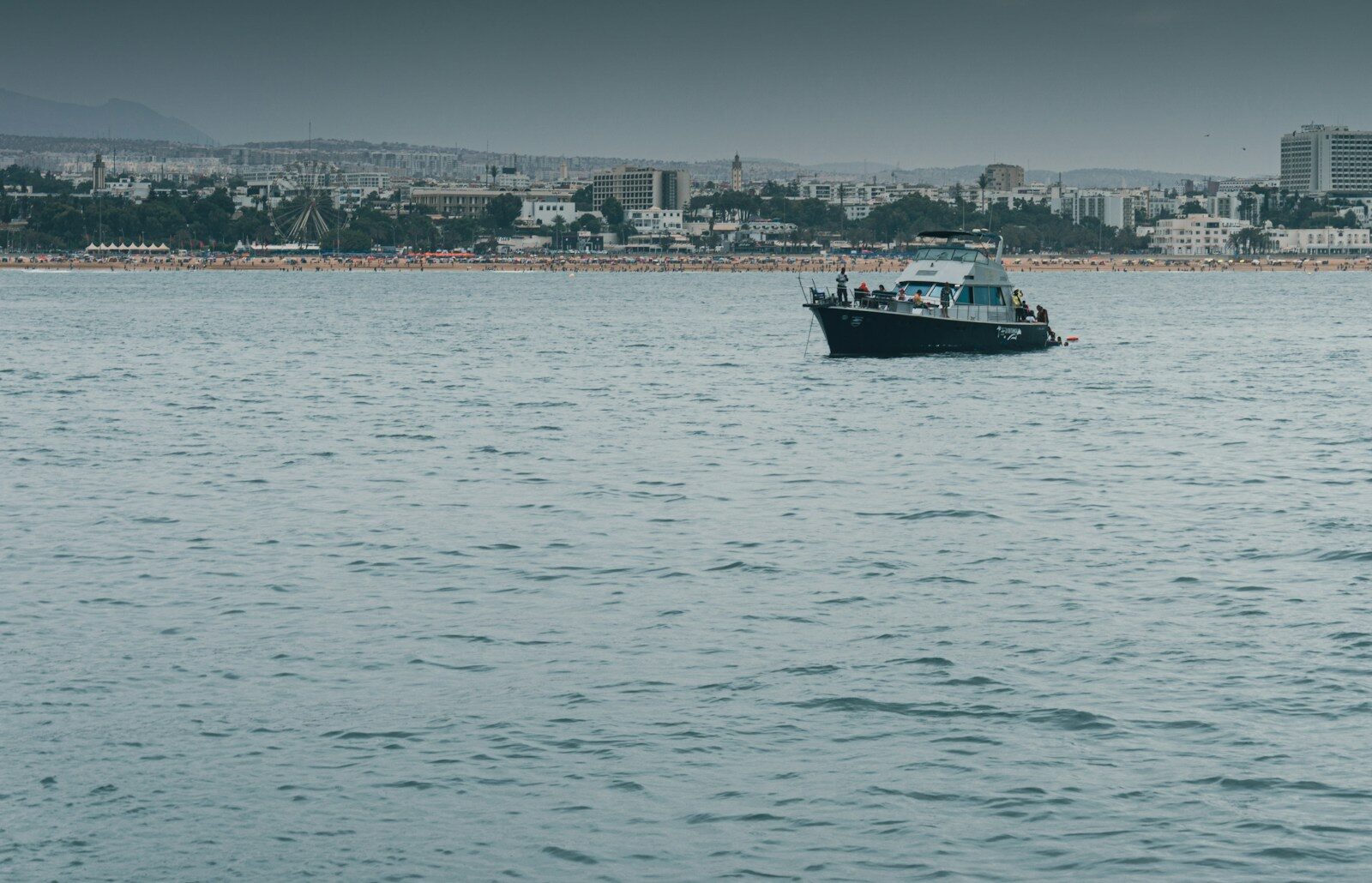
Agadir is rarely anyone’s only stop in Morocco, so it helps to see how Agadir tourist attractions compare with the rest of the country. The country’s most famous sights sit in the imperial cities, the desert and the Rif mountains. Agadir offers something none of them do: an easy beach base with genuine culture in reach.
Here is how the best things to see in Agadir compare with the country’s headline sights:
- History: Agadir’s story is recent and dramatic (the 1960 earthquake and rebuilding), while Fez and Marrakech offer medieval medinas and palaces.
- Atmosphere: Agadir is calm and spacious; Marrakech is intense and crowded.
- Nature: Agadir gives you ocean, gorges, waterfalls and bird lagoons; the Sahara gives you dunes and night skies.
- Comfort: Agadir has some of the best family-friendly hotels in the country, with easy walking and flat promenades.
A classic route is to start in Marrakech, head out to the desert, then finish with a few lazy days on the coast. Our list of things to do in Morocco covers the highlights city by city.
Agadir Tourist Attractions FAQ
What is famous in Agadir?
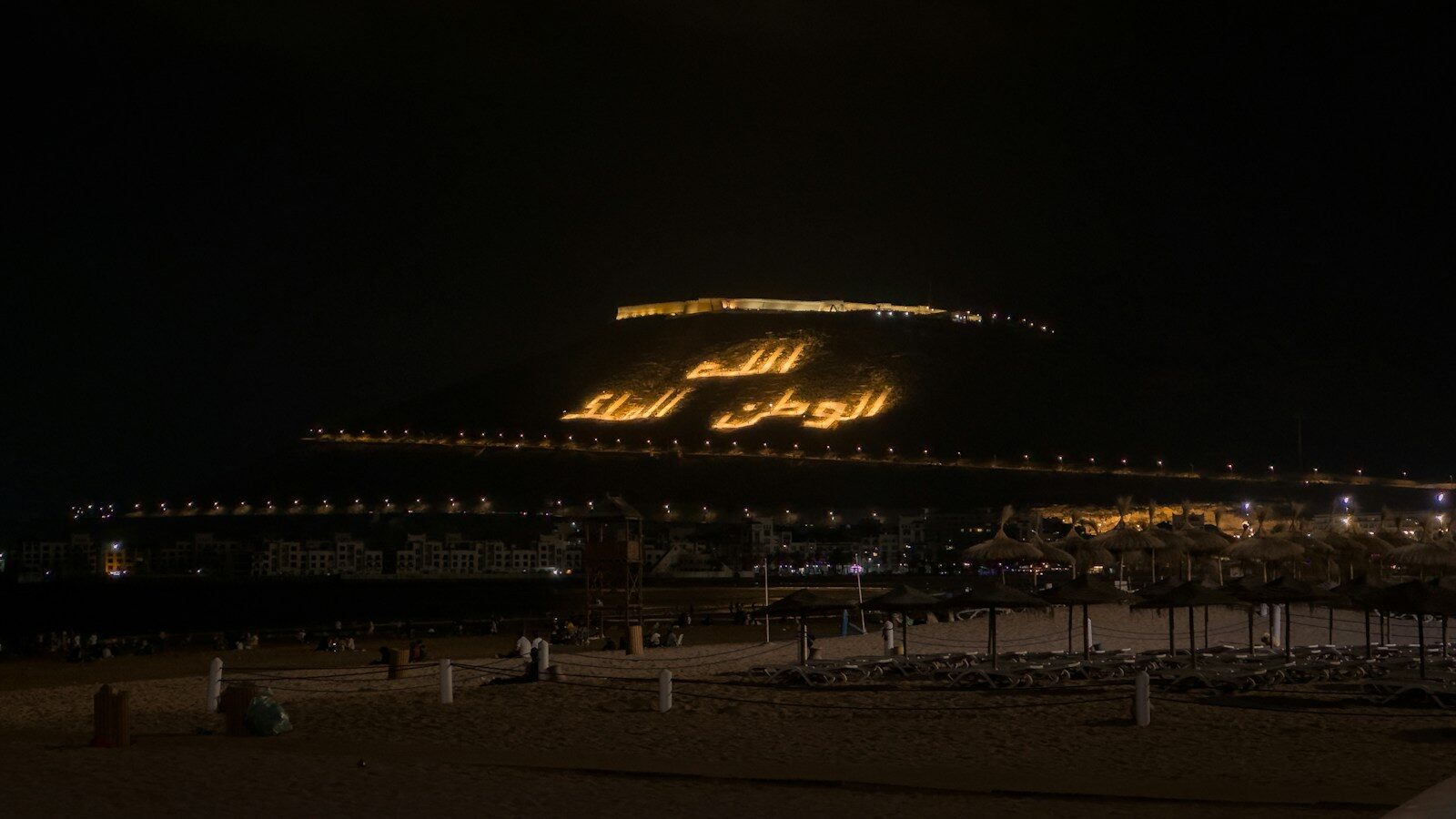
Agadir is famous for its long sandy beach, year-round sunshine, its fishing port and fresh sardines, the Agadir Oufella kasbah on the hill with the “God, Country, King” inscription, and Souk El Had, one of the largest markets in Morocco. The region is also known for argan oil and the surf coast just north at Taghazout.
What are the main attractions in Agadir?
The main Agadir tourist attractions are the Agadir Oufella kasbah and cable car, Agadir Beach and the promenade, Souk El Had, Medina Polizzi, the marina and fishing port, the Agadir Art Museum and the Mémoire d’Agadir museum. Just outside the city, Crocoparc, Taghazout, Paradise Valley, Imouzzer, Souss-Massa National Park and Taroudant are the top excursions.
Is Agadir worth visiting for tourists?
Yes, especially if you want a relaxed base with good weather. Agadir city has fewer historic monuments than Fez or Marrakech, but it combines a superb beach, easy transport, family-friendly hotels and a wide choice of day trips into the mountains, the Souss valley and the national park. Three to four days is enough for most visitors.
What are the top 5 tourist attractions in Morocco?
Most travelers would name Jemaa el-Fnaa square and the medina in Marrakech, the medieval medina of Fes el-Bali, the Erg Chebbi dunes at Merzouga, the blue town of Chefchaouen and the Hassan II Mosque in Casablanca. Agadir’s beach and kasbah are the top attractions on the southern Atlantic coast.
What to avoid in Agadir?
Avoid swimming outside lifeguard flags, visiting Souk El Had on a Monday, accepting help from unofficial guides, getting into a taxi without the meter or an agreed fare, and buying argan oil from roadside sellers. Dress modestly in the souk and around religious sites, and use strong sunscreen.
Can I swim in the sea in Agadir?
Yes. Agadir’s bay is one of the most sheltered swimming spots on Morocco’s Atlantic coast, with a gentle slope and lifeguards on the main beach during the summer season. The undertow can still be strong, so swim only between the flags when lifeguards are on duty, and take extra care outside summer or away from the main beach.
How many days do you need in Agadir?
Three days covers the main things to see in Agadir and one day trip. Five days lets you add Taroudant, the national park and more beach time. A week suits surfers or anyone combining the city with Essaouira.
Is Agadir safe for tourists?
Agadir is generally considered one of the safest cities in Morocco for visitors, with visible tourist police along the seafront. Petty theft on crowded beaches and pushy unofficial guides are the most common issues, so keep valuables out of sight and stay alert in busy areas.
Make the Most of Agadir Tourist Attractions
Agadir rewards travelers who look past the sunbed. The beach is the reason most people come, but the city’s real character lives in the places that tell its story: the restored kasbah on the hill, the memory museum in Talborjt, the bustle of Souk El Had and the noise of the fishing port at dawn. Beyond the city, surf villages, palm gorges, mountain waterfalls and one of North Africa’s most important bird reserves are all within easy reach.
The best way to enjoy Agadir tourist attractions is to mix them, and to treat the best places to visit in Agadir Morocco as a set rather than a checklist. Spend mornings exploring, afternoons by the sea and evenings on the promenade, and give at least one day to the mountains or the national park.
Your next step is simple: pick your three days, check that your souk day isn’t a Monday, and plan your first sunset at Agadir Oufella. For everything else you need to organize the trip, from transport to costs, start with our complete Morocco travel guide.