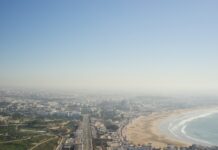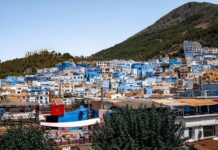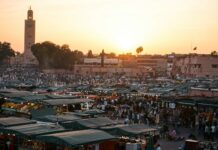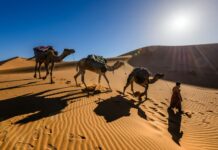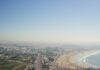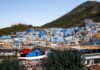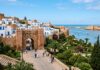
Tangier tourist attractions sit on a hill where you can drink mint tea in Africa and watch ferries leave for Europe across a strait just 14 kilometers wide at its narrowest. That view explains most of the city. Phoenicians, Romans, Portuguese, British, Spanish and an international committee of diplomats have all run Tangier at some point, and each of them left something you can still walk past today.
This guide is for travelers who have a day, a weekend or a long stopover in the north and want to spend it well. It covers the 15 sights that are worth your time, what each one costs in dirhams, how long it takes, how to get around without being overcharged, and an honest answer to the two questions people ask most: is Tangier safe, and is Tangier worth visiting at all.
Why Tangier Is Worth Visiting Before the Rest of Morocco
Tangier used to have a reputation. For decades guidebooks warned about hustlers at the port and fake guides who would not leave you alone. Some of that was earned. Most of it is out of date. The city has been rebuilt with a new marina, a cleaned-up Corniche, restored museums and one of the fastest trains in the world pulling into a modern station.
Morocco as a whole is booming. The country welcomed a record 19.8 million visitors in 2025, according to the Ministry of Tourism, and the north takes a growing share of them. Yet Tangier still feels less staged than Marrakech. Locals outnumber tourists in the medina by evening, and prices in the cafes are set for residents, not tour groups.
What is Tangier known for?
Tangier is known for three things. The first is geography: it sits at the meeting point of the Mediterranean and the Atlantic, on the edge of the Strait of Gibraltar. The second is its time as an international zone between 1923 and 1956, when it was governed by a committee of foreign powers and drew spies, bankers, writers and musicians.
The third is that bohemian legacy. Paul Bowles lived here for more than 50 years. William Burroughs wrote much of Naked Lunch in a small Tangier hotel. The Rolling Stones smoked on the terrace of Café Baba. Matisse painted the view from the Grand Hotel Villa de France. You can visit almost all of these places today, which is a big part of why the city tangier travelers imagine still exists in pieces.
Tangier Africa and Europe in one view
On a clear day you can see the Spanish coast from the Kasbah walls. Tarifa is less than an hour away by fast ferry. Tanger Med, the port complex 45 kilometers east of the city, handled more than 11 million containers in a single year and is the largest port in Africa and the Mediterranean.
That mix of old walls and new ambition is what makes Tangier Africa’s most European city and, at the same time, unmistakably Moroccan. The call to prayer still carries over the rooftops. Bread still comes out of wood-fired neighborhood ovens. And the cafe chairs still face the street so the men drinking tea can watch everything that passes.
Tangier Tourist Attractions at a Glance
Use this table to plan your days and compare the things to do in Tangier Morocco by cost and time. Prices are typical entry fees for foreign visitors and can change, so carry small notes and coins in dirhams. Most museums are closed on Tuesday.
| Attraction | Area | Typical entry | Time needed |
|---|---|---|---|
| Grand Socco and Mendoubia Gardens | Medina edge | Free | 30 minutes |
| Petit Socco | Medina | Free (tea 10–15 MAD) | 45 minutes |
| American Legation Museum | Medina | 50 MAD | 1 hour |
| Kasbah and Bab el Bahr | Kasbah | Free | 1 hour |
| Kasbah Museum + Contemporary Art Space | Kasbah | 30–60 MAD combined | 1–1.5 hours |
| Dar Niaba Museum | Medina | 20 MAD | 45 minutes |
| Café Hafa and Phoenician Tombs | Marshan | Free (tea about 10 MAD) | 1 hour |
| Ville Nouvelle and St Andrew’s Church | New Town | Donation | 1–2 hours |
| Corniche, beach and marina | Waterfront | Free | 1–2 hours |
| Villa Harris Museum and park | Malabata | 20 MAD, park free | 1.5 hours |
| Perdicaris Park (Rmilat) | West hills | Free | 1–2 hours |
| Cap Spartel lighthouse | 14 km west | Around 50 MAD | 1 hour |
| Caves of Hercules | 14 km west | 60–80 MAD | 45 minutes |
| Achakar and Atlantic beaches | West coast | Free | Half day |
| Day trip to Asilah, Tetouan or Chefchaouen | Region | Varies | Full day |
These Tangier tourist attractions split neatly into three zones: the old medina and Kasbah on the hill, the waterfront and new town to the east, and the wild Atlantic coast to the west. Group your sights by zone and you will spend far less time in taxis.
Old City Tangier: The Medina and Kasbah
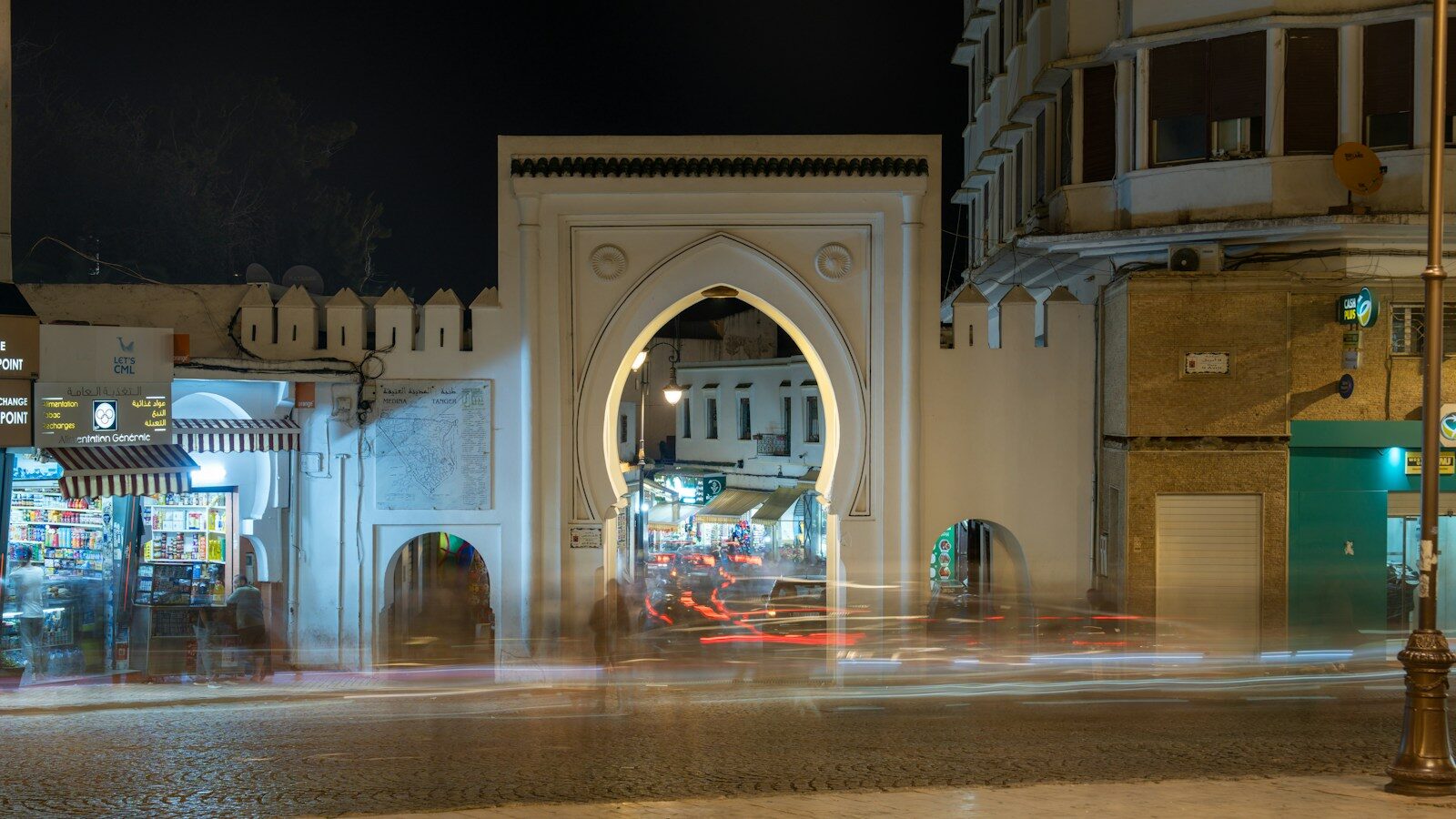
The old city Tangier walls enclose a small, steep and very walkable medina. It is far easier to navigate than Fez or Marrakech. Everything slopes down toward the port, so if you get lost, walk downhill and you will hit the sea or the Grand Socco within ten minutes.
1. Grand Socco and Mendoubia Gardens
The Grand Socco is the hinge between the medina and the new town, and it is the best place to start. The official name is Place du 9 Avril 1947, after the day Sultan Mohammed V gave a speech here calling for independence. Today it is a paved square with a fountain, palm trees, taxis and a constant flow of people.
On one side stands Cinema Rif, an Art Deco cinema that now houses the Tangier Cinémathèque and a cafe with good coffee. Behind the square, the Mendoubia Gardens hold a huge old banyan tree and shaded benches where families sit in the late afternoon. Just below is the main food market, with olives, fish, spices and fruit piled high.
Tell your taxi driver “Cinema Rif” or “Souk Barra” rather than “Grand Socco”. Many drivers know the square by those names.
2. Petit Socco
Walk down Rue Siaghine from the Grand Socco and you reach the Petit Socco, the small square at the heart of the medina. In the international zone years this was where bankers, diplomats and smugglers met. Café Central and Café Tingis still face the square, and both have hosted writers from Burroughs to Kerouac.
The coffee is ordinary. The people-watching is not. Order a mint tea, sit facing out like everyone else, and watch the medina pass in front of you. Mornings are calm. After 5 p.m. the square fills with residents, and it feels like a living neighborhood rather than a stage set.
3. Tangier American Legation Museum
This is one of the most surprising things to do in Tangier. Morocco was among the first countries to recognize the United States, and in 1821 the Sultan gave the Americans a building in the medina. It became the first property owned by the US government abroad and is now a museum and cultural center.
Inside you will find letters between George Washington and the Sultan, old maps, paintings and a wing devoted to Paul Bowles. A small courtyard with a fountain offers a quiet break from the alleys. Entry is about 50 MAD, paid in cash. It is generally open weekdays 10 a.m. to 5 p.m., with shorter weekend hours.
4. The Kasbah and Bab el Bahr
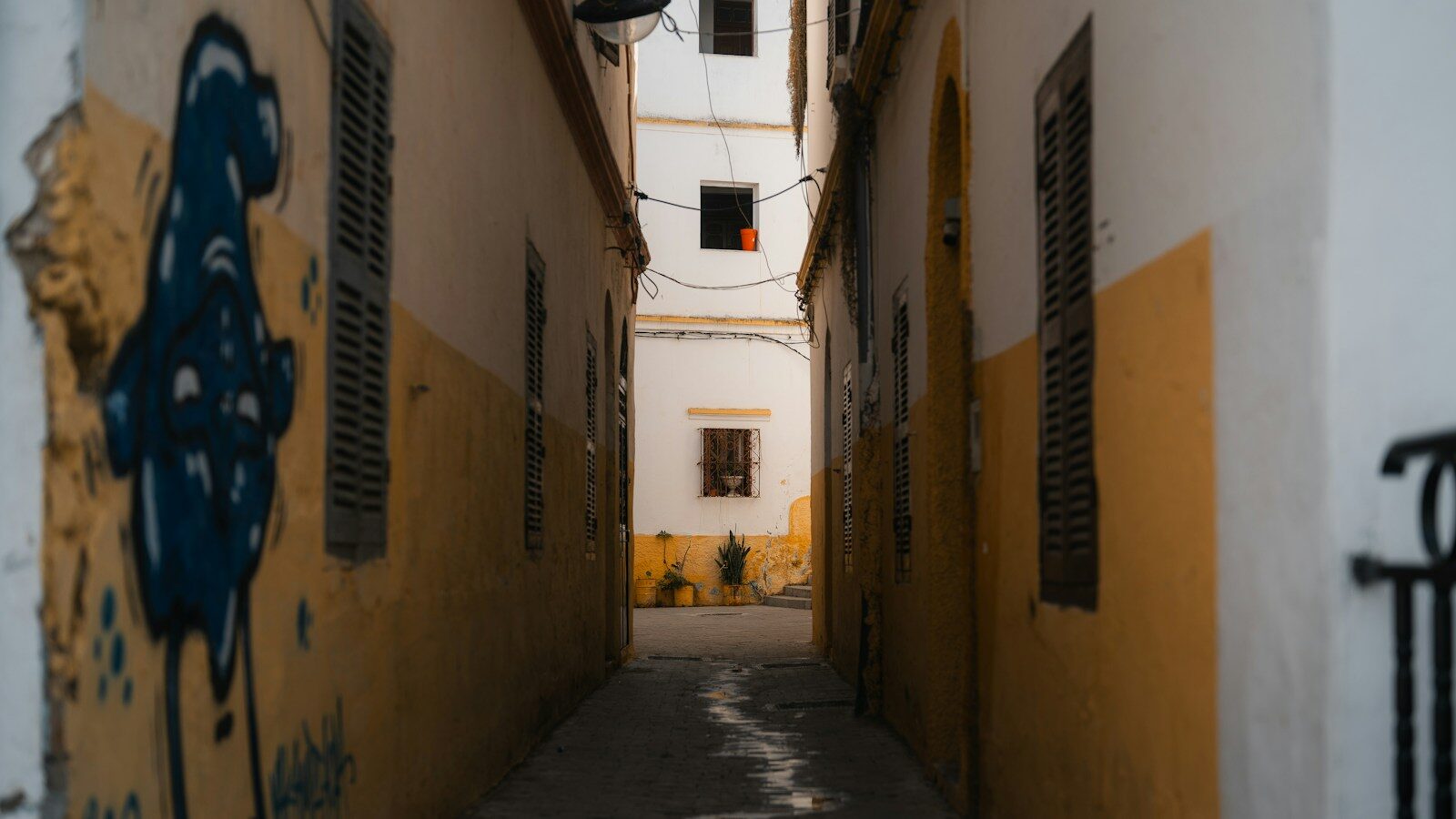
The Kasbah is the walled citadel at the top of the medina. The climb is steep, and that keeps the crowds thinner than in the lanes below. Up here the houses are whitewashed, the doors are painted blue and green, and every gap between walls frames a piece of the sea.
Look for Bab el Bahr, the “Sea Gate”, just before the museum entrance. It opens onto a terrace with free views over the port and the Strait of Gibraltar. On a clear morning you can pick out the Spanish coast. This is one of the best places to visit in Tangier for photos, especially in early light before the haze builds.
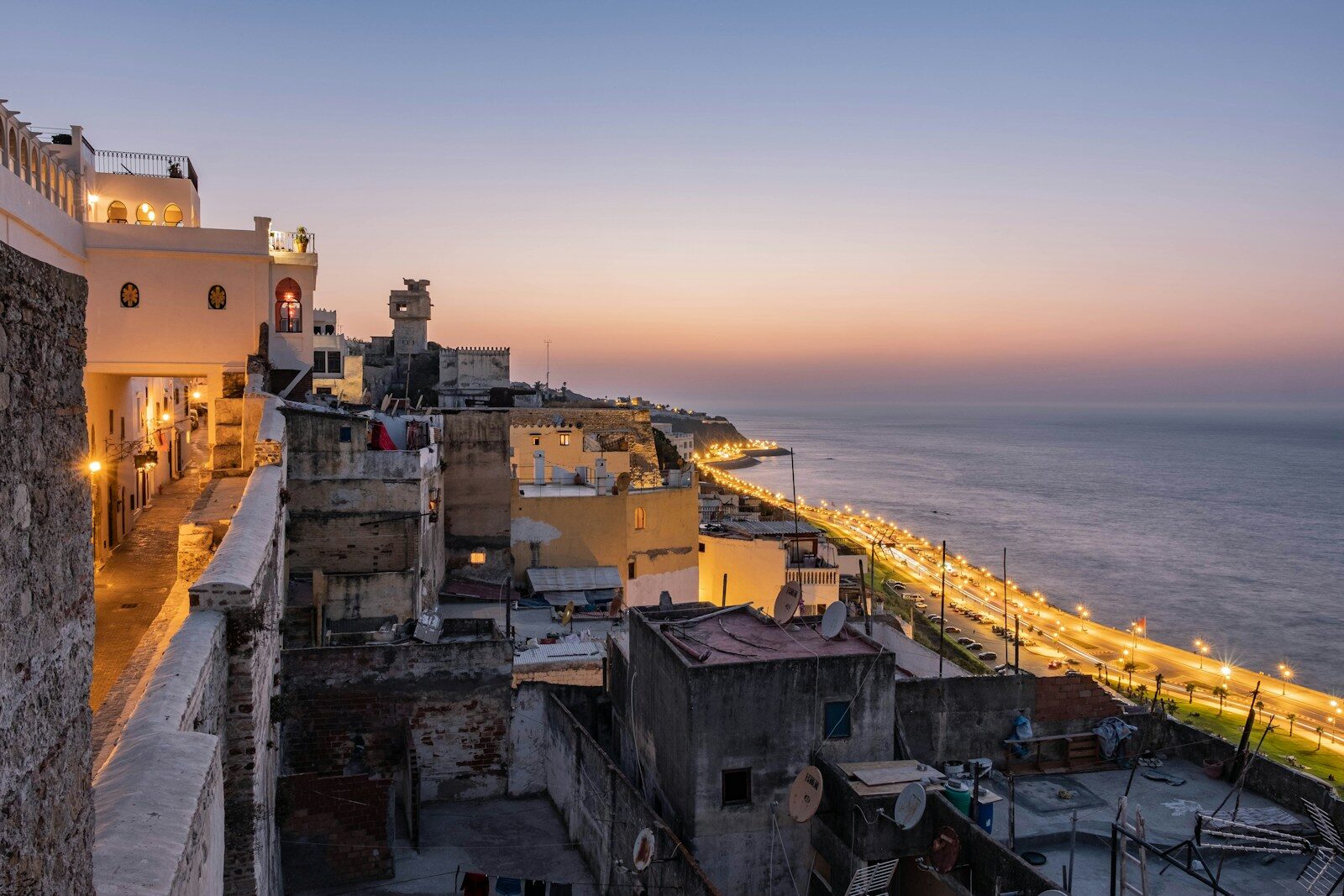
5. Kasbah Museum and the Contemporary Art Space
The Kasbah Museum of Mediterranean Cultures fills Dar el Makhzen, the former sultan’s palace built in the time of Moulay Ismail. The collection runs from prehistoric tools and Roman mosaics to Islamic ceramics and maps of the city. Honestly, the building steals the show: carved cedar ceilings, tiled courtyards and a quiet Andalusian garden.
Next door, the old Kasbah prison has been restored as a contemporary art space showing artists from the north of Morocco. One combined ticket covers both. Visitors report prices between 30 and 60 MAD, so bring enough cash. Both are typically open 10 a.m. to 6 p.m. and closed on Tuesday. Labels are mainly in Arabic and French.
6. Dar Niaba and the small medina museums
Dar Niaba was once Morocco’s ministry of foreign affairs, back when diplomats had to live in Tangier to deal with the Sultan. The restored building now tells the story of the city’s diplomatic past for an entry fee of around 20 MAD. It is a short visit, but it fills in the history that the bigger museums skip.
Nearby, the Lorin Foundation shows photographs of daily life in the city across much of the last century, and the restored Moshe Nahon Synagogue recalls the large Jewish community that once lived in the medina. None of these takes more than 30 minutes, and together they make the medina feel much deeper than a shopping street.
7. Café Hafa and the Phoenician Tombs
Walk ten minutes west from Bab Kasbah into the Marshan district and you reach Café Hafa. It opened in 1921 and has barely changed: tiled terraces stepping down a cliff, plastic chairs, mint tea poured from height, and a view straight across the strait. The Beatles, the Rolling Stones and Paul Bowles all drank tea here.
Stick to tea and maybe a bowl of bissara soup. The food is not the point. Afterward, walk along the cliff to the Phoenician Tombs, a field of graves cut into the rock above the sea. You cannot go inside them, but locals picnic here at sunset, and it is one of the calmest spots in the city tangier residents actually use.
Best Places to Visit in Tangier Beyond the Medina
Most visitors never leave the old town. That is a mistake, because several Tangier tourist attractions sit outside the walls. Some of the best places to visit in Tangier are in the new districts, the green hills and the long waterfront, and they show you how the city lives now.
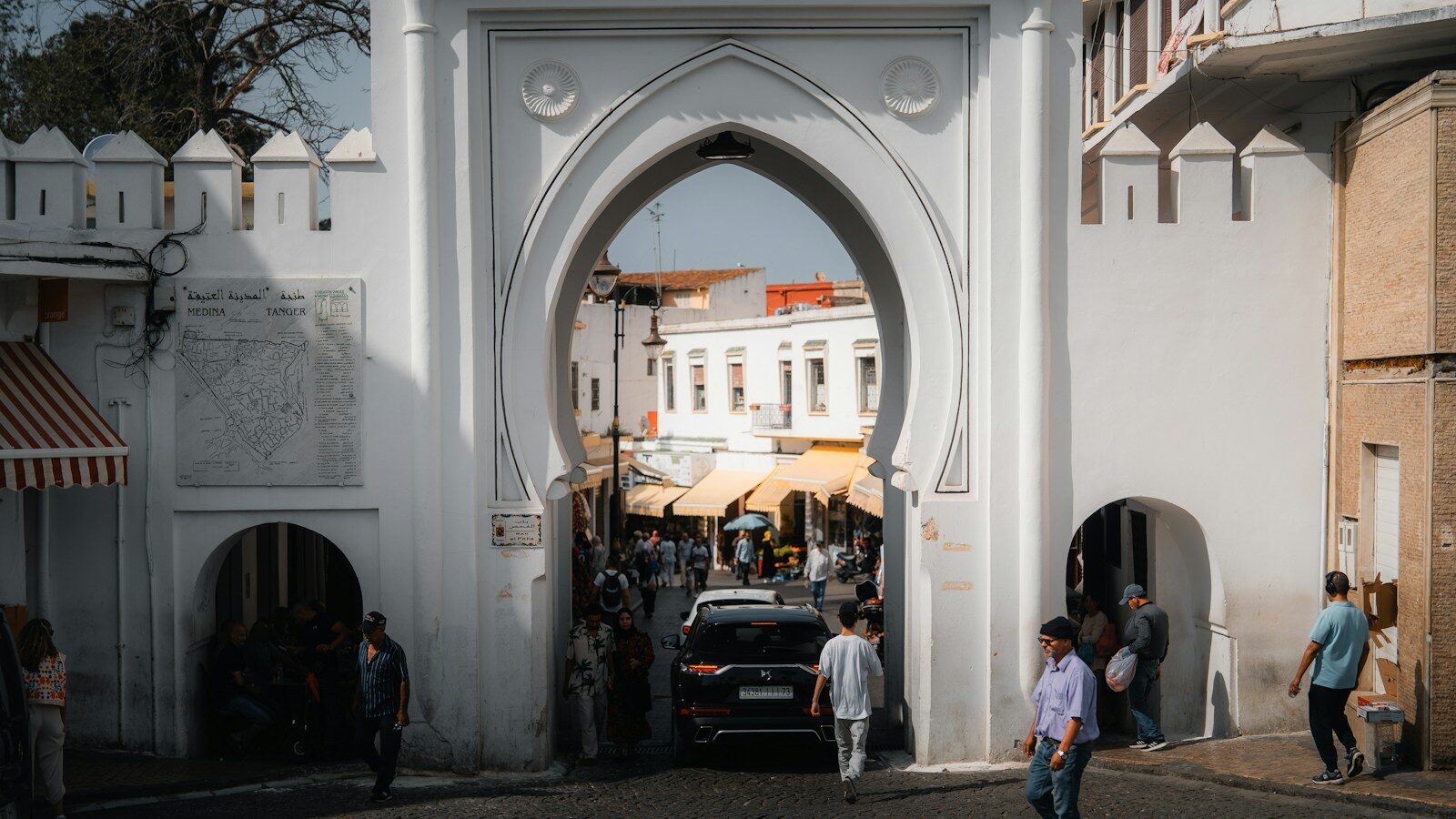
8. Ville Nouvelle, Boulevard Pasteur and St Andrew’s Church
The Ville Nouvelle was built mostly during the international zone years. Its main streets, Boulevard Pasteur and Avenue Mohammed V, are lined with Art Deco facades, bookshops, patisseries and cafes. At the end of Boulevard Pasteur, the Terrasse des Paresseux, the “Terrace of the Lazy”, has cannons, benches and a broad view over the bay.
Back near the Grand Socco, St Andrew’s Church is an Anglican church built in a Moorish style, with the Lord’s Prayer carved in Arabic above the altar. The garden cemetery holds the graves of British expats, soldiers and writers. The caretaker usually shows visitors around for a donation. It is closed on Fridays during service hours.
9. The Corniche, the beach and Tanja Marina Bay
The Corniche is a wide promenade that curves around the bay from the port toward Malabata. It was rebuilt with palm trees, bike lanes and cafes, and in the evening half the city seems to walk it. Families buy roasted corn, teenagers play football on the sand and couples sit on the sea wall.
The municipal beach is fine for a walk or a paddle, though the water is better farther west. At the western end, Tanja Marina Bay has transformed the old port with yachts, restaurants and a waterfront walk below the medina walls. Come at sunset, when the light hits the white houses of the Kasbah above you.
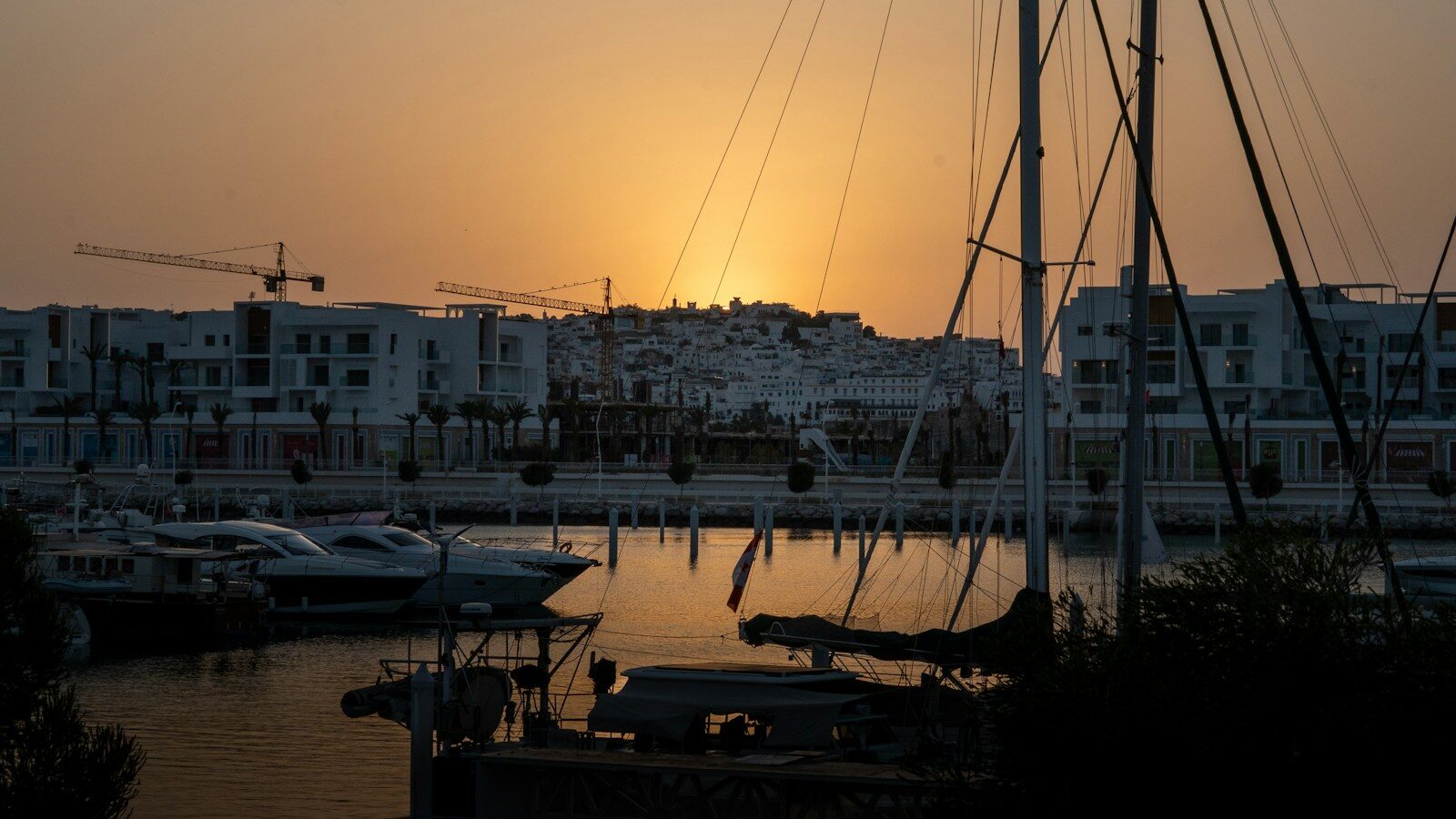
10. Villa Harris Museum and Park
About five kilometers east of the center, in Malabata, stands Villa Harris. It was built in the late 19th century by Walter Harris, the London Times correspondent who spent his life reporting from Morocco. After years of neglect it reopened as a museum of modern Moroccan art, with works spanning roughly the last two centuries.
Entry to the museum is about 20 MAD, and the surrounding park is free. The garden is huge, with lawns, old trees, playgrounds and paths down toward the sea. Locals come here to jog and picnic, which makes it one of the few attractions where you see Tangier on its day off.
11. Perdicaris Park (Rmilat Forest)
Perdicaris Park covers about 70 hectares of forest on the hills west of the city, facing the strait. It is named after Ion Perdicaris, a Greek-American who built a villa here in the 1870s and was famously kidnapped from it in 1904, an incident that brought American warships to the bay.
The restored villa now works as a heritage center. The real draw, though, is the forest: eucalyptus, pine and cork oak, walking trails, and sudden views of the sea through the trees. Entry is free. A petit taxi from the center takes 10 to 15 minutes, and drivers know it as “Rmilat”.
Tangier Africa: Where Two Seas and Two Continents Meet
West of the city, the land ends, and Tangier Africa feels truly wild. This is the corner of the continent where the Mediterranean gives way to the Atlantic, and it is where the most dramatic Tangier tourist attractions sit. You can see all three in half a day.
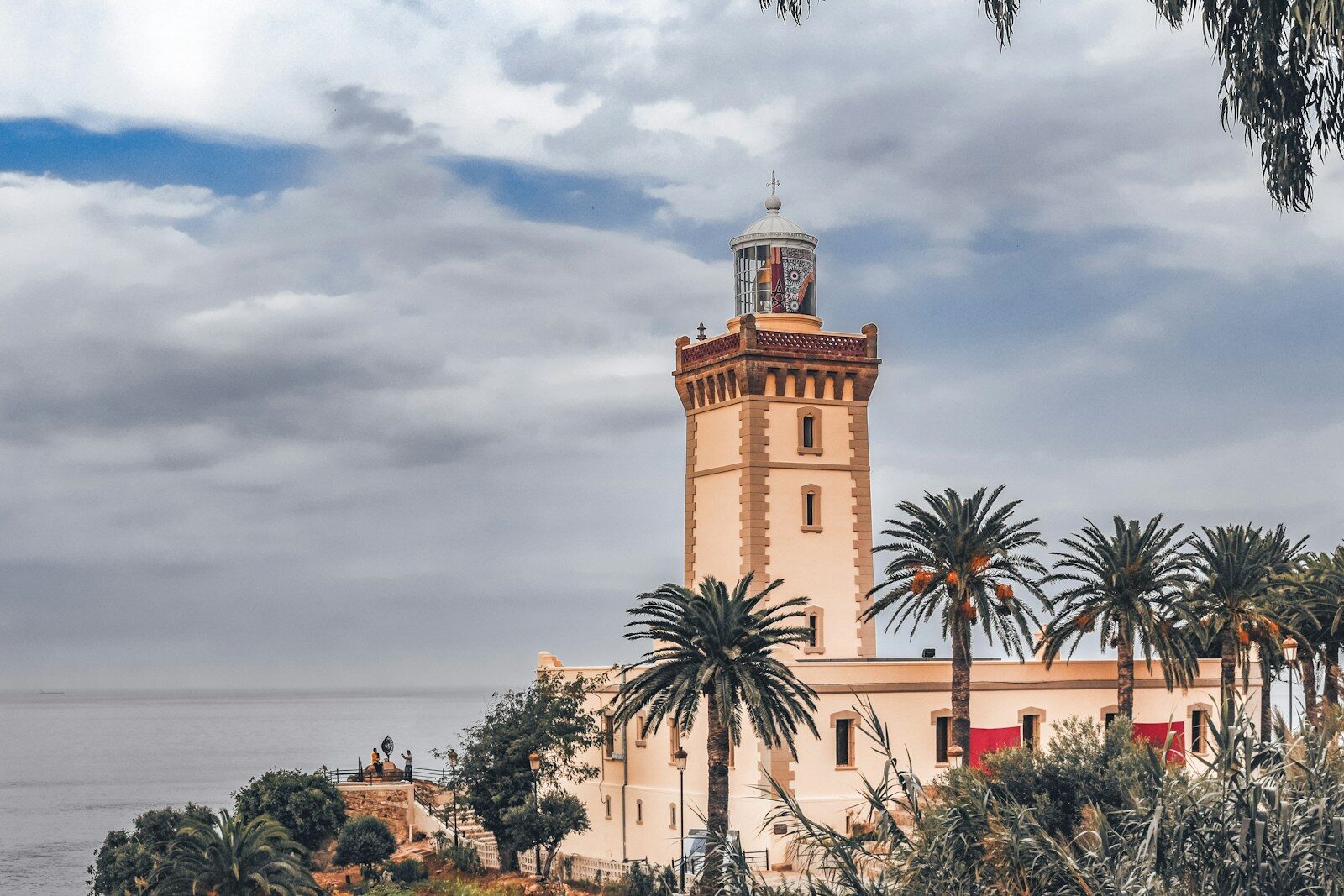
12. Cap Spartel
Cap Spartel is the northwestern tip of mainland Africa, about 14 kilometers from the center. A lighthouse built in the 1860s stands in a garden of palms above the cliffs. Inside, a small museum explains the shipwrecks and naval battles of the strait. Combined entry to the lighthouse, museum and garden is around 50 MAD.
Walk to the edge of the terrace and you see the two seas meet. The Mediterranean side is usually calmer and bluer, and the Atlantic side rolls in harder. A signpost marks the spot, and yes, everyone takes the same photo. Bring a jacket, because the wind here is strong even in summer.
13. The Caves of Hercules
A few minutes south of the cape are the Caves of Hercules, a mix of natural cave and old stone quarry. Legend says Hercules rested here before one of his labors. The real star is the opening to the sea: seen from inside, it looks like a map of Africa in reverse, with waves crashing through it.
Entry costs between 60 and 80 MAD depending on the season. The caves are small and get crowded around midday when tour groups arrive, so aim for early morning or late afternoon. Souvenir stalls and camel rides line the road outside, and you can skip both without missing anything important.
14. Achakar and the Atlantic beaches
South of the caves, the coast opens into long Atlantic beaches. Achakar and Robinson Plage are the closest, with wide sand, cafes serving grilled sardines and much cleaner water than the city beach. The surf can be rough, so swim only where locals swim, and never alone.
This is where you go when you have had enough of museums, and it shows a softer side of Tangier Africa. In summer the beaches fill with Moroccan families. In the shoulder months you may have long stretches to yourself. A petit taxi or shared grand taxi gets you here, and a private driver for the whole western loop typically costs a few hundred dirhams.
15. Day trips: Asilah, Tetouan and Chefchaouen
Tangier is the best base in the north. Asilah, 45 minutes south, is a whitewashed fishing town with murals on the walls and a famous summer arts festival. Tetouan, about an hour east, has a UNESCO-listed medina with a strong Andalusian influence and almost no tourist pressure.
Chefchaouen, the blue town in the Rif Mountains, is about two hours away. It makes a long but rewarding day, and an overnight stay is even better. Our full Chefchaouen guide covers what to see there, where to stay and how to get there by bus, shared taxi or private car.
Things to Do in Tangier Morocco by Interest
Sights are only half the trip, even with this many Tangier tourist attractions. The other half is food, cafes, shopping and the small rituals of daily life. Here are the things to do in Tangier Morocco that do not appear on most top-ten lists.
Eat seafood and northern Moroccan dishes
Tangier is a fishing city, and the seafood is the best reason to sit down for a long lunch. Saveur de Poisson, near the Grand Socco, serves a fixed menu of fish soup, grilled fish, tagines and fruit, with no choices and no regrets. Around the old port, simple grills sell sardines and calamari by weight.
Try bissara, a thick fava bean soup with olive oil and cumin, for breakfast. Look for kalinte, a chickpea flan sold from carts, which shows the Spanish influence on the city. For dessert, the patisseries on Boulevard Pasteur serve French pastries and Moroccan almond sweets side by side.
Join the cafe culture
Cafes are the living rooms of Tangier. Besides Café Hafa and the Petit Socco, visit Café Baba in the Kasbah, open since 1943, with photos of its famous guests on the walls. Gran Café de Paris on Place de France was once a favorite of spies and journalists during the Second World War.
Note that traditional cafes are still largely male spaces, especially in the evening. Women travelers are welcome, but modern cafes on the Corniche and in the new town may feel more relaxed. Alcohol is served only in licensed bars, hotels and some restaurants, not in cafes.
Shop the souks without the pressure
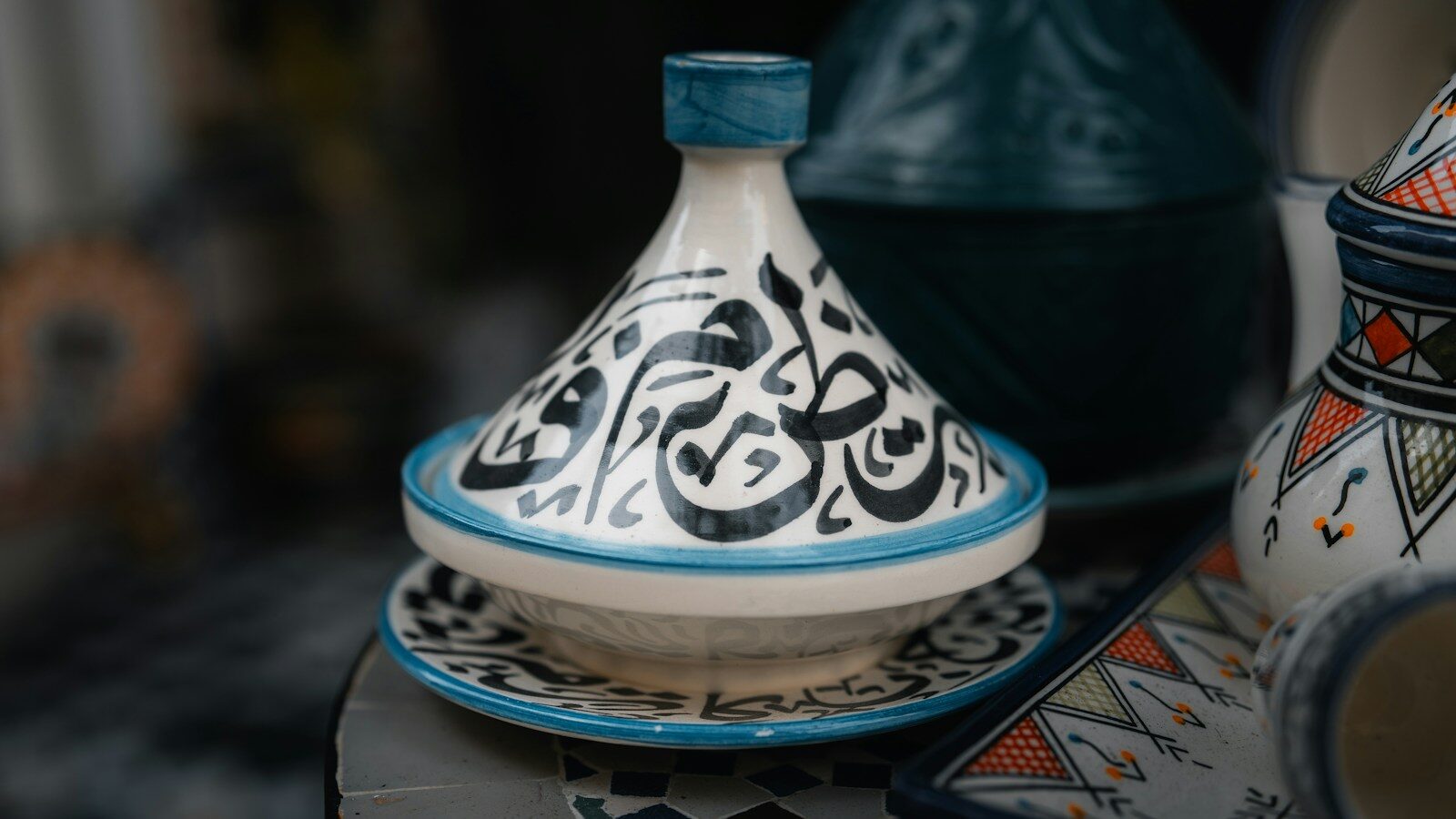
The medina souks are smaller than in Marrakech, and the selling is far less aggressive. Look for leather slippers, ceramics, woven blankets and northern Moroccan straw hats with colored pompoms. The women’s cooperative at Fondouk Dar Dbagh sells crafts at fixed prices and serves a generous traditional breakfast.
Haggling is expected in most shops. Start at about half the first price and settle somewhere in between with a smile. If you are not interested, a firm “la, shukran” (no, thank you) works much better than a vague maybe.
Relax in a hammam
A public hammam is cheap and very local: you bring soap, a scrub glove and a towel, and pay a few dozen dirhams. A spa hammam in a riad or hotel costs more but includes a full scrub, clay mask and massage. After a day of steep medina stairs, it is one of the most rewarding things to do in Tangier.
Hidden Tangier Tourist Attractions Most Visitors Miss
Once you have ticked off the big names, a second layer of the city opens up. These spots rarely make the top-ten lists, but they are some of the most rewarding things to do in Tangier if you have an extra afternoon.
Hotel Continental above the port
The Hotel Continental opened in the late 19th century on the edge of the medina, looking straight down at the harbor. Its tiled lobby, old photographs and faded salons have appeared in films and novels. You do not need to stay here. Ask politely to see the lobby, order a drink on the terrace and look out over the ferries crossing to Spain.
Matisse’s window at the Grand Hotel Villa de France
Henri Matisse stayed at the Grand Hotel Villa de France during his visits to the city and painted the view from his room toward St Andrew’s Church and the medina. The hotel has been restored and still celebrates the connection. It is a small detour from the Grand Socco and a reminder of how many painters fell for this light.
A match night at the Grand Stade de Tanger
Football is a serious passion in the north. The Grand Stade de Tanger, also called Ibn Battouta Stadium, was rebuilt into a 75,500-seat arena and hosted matches of the Africa Cup of Nations. If the local club Ittihad Riadi de Tanger or the national team is playing, a match is one of the most memorable things to do in Tangier Morocco. Buy tickets in advance and arrive early, because traffic around the stadium is heavy.
Sunrise walks on the old city walls
Get up before the medina wakes and walk the ramparts from Bab Kasbah toward Borj el Hajoui, the old cannon terrace above the port. Bakers are lighting their ovens, cats are claiming the steps and the strait is often perfectly flat. Of all the Tangier tourist attractions in this guide, this one costs nothing and needs no ticket.
Where to Stay Near the Best Places to Visit in Tangier
Where you sleep shapes your trip more than you might expect. Each area of the city suits a different kind of traveler, and choosing well saves you time and taxi money.
Inside the medina or Kasbah
Stay here for atmosphere. Small riads and guesthouses have roof terraces with sea views, and you can walk to the Petit Socco, the Kasbah and Café Hafa. The downside is luggage: most lanes are closed to cars, so expect a short walk with your bags. Choose a place near the Grand Socco or Bab Kasbah to keep that walk short.
The new town and Corniche
Stay here for comfort and convenience. Modern hotels along the Corniche have pools, parking and easy access to the beach and train station. You will need a taxi or a 20-minute uphill walk to reach the medina, but restaurants and nightlife are close by. This is the best base if you are arriving by Al Boraq or driving.
Outside the city
Resorts along the Atlantic coast toward Achakar and beyond are quiet and spacious, with golf courses and private beaches. They suit families and travelers who want rest more than sightseeing. Plan on taxis or a rental car to reach the best places to visit in Tangier, since the center is 20 to 40 minutes away.
How Many Days You Need: 1-, 2- and 3-Day Plans
How long should you stay? One day covers the medina highlights. Two days let you add the Atlantic coast. Three days give you time for a day trip and a slower pace. If you are building a wider route, our Morocco itinerary shows where Tangier fits best.
One day in Tangier
- Morning: start at the Grand Socco, walk down to the Petit Socco and visit the American Legation Museum.
- Midday: climb to the Kasbah, look out from Bab el Bahr, then tour the Kasbah Museum.
- Lunch: seafood near the Grand Socco.
- Afternoon: mint tea at Café Hafa and a walk to the Phoenician Tombs.
- Evening: sunset at Tanja Marina Bay and a stroll along the Corniche.
Two days in Tangier
Follow the one-day plan, then spend the second morning on the western loop: Perdicaris Park, Cap Spartel and the Caves of Hercules. Have a long fish lunch at Achakar, then return for an evening walk along Boulevard Pasteur and the Terrasse des Paresseux.
Three days in Tangier
Add a full day trip to Asilah or Tetouan, or an overnight in Chefchaouen. Use any spare hours for Villa Harris, Dar Niaba, a hammam or a cooking class. Three days is also enough to stop rushing and start enjoying the city the way locals do, which is the real secret of the best things to do in Tangier Morocco.
Is Tangier Safe? Honest Safety Tips
Yes, Tangier is safe for most travelers who take normal city precautions. Violent crime against tourists is rare. The common problems are petty: pickpockets in crowds, taxi drivers who “forget” the meter and self-appointed guides who expect a tip after showing you a street you did not ask to see.
For official guidance, check the US State Department travel advisory for Morocco, which has rated the country at Level 2, “exercise increased caution”, the same level as many European countries. The advice there focuses on terrorism risk in crowded places, not on street crime.
Simple rules that prevent most problems
- Ignore anyone who approaches you at the port or the medina gates offering to guide you. Book a licensed guide through your hotel instead.
- Insist on the meter in blue petit taxis, or agree on the fare before you get in. Careem works in the city center.
- Keep your phone in a front pocket in crowded souks and on the Corniche at night.
- Politely refuse any offer of hashish. It is illegal, and some offers are set-ups.
- Walk with a partner in the medina late at night, and stick to lit main lanes.
Women traveling alone generally report that Tangier is calmer than Marrakech. Dress modestly in the medina, wear sunglasses and walk with purpose. For a deeper look at scams and advisories across the country, read our guide to Morocco travel safety.
Getting to and Around Tangier
Tangier is one of the easiest entry points to Morocco, and reaching the best places to visit in Tangier is simple once you land. You can arrive by sea, rail or air, and the center is compact enough to walk between most sights.
By ferry from Spain
The fast ferry from Tarifa to Tangier Ville takes about one hour and lands at the port right below the medina. Balearia and Africa Morocco Link both run the route several times a day. Passport control usually happens on board, so join the queue as soon as you sail. Ferries from Algeciras arrive at Tanger Med, about an hour’s drive from the city.
By train
The Al Boraq high-speed train links Tangier with Kenitra, Rabat and Casablanca. It reaches speeds of 320 km/h and makes the trip to Casablanca in a little over two hours. Book on the ONCF website or at the station, and buy first class if you want a guaranteed quiet seat. Connections continue to Fez and Marrakech, and our Rabat travel guide makes a good next stop.
By air
Ibn Battouta Airport is about 15 kilometers south of the center, with direct flights from many European cities. Grand taxis wait outside, and fares into town are posted in the arrivals hall. Agree on the price before you load your bags.
Getting around the city
Walk the medina and Kasbah, because cars cannot enter most lanes in the old city tangier was built around. Use blue petit taxis for short trips across town and beige grand taxis for Cap Spartel, the beaches and nearby towns. Keep small notes ready, as drivers rarely have change for a 200-dirham bill. For a full overview of transport, money and planning across the country, see our Morocco travel guide.
When to go
Spring (April to June) and autumn (September to October) are the best months, with warm days and clear views across the strait. Summer is busy with Moroccan families and returning residents, and ferries sell out. Winter is mild but wet and windy, and storms sometimes cancel crossings.
Tangier Tourist Attractions FAQ
Is Tangier safe?
Yes. Tangier is safe for tourists who use normal precautions. The main risks are pickpockets, unofficial guides and taxi overcharging. Use metered taxis, avoid walking alone late in empty lanes and decline offers from strangers at the port.
Is Tangier worth visiting?
Yes. Its Tangier tourist attractions include a walkable medina, excellent museums, two coasts, great seafood and a fascinating history as an international zone. It is also calmer than Marrakech and a perfect first or last stop on a Morocco trip.
Is Tangier Morocco worth visiting for a day trip from Spain?
It is, if you plan well. Take an early ferry from Tarifa, focus on the medina, the Kasbah and Café Hafa, and leave the Atlantic coast for a longer visit. One night is far better than a rushed day.
What is Tangier known for?
Tangier is known for its location where the Mediterranean meets the Atlantic, its era as an international zone, its links with writers like Paul Bowles and William Burroughs, the Kasbah, Café Hafa and the Caves of Hercules.
What are the best places to visit in Tangier for a first trip?
The best places to visit in Tangier for first-timers start with the Grand Socco, the Petit Socco, the American Legation Museum, the Kasbah and Kasbah Museum, Café Hafa, Cap Spartel and the Caves of Hercules. Add Perdicaris Park and Villa Harris if you have more time.
How many days do you need in Tangier?
Two days are ideal for the main Tangier tourist attractions, including the Atlantic coast, and for the best things to do in Tangier at an easy pace. Add a third day for a trip to Asilah, Tetouan or Chefchaouen.
Can you see Spain from Tangier?
Yes. On a clear day you can see the Spanish coast from the Kasbah, Café Hafa and Cap Spartel, three of the best Tangier tourist attractions for views. Early morning usually gives the sharpest view.
What are the top things to do in Tangier at night?
The best things to do in Tangier at night are simple: walk the Corniche, have dinner at Tanja Marina Bay, sit in the Petit Socco or watch a film at Cinema Rif. The city stays lively until late, especially in summer.
Plan Your Trip to the City Where Africa Faces Europe
Tangier rewards travelers who give it more than a quick ferry visit, and the city tangier locals love is the one you find on day two. Its best moments are small: tea poured at Café Hafa, the first view of Spain from Bab el Bahr, the smell of grilled fish near the port. String those together and the city starts to make sense.
Start with the medina and Kasbah, then push west to Cap Spartel and the Caves of Hercules, and save an evening for the Corniche. Together, these Tangier tourist attractions show you every era of the city in two or three days. Pick your travel dates, book one night more than you think you need, and use the one-day plan above as your first draft. For more ideas once you leave the north, browse our list of things to do in Morocco.