Essaouira Morocco is the town most travelers reach after a few loud days in Marrakech, and almost all of them say the same thing on the first evening: why didn’t we come here sooner? It sits on the Atlantic about 176 km west of Marrakech, wrapped in 18th-century sea walls, cooled by a wind that rarely stops and fed by a fishing port that still works every single morning.
This guide is built for one job. You are planning a Morocco trip, you keep seeing Essaouira on lists, and you want to know whether it deserves a slot in your route, how long to stay, where to sleep and how to get there without wasting a day. Everything below comes from the questions travelers ask us most, checked against official sources and current prices in dirhams.
You will find the 12 best things to do in Essaouira Morocco, honest answers on cost and crowds, the real surf and kitesurf seasons, a full transport comparison for the Marrakech to Essaouira road, and a short list of Essaouira hotels and riads that we would book ourselves. Prices are given in Moroccan dirhams (MAD), with about 10 MAD to one euro as a rough guide.
Where Is Essaouira? A Quick Morocco Essaouira Overview
Essaouira is a walled port town on Morocco’s Atlantic coast, roughly halfway between Safi to the north and Agadir to the south. It is the capital of its own province in the Marrakech-Safi region, and the town itself is home to about 83,000 people according to the latest national census by the High Commission for Planning. That small size is a big part of what makes Essaouira Morocco so easy to enjoy: you can walk from one end of the medina to the other in fifteen minutes.
A town designed from scratch
Most Moroccan medinas grew slowly over centuries. Essaouira did not. Sultan Sidi Mohammed ben Abdallah ordered it built in the 1760s as the kingdom’s main Atlantic trading port, and he hired the French engineer Théodore Cornut to lay it out. That is why the streets are straighter than in Fes or Marrakech, why the gates line up, and why the sea bastions look more like Saint-Malo in Brittany than anything else in North Africa.
The site is much older than the town. Phoenician traders used the offshore island as a base, and the old name Mogador is usually traced to the Phoenician word migdol, meaning a small fortress. The Portuguese built a fort here in the early 1500s, and the name Mogador stuck until the 1960s. Locals still use it, and you will see it on cafés, hotels and boats all over town.
Why UNESCO listed the medina
The Medina of Essaouira was inscribed on UNESCO’s World Heritage List in December 2001. The committee described it as an outstanding, well-preserved example of a late 18th-century European fortified seaport translated into a North African setting. For about a century, the port linked Morocco and its Saharan trade routes with Europe, which is why you still find a Mellah (the old Jewish quarter), consulate buildings and Dutch and Spanish cannons on the walls.
This mixed history explains the atmosphere today. First-time Morocco Essaouira travelers describe the town as calm, open and creative, and that reputation is not marketing. Muslim, Jewish and European merchants lived side by side here for generations, and that easygoing spirit has outlasted the trade that created it.
Is Essaouira Morocco Worth Visiting?
Yes, for most travelers Essaouira Morocco is worth visiting, and it is often the stop people remember most fondly. It is not the place for grand palaces or a dense list of monuments. It is the place where your shoulders drop, the shopkeepers let you browse, and the evening plan is watching the sun sink behind Mogador Island with grilled sardines and mint tea.
Here is the honest balance, so you can judge it against your own trip.
| What you get | What to expect |
|---|---|
| A compact UNESCO medina that is easy to walk | Fewer major monuments than Fes or Marrakech |
| Low-pressure shopping and friendly vendors | Prices for crafts are not always cheaper |
| Fresh seafood at fair prices | Strong wind most afternoons, especially in summer |
| Mild weather all year, rarely above 26°C | Cool evenings, so pack a sweater even in August |
| World-class kitesurfing and good beginner surf | The town beach is not ideal for lazy swimming |
Who will love it most
Essaouira Morocco suits couples, families with young children, solo travelers who want a break from hustle, surfers and kitesurfers, photographers and anyone who prefers wandering to sightseeing. It also works brilliantly as a recovery stop after a desert tour or a long road trip.
It suits you less if you only have four or five days in Morocco and want to tick off the imperial cities, or if your idea of a beach holiday is flat, warm water and sun loungers. In that case, the resort beaches around Agadir will make you happier, and our Agadir in Morocco guide covers them in detail.
What is Essaouira famous for?
Essaouira is famous for five things above all: its fortified UNESCO medina and sea walls, its working fishing port with blue wooden boats, the constant trade wind that makes it a kitesurfing capital, Gnaoua music and its big annual festival, and thuya woodwork, a fragrant local craft found nowhere else in the country in such quantity.
It is also known for argan oil from the forests around the town, for its history as a 1960s and 1970s stop on the hippie trail, and for appearing on screen. Fans of fantasy television may recognize the ramparts as the slave city of Astapor from the third season of Game of Thrones, and Orson Welles filmed parts of his Othello here long before that.
12 Best Things to Do in Essaouira Morocco
The best things to do in Essaouira Morocco are simple, mostly free and close together. You do not need a guide for any of them, although a local guide adds a lot in the Mellah and at the port.
1. Walk the Skala de la Ville at sunset
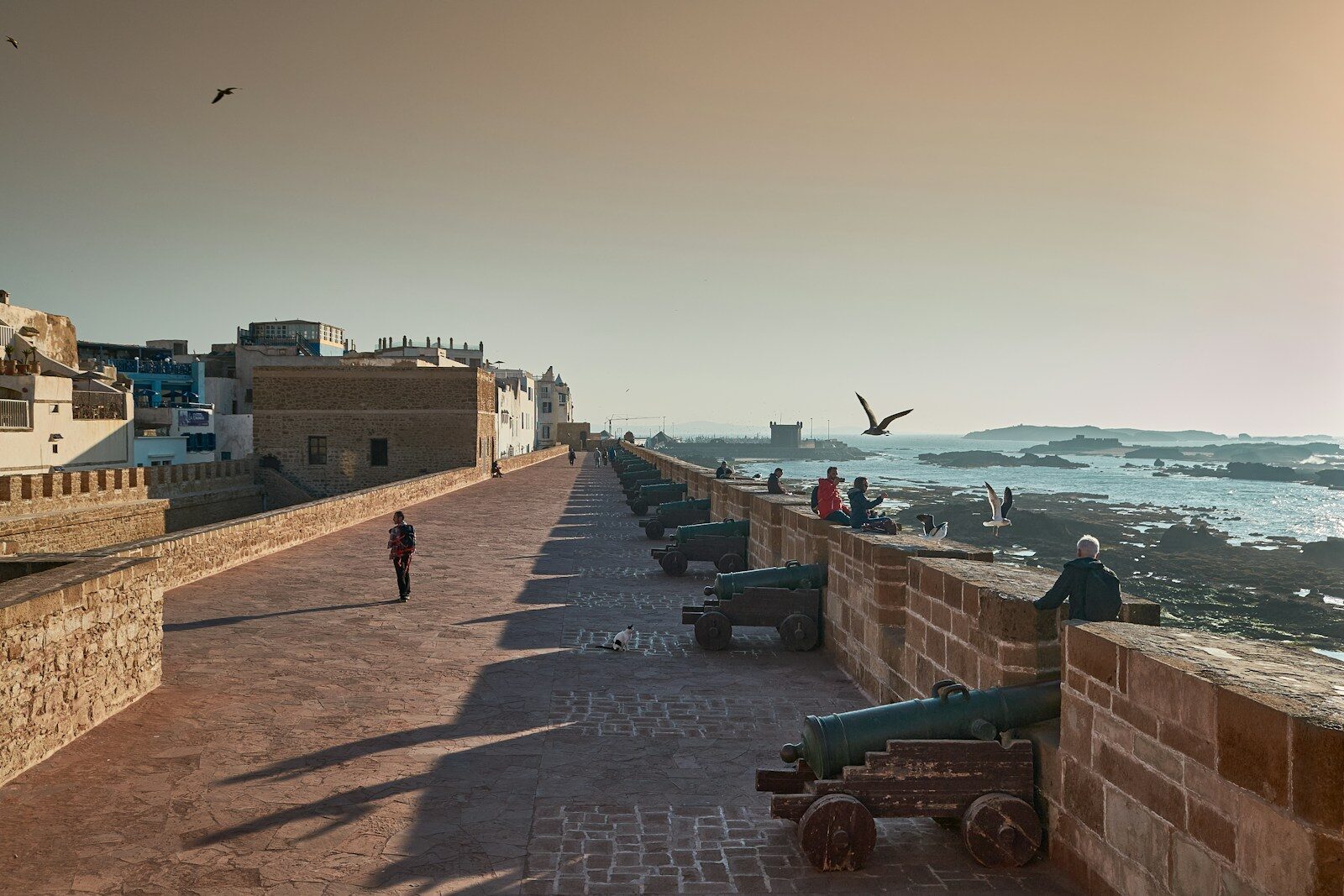
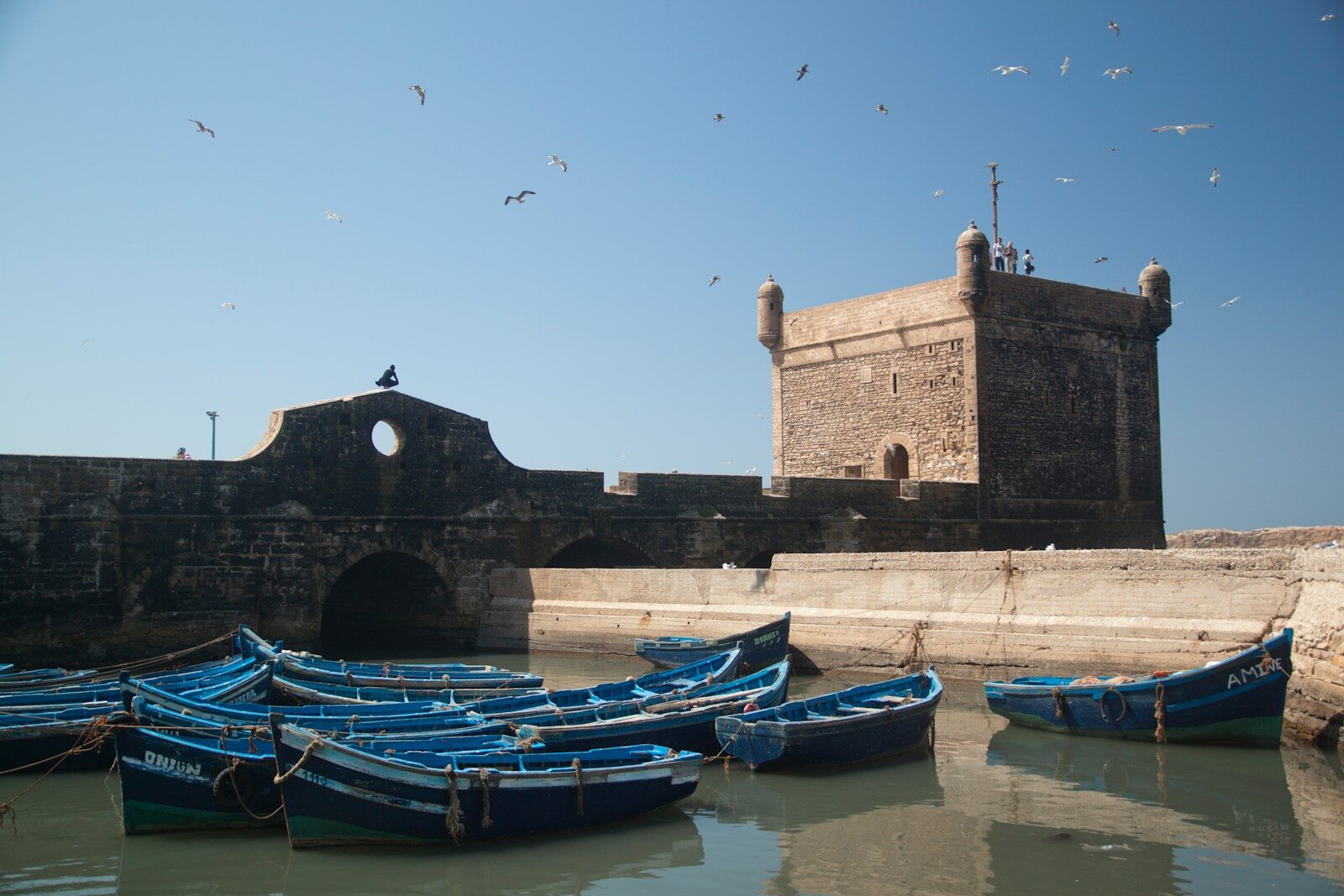
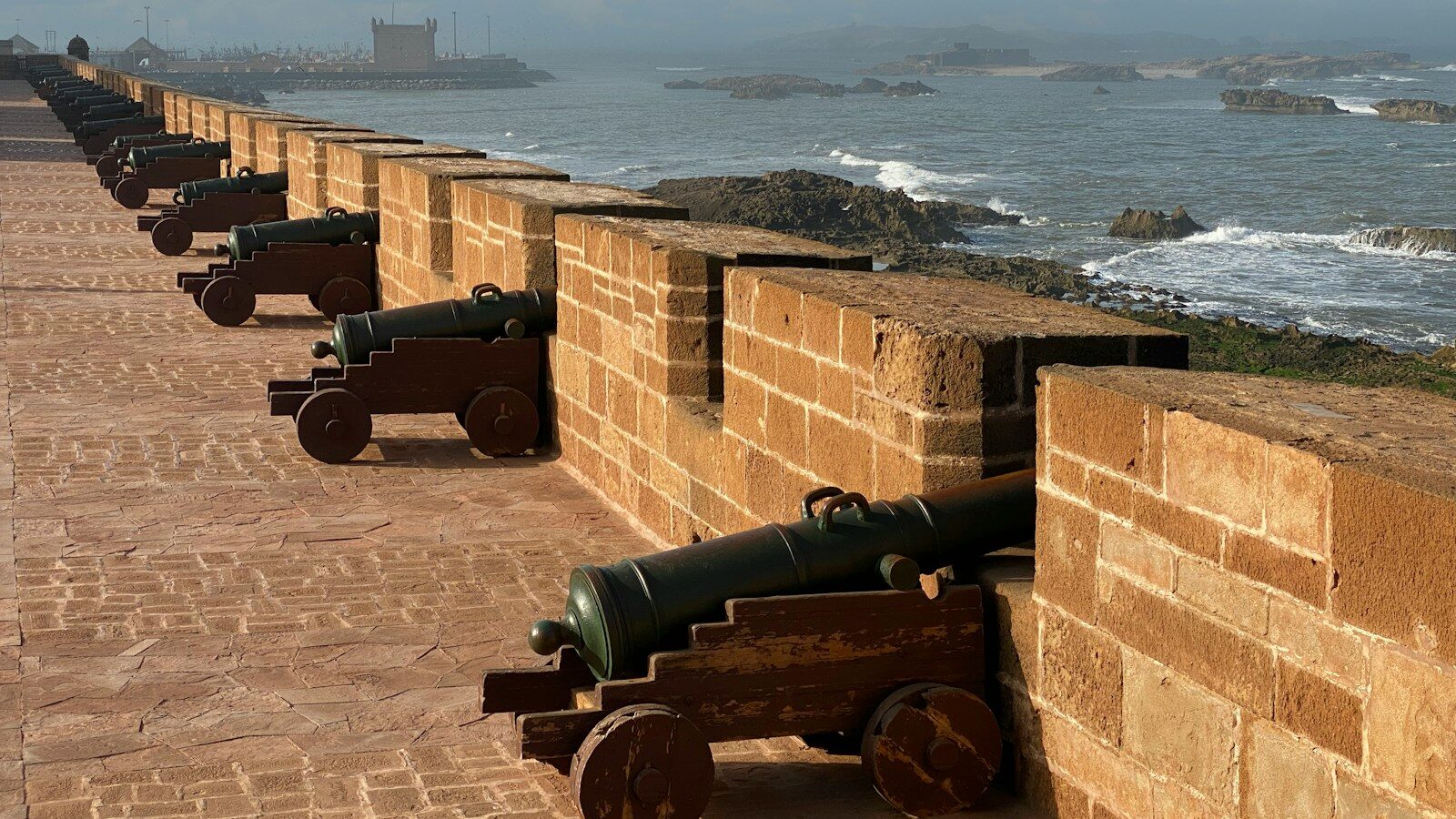
The Skala de la Ville is the long sea bastion on the northwest side of the medina, lined with bronze cannons that point at the waves. Access is free, and late afternoon is the best time, when the stone glows orange and the spray catches the light. Keep to the inner side of the wall: there is no railing, and the wind can push harder than you expect.
2. Watch the fishing port come alive
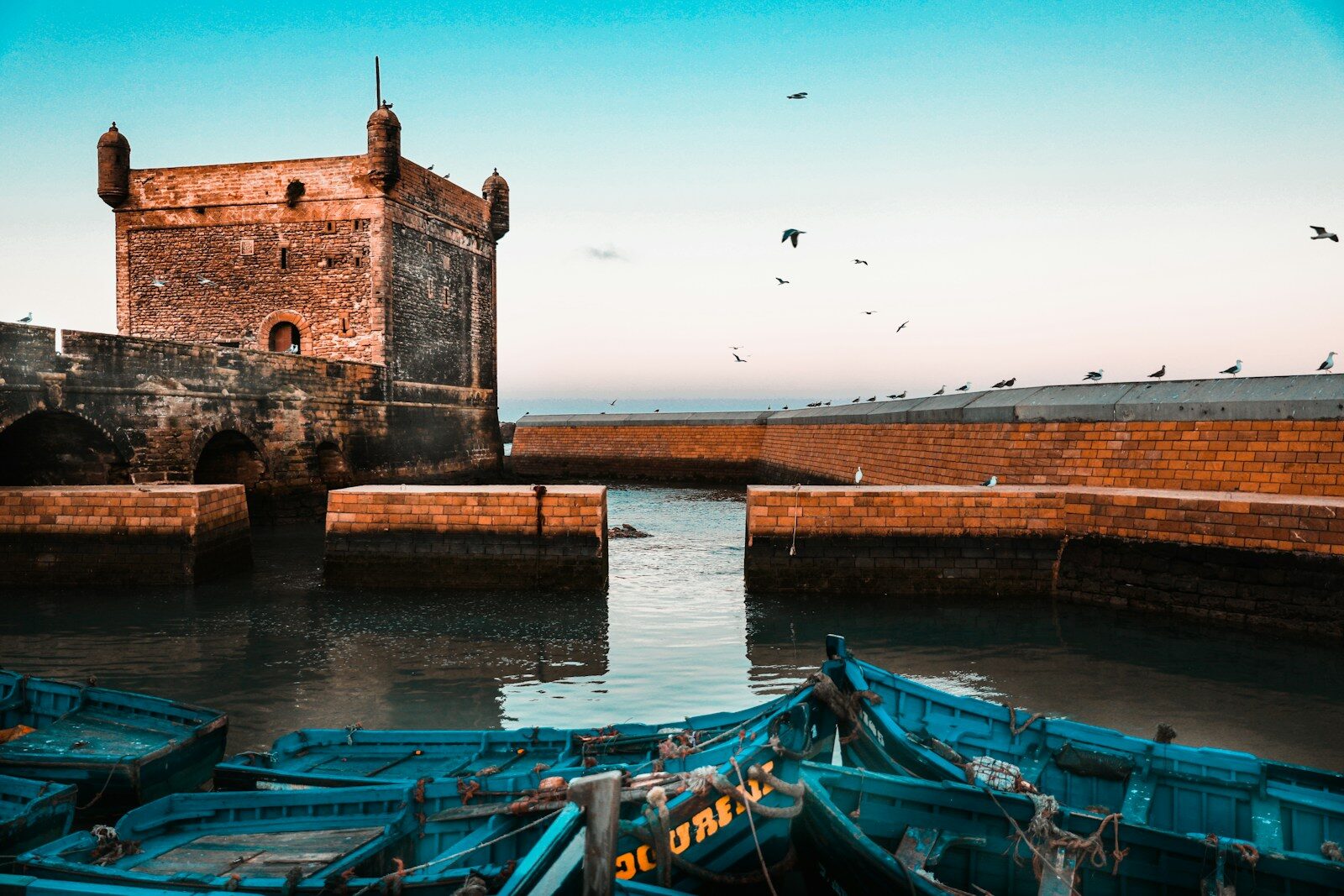
Go to the port between 8 and 11 a.m., when the boats land their catch, gulls circle overhead and men mend bright nets on the quay. It is Morocco’s third-largest fishing port and one of the most photogenic working harbors anywhere. Walking around costs nothing, and nobody will ask you to pay to enter the docks themselves.
3. Climb the Skala du Port
The Skala du Port is the smaller fortress at the harbor mouth, with a square tower and the best view back over the walls to the medina. Unlike the Skala de la Ville, it charges a small entry fee, recently quoted at around 30 to 60 MAD for foreign adults, and it typically opens from about 9 a.m. to 5 p.m. Climb the tower for the classic postcard photo.
4. Eat grilled fish from the port stalls
This is the meal most visitors remember. Pick your fish, prawns or squid at the stalls near the port, agree the price per kilo before anything goes on the grill, then pay a separate grill fee, usually 20 to 30 MAD per person. A generous plate for one person often lands between 80 and 140 MAD in total. Ask for the price first, every time.
5. Get lost in the medina souks
The main market streets run between Bab Doukkala and the clock tower near Place Moulay Hassan, with side lanes for spices, jewelry, leather and woodwork. Essaouira has a reputation for low-pressure selling, and it is well earned: you can look, ask a price and walk away with a smile. Prices are still tourist prices, so polite bargaining remains normal.
6. Visit the thuya woodworkers under the ramparts
The workshops built into the walls below the Skala de la Ville sell boxes, chess sets and inlaid tables made from thuya, a local cedar-like wood with a warm, spicy scent. Watching the craftsmen polish the burl is free. For a quality piece, check that the lid fits snugly and that the inlay is flush, not glued on top.
7. Explore the Mellah and Bayt Dakira
The Mellah, in the north of the medina, was once home to one of Morocco’s largest Jewish communities. Today it is quieter and partly restored, with Stars of David still carved above some doorways. Bayt Dakira, the House of Memory, opened in 2020 and includes the restored Simon Attias Synagogue and exhibits on centuries of Jewish and Muslim life in the town. Entry has been free, and it is generally closed on Saturdays.
8. Shop for argan oil and amlou
Argan trees grow across the Essaouira region, and the town is one of the best places in Morocco to buy argan oil and amlou, a spread of roasted almonds, argan oil and honey. Women’s cooperatives on the road toward Marrakech sell both. In town, choose shops that show the pressing date, and expect real cosmetic argan oil to cost far more than the cheap bottles sold by the dozen.
9. Hear Gnaoua music
Gnaoua is a hypnotic, rhythm-driven music with sub-Saharan roots, played on the guembri bass lute and iron castanets called qraqeb. UNESCO added Gnawa to its list of the intangible cultural heritage of humanity in 2019. You can hear it in small venues and riads year-round, and every year in late June the town hosts the Gnaoua and World Music Festival, running since 1998, when more than 400 musicians fill the squares for three days.
10. Walk or ride to Diabat and the dunes
Follow the Essaouira beach south for about 40 to 45 minutes and you reach the village of Diabat, the crumbling Bordj El Berod fort half-swallowed by the sand and wide coastal dunes behind it. Camel rides, horseback rides and quad tours all run here. Choose operators whose animals look healthy and rested, and walk away from anyone who will not tell you the full price in advance.
11. Watch the falcons of Mogador Island
The Purple Isles just offshore are a protected nature reserve and a Ramsar wetland site, and they hold the world’s largest breeding colony of Eleonora’s falcons, according to BirdLife International. Landing requires official permission, and the birds nest from late April to the end of October. Bring binoculars to the beach or the Skala du Port and you can often see them hunting over the water.
12. Join a cooking class or take a hammam
A half-day cooking class is the easiest way to learn how a tagine, a fish chermoula or a pastilla really comes together, and most classes start with a trip to the market. Afterward, a hammam scrub is the perfect end to a windy day. Local public hammams cost very little; spa hammams in riads and hotels cost more but explain every step in English or French.
Essaouira Beach and the Coast Beyond Town
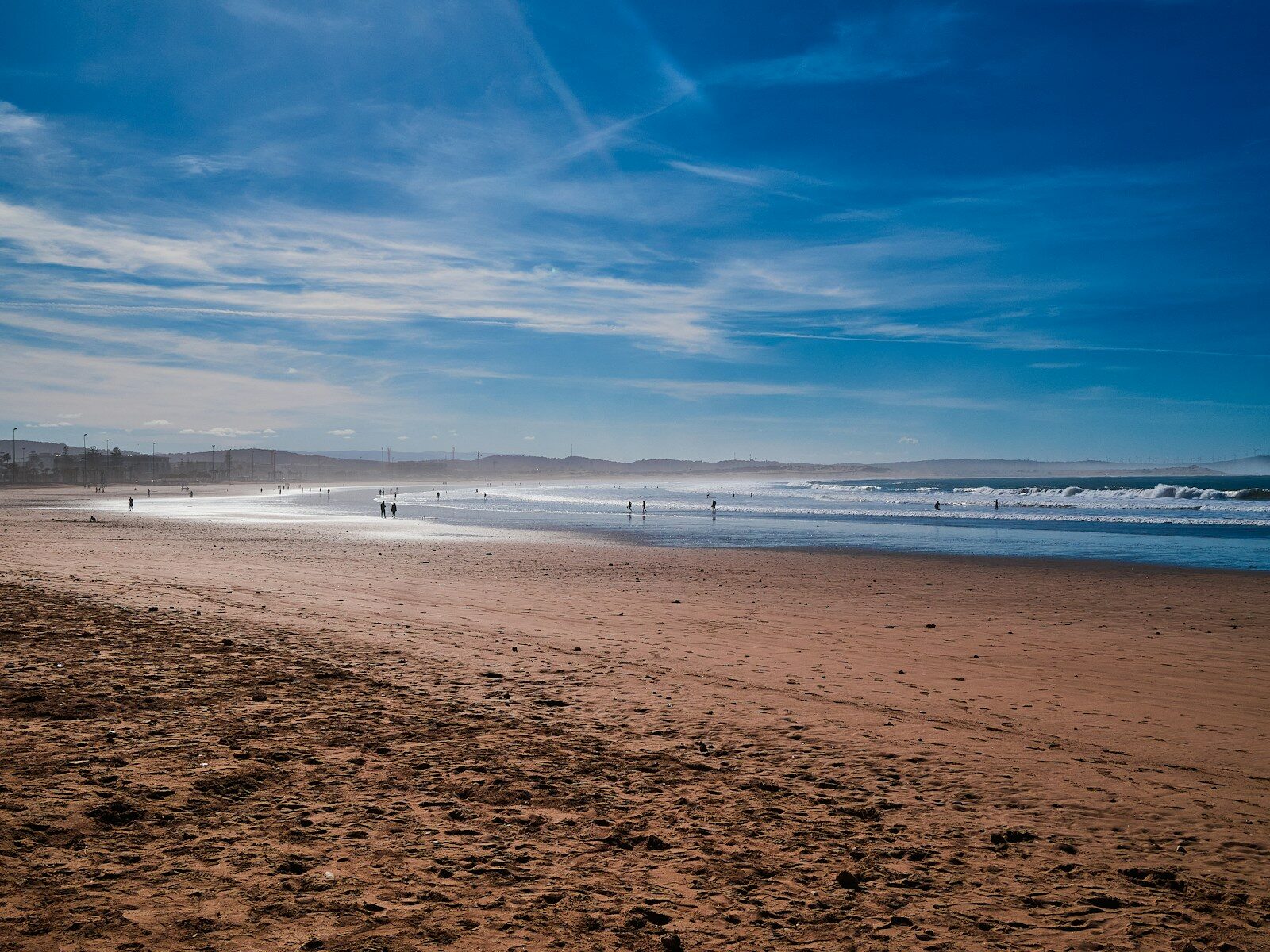
The main Essaouira beach is a wide, clean crescent of sand that starts at the medina walls and runs south for several kilometers, with a seafront promenade of about 2 km lined with cafés and beach clubs. Mornings are often calm and bright; by early afternoon the wind usually builds and the kites come out.
Swimming, sunbathing and the wind
The bay is partly sheltered by Mogador Island, but the water is cool all year, roughly 16°C in winter to 21°C in late summer. On strong-wind days, sand blows hard along the beach, so sunbathing is easier in the morning or in the lee of a beach club windbreak. Swim only where others are swimming, avoid the rocky area near the port, and watch children closely when the tide turns.
Beachwear is fine on the sand itself. When you walk back into town or sit at a café on the promenade, cover up with a shirt or wrap. Local families stroll the promenade in the evening, especially at weekends, and that mix of locals and visitors is part of the charm.
Beaches worth a short trip
The coast around Essaouira Morocco gets wilder and emptier as you leave town:
- Sidi Kaouki, about 25 km south (around 30 minutes by car), is a low-key surf village with a long beach, a small white marabout shrine and simple guesthouses.
- Sidi M’Barek, south of Diabat, is a quiet beach often used by kite schools on bigger days.
- Moulay Bouzerktoun, about 20 km north, is a fishing village with powerful wind and waves, best for experienced riders and for watching the pros.
- Beaches on the road to Safi, farther north, offer empty sand for a picnic if you have a car.
A grand taxi to Sidi Kaouki is easy to arrange from Bab Marrakech, and in summer some surf schools run daily shuttles. If you have more time on the coast, our Taghazout guide covers the surf villages north of Agadir, about three hours farther south.
Surf and Wind: Watersports on the Atlantic Coast
Essaouira is nicknamed the Wind City of Africa for good reason. The northeast trade winds, called the alizés, are boosted in summer by the heat inland, and together they create one of the most reliable wind patterns on the Atlantic. That wind decides almost everything about when and where to ride.
Essaouira Morocco surfing: spots and seasons
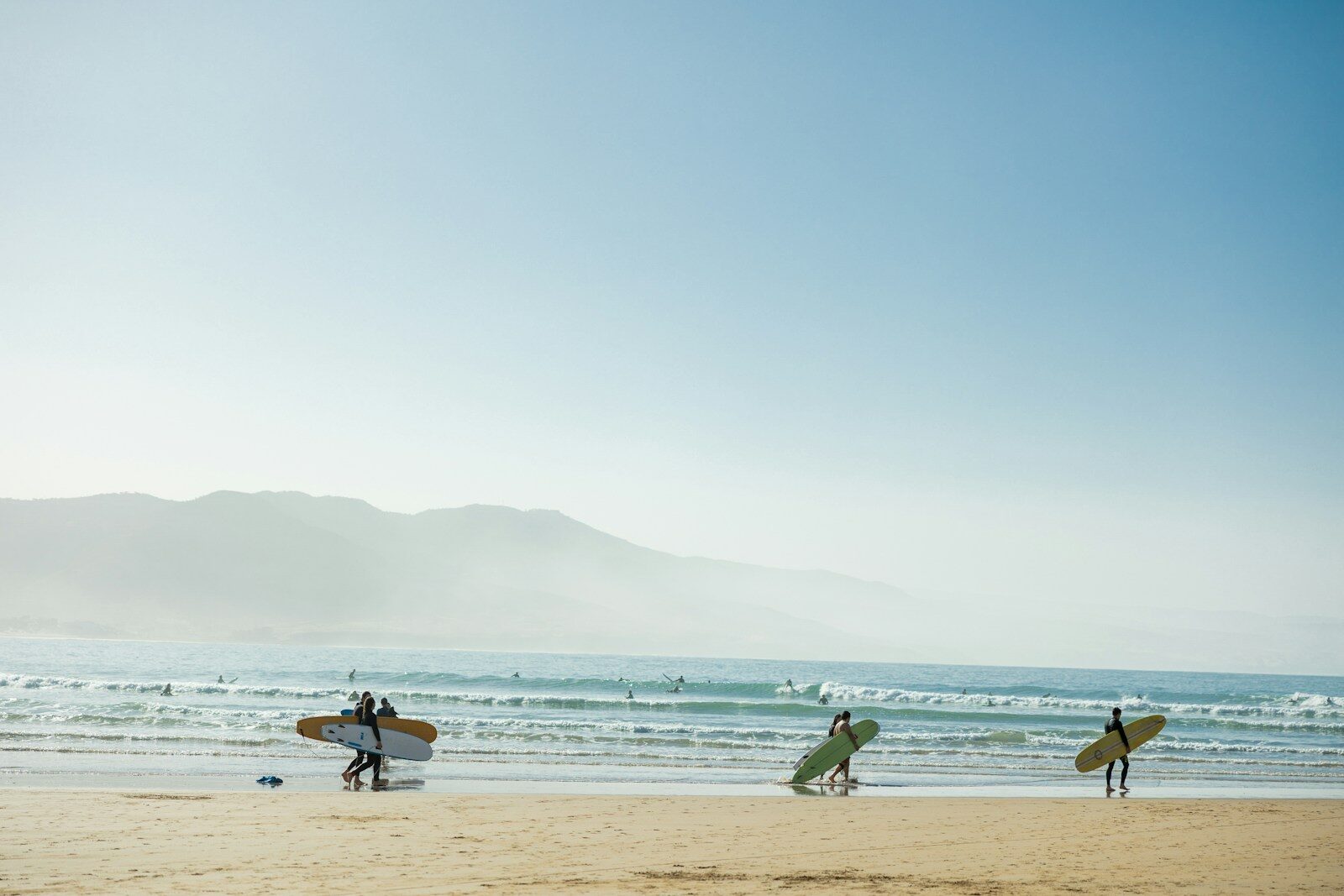
For waves, the best Essaouira Morocco surfing season runs from roughly October to April, when Atlantic storms send bigger swells and the wind is lighter. Summer brings smaller waves and stronger wind, so the town bay becomes a kite zone and surfers head out early or drive to more sheltered corners.
The bay in front of town is the classic beginner spot, with soft, rolling waves and sand underfoot. Sidi Kaouki has more consistent waves for improvers. Moulay Bouzerktoun is powerful and better left to experienced surfers. Once your Essaouira surf skills grow, advanced riders looking for long point breaks usually continue south to Taghazout and Imsouane.
The golden rule is simple: surf early. Mornings are often glassy before the wind arrives, and an offshore east wind forecast is the best news a surfer here can get.
Essaouira surf schools and what lessons cost
There are dozens of Essaouira surf schools along the beach promenade, from small local outfits to international centers. A two-hour beginner group lesson with board and wetsuit typically costs around 250 to 350 MAD, and multi-lesson packs bring the price per session down. Board rental runs roughly 200 MAD per day, with cheaper hourly rates.
Before booking, check three things: that instructors are certified, that group sizes stay small (six students per instructor is a good maximum) and that the school chooses the spot by conditions, not by convenience. In winter you will want a 4/3 mm wetsuit; in summer a 3/2 mm suit is usually enough.
Essaouira Morocco kitesurfing: wind, schools and safety
Essaouira Morocco kitesurfing is world-class, and the main season runs from about April to September, when the trade winds blow on most days and often reach 20 to 25 knots, sometimes more than 30 in midsummer. Winter still has kiteable days, but they are less predictable.
The wind blows mostly side-shore or side-onshore across the bay, which is ideal for learning, and the wide beach gives plenty of space to launch. Beginners should still avoid the area close to the port and town, where gusts are stronger and rocks hide under the water. Sidi Kaouki and Moulay Bouzerktoun are favored by experienced riders for wave sessions and downwinders.
For Essaouira Morocco kitesurfing, a full beginner course usually takes around 9 to 12 hours of instruction spread over several days. Choose an IKO- or VDWS-certified school, ask whether radio helmets are used and confirm that a rescue boat or jet ski is on standby. Book ahead in July and August, when the best schools fill up.
Marrakech to Essaouira: Bus, Taxi, Car or Tour
There is no train to Essaouira, so the Marrakech to Essaouira trip is always by road. The distance is about 176 km on a good highway and national road, and the scenery shifts from the Haouz plain to argan forest as you approach the coast.
| Option | Typical time | Approximate cost | Best for |
|---|---|---|---|
| Supratours bus | About 3 hours | 80 to 130 MAD per person | Budget travelers, train connections |
| CTM bus | About 2.5 to 3 hours | Around 80 to 110 MAD | Comfort and reliable timing |
| Private transfer or taxi | About 2.5 hours | 450 to 1,000 MAD per car | Groups, families, door-to-door |
| Rental car | About 2.5 hours | From about 300 MAD per day plus fuel | Exploring beaches nearby |
| Organized day tour | 11 to 12 hours round trip | Varies by operator | Travelers very short on time |
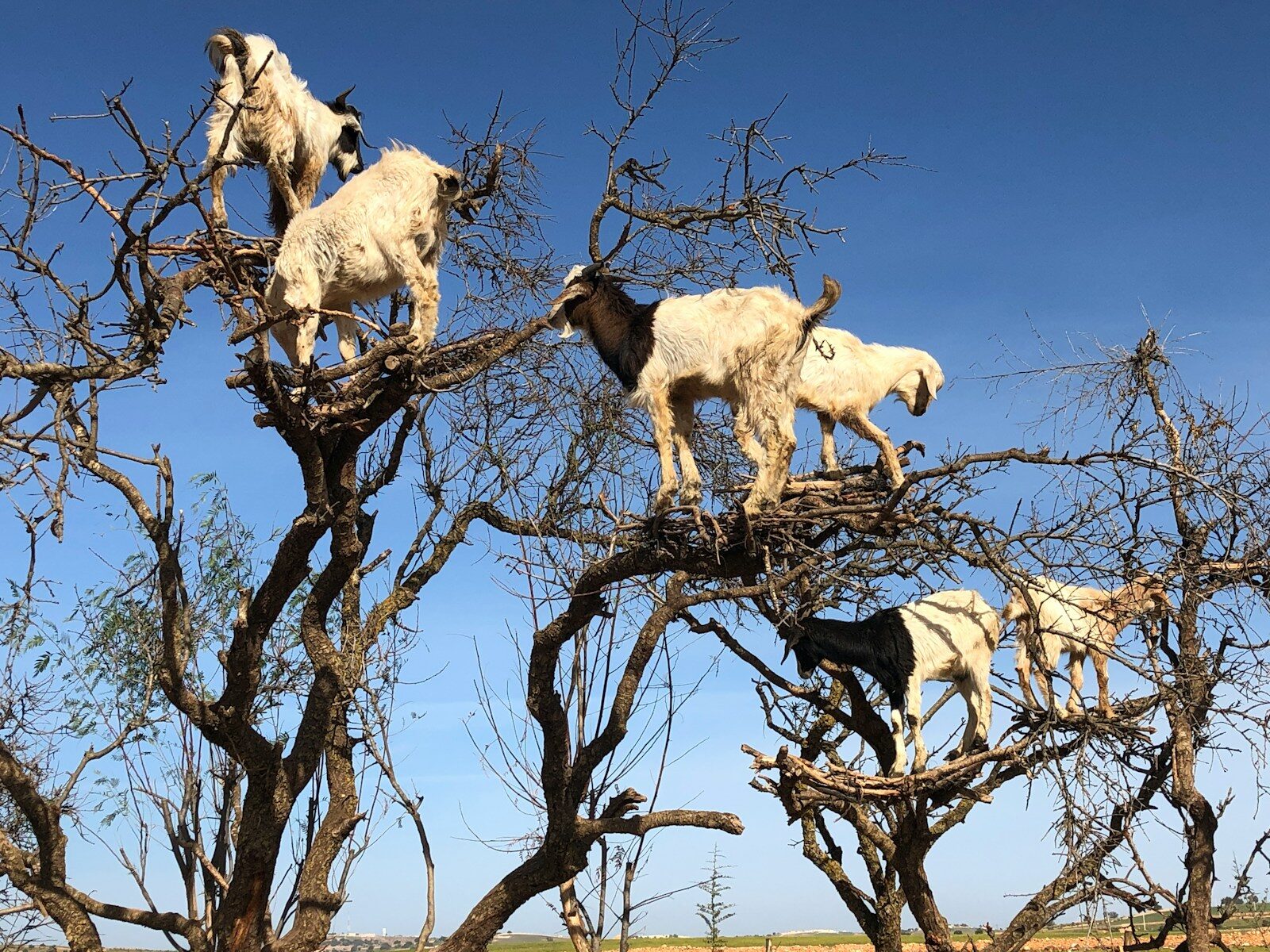
On the Marrakech to Essaouira route, Supratours, run by the national rail company ONCF, leaves from beside Marrakech train station and arrives near Bab Marrakech in Essaouira. CTM departs from its own station in Marrakech and arrives at the CTM station a short taxi ride from the medina. Both sell tickets online on their official websites, and buying a day ahead is wise in summer and on holiday weekends. On the way, you will pass the famous goats standing in argan trees; many are placed there for photos, and the herders expect a tip if you stop.
Is a day trip to Essaouira from Marrakech worth it?
A day trip to Essaouira from Marrakech is possible, and it beats not coming at all. But it means around five hours in a vehicle for four or five hours in town, and you miss the best moments: the early port and the sunset on the walls. If you can spare even one night, take it. Two nights is the sweet spot for most people.
If a day trip to Essaouira from Marrakech is your only option, leave by 8 a.m., ask your driver to skip long souvenir stops, spend your time between the port, the Skala and the souks, and eat lunch at the fish stalls. Our Moroccan Marrakech guide suggests how to fit this around your days in the city.
Getting back from Essaouira to Marrakech
The return from Essaouira to Marrakech works the same way, with several daily buses from both companies. Afternoon departures are popular, so book your seat when you arrive. If your Essaouira to Marrakech bus connects to a flight, leave a buffer of at least four hours between your bus arrival and your flight: road works and slow trucks can add time.
Flying in, and arriving from Agadir or Casablanca
Essaouira-Mogador Airport (ESU) sits about 15 km southeast of town and is served mainly by low-cost flights from Europe, including Ryanair and easyJet routes to France, Belgium, the UK, Spain and Germany, many of them seasonal. A taxi to the medina costs a fixed fare of around 150 MAD.
From Agadir, buses take about three hours along a scenic coastal road. From Casablanca, CTM runs direct coaches, or you can take the train to Marrakech and connect to a Supratours bus. Our Morocco itinerary routes show where Essaouira fits on a 7, 10 or 14-day plan.
Essaouira Hotels and Riads: Where to Stay
The choice of Essaouira hotels is wide for such a small town, from 100 MAD dorm beds to a Relais & Châteaux palace. The bigger question is not which hotel, but which area.
Where to stay: medina, seafront or outside town
Inside the medina is the best choice for a first visit. You walk everywhere, wake to the call to prayer and gulls, and step out onto the walls at sunset. Rooms in traditional riads can be small and a little damp in winter, so check reviews for heating and hot water.
The seafront and Mogador district south of the medina has modern hotels with pools, parking and direct beach access. It suits families, kitesurfers with gear and anyone arriving by car, and the medina is a 10 to 20-minute walk along the promenade.
Outside town, the countryside guesthouses around Ghazoua and the argan hills offer gardens, pools and silence, about 10 to 15 minutes by car from the walls. They are ideal for longer stays if you do not mind relying on taxis.
Our short list of hotels and riads
| Stay | Style | Area | Typical starting rate |
|---|---|---|---|
| Heure Bleue Palais | Relais & Châteaux luxury riad with rooftop pool | Medina, by Bab Marrakech | About 2,500 MAD |
| Sofitel Essaouira Mogador Golf & Spa | Five-star resort by Didier Gomez with golf | Diabat, outside town | About 2,000 MAD |
| Le Medina Essaouira Thalassa Sea & Spa, MGallery | Seafront five-star with thalasso spa | Beachfront | About 1,300 MAD |
| Madada Mogador | Boutique riad with a sea-view terrace | Medina edge | About 1,400 MAD |
| Riad Le Khan Mogador | Good-value four-star riad | Medina | About 700 MAD |
| Riad Azul, Riad Baladin, Dar Ness | Charming mid-range riads | Medina | About 600 to 1,000 MAD |
| Atlantic Hostel, The Chill Art Hostel | Social hostels with rooftops | Medina | Dorms from about 100 to 200 MAD |
Rates at Essaouira hotels move a lot with season and demand. They rise sharply during the Gnaoua festival in late June, in July and August and over Christmas and New Year, when the town’s hotels often sell out completely. Book at least a month ahead for those dates.
How to choose a good riad
Look for a riad with a roof terrace (Essaouira’s best feature), recent reviews that mention a warm shower and good breakfast, and a location within five minutes of a gate where a taxi can drop you. Porters with handcarts wait at Bab Marrakech and Bab Doukkala; agree a price of around 20 to 30 MAD before they load your bags.
Where to Eat and What It Costs
Food is one of the best reasons to visit Essaouira Morocco. The catch of the day sets the menu in many restaurants, and seafood here is fresher and cheaper than in Marrakech.
What to order
Start with grilled sardines, the town’s signature, then try a fish tagine with chermoula, calamari, sea bream with saffron sauce, or a seafood pastilla. For breakfast, look for msemen (square flaky pancakes) with amlou. Street snacks include grilled corn on the promenade, sweet msemen from medina stalls and the cups of hot snail broth sold by vendors in the evening.
Popular names that come up again and again with travelers include the port fish stalls, small medina places such as Khmissa for budget tagines, and mid-range spots like La Clé de Voûte and The Loft for seafood. For a long brunch, the cafés around the smaller squares of the medina are perfect for an unhurried morning.
Is Essaouira expensive?
Essaouira is not expensive by European standards, and it is generally a little cheaper than Marrakech for food and transport. Accommodation is the one cost that can climb, especially for boutique riads in high season. Here is what typical daily spending looks like:
| Item | Typical price |
|---|---|
| Mint tea or coffee at a café | 10 to 20 MAD |
| Grilled fish lunch at the port | 80 to 140 MAD |
| Mid-range restaurant meal per person | 100 to 150 MAD |
| Petit taxi within town | 10 to 20 MAD |
| Two-hour surf lesson | 250 to 350 MAD |
| Hostel dorm bed | 100 to 200 MAD |
| Mid-range riad double room | 600 to 1,000 MAD |
A careful budget traveler can manage on 400 to 500 MAD a day. A comfortable mid-range trip with a good riad, restaurant dinners and one activity sits around 1,000 to 1,500 MAD per person per day. Cards are accepted in hotels and better restaurants, but cash runs the souks, taxis and port, so keep small notes.
When to Go and How Many Days You Need
Essaouira Morocco is a year-round destination, which is unusual in the country. The Atlantic keeps it mild: average highs sit around 18 to 20°C in winter and only about 22 to 26°C in midsummer, while Marrakech often passes 38°C. Rain falls mostly between November and March, and summer is almost completely dry.
| Season | Weather | Best for |
|---|---|---|
| Spring (March to May) | Mild, breezy, few crowds | Sightseeing, first kite sessions, photography |
| Summer (June to August) | Warm, very windy, foggy mornings | Kitesurfing, escaping inland heat, Gnaoua festival |
| Autumn (September to November) | Warm sea, lighter wind | All-round travel, surf starts to build |
| Winter (December to February) | Cool, sunny days, chilly nights | Surfing, quiet medina, lower hotel prices |
For a balanced trip, May, June, September and October are hard to beat. Come in late June if you want the festival atmosphere, and plan around the summer wind if lazy beach days are your priority.
How many days in Essaouira is enough?
Two full days in Essaouira is enough to see the medina, port, walls and beach without rushing. Three days lets you add a surf lesson, a cooking class or a trip to Sidi Kaouki. Four days or more suits kitesurfers, remote workers and anyone using the town as a slow base. A single day, as a trip from Marrakech, gives you a taste but not the town’s real rhythm.
A simple three-day plan
Day 1: Arrive, check in, walk the souks and the Mellah, then watch sunset from the Skala de la Ville and eat grilled fish by the port.
Day 2: Visit the fishing port early, climb the Skala du Port, take a surf lesson or a hammam, and spend the evening on a roof terrace with live Gnaoua music.
Day 3: Walk the beach to Diabat, ride a camel or horse in the dunes, or take a taxi to Sidi Kaouki for lunch, then shop for thuya wood and argan oil before dinner.
Marrakech or Essaouira: Where Should You Stay?
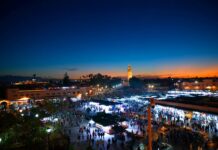
You do not really have to choose between Marrakech and Essaouira Morocco, because the two towns complement each other perfectly. Marrakech gives you palaces, gardens, the Jemaa el-Fna square and intense, unforgettable energy. Essaouira gives you sea air, space and calm. Most good itineraries include both.
| Factor | Marrakech | Essaouira |
|---|---|---|
| Atmosphere | Busy, intense, exciting | Relaxed, breezy, creative |
| Main sights | Palaces, madrasa, gardens, souks | Ramparts, port, beach, medina |
| Summer heat | Often above 38°C | Usually 22 to 26°C |
| Sales pressure | High in the main souks | Low to moderate |
| Nightlife and dining | Wide choice, rooftop bars | Smaller, cozy, seafood-led |
| Ideal stay | 2 to 4 nights | 2 to 3 nights |
If you can only base yourself in one, stay in Marrakech for a short first visit focused on culture, because it is also the hub for desert tours and Atlas trips. Choose Essaouira if you are coming back to Morocco, traveling with small children, visiting in July or August, or simply want a slower holiday. A common and very satisfying plan is three nights in Marrakech, two or three in Essaouira, and then a flight home from either city.
What is the prettiest city in Morocco?
There is no single answer, and the debate is half the fun. Chefchaouen, the blue town in the Rif Mountains, is the most photographed and is often called the prettiest; our Chefchaouen guide explains why. Essaouira is the strongest candidate on the coast, with its white and blue medina against the ocean. Fes wins for raw history, and Marrakech for color and drama.
Practical Tips: Safety, Money and Respect
Essaouira is one of the safest and most relaxed towns in Morocco, and the Essaouira beach and medina feel easy even for solo travelers, but the usual common sense applies. Read our Morocco travel safety guide for the full list; these are the points that matter most here.
- Pack layers. The wind makes evenings cool all year, so bring a light jacket or sweater even in summer, plus strong sunscreen for windy days.
- Agree prices first. At the fish stalls, with porters and for camel or quad rides, confirm the full price before you start.
- Guides. Self-appointed guides are rare here compared with Marrakech, but a polite “la, shukran” (no, thank you) is enough if someone insists.
- Dress code. Swimwear is fine on the beach; cover shoulders and knees in the medina, and dress modestly at religious sites.
- Cash. ATMs are found near Bab Doukkala, Place Moulay Hassan and on Avenue Mohammed V, but carry enough cash for the weekend, when machines can run low.
- Photos. Ask before photographing people, especially fishermen and women in the souks.
- Ramadan. During the holy month, many cafés close in daytime and the town comes alive after sunset; plan meals around that.
For broader planning, including visas, money and transport, our other destination guides cover each region of the country in the same detail.
Essaouira Morocco FAQ
Is Essaouira, Morocco worth visiting?
Yes. Essaouira Morocco is worth visiting for its UNESCO medina, fishing port, sea walls, fresh seafood and relaxed, low-pressure atmosphere. It is especially rewarding after Marrakech, for families, and for surfers and kitesurfers. Plan at least one night, ideally two or three, to see the port in the morning and the walls at sunset.
Is it better to stay in Marrakech or Essaouira?
It depends on your trip. Marrakech is better for a first, culture-focused visit and as a base for desert and mountain tours. Essaouira is better for a slow, cooler, more relaxing stay, especially in summer. Most travelers enjoy splitting their time, with two to four nights in Marrakech and two to three in Essaouira.
Is Essaouira expensive?
No. Essaouira is affordable, and food and transport are often slightly cheaper than in Marrakech. Expect 80 to 140 MAD for a grilled fish lunch, 100 to 150 MAD for a mid-range dinner and 600 to 1,000 MAD for a mid-range riad room. Prices rise during the Gnaoua festival, in July and August, and at New Year.
What is Essaouira famous for?
Essaouira is famous for its fortified 18th-century medina listed by UNESCO, its blue-boat fishing port, strong trade winds that make it a kitesurfing hotspot, Gnaoua music and its annual festival, thuya woodwork, argan oil and a long history as a creative, multicultural port once known as Mogador.
How many days in Essaouira is enough?
Two full days is enough for the main sights. Three days lets you add a surf lesson, a cooking class or a beach trip to Sidi Kaouki. Four or more days suits kitesurfers and slow travelers. A day trip is possible but rushed, because the bus or car takes about five hours round trip.
What is the prettiest city in Morocco?
Many travelers name Chefchaouen, the blue town in the Rif Mountains, as the prettiest city in Morocco. On the coast, Essaouira is the top contender, with white and blue houses inside honey-colored sea walls. Fes and Marrakech are often chosen for history and color. The best answer depends on what you find beautiful.
How do I get from Marrakech to Essaouira?
Take a Supratours or CTM bus (about 3 hours, around 80 to 130 MAD), a private transfer or taxi (about 2.5 hours, roughly 450 to 1,000 MAD per car) or a rental car. There is no train. Book bus seats a day ahead in summer and on holiday weekends.
When is the best time for Essaouira surf and kitesurfing?
For surfing, October to April brings the best swell and lighter wind. For kitesurfing, April to September is peak season, with strong, reliable trade winds on most days. Beginners can learn both all year in the sheltered bay, as long as they choose a certified school.
Plan Your Essaouira Morocco Trip
Essaouira earns its place in a Morocco itinerary not with a long list of monuments, but with a feeling: wind in your face on the ramparts, a plate of sardines at the port and a medina where nobody rushes you. Give it at least two nights, pick a riad with a roof terrace and time your walls visit for sunset.
If surf or kite is your goal, match your dates to the season. If calm and culture are the goal, aim for spring or autumn and leave room for nothing in particular, because that is when Essaouira Morocco shows you its best side. Your first step is easy: check bus seats or transfers for the Marrakech to Essaouira road for your dates, then book the riad.
Ready to plan the rest of your route? Use the ready-made routes linked above, and add Essaouira Morocco where the road meets the sea.