
There is no legal dress code for tourists visiting Morocco. Non-Muslim women are not legally required to cover their hair, and foreign visitors are not held to statutory dress regulations. However, Morocco is a socially conservative Muslim nation where modest dress is the standard across traditional residential quarters, historic medinas, and rural communities.
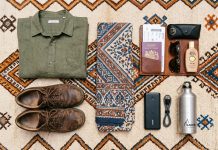
How you dress directly shapes your travel experience: wearing modest, respectful clothing dramatically reduces unsolicited catcalling, ensures smooth access to cultural sites, and protects your skin against intense North African sun and desert dust. The baseline rule for both men and women is simple: keep your shoulders and knees covered, and choose loose, breathable fabrics.
The Core Dress Code Rules at a Glance
| Guideline | Women | Men |
|---|---|---|
| Shoulders | Covered (t-shirts, blouses, light button-downs, or scarves over sleeveless tops). Avoid thin tank tops. | Covered (t-shirts, polo shirts, or short/long-sleeve linen shirts). Never walk shirtless in town. |
| Knees | Covered (maxi skirts, culottes, loose linen pants, or midi dresses below the knee). | Covered in towns (chinos, jeans, or lightweight trousers). Save shorts for beaches. |
| Chest & Midriff | High necklines; no exposed midriffs, crop tops, or deep V-neck cuts. | Standard necklines; shirts buttoned up to normal collar height. |
| Fit & Silhouette | Loose-fitting silhouettes (flowing fabrics are cooler and culturally modest). Avoid skin-tight spandex. | Relaxed or regular fit trousers. Avoid tight athletic leggings without shorts over them. |
| Head Coverings | Not required for non-Muslims in daily life. Bring a scarf for sun protection and mosque entry. | Not required. Wide-brim hats or baseball caps recommended for sun protection. |
Do Women Have to Wear a Headscarf in Morocco?
No. Female tourists are under no expectation to wear a hijab or headscarf on public streets, in restaurants, in markets, or on public transit. Moroccan women themselves choose whether to wear a hijab (many do, while many in Casablanca, Rabat, and Marrakech do not).
The only circumstance where non-Muslim women must cover their hair is when entering active religious sites open to visitors—specifically the Hassan II Mosque in Casablanca. Carrying a lightweight cotton or viscose scarf in your daypack is practical regardless: it provides instant protection against sun and windblown sand, keeps air-conditioned train drafts off your neck, and offers quick modesty if entering traditional neighborhoods.
What to Wear by Destination & Environment
Morocco is geographically diverse, and dress norms vary substantially depending on where you stand:
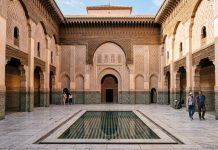
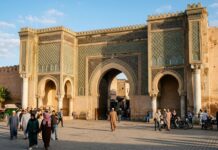
1. Traditional Medinas (Fes, Marrakech, Meknes)
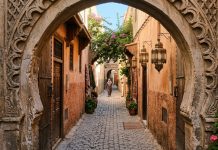
The older walled cities are densely populated residential communities as well as tourist centers. Dressing conservatively here is a matter of respect for local families living in the surrounding quarters.
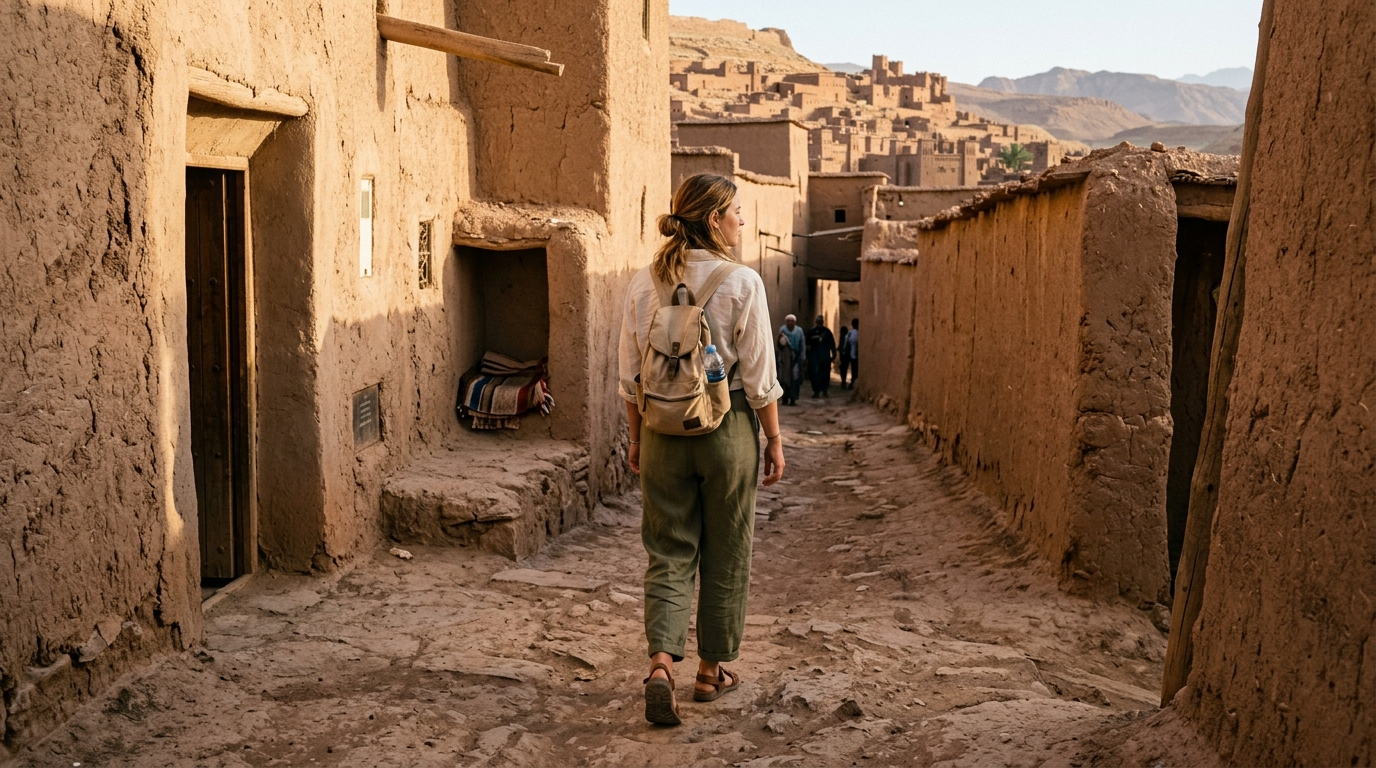
- Women: Ankle-length linen culottes or a tiered maxi skirt paired with a lightweight, breathable cotton t-shirt or loose linen shirt.
- Men: Lightweight chinos or travel pants with a cotton t-shirt or polo. Avoid athletic gym shorts; adult Moroccan men view shorts as sportswear or loungewear.
2. Modern Urban Districts (Gueliz in Marrakech, Casablanca Waterfront)
In modern commercial neighborhoods, rooftop lounges, and upscale international restaurants, local Moroccans dress in contemporary Western attire. Denim jeans, tailored knee-length dresses, and sleeveless tops are common and unremarkable in these specific zones.
3. Beach & Surf Towns (Essaouira, Taghazout, Agadir)
The Atlantic and Mediterranean coasts are relaxed. Standard swimwear (bikinis, one-pieces, swim trunks) is normal on the beach and in surf camp compounds. However, when walking from the sand into town streets, cafes, or port fish markets, put on a cover-up: slip into a sundress, tunic, or t-shirt and shorts.
4. Rural Berber Villages (Atlas Mountains & Sahara Oases)
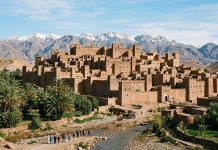
Communities in the High Atlas (such as Imlil) and pre-Saharan valleys (Skoura, Tinghir) are traditional and closely knit. Dress conservatively here: keep legs covered to the ankle and arms covered to the elbow. Avoid tight-fitting athletic yoga pants unless worn under a long tunic or hiking skirt.
Activity-Specific Dress Advice
What to Wear When Riding a Camel in the Sahara
Riding a dromedary camel into Erg Chebbi or Erg Chigaga involves sitting on a wooden saddle wrapped in thick, coarse wool blankets. The leather harness and coarse wool will severely chafe bare skin within twenty minutes.
- Wear: Long trousers (lightweight denim, breathable canvas, or sturdy hiking pants). Do not wear shorts, dresses, or thin leggings.
- Headgear: Wrap a traditional cotton desert scarf (cheche) around your head and mouth to block fine airborne sand kicked up by camel hooves and desert breezes.
- Footwear: Closed-toe shoes with socks to prevent hot, abrasive sand from filling your footwear during dismounting.
What to Wear to a Traditional Moroccan Hammam
Navigating hammam attire causes significant anxiety for first-time visitors because etiquette differs between public neighborhood baths and private tourist spas:
- In Public Neighborhood Hammams: Men and women bathe in separate facilities or during separate hours. Women bathe wearing dark underwear or bikini bottoms (going completely nude is rare and generally frowned upon). Men wear swim trunks or boxer shorts (nude bathing is strictly prohibited for men).
- In Private Hotel / Luxury Spas: Spa staff supply disposable paper underwear, a plush bathrobe, and slippers. You can also wear your own dark swimwear bottoms.
What to Wear to the Hassan II Mosque in Casablanca
As an active place of Islamic worship, visitor dress is monitored at the ticketing gate. Both men and women must have shoulders, chests, and knees completely covered. Women should bring a scarf to drape over their hair. All visitors must remove their shoes at the entrance; plastic tote bags are provided at the door so you can carry your shoes through the tour. Wear clean socks, as you will walk across vast marble and carpeted floors.
Seasonal Adjustments: Heat vs. Stone Riads
Summer (June to August)
Do not make the mistake of wearing tiny polyester tank tops and short shorts in inland furnace heat (40°C+ / 104°F+). Direct sunlight baking bare skin raises your core body temperature faster than light, loose clothing. The coolest outfit in Moroccan summer heat is a loose, white or light-colored 100% linen long-sleeve shirt and wide-leg linen trousers. It allows airflow across your skin while blocking direct ultraviolet radiation.
Winter (December to February)
Travelers routinely underpack for winter in Morocco. While daytime temperatures in Marrakech hover around a pleasant 18°C–20°C (64°F–68°F), historic riads have no central heating. High ceilings, stone walls, and bare zellij tile floors make indoor spaces damp and cold (often 8°C–12°C / 46°F–54°F). Bring warm fleece jackets, wool socks, and thermal sleepwear. If your itinerary includes the Sahara Desert, pack a packable down jacket, as desert dunes drop to freezing (0°C / 32°F) overnight.
Frequently Asked Questions
Can women wear shorts in Morocco?
Shorts are acceptable on beaches, inside resort hotels, and along modern beach promenades in Agadir or Taghazout. In historic medinas and traditional towns, wearing short shorts will draw persistent staring and verbal harassment. If you prefer shorts in warm weather, choose loose bermuda-length shorts that reach the knee.
Can men wear shorts in Morocco?
Men can physically wear shorts without legal issue, but long trousers are standard social attire for adult men. Men in knee-length shorts are recognized immediately as foreign tourists. If visiting government buildings, religious monuments, or formal restaurants, wear trousers.
What shoes are best for walking in Morocco?
Comfortable low-profile walking sneakers or trail runners with durable rubber grip soles. Historic medinas feature slick, polished stone cobblestones and open drainage channels. Avoid smooth-soled dress shoes, thin flip-flops, and high heels.
Complete Your Trip Preparation
To ensure your full gear kit is ready, review our itemized Morocco packing checklist, check our 25 first-time Morocco travel tips, and consult the foundational Morocco Travel Guide to finalize your itinerary.