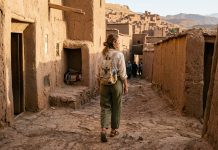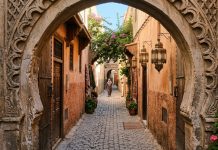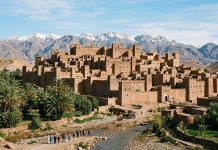

The best time to visit Morocco is during spring (mid-March through May) and autumn (September through November). During these shoulder seasons, daytime temperatures across the imperial cities hover between 20°C and 28°C (68°F–82°F), the High Atlas mountain passes are clear of winter snow, and the Sahara Desert has cooled down from daytime extremes.
Because Morocco encompasses four distinct climate zones—the Atlantic and Mediterranean coasts, the inland plains, the Atlas mountain ranges, and the pre-Saharan desert basins—weather varies significantly depending on your route. An ideal month for surfing in Essaouira or Taghazout is not necessarily a comfortable month for exploring the medina alleys of Marrakech or camping in Erg Chebbi.
Morocco Climate Zones Explained
1. The Atlantic & Mediterranean Coasts
Locations: Tangier, Casablanca, Rabat, Essaouira, Taghazout, Agadir.
The coastline experiences a Mediterranean climate moderated by the Atlantic Ocean. Summers are warm but tempered by steady coastal trade winds (the alizé), keeping Essaouira around 22°C–25°C (72°F–77°F) even in July. Winters are mild and occasionally rainy, with daytime temperatures rarely dropping below 14°C (57°F).
2. The Inland Plains & Imperial Cities
Locations: Marrakech, Fes, Meknes.
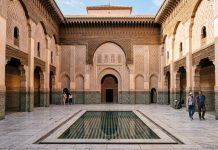
Inland cities experience semi-arid conditions with wider seasonal temperature swings. Summers (July and August) are intensely hot, with temperatures frequently surpassing 42°C (108°F), making midday sightseeing impractical. Winters bring clear sunny days (16°C–20°C / 61°F–68°F) but cold nights (4°C–8°C / 39°F–46°F). Because historic riads feature thick stone walls, high ceilings, and unheated tile floors, bring warm indoor layers for winter stays.
3. The Atlas Mountains
Locations: High Atlas (Imlil, Mount Toubkal), Middle Atlas (Ifrane, Azrou), Anti-Atlas (Tafraoute).
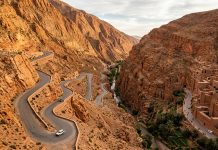
An alpine climate governs the mountains. Winter brings heavy snowfall above 1,800 meters, closing high passes like Tizi n’Tichka during major storms. Summer provides a cool retreat from inland furnace heat, with pleasant daytime trekking weather, though afternoon thunderstorms can occur in July and August.
4. The Sahara Desert
Locations: Merzouga, Erg Chebbi, Zagora, M’Hamid, Erg Chigaga.
True desert climate with radical diurnal swings. In summer, midday sand temperatures exceed 50°C (122°F), causing most permanent desert camps to close between late June and late August. In winter (December to February), days are crisp and sunny (18°C–22°C / 64°F–72°F), but night temperatures plummet to near freezing (0°C–4°C / 32°F–39°F). Quality winter desert camps provide heavy wool blankets or wood-burning stoves.
Month-by-Month Weather & Travel Breakdown
| Month | Avg High / Low (Marrakech) | Rainfall | Crowd Level | Best Regions to Visit |
|---|---|---|---|---|
| January | 19°C / 6°C (66°F / 43°F) | 32 mm | Moderate | Southern coast (Agadir), low-altitude valleys, winter city sightseeing |
| February | 20°C / 8°C (68°F / 46°F) | 37 mm | Moderate | Anti-Atlas almond blossom season (Tafraoute), Marrakech, Fes |
| March | 24°C / 10°C (75°F / 50°F) | 38 mm | High | All regions; excellent for Sahara desert crossings and imperial cities |
| April | 26°C / 12°C (79°F / 54°F) | 31 mm | Peak | Nationwide; wildflowers in the valleys, warm days, cool evenings |
| May | 29°C / 15°C (84°F / 59°F) | 18 mm | High | High Atlas trekking, northern cities (Chefchaouen, Tangier), Rose Valley |
| June | 34°C / 18°C (93°F / 64°F) | 5 mm | Moderate | Atlantic coast (Essaouira, Taghazout), High Atlas; avoid deep desert |
| July | 38°C / 21°C (100°F / 70°F) | 2 mm | Low (inland) / High (coast) | Strictly coastal destinations and high-altitude mountain refuges |
| August | 38°C / 22°C (100°F / 72°F) | 3 mm | Low (inland) / Peak (coast) | Mediterranean coast, Essaouira, Mount Toubkal climbing routes |
| September | 33°C / 19°C (91°F / 66°F) | 10 mm | High | All regions; ocean waters warm for swimming, desert reopens |
| October | 28°C / 15°C (82°F / 59°F) | 23 mm | Peak | Optimal month for country-wide itineraries linking north, south, and Sahara |
| November | 23°C / 11°C (73°F / 52°F) | 40 mm | High | Imperial cities, oasis valleys, Sahara; pack layers for cold evenings |
| December | 20°C / 7°C (68°F / 45°F) | 31 mm | Moderate / Peak (Holidays) | Marrakech, coastal cities, desert (with cold-weather night gear) |
Season-by-Season Guide
Spring (March to May): The Ideal Travel Window
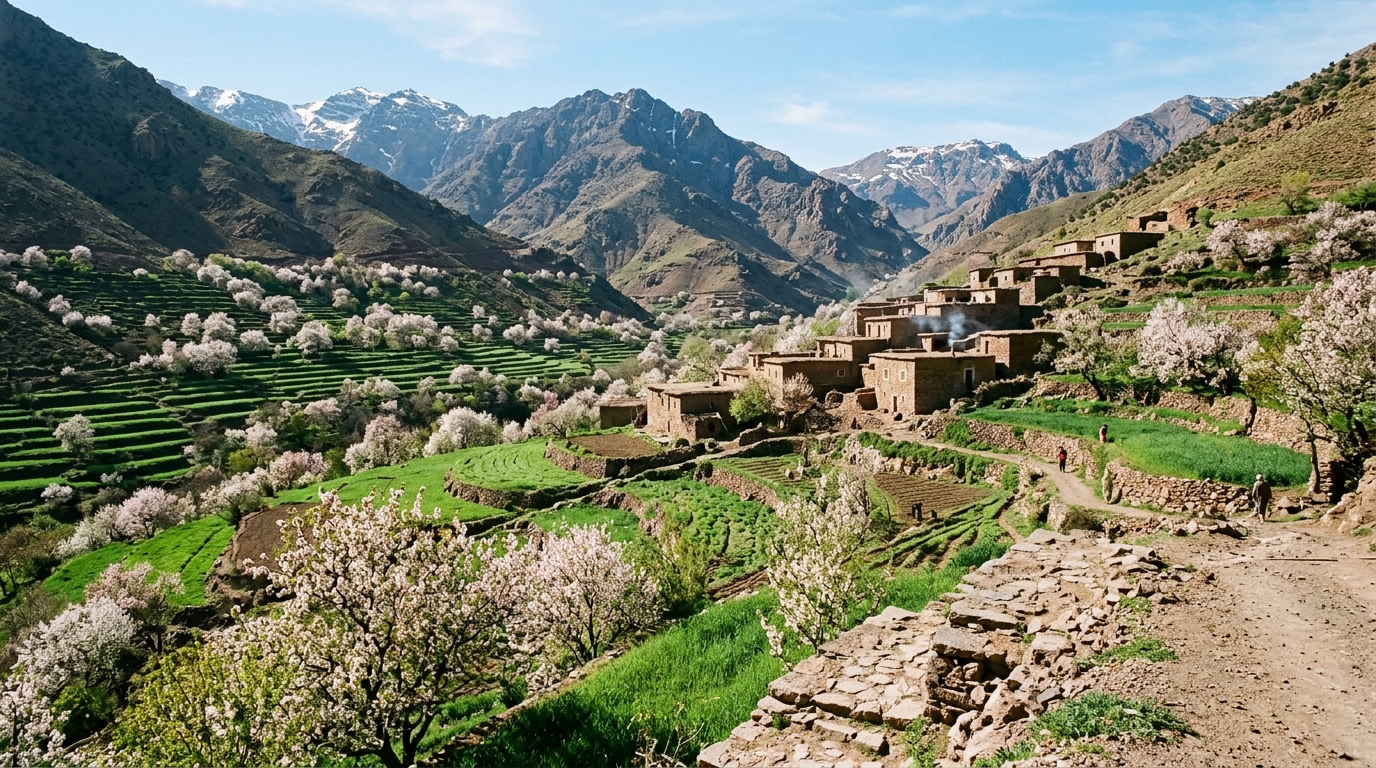
Spring is widely considered the prime window for an extensive Morocco itinerary. Valleys throughout the High Atlas are green, almond and cherry orchards bloom in February and March, and the Rose Valley near Kelaat M’Gouna harvests millions of damask roses in late April and early May.
Desert temperatures remain manageable (mid-20s to low-30s Celsius), allowing comfortable camel treks and desert walking. Because this is high season, book accommodations in Marrakech, Fes, and luxury desert camps at least two to three months in advance.
Autumn (September to November): Consistent Clear Skies
Similar to spring, autumn offers stable weather and comfortable temperatures nationwide. By mid-September, the summer heat breaks across Marrakech and the pre-Saharan plains. October is arguably the single best month for an itinerary that combines the imperial cities, a High Atlas trek, and an overland desert journey to Merzouga.
Atlantic ocean waters remain at their warmest of the year (around 20°C / 68°F) through September and October, making it an excellent season for coastal surfing in Taghazout and Essaouira.
Winter (December to February): Quiet Sightseeing & Cold Nights
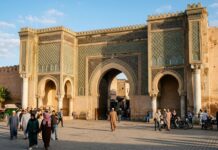
Winter is characterized by crisp blue skies and thin tourist crowds across the imperial cities. Exploring Fes el-Bali or the souks of Marrakech is physically easier without summer heat, and hotel rates drop outside the Christmas and New Year holiday spike.
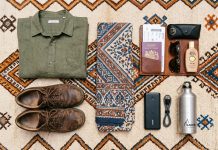
However, winter travel requires realistic packing for the cold. Moroccan architecture is designed to shed heat, not retain it. Traditional riads rarely have central heating—relying instead on portable space heaters or AC reverse-cycle units that struggle against cold stone floors. In the Sahara, overnight temperatures frequently hit 0°C (32°F). If traveling in winter, carry thermal base layers, a fleece jacket, and warm wool socks.
Summer (June to August): Extreme Inland Heat
Visiting Marrakech, Fes, or the Sahara in July or August requires adjusting your daily schedule. Midday temperatures routinely reach 42°C–45°C (108°F–113°F). Street life empties between 12:00 PM and 5:00 PM, re-emerging late into the night when temperatures drop to 26°C–28°C (79°F–82°F).
If visiting in summer, orient your route toward the coast: Essaouira, Taghazout, Tangier, and Al Hoceima offer comfortable temperatures and ocean breezes. Alternatively, base yourself in High Atlas villages like Imlil (1,740 meters), where mountain air stays 10°C cooler than the surrounding lowlands.
Traveling During Ramadan: Practical Realities
Ramadan is the Islamic holy month of fasting, shifting approximately 10 to 11 days earlier each Gregorian year. During Ramadan, practicing Muslims abstain from food, water, and smoking from sunrise to sunset.
Traveling during Ramadan is entirely feasible and culturally insightful, but requires understanding several operational changes:
- Dining: Tourist-oriented restaurants in major cities and hotels remain open during the day, often with curtained street windows. Local cafes and street food stalls remain closed until sunset. Be discreet and avoid eating, drinking, or smoking openly on public streets out of respect for those fasting.
- Schedules: Government offices, banks, monument ticket desks, and some public transit operate reduced or shifted hours, typically closing earlier in the afternoon.
- Iftar (Ftour): At sunset, sirens or the call to prayer announce the end of the fast. Streets completely empty for approximately 45 to 60 minutes as families gather to break their fast with dates, harira soup, and chebakia pastries. Around 9:00 PM, streets come alive with night markets and lively social activity lasting well past midnight.
Frequently Asked Questions
What is the cheapest time to visit Morocco?
The lowest accommodation and tour rates occur during the low seasons: the peak winter months of January and early February (excluding the holiday week) and the hot summer months of July and August for inland cities. Flight prices from Europe and North America are also generally lower outside school holiday breaks.
When can you swim in the ocean in Morocco?
The Atlantic coast is coolest in winter and spring (water temperatures around 16°C–17°C / 61°F–63°F). The best months for swimming and water sports are July through October, when coastal water temperatures reach 20°C–22°C (68°F–72°F).
Is the Sahara Desert open in the summer?
While the desert is physically accessible, most established luxury and standard tented camps in Erg Chebbi and Erg Chigaga dismantle or close between late June and late August due to dangerous heat exceeding 50°C (122°F). Only air-conditioned concrete hotels on the dune perimeter in Merzouga operate during midsummer.
Next Steps for Planning
Now that you know which months match your travel style, review our curated list of the best places to visit in Morocco to select destinations, or read our complete Morocco Travel Guide for transportation, budget guidelines, and entry advice.