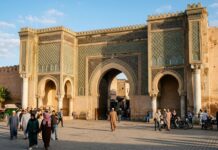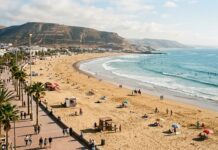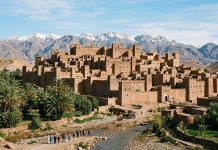

Unlike the intense sensory pace of Marrakech or the labyrinthine medieval density of Fes, Morocco’s political capital is clean, organized, spacious, and remarkably relaxed. Inscribed as a UNESCO World Heritage site in 2012, Rabat is celebrated for its unique urban harmony: a shared capital combining 12th-century Almohad imperial monuments with 20th-century French protectorate modernist architecture, set against wide Atlantic oceanfront promenades and lush botanical gardens.
Because Rabat is primarily an administrative and diplomatic center rather than a commercial tourism engine, visitors enjoy a rare travel experience in Morocco: market vendors do not aggressively solicit sales, historic monuments are well-maintained and uncrowded, and coastal breezes keep temperatures mild year-round. This guide covers what to see, where to stay, and how to fit Rabat into a broader Morocco itinerary.
Rabat Fast Facts for Travelers
- Airport: Rabat-Salé Airport (RBA), located 10 km northeast of the city center
- Main Train Station: Rabat-Ville (Gare de Rabat-Ville), located directly downtown within walking distance to hotels and the medina
- City Taxi Color: Blue Petit Taxis
- Recommended Stay: 1 to 2 full days
- Best Seasons: May to October (temperate maritime climate with minimal summer heatwaves)
Top Historical Landmarks & Attractions in Rabat
1. The Kasbah of the Udayas (Kasbah des Oudayas)
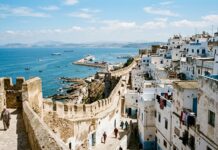
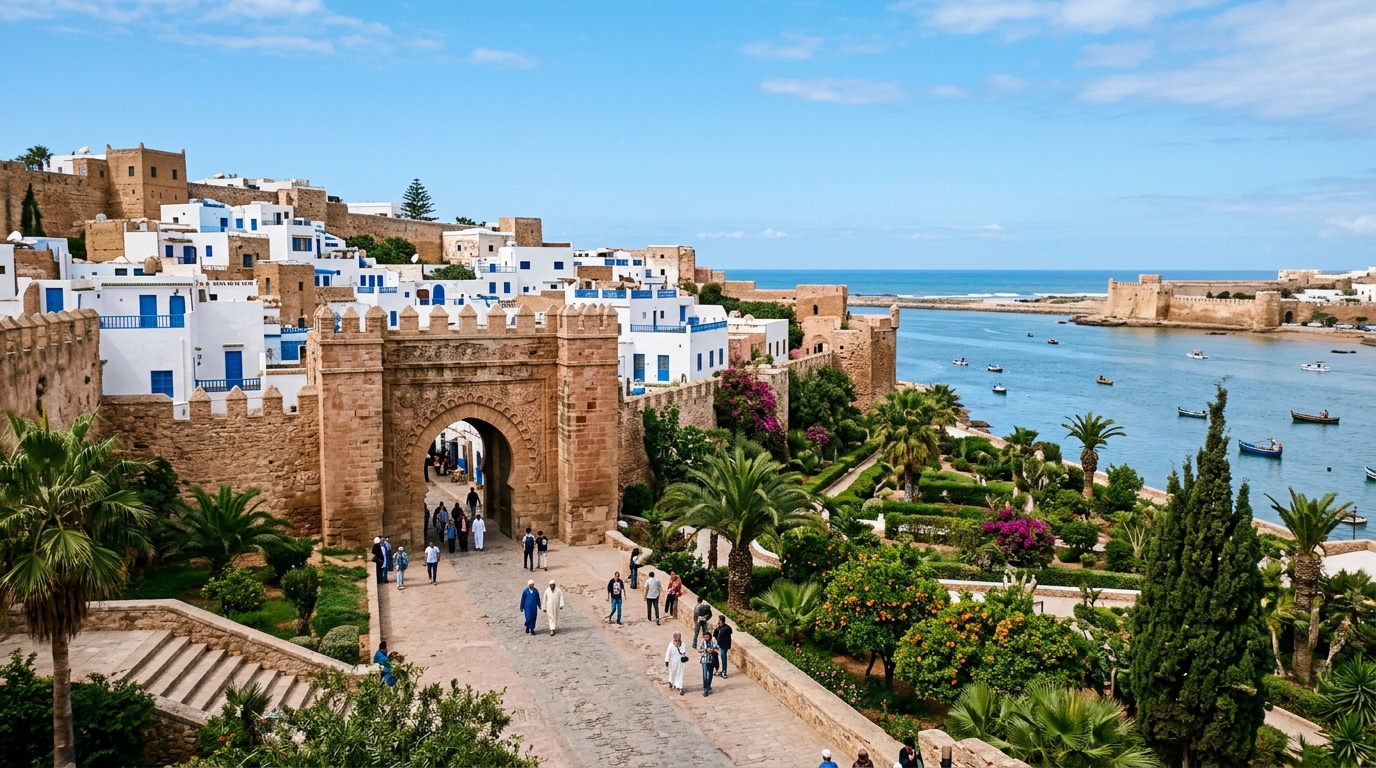
Perched on a high rocky cliff overlooking the mouth of the Bou Regreg river where it empties into the Atlantic Ocean, the Kasbah of the Udayas is an ancient fortified citadel founded by the Almohad dynasty in the 12th century. Enter through the monumental Bab Oudaia, an imposing sandstone ceremonial gate carved with geometric Almohad bas-reliefs and Quranic inscriptions.
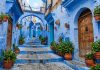
Inside the fortress walls lies a peaceful residential village characterized by narrow cobblestone alleys lined with whitewashed and indigo-blue houses, reminiscent of Andalusia or the Greek Cyclades. Follow the primary alley to the Plateforme du Sémaphore for sweeping ocean panoramas toward neighboring Salé. Near the entrance, relax in the enclosed Andalusian Gardens, planted with orange trees, bougainvillea, and date palms, before stopping at Café Maure for hot mint tea and almond pastries overlooking the river.
- Admission: Free entry to the Kasbah and Andalusian Gardens.
- Duration: Allow 60 to 90 minutes for a relaxed walk.
2. The Hassan Tower & Mausoleum of Mohammed V
Located on an elevated plateau overlooking the river, this complex represents both Morocco’s medieval imperial ambition and its modern national identity:
- The Hassan Tower (Tour Hassan): In 1195, the Almohad Caliph Yacoub al-Mansur commissioned what was intended to be the largest mosque and tallest minaret in the Islamic world. Construction halted abruptly upon the Caliph’s death in 1199, leaving the red sandstone minaret standing at 44 meters (half its intended 86-meter height), surrounded by a vast grid of over 300 stone columns.
- Mausoleum of Mohammed V: Facing the Hassan Tower across the marble plaza stands the contemporary royal mausoleum, built in 1971 to house the tomb of King Mohammed V (the architect of Moroccan independence) and his sons, King Hassan II and Prince Moulay Abdallah. The interior features a gilded cedar dome, stained-glass windows, and intricate hand-chiseled plasterwork. Uniformed Royal Guards on horseback stand sentry at the exterior gates.
- Admission: Free entry. Both men and women must dress respectfully with shoulders and knees covered.
3. Chellah Necropolis (Sala Colonia)
Situated two kilometers south of downtown, Chellah is one of the most layered archaeological sites in Morocco. Originally founded as the Phoenician trading post of Sala, it expanded into the thriving Roman municipal city of Sala Colonia in the 2nd century AD. In the 14th century, the Merenid dynasty converted the abandoned Roman site into a royal necropolis, constructing defensive stone battlements, a mosque, and royal funerary complexes.
Following an extensive multi-year archaeological restoration, visitors can stroll through Roman triumphal arches, public baths, and ancient olive groves where dozens of giant white storks build massive twig nests atop ruined minarets and ancient defensive walls.
- Admission: 70 MAD (~$7.00 USD).
- Timing: Allow 1 to 2 hours for a tranquil morning walk.
4. Mohammed VI Museum of Modern and Contemporary Art (MMVI)
Opened in 2014, the MMVI was the first major public museum built in Morocco since independence dedicated exclusively to contemporary visual arts. Housed in a palatial neo-Moorish building along Avenue Moulay El Hassan, the museum showcases permanent collections of 20th-century Moroccan modernists (such as Chaïbia Talal, Jilali Gharbaoui, and Mohamed Melehi) alongside world-class traveling international exhibitions.
- Admission: 40 MAD (~$4.00 USD); free on select cultural days.
5. The Riverfront: Grand Théâtre de Rabat & Mohammed VI Tower
The Bou Regreg river valley has undergone a dramatic architectural transformation as part of Morocco’s modern cultural vision:
- Grand Théâtre de Rabat: Designed by the late Iraqi-British architect Zaha Hadid, this futuristic 1,800-seat performing arts center features sweeping white sculptural curves inspired by the neighboring river and Islamic calligraphy.
- Mohammed VI Tower: Rising 250 meters (55 stories) directly across the river in Salé, this sleek glass tower is the second-tallest skyscraper on the African continent, featuring residential, office, and luxury hotel spaces designed with advanced sustainable engineering.
Where to Stay: Neighborhood Breakdown
| Neighborhood | Vibe & Atmosphere | Key Advantages |
|---|---|---|
| The Medina | Historic traditional walled quarter; peaceful, clean stone alleys | Authentic riads, walking access to Kasbah des Oudayas, fixed-price shopping |
| Quartier Hassan | Broad tree-lined French colonial boulevards; government ministries | Walking distance to Hassan Tower, tram lines, and Rabat-Ville train station |
| Agdal | Modern, trendy residential and university district | Boutique modern hotels, international cafes, shopping malls, dining |
Transportation in Rabat
High-Speed Rail: The Al Boraq Hub
Rabat is a central stop on Morocco’s high-speed rail corridor (ONCF Al Boraq):
- Rabat to Casablanca: 50 minutes via high-speed train (approx. 50–70 MAD) or regular Atlas train to Casa-Port.
- Rabat to Tangier: 1 hour 20 minutes via Al Boraq (approx. 115–170 MAD), cruising at 320 km/h.
- Rabat to Fes: 2 hours 45 minutes via conventional express train (approx. 85 MAD).
Station Tip: Most passenger trains stop at Gare de Rabat-Ville (downtown). Some express and night trains stop exclusively at Gare de Rabat-Agdal, located 3 km south in the modern commercial district. Check your ticket carefully to board at the correct station.
Getting Around Town
- Blue Petit Taxis: Abundant and clean. Drivers automatically turn on the mechanical meter (compteur) without prompting. Standard cross-town fares range from 10 to 20 MAD ($1.00–$2.00 USD).
- Rabat-Salé Tramway: Two modern tramway lines (Line 1 and Line 2) connect key hubs across Rabat and cross the bridge into neighboring Salé. Single-ride tickets cost 6 MAD and provide an effortless way to reach the Hassan Tower and Medina gates.
- Rowboats across the Bou Regreg: For a scenic local transfer between Rabat’s marina and the historic ramparts of Salé, small wooden rowboats (floukas) shuttle passengers across the river for 2.50 MAD per person.
Next Steps for Planning Your Morocco Itinerary
Rabat connects effortlessly into any northern Morocco route. Pair your visit with the commercial waterfront in our Casablanca Travel Guide, head north to the blue alleys in our Chefchaouen Travel Guide, or see how the capital fits into our 10-day Morocco itinerary.