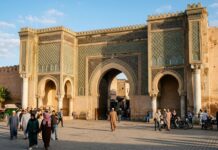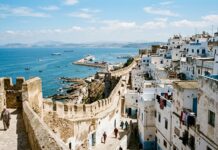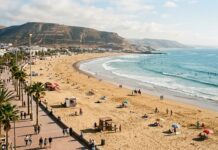

Located on Morocco’s Atlantic coast three hours west of Marrakech, Essaouira (historically known as Mogador) offers an immediate maritime contrast to the inland furnace heat of the central plains. Enclosed by massive 18th-century stone seawalls mounted with bronze cannons, the town combines a UNESCO-listed fortified medina, a working fishing harbor filled with bright blue wooden trawlers, and a vibrant community of thuya wood artisans and Gnaoua musicians.
Essaouira is dominated by the alizé—the fierce Atlantic trade wind that blows steadily along the coast throughout the summer months. While the wind prevents traditional sunbathing on the city beach, it keeps temperatures comfortably between 22°C and 25°C (72°F–77°F) during July and August and creates world-class conditions for kitesurfing and windsurfing. This guide provides practical logistics for visiting: bus connections from Marrakech, medina highlights, harbor dining advice, and coastal day trips.
Essaouira Fast Facts for Travelers
- Location: Atlantic Coast, 180 km west of Marrakech / 175 km north of Agadir
- Transit Access: Highway only (no passenger rail). Reached via direct Supratours or CTM buses from Marrakech (3 hours)
- Airport: Essaouira-Mogador Airport (ESU), located 16 km south (direct seasonal budget flights from Europe)
- City Taxi Color: Yellow Petit Taxis (flat fare 7–10 MAD)
- Recommended Stay: 2 to 3 days (ideal for decompressing after Marrakech)
- Best Seasons: September to November (winds calm down, ocean water is warmest)
Historical Heritage: “The Well-Designed” City
Unlike the tangled medieval labyrinths of Fes or Marrakech, Essaouira’s medina was laid out on a grid in the 1760s by Alaouite Sultan Mohammed ben Abdallah. The Sultan hired French military architect Théodore Cornut to construct a fortified port capable of defending against European naval bombardment while encouraging international maritime trade. The resulting city was named al-Saouira (literally “The Well-Designed”), marrying Vauban-style French military ramparts with traditional Moroccan stone archways and whitewashed residential buildings.
Top Things to Do in Essaouira
1. Walk the Seawall Ramparts at Skala de la Ville
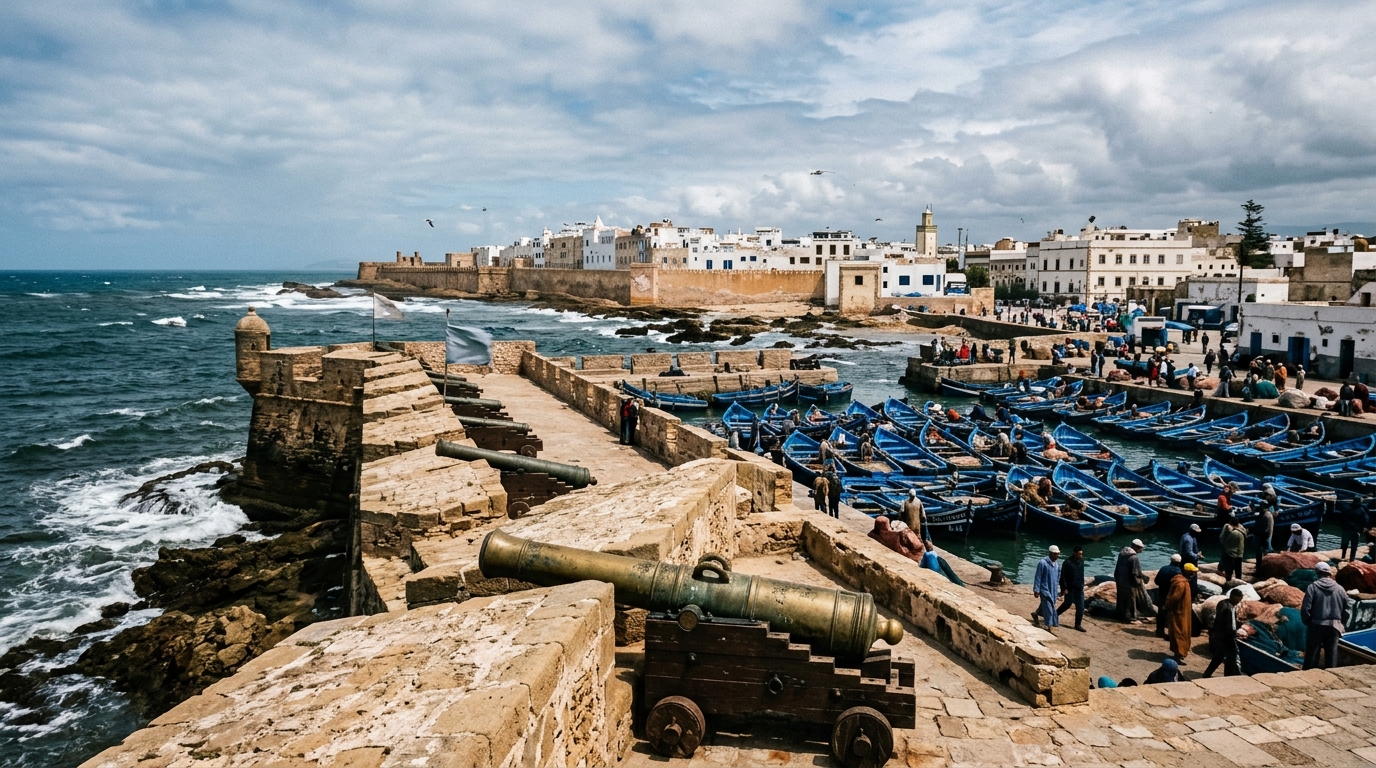
The iconic defensive sea fortification of Essaouira is the Skala de la Ville. Built into the western sea cliffs to protect the town against maritime attacks, the 200-meter stone promenade is lined with a row of 19 Spanish, Dutch, and French bronze cannons pointing through embrasures toward the crashing Atlantic surf.
- Photography Tip: Walk the ramparts in late afternoon when the low ocean sun illuminates the yellow sandstone battlements. (Fans of Game of Thrones will recognize these ramparts as the filming location for the slave city of Astapor).
- Under the Ramparts: The dark arched vaulted casemates beneath the ramparts, once used for munitions storage, now house master woodcarving workshops.
2. Experience the Working Fishing Harbor (Port de Pêche)
Located directly outside the southern sea gate (Bab el-Marsa), Essaouira’s working harbor is one of the most active artisanal fishing ports in Morocco. Every morning and early afternoon, dozens of wooden blue fishing dhows and trawlers return from the Atlantic, unloading wooden crates piled high with sardines, conger eels, sea bass, red mullet, and octopus.
- What to See: Watch traditional shipwrights constructing wooden trawlers using hand axes and copper nails, net menders repairing nylon fishing nets on the docks, and fish auctions taking place in the central hall.
- Skala du Port: Climb the square stone tower at the harbor entrance (entry: 50 MAD / $5 USD) for the classic postcard view looking back across the harbor’s blue boats toward the white medina walls.
3. Eating Grilled Seafood: How to Order Without Overpaying
Sampling fresh grilled seafood is a signature Essaouira experience, but requires clear price confirmation before sitting down:
- The Outdoor Grills near Bab el-Marsa: Numbered open-air fish stalls display the day’s catch on beds of ice. You choose your selection (sardines, sea bream, calamari, jumbo prawns), and the stall cooks it over charcoal, served with bread, tomato salad, and spicy harissa sauce.
- The Golden Rule: Agree on the total price before anything is put on the grill. Unscrupulous stallholders quote low prices for sardines, then add expensive prawns or calamari to the plate and charge 250–350 MAD at the end. A generous mixed plate of sardines, salad, and bread should cost roughly 60 to 90 MAD ($6–$9 USD).
4. Discover Thuya Wood Artisan Workshops
Essaouira is the historic center for craftsmanship using the fragrant wood of the Tetraclinis articulata (Barbary thuya tree), an evergreen tree indigenous to the Atlas foothills surrounding the city. Artisans harvest the dense, knotty burl of the root, which features rich amber swirls and a distinct cedar-like aroma.
- The Craft: Master woodworkers carve jewelry boxes, chess sets, decorative bowls, and furniture, inlaying the dark thuya burl with lemonwood, mother-of-pearl, and ebony.
- Buying Advice: A small solid thuya box costs 30 to 60 MAD; intricate larger jewelry boxes with secret sliding locks cost 150 to 300 MAD. Check that the item is carved from dense root burl rather than cheaper trunk wood (the burl has tight circular grain swirls and smells intensely aromatic).
5. Explore the Roots of Gnaoua Music
Essaouira is the spiritual home of Gnaoua, a centuries-old musical and spiritual tradition rooted in sub-Saharan African ritual healing songs brought to Morocco by enslaved people. Centered around the deep, rhythmic bass notes of the three-stringed camel-neck lute (guembri) and the metallic clash of heavy iron castanets (qraqeb), Gnaoua rhythms induce hypnotic trance states.
- Gnaoua and World Music Festival: Held annually every June, this four-day festival draws hundreds of thousands of international music enthusiasts for open-air concerts on the beach and in medina squares.
- Live Music in Town: Year-round, you can hear acoustic Gnaoua performances in cultural cafes such as Caravane Café and Café O’Bleu Mogador.
6. Day Trips: Sidi Kaouki & Diabat
- Sidi Kaouki (25 km south): A laid-back, bohemian surf village featuring wide, empty sandy beaches, ocean swells, and beachside cafes serving grilled fish. Accessible via local city bus Line 2 from Essaouira (7 MAD) or shared Grand Taxi (15 MAD). Ideal for beginner-to-intermediate surf lessons.
- Diabat (5 km south): A small village famous for its association with Jimi Hendrix, who visited in the summer of 1969. Walk past the village to view the Dar Sultan, an 18th-century royal palace ruin slowly being swallowed by shifting coastal sand dunes.
How to Travel Between Marrakech and Essaouira
Because there is no passenger rail service to Essaouira, the 180-kilometer highway across the Haouz plain is serviced by reliable coach buses and private transfers:
| Transport Mode | Travel Time | Cost | Key Practical Notes |
|---|---|---|---|
| Supratours Coach Bus | 2 hours 45 min | 80–110 MAD ($8–$11) | Best Option: Departs Marrakech ONCF station; arrives directly at Bab Marrakech outside medina. |
| CTM Coach Bus | 3 hours | 80–100 MAD ($8–$10) | Comfortable; arrives at CTM depot roughly 1 km from medina (take a 7 MAD Petit Taxi). |
| Private Car / Transfer | 2 hours 15 min | 600–900 MAD ($60–$90) | Door-to-door convenience; allows stopping at rural argan oil cooperatives along Highway N8. |
| Shared Grand Taxi | 2.5 hours | 80–100 MAD per seat | Departs when all 6 passenger seats fill from Bab Doukkala in Marrakech. |
Where to Stay in Essaouira
- Inside the Medina: Stay in a restored coastal riad near the ramparts or along Rue Chbanat. Riad courtyards in Essaouira are protected from ocean winds, and rooftop terraces provide stunning views over the seagulls and whitewashed chimneys.
- Along the Beachfront (Boulevard Mohammed V): Modern hotels with swimming pools and ocean balconies. Better for travelers who want immediate beach access, elevators, and vehicle parking.
Next Steps for Planning
Essaouira pairs perfectly with a stay in Marrakech. Consult our Marrakech Travel Guide, check seasonal wind and swimming conditions in our best time to visit Morocco guide, and review packing advice in what to pack for Morocco.