
Packing for Morocco requires balancing cultural conservatism, extreme temperature swings, and rugged medina infrastructure. A packing list suitable for a European beach holiday will leave you feeling uncomfortably exposed in rural villages and shivering inside unheated riads at night.
Moroccan travel involves navigating polished cobblestone alleys, dusty desert sand dunes, and modern high-speed trains. This comprehensive packing checklist outlines essential gear, clothing guidelines for men and women, medical necessities, and items you must leave at home to avoid customs confiscation.
The Golden Rule of Luggage in Morocco
Do not bring large hard-shell rolling suitcases if you plan to stay inside historic medinas.
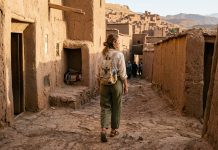
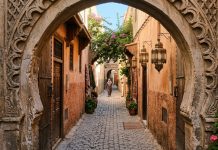
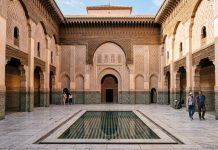
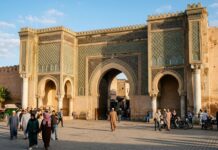
Historic medinas in Marrakech, Fes, Chefchaouen, and Essaouira are completely closed to vehicle traffic. Alleys feature uneven cobblestones, open drainage gutters, and steep stone stairways. Traditional riads rarely have elevators, meaning you must carry your luggage up three or four flights of narrow tile stairs.
- Recommended: A 40L to 55L travel backpack (such as the Osprey Farpoint/Fairview) or a sturdy duffel bag with backpack straps.
- If you bring rolling luggage: Choose durable, large all-terrain wheels and prepare to pay a medina handcart porter (typically 20 to 30 MAD / $2–$3 USD) to transport your bags from the taxi gate to your riad door.
Core Clothing Checklist (Men & Women)
Social etiquette across Morocco leans conservative. Both men and women should plan on keeping shoulders and knees covered when walking through medinas, markets, and rural towns. Natural breathable fabrics—especially linen, lightweight cotton, and merino wool—keep you cool during hot daytime hours without attracting unnecessary staring.
| Item | Quantity | Practical Recommendations |
|---|---|---|
| Linen or lightweight cotton trousers | 2–3 pairs | Loose-fitting chinos, wide-leg linen pants, or culottes. Avoid heavy denim in summer. |
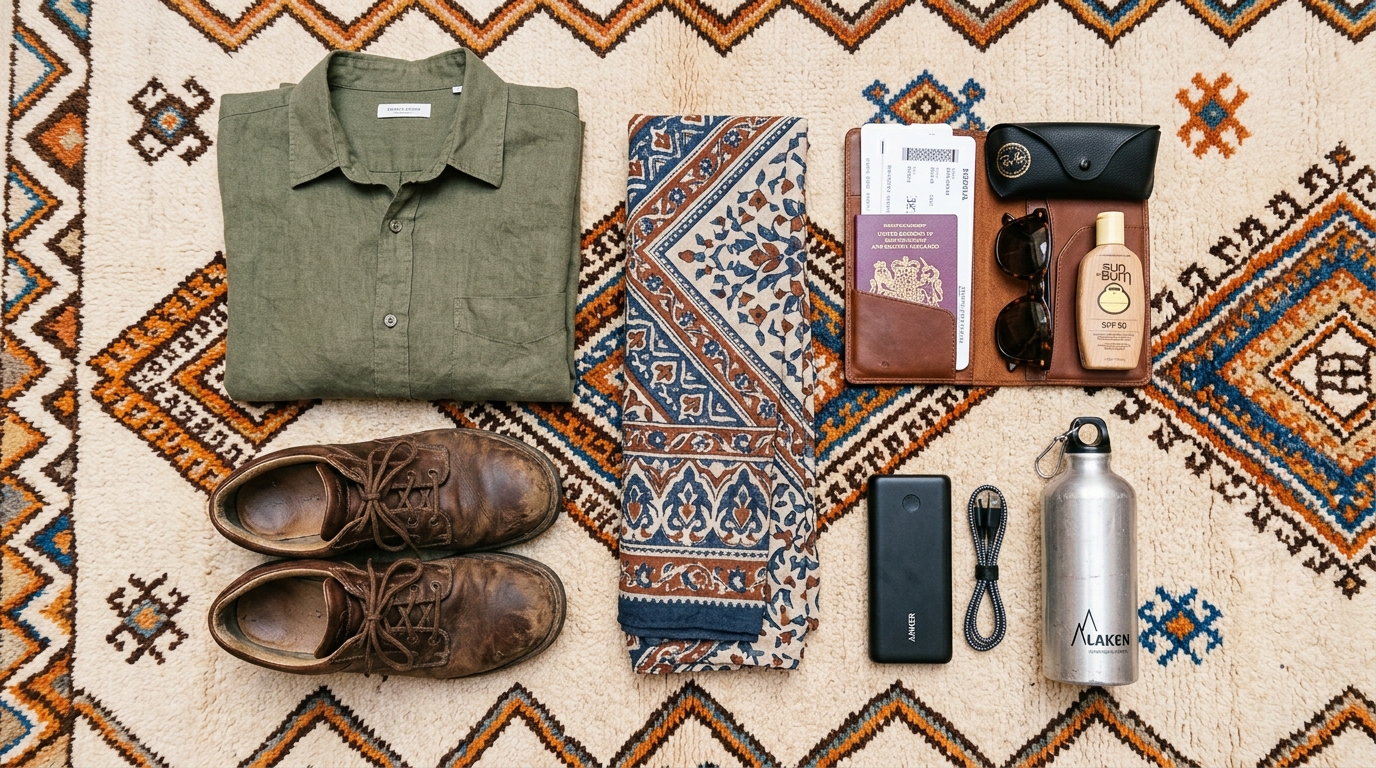
| Breathable short & long-sleeve shirts | 4–5 | Cotton t-shirts with modest necklines; loose button-down linen shirts for sun protection. |
| Maxi dresses / Midi skirts (Women) | 2 | Breathable fabrics falling below the knee; high chest coverage. |
| Lightweight cotton scarf / Shawl | 1–2 | Essential for sun protection, dust in the desert, and quick shoulder coverage. |
| Warm mid-layer (Fleece or Merino sweater) | 1–2 | High Atlas evenings, desert nights, and unheated riad rooms drop below 8°C (46°F). |
| Packable down jacket (Winter/Autumn) | 1 | Critical from November through March. Desert nights in Erg Chebbi frequently hit 0°C (32°F). |
| Underwear & Moisture-wicking socks | 6–7 pairs | Merino wool socks cushion feet on stone paving and resist odor on long overland legs. |
| Swimwear | 1 | For riad plunge pools, coastal beaches in Essaouira/Taghazout, and tourist hotel pools. |
For an in-depth dress code breakdown covering specific cultural situations, read our companion guide on what to wear in Morocco.
Footwear: What Actually Works on Medina Cobblestones
You will walk between 12,000 and 20,000 steps daily across irregular stone surfaces. In Fes and Marrakech, centuries of foot traffic have worn the stone paving glass-smooth, making leather-soled shoes and smooth flip-flops dangerously slippery.
- 1 Pair of Sturdy Walking Shoes / Trail Runners: Low-profile sneakers or trail runners with deep rubber tread (Vibram or Continental rubber). Pick a pair that can handle dust, donkey droppings, and uneven flagstones.
- 1 Pair of Supportive Walking Sandals: Tevas, Birkenstocks, or Chacos with secure ankle straps for warm coastal days.
- 1 Pair of Slip-on Shoes / Flip-Flops: Strictly for walking around your riad room, stepping into traditional shared hammams, or lounging by the pool.
- Leave at home: High heels, wedge sandals, and pristine white canvas sneakers (which turn orange-brown within 48 hours of medina dust).
Toiletries & First-Aid Essentials
While pharmacies (marked by green flashing neon crosses) are widespread and well-stocked in Moroccan towns, finding specific Western branded medications inside medinas can be challenging.
- Electrolyte Rehydration Powders: Dissolving packets (such as Liquid I.V. or Nuun) are critical for preventing dehydration in dry desert and inland summer heat.
- Digestive Medications: Pack Loperamide (Imodium), Pepto-Bismol chewables, and a prescription broad-spectrum antibiotic (such as Ciprofloxacin or Azithromycin) prescribed by your travel clinic for food-borne traveler’s diarrhea.
- Pocket Tissues and Wet Wipes: Public restrooms in cafes, train stations, and roadside stops rarely provide toilet paper or soap. Always keep a pocket tissue pack and travel hand sanitizer in your daypack.
- High-SPF Sunscreen & Lip Balm: Quality sunscreen carries a heavy 100% to 150% import markup in Morocco. Bring SPF 50+ broad-spectrum lotion and zinc lip balm from home.
- Insect Repellent: Needed if staying in palm oases (Skoura, Tinghir) or camping near riverbeds in late spring and summer.
Electronics & Tech Gear
- Power Bank (10,000 to 20,000 mAh): Long driving days through the Atlas Mountains and nights in off-grid Sahara tent camps mean limited access to wall outlets.
- European Plug Adapters (Type C and Type E): Morocco uses the standard European two-pin round outlet (220V, 50Hz). North American, UK, and Australian travelers require pin adapters.
- Headlamp or Small Flashlight: Invaluable when walking through poorly lit residential medina alleys at night or navigating dunes outside your desert tent camp.
- eSIM or Physical SIM Ejector Tool: If using a local physical SIM card from Maroc Telecom or Orange, carry a small pin to swap SIMs at the airport.
Sahara Desert Specific Gear
If your itinerary includes an overnight stay in the dunes of Erg Chebbi or Erg Chigaga, pack these items in a small compressible daypack (leave main luggage in the staging hotel):
- Cotton Desert Turban / Scarf (Cheche): You can purchase a traditional 4-meter indigo or cotton Berber scarf in Erfoud or Merzouga for 50–100 MAD ($5–$10). Camp guides will wrap it for you; it is far superior to a baseball cap for sealing out windblown silica sand.
- Warm Sleepwear & Wool Beanie: Desert sand radiates all daytime heat into the atmosphere immediately after sunset. Night temperatures plunge rapidly, especially from October through April.
- Ziploc Plastic Bags: Ultra-fine desert dust penetrates camera lens barrels, phone charging ports, and mechanical zippers. Seal electronics in Ziploc bags during camel rides and quad biking.
What NOT to Bring to Morocco
| Item | Why Leave It at Home |
|---|---|
| Camera Drones (DJI, etc.) | STRICTLY ILLEGAL. Moroccan aviation law prohibits unauthorized drone import. Drones detected by customs X-ray machines at CMN, RAK, or ferry ports are confiscated immediately, accompanied by steep customs fines and police questioning. |
| Revealing Beachwear for Cities | Short shorts, halter tops, and plunge necklines are socially inappropriate in traditional medinas and attract persistent catcalling and harassment. |
| Expensive Fine Jewelry & Luxury Watches | Wearing flashy gold or luxury brands in crowded medina souks makes you an obvious target for pickpockets. |
| Bulky Guidebooks | Heavy physical books add dead weight. Download digital PDF versions or store key articles offline on your smartphone. |
Next Steps for Trip Planning
Now that your packing list is organized, learn how to assemble culturally respectful outfits in our guide on what to wear in Morocco, check seasonal temperature variations in our best time to visit Morocco guide, or consult the complete Morocco Travel Guide.