
Traveling in Morocco is rewarding, but first-time visitors frequently encounter cultural, logistical, and navigating friction. The country does not operate like Western Europe or Southeast Asia: historic medinas lack street signs, credit cards are rarely accepted in market stalls, and navigating urban taxi systems requires knowing local regulations.
Here are 25 specific, practical rules to help you navigate Morocco smoothly, avoid common scams, handle money properly, and travel with confidence.
Medina Navigation & Street Realities
1. Download Offline Maps Before You Enter the Medina
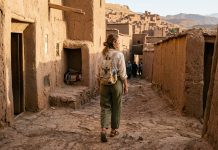
Cellular GPS frequently drops or drifts inside the covered alleys and high stone walls of Marrakech and Fes. Download the offline city map on Maps.me or Google Maps before leaving your riad. Maps.me often maps small pedestrian passages (derbs) more accurately than Google Maps.
2. Ask Shopkeepers for Directions, Not Lingering Youths
If you get disoriented in the medina, do not stand still in the middle of an alley staring at your phone—this immediately attracts unsolicited “helpers.” Instead, step inside an active shop or stall and ask the shopkeeper for directions to the nearest main square or landmark (such as Jemaa el-Fna in Marrakech or Bab Bou Jeloud in Fes). Shopkeepers are anchored to their businesses and cannot abandon their stalls to lead you somewhere for money.
3. Walk on the Right and Yield to Mules and Motorbikes
Medina alleyways are active thoroughfares used by pedestrians, handcarts, pack donkeys, and motorbikes. Listen for the shout “Balak! Balak!” (meaning “Watch out! Make way!”). When you hear it, immediately step to the right-hand wall to let laden carts or scooters pass.
4. Getting Lost Is Normal—Don’t Panic
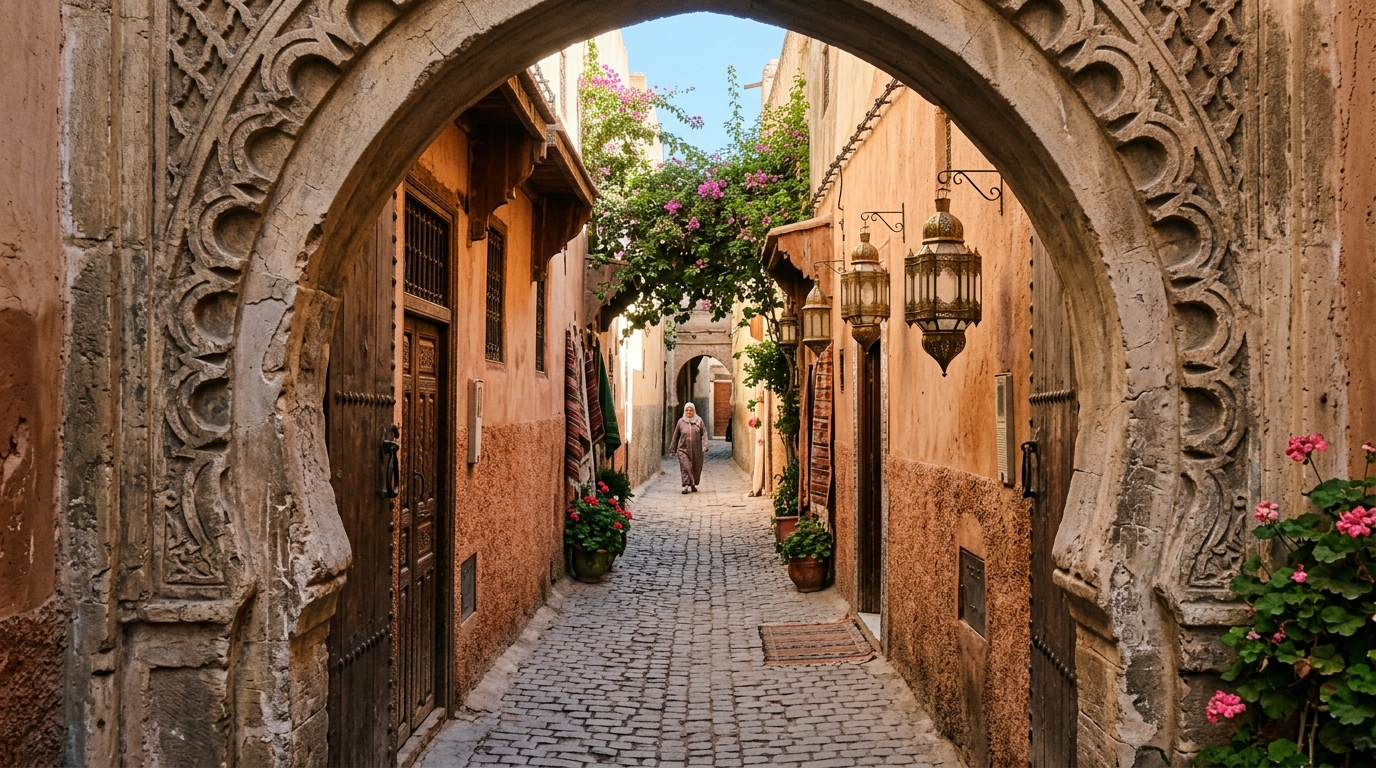
Fes el-Bali contains over 9,000 alleys, and Marrakech contains hundreds of blind residential dead ends. You will take wrong turns. Remember that all alleys eventually dead-end at a private residential door (usually indicated by arched entryways) or open back into a primary commercial thoroughfare lined with shops. If you find yourself in an empty, quiet alley, retrace your steps toward the noise and light of the main market street.
Handling Touts, Hassles & Scams
5. The “It’s Closed Today” Routine Is Always a Scam
While walking toward major attractions (such as the Chouara Tannery in Fes, the Saadian Tombs in Marrakech, or the main medina gates), young men will approach claiming: “That monument is closed today for prayer/cleaning, come this way to the Berber market.” This is almost universally false. The monument is open, and their goal is to redirect you to an overpriced carpet or leather shop. Ignore the claim, politely decline, and keep walking to the official entrance.
6. Master the Firm “La, Shukran”
Aggressive touts, street vendors, and faux guides thrive on engaging travelers in conversation. Engaging in small talk (“Where are you from?”, “Is it your first time?”) invites them to walk alongside you. If you are not interested in a service or product, make direct eye contact, shake your head, say firmly and politely “La, Shukran” (Arabic for “No, thank you”) or “Non, merci”, and continue walking at a steady pace without breaking stride.
7. Never Let Street Performers Hand You Anything
In high-traffic tourist squares like Jemaa el-Fna, men holding Barbary macaque monkeys on chains or snake charmers will attempt to place an animal on your shoulder or hand you a reptile for an unrequested photo. Once you hold the animal or snap a picture, they aggressively demand 100 to 200 MAD ($10–$20 USD). Keep your hands in your pockets or close to your body when crossing performance areas if you do not wish to participate.
8. Beware the Henna “Gift” in Jemaa el-Fna
Women offering henna tattoos will approach, grab your hand, and begin drawing without asking, claiming it is “a free gift of welcome.” Once ink touches your skin, they demand 200–400 MAD and can become verbally confrontational. Keep your hands closed and politely pull away immediately if someone reaches for your arm. Furthermore, avoid “black henna,” which contains toxic industrial chemicals (PPD) that cause severe allergic skin blistering.
Money, Payments & Bargaining
9. Cash Is King—Always Carry Small Banknotes
While major hotels and upscale restaurants in modern districts accept Visa and Mastercard, everyday Moroccan commerce runs entirely on cash. Taxis, medina food stalls, monument ticket booths, and souk merchants do not accept cards. Always break large 200 MAD banknotes at formal supermarkets or hotels to ensure you carry plenty of 10, 20, and 50 MAD notes and 5/10 MAD coins. Street vendors frequently cannot change 200 MAD bills on a 15 MAD purchase.
10. Decline Dynamic Currency Conversion (DCC) at ATMs
When withdrawing Moroccan Dirhams from bank ATMs, the screen will present a conversion prompt: “Accept conversion to USD/EUR with guaranteed rate” vs. “Decline conversion / Proceed in MAD.” Always select Decline Conversion / Bill in Local Currency (MAD). Local ATMs tack on a 5% to 10% hidden foreign exchange markup if you let them calculate the rate. Let your own bank at home handle the conversion.
11. Souk Bargaining Is a Social Negotiation, Not a Fight
In traditional souks where items lack fixed price tags (rugs, ceramics, leather bags, lanterns), initial prices quoted to foreign tourists are typically 2 to 3 times the actual retail value. Offer 40% to 50% of the initial quote and negotiate upward with a smile. If the seller refuses your final figure, say thank you and walk away. If their price was feasible, they will call you back; if not, you have reached their actual floor.
12. Budget for the Daily Tourist Lodging Tax
Moroccan municipalities levy a mandatory lodging tax (Taxe de Séjour and Taxe de Promotion Touristique) ranging from 15 to 35 MAD ($1.50–$3.50 USD) per person, per night, depending on the accommodation category. Many online booking portals do not collect this upfront; riads will add it to your final checkout bill, payable in cash.
Transportation & Getting Around
13. Always Insist on the Taximeter in Petit Taxis
By Moroccan law, city taxis (Petit Taxis) must turn on the mechanical meter (le compteur) at the start of every trip. Drivers outside airports, train stations, and luxury hotels often refuse, quoting flat rates of 50 to 100 MAD for trips worth 15 MAD. Before getting into the car, say “Le compteur, s’il vous plaît.” If the driver refuses, simply close the door and flag the next cab.
14. Learn Your City’s Taxi Color
Each Moroccan municipality has a designated uniform color for its Petit Taxis: ochre/red in Marrakech, red in Casablanca, blue in Chefchaouen, fawn/cream in Fes, blue in Rabat, and yellow in Essaouira. You cannot hail a taxi licensed in one city to operate in another.
15. Book Passenger Rail Directly Through ONCF
The Moroccan national rail network (ONCF) operates clean, punctual, air-conditioned trains, including the 320 km/h Al Boraq high-speed line between Tangier, Rabat, and Casablanca. Purchase tickets directly on the official ONCF portal (oncf-voyages.ma) or at station ticket machines. Avoid third-party booking sites that tack on 30% to 50% reseller markups.
16. Be Prepared for Strict Highway Police Radar
If you rent a car, obey posted speed limits meticulously. The Royal Gendarmerie and National Police maintain frequent radar checkpoints along rural highways. Approaching towns, limits drop abruptly from 100 km/h to 60 km/h or 40 km/h, and fines (typically 150 to 300 MAD payable on the spot with an official receipt) are strictly enforced.
Culture, Etiquette & Religion
17. Dress Conservatively Outside Beach Resorts
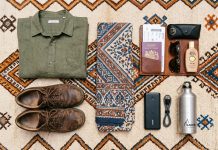
Morocco is a moderate Muslim country, but social norms remain conservative, particularly in historic medinas, residential quarters, and rural villages. Both men and women should keep shoulders and knees covered to avoid unwanted staring. Lightweight linen trousers, long skirts, and breathable cotton shirts work well in warm weather.
18. Non-Muslims Cannot Enter Most Mosques
Unlike Turkey or Egypt, historic functioning mosques in Morocco are closed to non-Muslim visitors. You may look into courtyards through open doorways from the street, but do not enter. The only major exception is the Hassan II Mosque in Casablanca, which runs scheduled, paid guided interior tours outside of daily prayer times.
19. Eat and Shake Hands with Your Right Hand
In Moroccan dining culture, particularly when eating communally from a central tajine or couscous platter using flatbread, use only your right hand. In Islamic tradition, the left hand is reserved for personal hygiene and is considered unclean for handling food or greeting others.
20. Always Ask Before Photographing People
Many Moroccans—especially older residents, women, and artisans working in their shops—deeply object to having cameras pointed at them without permission. Always ask “Permettez-moi une photo?” or gesture respectfully before shooting. If someone shakes their head, put the camera down immediately.
Health, Food & Daily Utilities
21. Stick to Bottled Water or Filtered Systems
While municipal tap water in major cities like Casablanca and Rabat is treated according to national safety standards, its mineral balance differs from Western water and frequently triggers digestive upset in travelers. Stick to bottled mineral water (common brands include Sidi Ali and Ain Saiss) or carry an insulated bottle with a built-in purifier filter.
22. Eat at High-Turnover Street Stalls
Moroccan street food is delicious, safe, and inexpensive when chosen wisely. Look for stalls crowded with local families, taxi drivers, and working Moroccans—a rapid turnover of grilled kefta, skewers, harira, and fresh msemen guarantees the food has not been sitting lukewarm under heat lamps.
23. Alcohol Is Not Sold Everywhere
Alcohol is strictly regulated. Most medina restaurants do not hold liquor licenses. If you wish to purchase wine or beer for your riad room, locate a licensed French supermarket (such as Carrefour or Marjane Market) in the modern new towns (Gueliz in Marrakech, Ville Nouvelle in Fes), where alcohol is sold in an enclosed annex room.
24. Power Plugs Are Standard European Types C and E
Morocco operates on a 220V, 50Hz electrical system using round, two-pin European standard plugs (Type C and Type E). Travelers from North America, the UK, or Australia will need plug adapters and should verify that high-draw appliances (hair dryers, curlers) support dual voltage (110–240V).
25. Learn 5 Essential Moroccan Darija Phrases
While French is widely spoken in commerce and English is standard in tourism hubs, speaking a few words of Moroccan Darija (Arabic) shows immediate respect and softens interactions:
- Salam Alaykum: Hello / Peace be upon you (Response: Wa Alaykum Salam)
- Shukran: Thank you (To say “No, thank you”: La, Shukran)
- Afak: Please
- Bslama: Goodbye
- Inshallah: God willing (used when discussing future plans or arrival times)
Next Steps for Planning
To see how to budget for these daily expenses, consult our Morocco travel cost breakdown, explore route options in our 10-day Morocco itinerary, or review the foundational Morocco Travel Guide.