
Staying in a traditional riad is one of the most memorable cultural experiences Morocco offers. Unlike conventional high-rise hotels situated along modern city boulevards, riads are historic inward-facing townhouses nestled deep within the maze-like medinas of imperial cities like Marrakech, Fes, Meknes, and Essaouira.
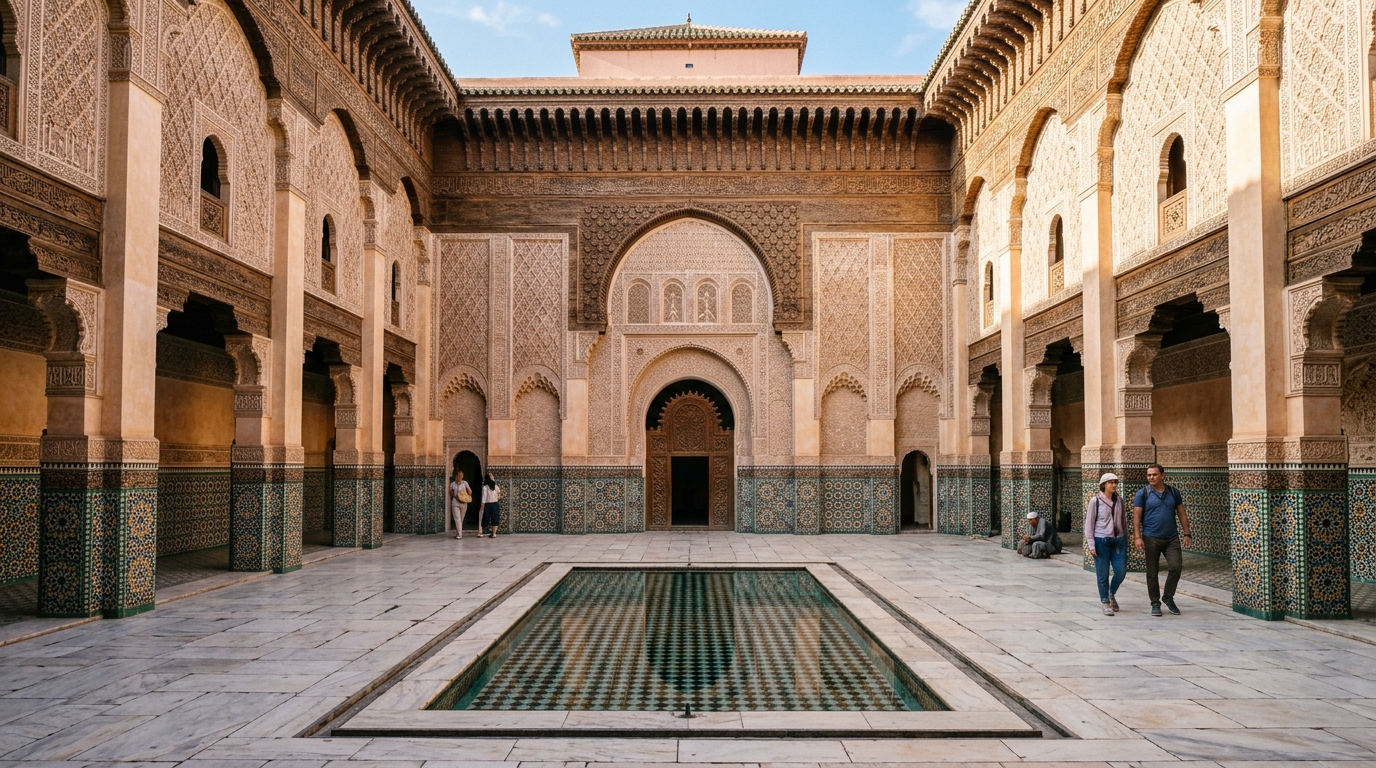
Behind unassuming, blank wooden exterior doors on dusty medina alleys lies an oasis of calm: sunlit interior courtyards centered around marble fountains, intricate hand-carved cedar woodwork, vibrant zellij tilework, and fragrant citrus trees. However, because riads are historic residential properties rather than purpose-built hotels, staying in one comes with unique quirks and practical considerations that every traveler should know before booking.
What Exactly Is a Riad? Architecture & History
The word riad (often spelled riyad) derives from the Arabic term riyad (رياض), meaning “gardens.” Historically, the wealthy merchant elite and aristocratic families designed their urban homes according to Islamic principles of privacy, family sanctuary, and thermal efficiency:
- Inward-Facing Layout: The ground floor features no exterior-facing windows looking out onto public street alleys. All windows, balconies, and doorways face inward toward a central open-air courtyard (the patio). This ensured family privacy from street onlookers while isolating the home from street noise and dust.
- Thermal Regulation: Thick rammed-earth or brick walls coupled with the open central atrium create a natural chimney effect. Cool night air sinks into the courtyard and keeps ground-floor salons comfortably temperate during scorching summer afternoons.
- Zellij & Plaster Craft: Riads showcase Morocco’s master craft traditions: geometric polychrome mosaic tilework (zellij) lining walls and fountain basins, intricately chiseled stuccowork (geb), and sculpted painted cedarwood ceilings (zouak).
Riad vs Dar: What is the Difference?
While the terms are used interchangeably in modern travel marketing, they represent distinct architectural classifications:
- A Riad: An expansive courtyard home that contains an interior garden featuring soil beds, mature orange or lemon trees, and a central water fountain.
- A Dar: A smaller medina house built around a paved, tiled courtyard without garden plantings. Today, both types provide similar boutique hospitality experiences.
The Practical Realities of Riad Stays
1. Medina Accessibility & Luggage Logistics
Moroccan medinas are strictly pedestrian-only environments; cars, buses, and taxis cannot enter their narrow alleys. Your taxi from the airport will drop you at the nearest vehicle-accessible city gate (bab) or public square:
- You must walk the remaining distance through winding cobblestone alleys to reach your riad (typically 3 to 10 minutes on foot).
- Local luggage porters with two-wheeled handcarts (carrossas) congregate at city gates. For 20 to 30 MAD ($2 to $3 USD), they will load your heavy bags onto their cart and guide you directly to the riad door.
- Always request that your riad send a staff member to meet your taxi at the drop-off gate upon arrival. Attempting to navigate the medina alleys with heavy suitcases for the first time without a guide frequently results in getting lost.
2. Acoustic Dynamics: The Open Courtyard
Because every guest room opens directly onto the central interior atrium, sound travels with exceptional clarity. Footsteps on tile staircases, breakfast preparation in the courtyard kitchen, and whispered conversations in the central salon can easily be heard inside surrounding rooms. If you are a light sleeper, request an upper-floor room and pack high-quality earplugs.
3. Seasonal Heating & Air Conditioning
While riads excel at staying cool in summer, unheated medina homes can feel surprisingly chilly and damp during winter months (December to February). Ensure your prospective riad provides rooms equipped with modern reversible split-system air conditioning and heating units, or cozy fireplaces.
4. Rooftop Terraces
The rooftop terrace is the social heart of every riad. Elevated above the claustrophobic medina alleys, terraces offer panoramic views across clay-tiled rooftops, minarets, and distant mountain ranges. Most riads serve lavish breakfasts on the terrace and offer sun loungers for afternoon relaxation.
Riad Etiquette & Tipping
- Shoe Etiquette: While some modern riads permit shoes everywhere, it is polite to remove outdoor footwear before stepping onto fine hand-woven Berber wool carpets in guest salons.
- House Keys & Curfews: Many traditional riads lock their heavy outer wooden front doors at night. If you plan to return late after dinner, inform the night manager (gardien de nuit) so they can admit you promptly.
- Tipping the House Team: Riad hospitality is remarkably intimate and personal, managed by a dedicated small team of housekeepers, cooks, and concierges. It is customary to leave a communal gratuity at checkout—typically 50 to 100 MAD ($5 to $10 USD) per day of your stay placed in an envelope for the staff tip box.
For more accommodation inspiration and itinerary ideas, explore our guide to the best riads in Marrakech and our comprehensive overview of Fes el-Bali.