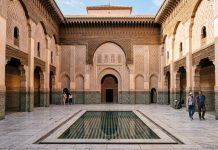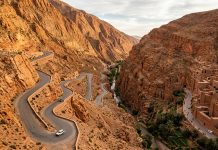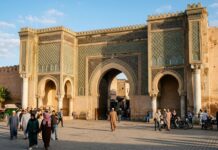

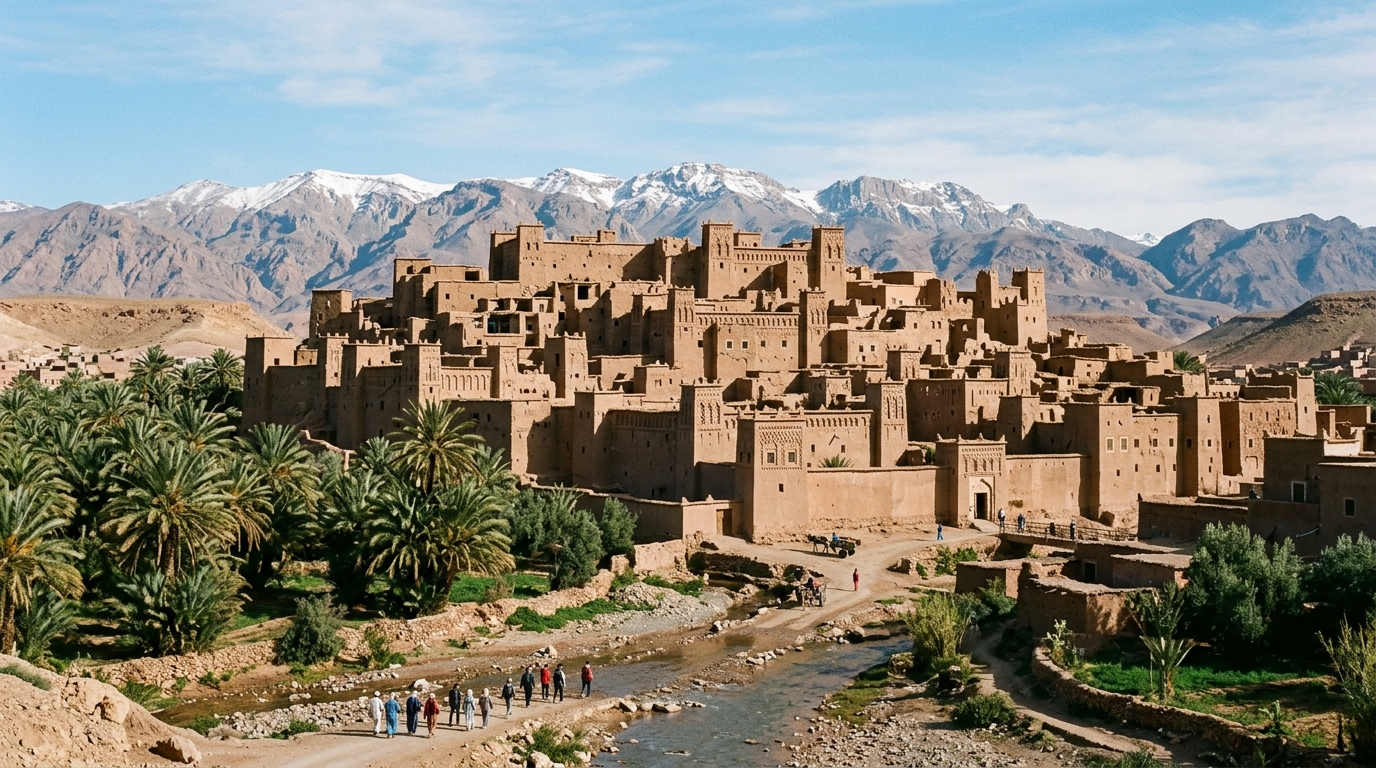
Planning a trip to Morocco comes down to four core decisions: how many days you have, which regions you can realistically link together, how you will get between them, and what time of year you go. A standard trip connects imperial cities, mountain passes, and desert plains, but trying to cover all of them in a week leaves you spending most of your time in transit.
This guide lays out the practical framework for an independent trip: entry requirements, honest transit times between major hubs, realistic daily budgets in Moroccan Dirhams, seasonal weather patterns, and regional overviews so you can build a sensible route.
Fast Facts for Travelers
- Location: North Africa, bordering the Atlantic Ocean and Mediterranean Sea
- Capital: Rabat
- Largest City: Casablanca
- Primary Gateway Airports: Casablanca Mohammed V (CMN), Marrakech Menara (RAK)
- Currency: Moroccan Dirham (MAD). Roughly 10 MAD = $1 USD / 11 MAD = €1 EUR
- Languages: Darija (Moroccan Arabic) and Tamazight (Berber) are official; French is widely used in commerce, transit, and hospitality; English is standard in tourism centers
- Plug Type: Types C and E (standard European two-pin), 220V, 50Hz
- Emergency Numbers: Police 19 (urban) / 177 (Royal Gendarmerie rural), Ambulance/Fire 15
Passport and Visa Requirements
Travelers holding passports from the United States, Canada, the United Kingdom, the European Union, Australia, and New Zealand do not require a visa for tourist stays up to 90 days. Your passport must be valid for at least six months beyond your planned date of entry and contain at least one blank stamp page.
At border control—whether landing at Casablanca Mohammed V or arriving by ferry in Tangier—immigration officers stamp your passport with an entry stamp containing an alphanumeric police file number (Numéro d’Entrée). Hotels and riads will ask for this number when you check in; keep it accessible.
Travelers from countries requiring a visa can apply through the official Moroccan consular portal for an eVisa (electronic visa), introduced in recent years to streamline entry.
When to Visit Morocco
Morocco’s climate varies drastically between coastal zones, mountain ranges, and inland desert basins. Selecting travel dates depends on your intended geography.
| Season | Months | Weather Conditions | Travel Suitability |
|---|---|---|---|
| Spring | March to May | Moderate temperatures nationwide (18°C–26°C / 64°F–79°F), blooming countryside | Optimal for cities, desert trips, and hiking |
| Autumn | September to November | Warm days, comfortable evenings; post-summer cooling across central plains | Optimal across all regions including Sahara |
| Winter | December to February | Mild along coastal plains (Casablanca, Tangier); freezing nights in High Atlas and Sahara dunes; occasional snow at elevation | Good for city sightseeing; cold in desert camps and unheated riads |
| Summer | June to August | Intense inland heat (Marrakech and Fes routinely exceed 40°C / 104°F); Sahara camps largely shut down | Stick to Atlantic and Mediterranean coasts (Essaouira, Taghazout, Tangier) |
For detailed weather breakdowns by month and regional temperatures, read our complete guide on the best time to visit Morocco.
How to Travel Between Moroccan Cities
Morocco has one of the most reliable ground transportation networks on the African continent, combining passenger rail, scheduled intercity coach buses, and shared route taxis.
1. Passenger Rail (ONCF & Al Boraq)
The national rail operator is ONCF (Office National des Chemins de Fer). Rail is the fastest and most comfortable way to travel between Tangier, Rabat, Casablanca, Fes, and Marrakech.
- Al Boraq (High-Speed Train): Connects Tangier to Casablanca via Kenitra and Rabat in 2 hours and 10 minutes. First and second-class reserved seating with power outlets.
- Atlas Conventional Lines: Links Casablanca to Marrakech (approx. 2 hours 40 minutes) and Casablanca to Fes (approx. 3 hours 45 minutes).
- Tickets: Book direct on the official ONCF website (oncf-voyages.ma) up to 30 days in advance, or buy at station automated kiosks.
2. Intercity Coaches (CTM and Supratours)
Rail does not reach Chefchaouen, Essaouira, Agadir, or the Sahara desert towns. For these legs, use national coach operators:
- CTM: Runs modern, air-conditioned long-distance coaches between nearly all major towns. Seats are reserved with luggage weighed at check-in (a nominal 5–10 MAD fee per bag).
- Supratours: The bus subsidiary of the rail network ONCF. Their schedules synchronize directly with train arrivals in Marrakech and Fes for onward travel to Essaouira, Ouarzazate, and Merzouga.
3. Grand Taxis and Petit Taxis
Within towns, use Petit Taxis (small city cabs, each municipality having its own uniform color—ochre in Marrakech, red in Casablanca, blue in Chefchaouen). By law, drivers must use the taximeter (compteur). If a driver refuses to turn it on, exit and hail another.
For routes between neighboring towns not well served by buses, Grand Taxis operate on fixed collective routes. You pay for one seat out of six, or purchase all seats to leave immediately as a private taxi.
Morocco Travel Budget Breakdown
Costs in Morocco remain reasonable for travelers paying in dollars, euros, or pounds, though prices in tourist centers like Marrakech have climbed steadily over recent years.
| Expense Category | Budget Traveler | Mid-Range Traveler | Comfort / High-End |
|---|---|---|---|
| Accommodation | 150–300 MAD ($15–$30) hostel dorm or basic hotel | 600–1,200 MAD ($60–$120) mid-range riad room | 1,800–4,500+ MAD ($180–$450+) luxury riad or boutique hotel |
| Daily Food | 80–150 MAD ($8–$15) local eateries, sandwiches, street soup | 200–400 MAD ($20–$40) sit-down restaurants, tajine meals | 500–1,000+ MAD ($50–$100+) fine dining, courtyard meals |
| Intercity Transit | 50–120 MAD ($5–$12) 2nd class train or regional bus | 150–300 MAD ($15–$30) 1st class rail, CTM coach | 800–1,800 MAD ($80–$180) private driver per leg |
| Activities & Entry | 20–70 MAD ($2–$7) historic monuments, madrassas | 150–350 MAD ($15–$35) guided city walking tours | 600–1,500+ MAD ($60–$150+) cooking classes, hammams |
| Total Per Day | 300–550 MAD (~$30–$55) | 1,000–1,800 MAD (~$100–$180) | 2,800–6,000+ MAD (~$280–$600+) |
For itemized expense breakdowns including ATM fees and tipping practices, consult our guide on how much a trip to Morocco costs.
Major Destination Profiles
Marrakech
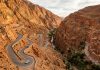
Morocco’s primary tourism hub. Home to the historic medina, Bahia Palace, the Saadian Tombs, and the open square of Jemaa el-Fna. Marrakech serves as the primary departure base for High Atlas trekking trips and overland routes across the Tizi n’Tichka pass to the Sahara.
Fes
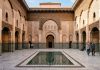
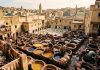
The country’s historical and spiritual center. Fes el-Bali contains over 9,000 narrow alleys closed to motor vehicles, the 9th-century University of al-Qarawiyyin, and the traditional leather tanneries of Chouara. Fes is also the gateway to the cedar forests of Azrou and the desert route southward through Midelt.
Chefchaouen
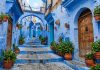
Located in the Rif Mountains of northwest Morocco. Known for its distinct blue-washed architecture, compact medina, and proximity to mountain trails in Talassemtane National Park. Best accessed by CTM bus from Tangier (2.5 hours) or Fes (4 hours).
Essaouira
A fortified Atlantic port town with an 18th-century stone rampart (Skala de la Ville), active fishing harbor, and steady coastal trade winds that keep temperatures significantly cooler than inland cities. Located 3 hours west of Marrakech by daily Supratours bus.
The Sahara (Erg Chebbi & Erg Chigaga)
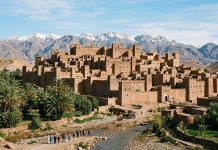
The primary dune fields of the Moroccan desert. Erg Chebbi (based out of Merzouga) features towering red sand dunes accessible on paved roads. Erg Chigaga (south of M’Hamid) requires a multi-hour 4×4 drive through desert scrub and offers a more remote experience. Minimum realistic commitment from Marrakech or Fes: 3 days / 2 nights.
Practical Money and Safety Advice
Cash vs. Cards
Morocco remains primarily cash-driven for day-to-day purchases. While larger hotels, formal restaurants, supermarket chains, and train ticket counters accept Visa and Mastercard, medina market vendors, taxis, local cafes, and small riads require cash.
- Carry 200–500 MAD in small banknotes (20, 50, and 100 MAD) and coins. Medina vendors rarely have change for 200 MAD bills on small purchases.
- Use bank ATMs attached directly to physical branches (Attijariwafa Bank, Banque Populaire, BMCE) rather than standalone machines in convenience kiosks to reduce skimming risk.
- Always decline the ATM’s dynamic currency conversion (DCC) and choose to be charged in MAD so your home bank sets the exchange rate.
SIM Cards and Connectivity
Three main telecommunication networks operate across Morocco: Maroc Telecom (IAM), Orange, and Inwi. Maroc Telecom maintains the most reliable coverage along rural highways, mountain valleys, and desert roads.
Prepaid tourist SIM cards are available at airport arrival terminals or telecom kiosks in every city center. A physical SIM or eSIM with 10 GB to 20 GB of mobile data typically costs between 100 MAD and 200 MAD ($10–$20 USD).
Cultural Etiquette and Dress
Morocco is a Muslim country with conservative social standards, particularly outside of Europeanized commercial districts in Casablanca and Marrakech.
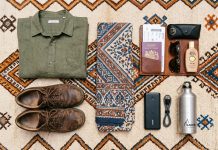
- Cover shoulders and knees when visiting historic quarters, small towns, and rural communities. Loose, lightweight linen or cotton trousers and shirts work well for warm weather.
- Non-Muslims are prohibited from entering functioning mosques across Morocco, with the notable exception of the Hassan II Mosque in Casablanca, which operates organized guided tours outside prayer hours.
- Always ask permission before photographing market stallholders or artisans. Many prefer not to be photographed, while street performers in high-traffic squares expect a direct tip (10–20 MAD) if captured on camera.
Frequently Asked Questions
Is Morocco safe for independent travelers?
Morocco has a low rate of violent crime against tourists and maintains a visible security presence throughout tourist areas. The most common issues visitors encounter are medina hustlers offering unsolicited navigation assistance (“faux guides”), aggressive touts in market squares, and taxi drivers refusing to run meters. Firmly stating “Non, merci” and continuing to walk avoids most unwanted interactions.
How many days do I need for a first visit?
A 7-day trip is sufficient for two major destinations and a day trip (for example, Marrakech, Essaouira, and the High Atlas). If you intend to include the Sahara Desert, schedule at least 10 days to absorb the 9-hour driving legs between the desert and either Marrakech or Fes without exhausting yourself.
Can I drink the tap water in Morocco?
Municipal tap water in major cities like Rabat, Casablanca, and Marrakech is chemically treated and safe according to national standards, but its mineral composition often causes digestive issues for short-term visitors. Stick to bottled water (popular brands include Sidi Ali and Ain Saiss) or carry a refillable bottle equipped with an internal purifier filter.
Next Steps for Planning
With an understanding of the country’s layout, transit systems, and seasonal conditions, begin selecting your destinations and locking in a route. Continue reading our 10-day Morocco itinerary for a day-by-day route plan connecting the imperial cities with the Sahara.