
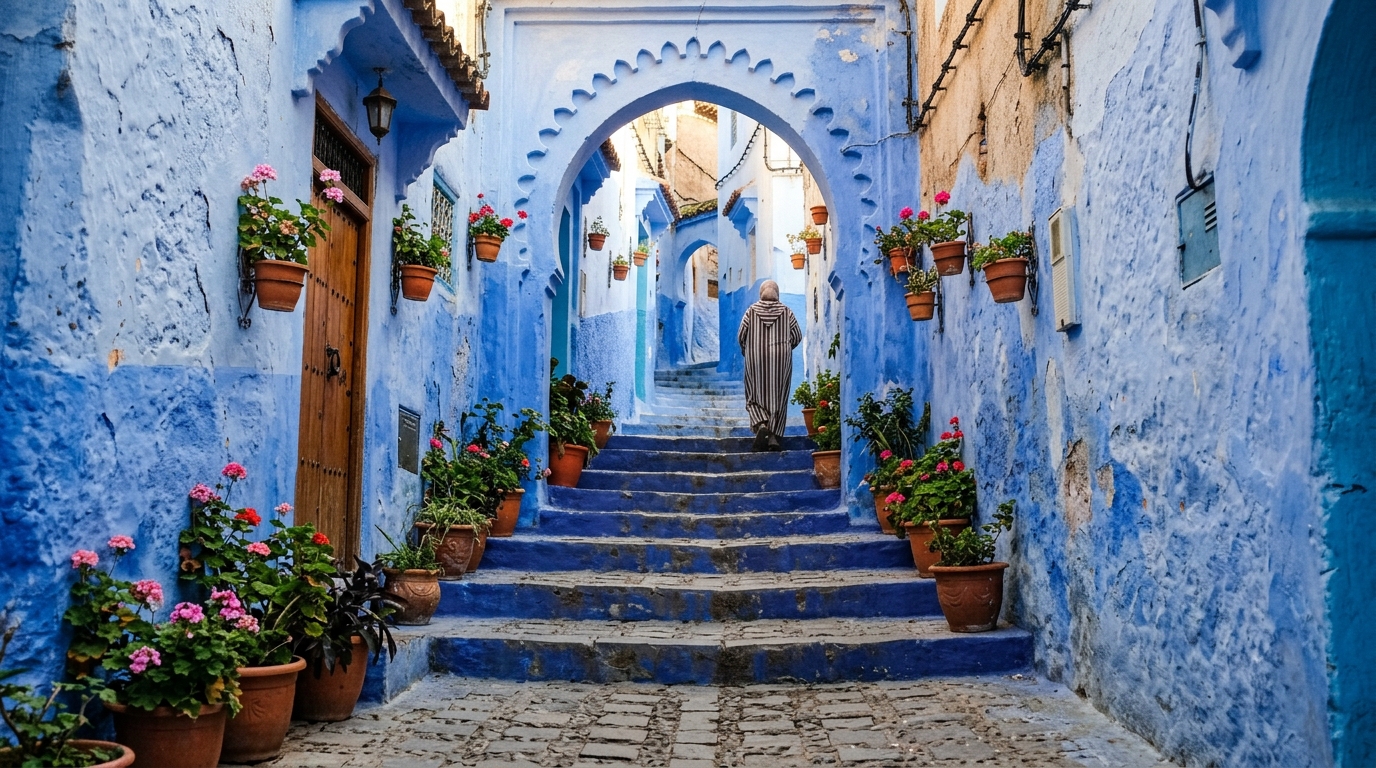
Known across the world as Morocco’s “Blue City,” Chefchaouen (often abbreviated simply as Chaouen) sits folded into the dramatic limestone peaks of the Rif Mountains in northwestern Morocco. Founded in 1471 by Moulay Ali Ben Rachid as a fortified military stronghold (kasbah) to defend against Portuguese coastal invasions, the town expanded significantly after 1492, when Jewish and Muslim refugees fleeing the Spanish Reconquista settled here, introducing Andalusian whitewashed architecture, red-clay tile roofs, and courtyard gardens.
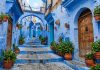
Today, Chefchaouen is world-famous for its medina walls, doorways, and cobblestone steps painted in varied shades of cobalt, sky blue, powder blue, and indigo. Beyond photography, the town offers a tranquil mountain atmosphere in sharp contrast to the high-pressure sales environments of Marrakech and Fes. This guide covers how to reach the town without a railway, where to stay, what to see, and how to hike in the surrounding mountain valleys.
Chefchaouen Fast Facts for Travelers
- Location: Rif Mountains, 110 km south of Tangier / 200 km north of Fes
- Transit Access: Highway only (no airport, no rail station). Reached via CTM coach buses, grand taxis, or rental car
- City Taxi Color: Sky-blue Petit Taxis
- Recommended Stay: 1 to 2 full days (2 nights optimal)
- Best Time to Visit: April to May (wildflowers and cool mountain air) and September to October
Why Is Chefchaouen Painted Blue?
Several theories explain why the medina was washed in blue, and the modern reality is a blend of cultural tradition and practical utility:
- Jewish Tradition: The primary historical origin dates to Sephardic Jewish refugees who settled in the town in the late 15th century and a second wave arriving in the 1930s. In Jewish religious tradition, the blue dye (tekhelet) represents the sky and heaven, serving as a constant reminder of the divine.
- Mosquito & Insect Repellent: Local residents maintain that the blue lime-wash repels mosquitoes and flies, which naturally avoid clear, cool, and reflective surfaces.
- Thermal Cooling: Similar to Mediterranean whitewashing in Greece and southern Spain, the pale mineral wash reflects intense summer sun, keeping stone interior rooms significantly cooler.
- Modern Civic Pride: Today, the municipal government and local families reapply fresh layers of blue wash multiple times each year, particularly before religious holidays and peak tourism seasons.
Top Things to Do in Chefchaouen
1. Wander the Residential Quarters of Al-Andalus and Souika
The greatest appeal of Chefchaouen is simply exploring its quiet pedestrian alleys on foot. The medina is small, exceptionally clean, and almost entirely free of the aggressive touts found in larger cities. The most picturesque and photogenic streets are located in the upper residential neighborhoods of Al-Andalus, Souika, and along the climbing steps of Callejón El Asri.
- Etiquette Tip: While the medina is widely photographed, remember that these streets are active family homes. Do not peer directly into open residential front doors, keep voice volumes low in the early morning, and always ask permission before taking close-up portraits of residents.
2. Relax in Plaza Uta el-Hammam
The social center of the medina is Plaza Uta el-Hammam, a tree-shaded cobblestone square lined with sidewalk cafes, outdoor restaurant terraces, and sweet pastry shops. The square is anchored by two prominent historical landmarks:
- The Grand Mosque: Built in the 15th century by Ali Ben Rachid, it features a unique octagonal stone minaret reflecting Andalusian architectural heritage. (Closed to non-Muslim visitors).
- The Red Kasbah: A heavily fortified red-stone military citadel built in 1471. Step inside to explore its quiet central Andalusian courtyard garden, the ethnographic museum displaying regional Rif tribal costumes and pottery, and climb the primary defense tower for panoramic views across the square. Admission: 60 MAD (~$6.00 USD).
3. Watch Daily Life at Ras el-Maa Waterfall
Exit the medina through the eastern gate of Bab el-Ansar to reach Ras el-Maa (“Head of the Water”). Here, cold mountain spring water surges out of the limestone cliffs, powering historic watermills and providing fresh water for the town. Local women still gather at the covered riverside stone washing basins to launder rugs and clothes, while small open-air riverside cafes set plastic tables and chairs directly in the shallow, rushing water so patrons can dip their feet while sipping fresh mint tea or freshly squeezed orange juice.
4. Hike Up to the Spanish Mosque for Sunset
For the iconic panoramic view of Chefchaouen, hike to the Spanish Mosque (Bouzafar). Built by the Spanish military administration in the 1920s on a ridge overlooking the valley, the mosque was never consecrated and sits decommissioned on a barren hillside.
- The Trail: Starting at the Ras el-Maa river crossing, a well-paved stone footpath climbs gently along the hillside. The walk takes approximately 20 to 30 minutes at a relaxed pace.
- Timing: Start walking 45 minutes before sunset. As the sun sinks behind the opposite mountain ridge, the entire blue medina glows in soft indigo and violet tones as the synchronized evening call to prayer echoes across the valley.
5. Day Trip to Akchour Waterfalls and God’s Bridge
Located 30 kilometers north of Chefchaouen in Talassemtane National Park, the river gorges of Akchour offer some of northern Morocco’s finest day hikes:
- God’s Bridge (Pont de Dieu): A dramatic natural red rock arch spanning 25 meters above the Oued Farda river canyon. The hike takes about 45 minutes to 1 hour along a moderately steep trail from the trailhead.
- Grand Cascade d’Akchour: A scenic 3-to-4-hour round-trip hike winding upstream past river boulders, small natural swimming pools, and rustic tagine stands to a 70-meter mountain waterfall.
- Logistics: Take a shared Grand Taxi from Chefchaouen’s main taxi rank near the bus station (approx. 25 MAD per seat, or 150 MAD to hire the entire car private one-way). The drive takes roughly 45 minutes each way.
How to Get to Chefchaouen: Transit Logistics
Because Chefchaouen has no railway station and no airport, all travel is by road through the winding mountain passes of the Rif range:
| Origin City | Distance | CTM Bus Travel Time & Fare | Grand Taxi / Private Driver |
|---|---|---|---|
| Tangier | 110 km | 2 hours 15 min (~50–60 MAD) | 1.5–2 hours (approx. 350–500 MAD private) |
| Fes | 200 km | 4 hours (~75–85 MAD) | 3.5 hours (approx. 600–800 MAD private) |
| Tetouan | 65 km | 1 hour 15 min (~35 MAD) | 1 hour (approx. 150–200 MAD private) |
| Casablanca | 340 km | 6 hours (Take Al Boraq train to Tangier, then bus) | 4.5–5 hours direct private transfer |
Arrival at Chefchaouen Bus Station
CTM and regional buses arrive at the main bus terminal (Gare Routière), situated in the modern valley town roughly 1.5 kilometers below the historic medina. Do not attempt to drag luggage uphill on foot. Blue Petit Taxis wait directly outside the terminal; a ride up to the main medina gates (Bab el-Ain or Bab Souq) costs a flat 10 to 15 MAD ($1.00–$1.50 USD).
Where to Stay in Chefchaouen
Unlike Marrakech or Fes, which feature opulent palatial riads, accommodations in Chefchaouen consist of intimate, family-run guesthouses (dar) characterized by whitewashed rooms, exposed pine beams, hand-woven wool rugs, and rooftop breakfast terraces with views of the mountain peaks.
- Stay Inside the Medina: Book lodging within the upper quarters near Bab Souq or Ras el-Maa for quiet nights and easy access to walking paths.
- Luggage Precaution: The medina is filled with steep cobblestone steps. If you travel with heavy bags, arrange for your guesthouse to send a porter to meet your taxi at the gate.
Next Steps for Planning
To see how Chefchaouen fits into an extended trip connecting the imperial cities, read our 10-day Morocco itinerary, review our packing advice for cobblestone stairs in what to pack for Morocco, and check our primary Morocco Travel Guide.