Agadir in Morocco doesn’t look like the Morocco on most postcards. There’s no tangled old medina and no centuries-old riads, because an earthquake flattened the city in 1960 and it was rebuilt from scratch. What it does have is a long, sheltered bay, mild weather in every month, a hilltop kasbah with views over the whole coast, one of Morocco’s biggest markets, and world-class surf twenty minutes up the road.
This guide to Agadir in Morocco covers the best things to do in Agadir, from the beach and the kasbah cable car to Souk El Had and the fish stalls at the port. It also covers the beaches and day trips from Agadir worth leaving town for, where to stay in Agadir for each kind of trip, the best time to visit Agadir, and what everything costs in 2026.
The short version: give Agadir three days. Spend one on the beach, the kasbah and the marina, one on the souk and the city’s small museums, and one on a day trip to Paradise Valley or the surf villages of Taghazout and Tamraght. If you want a surf course or a proper beach holiday, five to seven days is better.
Agadir in Morocco at a Glance
Agadir is the capital of the Souss-Massa region on Morocco’s southern Atlantic coast, about 250 km southwest of Marrakech. It’s the country’s main beach resort, and unlike many resort towns, Agadir in Morocco is also a working city with a large fishing port, so it feels lived-in rather than built only for tourists.
| Airport | Agadir Al Massira (AGA), about 20–25 km southeast of the center |
| From Marrakech | About 3–3.5 hours by bus or car on the A7 motorway; there’s no train to Agadir |
| Getting around | Orange petit taxis (metered) inside the city; local buses and grand taxis along the coast |
| Days needed | 3 days for the highlights; 5–7 for surfing or a beach holiday |
| Best for | Beach holidays, families, surfers, winter sun, a relaxed end to a Morocco route |
| Not for | Travelers who want an old medina and historic monuments as the main event |
| Currency check | Prices below converted at about 9.8 MAD to the US dollar (October 2026) |
Agadir works best as a base. The city itself fills two days comfortably, and the coast and valleys around it fill the rest of the week. For the broader overview, including how Agadir compares with Taghazout as a place to stay, read our Agadir & Taghazout Travel Guide.
Things to Do in Agadir City
These are the best things to do in Agadir without leaving town, and the places that best explain what makes Agadir in Morocco different from the rest of the country. Most sit within a 10-minute taxi ride of the beach, and several pair naturally on the same day.
1. Spend a Day on Agadir Beach and the Corniche
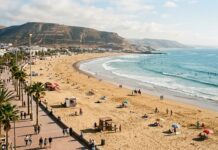
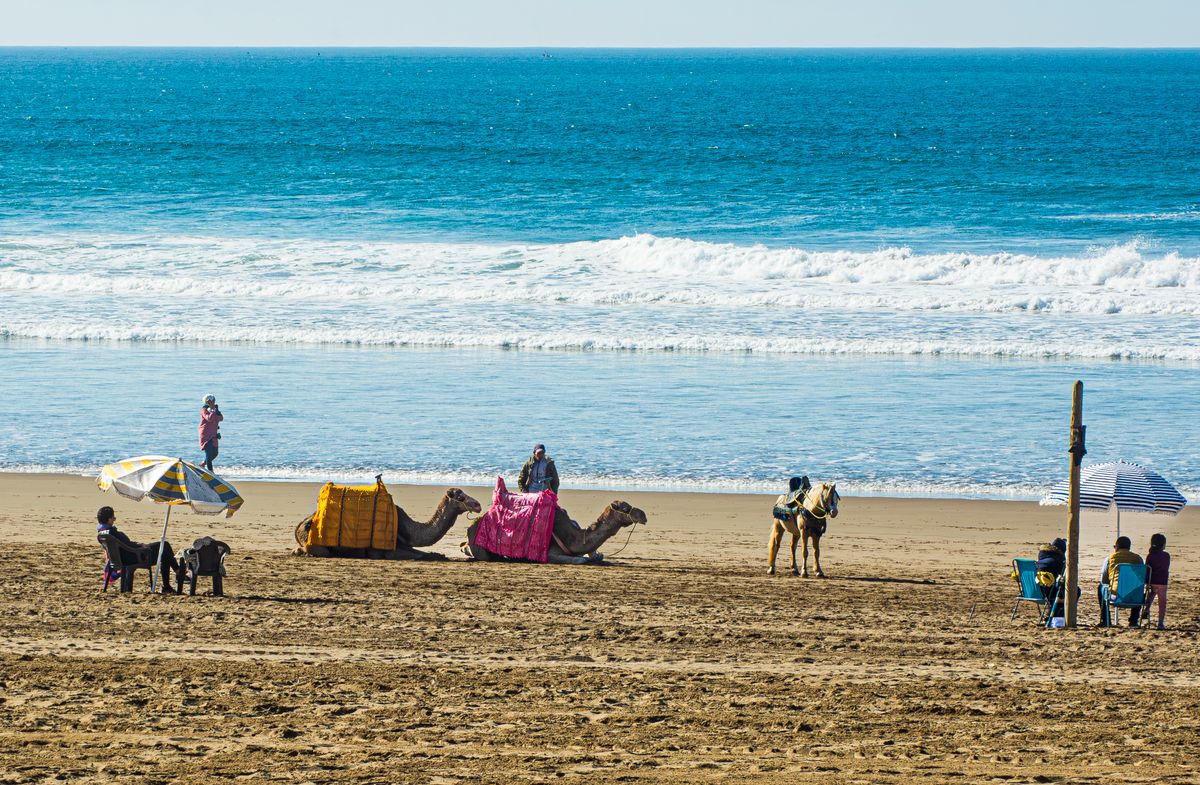
The main reason most people come. Agadir beach curves for several kilometers from the marina in the north toward the Oued Souss river mouth in the south, backed by a wide pedestrian promenade (the Corniche) lined with cafés, juice bars and restaurants. Mornings are for joggers and families; late afternoons are when locals come out to walk, and the whole promenade fills up at sunset.
Sunbeds and umbrellas are available to rent from beach clubs and hotel concessions, or you can lay a towel down anywhere on the public sand. Expect people selling snacks, camel rides and horse rides along the shore. A polite “la, shukran” (no, thank you) is all it takes.
Tip: The northern end, near the marina, has the most restaurants and the easiest swimming. The southern stretch toward the big resort hotels is quieter and better for long walks.
2. Ride the Cable Car to the Agadir Oufella Kasbah
The hill at the north end of the bay is crowned by the ruined walls of Agadir Oufella, the fortress built in the 16th century to guard the bay. The old town inside it was destroyed in the 1960 earthquake, and the hillside now carries the giant Arabic inscription “God, Country, King,” lit up after dark.
Since 2022 you can reach it by Morocco’s first urban cable car (téléphérique), which runs about 1.7 km from the base station at Pont Tildi, on Rue Echouhada, to the top of the 236-meter hill. The ride takes only a few minutes each way and is worth it for the view of the bay, port and Atlas foothills alone. A return ticket for adults was about 130 MAD (around $13 USD) at the ticket office in summer 2026; prices have changed several times since it opened at 80 MAD, so check on the day.
At the top, walk the restored ramparts, read the history panels, and stay for sunset. You can also reach the kasbah by petit taxi or on foot up the road, though the walk is steep and exposed in the heat.
Important: Buy cable car tickets at the station rather than through a “city tour” that only includes it as an optional extra. Several tours advertise the ride but leave the ticket out of the price.
3. Get Lost (a Little) in Souk El Had
Souk El Had is one of the largest markets in Morocco, a walled compound of around 6,000 stalls about 800 meters inland from the middle of the beach. Unlike the medinas of Fes or Marrakech, it’s laid out in a grid with numbered gates, so it’s hard to get properly lost.
Come here for spices, dates, olives, argan oil, amlou (almond, argan and honey spread), leather, pottery, carpets, djellabas and cheap everyday goods. Fresh produce fills whole sections, and it’s fun just to watch the city do its shopping. Souvenir stalls cluster around gates 8 and 9, which are also known for jewelry.
- Open: Roughly 8:00 AM to 8:00 PM, closed Mondays. Many stalls shut for a few hours after Friday midday prayers.
- Busiest day: Sunday (“Had” means Sunday).
- Cost: Free to enter.
Haggling is expected at craft stalls, though less aggressively than in Marrakech. Start well below the first price and walk away politely if it doesn’t move. Be wary of “guides” who attach themselves to you at the gate; they usually steer you to shops that pay them commission. For the basics of bargaining, see Navigating Marrakech Souks & Haggling — the same rules apply here.
4. Eat Grilled Fish at the Port
Agadir is one of the biggest fishing ports in Morocco, and the simplest meal in town is also one of the best. Near the fishing port, rows of small grill stalls lay out the morning’s catch on ice: sardines, sole, sea bream, prawns, squid. You point at what you want, they weigh it, grill it, and bring it with bread, salad and sauces.
Prices are by weight, so agree the total before they start cooking. Lunchtime is the liveliest. If you’d rather sit down properly, the restaurants around the marina serve similar fish with tablecloths and higher prices.
For what else to order while you’re in Morocco, see 30 Moroccan Foods You Need to Try.
5. Visit Medina Polizzi (La Médina d’Agadir)
Since Agadir lost its old town in 1960, the Italian architect Coco Polizzi set out in the 1990s to build a new one using traditional Amazigh (Berber) techniques: rammed earth, stone, carved cedar and tiled courtyards. The result, in Ben Sergao on the southern edge of town, is half open-air museum and half artisan village, with workshops, a small café and plenty of photo spots.
Some visitors find it too “built” to feel authentic. Others love it as a showcase of southern Moroccan building styles. Either way it’s peaceful, rarely crowded and unlike anything else in the city.
- Entry: About 40 MAD (around $4 USD)
- Open: Roughly 9:00 AM to 6:00 PM
- Time needed: 45–90 minutes; take a taxi, as it’s outside the center
6. Learn How the 1960 Earthquake Shaped Agadir in Morocco
To understand modern Agadir, you need to know what happened just before midnight on February 29, 1960. A shallow earthquake of only about magnitude 5.8 struck almost directly beneath the city. Around 12,000–15,000 people died, roughly a third of the population, and most of the city was destroyed in seconds. King Mohammed V ordered Agadir rebuilt a few kilometers south of the original site, which is why the modern city feels planned and spacious.
Two places tell this story:
- Mémoire d’Agadir, a small museum in the Olhão Garden (Jardin de Olhão) with photographs of the city before and after the earthquake. Entry is around 20 MAD and it’s usually closed on Mondays.
- The kasbah itself, where the old town once stood and many of the dead are buried.
The Olhão Garden, named after Agadir’s twin town in Portugal, is a quiet shady spot worth a short stop on its own.
7. See the Agadir Art Museum
The former Amazigh Heritage Museum on Avenue Hassan II reopened in 2023 as an art museum. It kept part of its heritage collection, including Amazigh jewelry and carpets from the Souss region, and added paintings that range from colonial-era works to contemporary Moroccan artists. It’s small, calm and air-conditioned, which makes it a good hour on a hot afternoon.
- Entry: About 40 MAD
- Open: Around 10:00 AM to 6:00 PM, closed Tuesdays
8. Walk the Marina at Sunset
The marina at the north end of the beach is Agadir’s most polished corner: yachts, palm-lined walkways, ice cream shops and terrace restaurants. It’s also the starting point for boat trips and fishing excursions. Come for the evening walk and a drink with the kasbah lit up on the hill above you.
9. Watch Birds at the Oued Souss Estuary
At the southern end of the city, the Souss river meets the sea in a wide estuary that’s part of the Souss-Massa National Park. Flamingos, spoonbills, herons and waders gather on the mudflats, especially from autumn through spring. You don’t need a guide or a ticket — just binoculars, an early start and a taxi to the estuary edge south of the Royal Palace area.
10. Take the Kids to Crocoparc
Crocoparc, about 13 km east of the beach on the road toward Taroudant, is a botanical garden and wildlife park with more than 300 Nile crocodiles, plus tortoises, iguanas, snakes and monkeys. It’s one of the most family-friendly things to do in Agadir, and it’s shaded enough to work even in summer.
- Entry: About $11 USD (around 110 MAD) for a prepaid adult ticket online; check the gate price on the day
- Getting there: About 25–30 minutes by taxi, or through hotel shuttles and tours
11. Relax in a Hammam with Argan Oil
The Souss is the home of the argan tree, and many Agadir hotels and day spas build their treatments around it. A traditional hammam involves steam, black soap (savon beldi) and a vigorous scrub with a kessa glove, often followed by an argan oil massage. Hotel spas are the easiest option for a first time; neighborhood public hammams are cheaper and more local, with separate hours or sections for men and women.
12. Ride a Camel or Horse Along the Coast
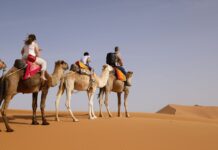
Camel and horse rides are offered on the beach itself and, more scenically, on the dunes and riverbanks north and south of the city. Short rides are usually arranged through your hotel or directly with handlers. Check the animals look healthy and well cared for before you agree, and settle the price and the length of the ride up front.
Agadir Beach and the Best Beaches Nearby
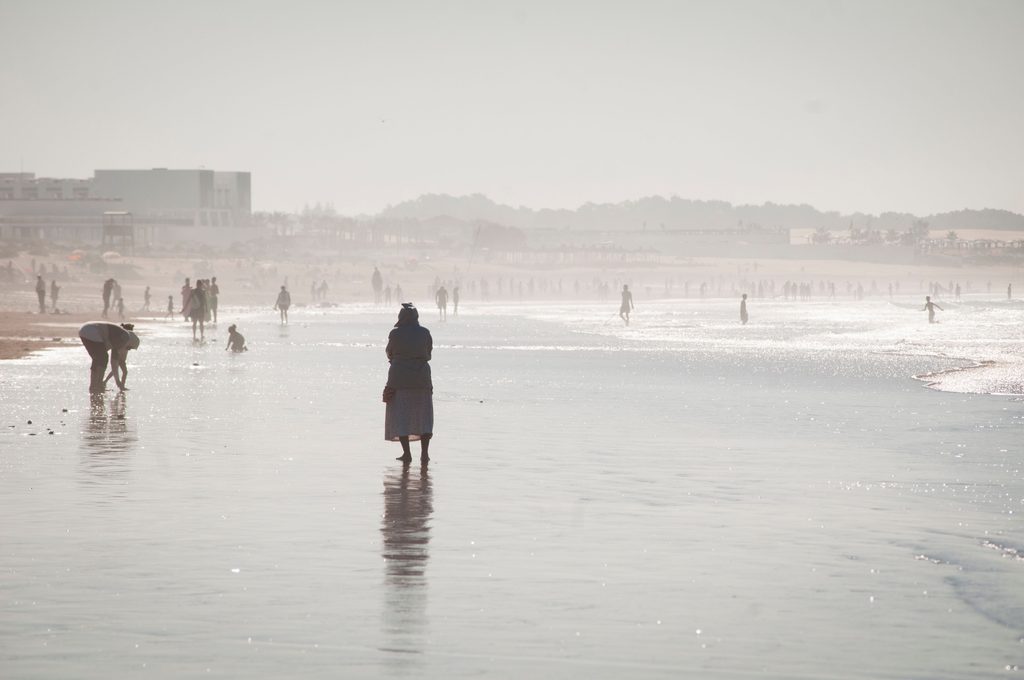
Agadir beach is the most sheltered stretch of sand on this part of the coast, which makes it the best choice for families and swimmers. But some of the most beautiful beaches near Agadir in Morocco start just north of the city. Here’s how they compare:
| Beach | Distance from Agadir | Best for | What to know |
|---|---|---|---|
| Agadir beach | In the city | Swimming, families, sunbathing | Sheltered bay, lifeguards in summer, promenade with cafés and restaurants |
| Taghazout & Tamraght beaches | About 15–20 km north | Surf lessons, cafés, a laid-back village feel | Open swell; beginner breaks south of Taghazout, expert point breaks near the village |
| Imsouane | About 90–100 km north | Longboarding, seafood, a quiet escape | Sheltered bay with one of Africa’s longest right-hand waves |
| Souss-Massa coast | About 40–60 km south | Wild empty beaches, birdwatching | Inside the national park; limited facilities, so bring water and food |
Important: Even on Agadir beach, this is the open Atlantic. Swim near lifeguard posts, follow the flags, and stay away from the port area and the river mouth, where currents are stronger.
Surfing in Taghazout and Tamraght
Taghazout, a former fishing village about 20 km north of Agadir, is one of the best-known surf destinations in Africa. Its right-hand point breaks — Anchor Point, Killer Point, Hash Point and La Source among them — come alive with the winter swells from roughly October to April. Neighboring Tamraght and the beaches between them have gentler sand-bottom waves that suit beginners.
You don’t need to stay in Taghazout to surf there. Plenty of schools pick up from Agadir hotels.
| Option | Typical price (October 2026 listings) | What’s included |
|---|---|---|
| 2-hour group lesson in Taghazout | About $25–31 USD | Instructor, board and wetsuit; transfer from Agadir usually extra |
| Half-day lesson from Agadir | From about 35 € | Lesson, equipment and pickup in Agadir |
| Full-day surf lesson with lunch | About $67–69 USD | Two sessions, lunch, equipment and return transfer from Agadir |
| Surf camp week | Varies widely | Accommodation, meals, daily lessons and transport to the best spot each day |
Tips for first-timers:
- Summer (June to September) has smaller, friendlier waves, which is actually the best time to learn.
- Winter brings the famous swells, but beginners should stay on the sandy beach breaks and leave the reef points to experienced surfers.
- The water stays cool all year. A full wetsuit is standard, and schools include one.
- Taghazout itself is alcohol-free and low-key. For nightlife, you’ll be back in Agadir.
Getting there is easy: local buses 32 and 33 run from Agadir up the coast through Aourir, Tamraght and Taghazout roughly every 30 minutes during the day and take about 45 minutes. A taxi from the city takes around 20–25 minutes.
Day Trips from Agadir
The location of Agadir in Morocco, between the Atlantic, the Anti-Atlas and the High Atlas, makes it a great base. These are the most rewarding day trips from Agadir, from half-days to full days.
| Day trip | Distance and drive time | Best for | Rough cost |
|---|---|---|---|
| Paradise Valley & Imouzzer | About 1 hour to the valley, 1.5 hours to Imouzzer | Rock pools, palm gorges, a mountain village | Free entry; tours roughly 250–350 MAD |
| Taghazout & Tamraght | 20–30 minutes | Surf, cafés, coastal walks | Bus fare or a short taxi ride |
| Souss-Massa National Park | About 40 minutes | Birdwatching, wild coast | Guided tours available; best with a guide |
| Taroudant & Tiout | About 1–1.5 hours | Walled town, souks, a palm oasis | Most easily done on a tour or with a driver |
| Imsouane | About 1.5 hours | Longboarding, a fishing port, seafood lunch | Limited public transport; drive or book a transfer |
| Essaouira | About 3 hours each way | Ramparts, medina, harbor | Long day; better as an overnight stay |
Paradise Valley and Imouzzer
Paradise Valley (Vallée du Paradis) is a palm-filled limestone gorge in the foothills of the High Atlas, about an hour’s drive northeast of Agadir along a winding road from Aourir. A short trail from the parking area leads down to green rock pools, small waterfalls and flat ledges where people swim, picnic and jump into the water.
- Entry: Free; vendors sell drinks and snacks at the trailhead, and there are basic toilets.
- Water levels: Fullest after the winter rains, roughly February to April. By late summer some pools shrink.
- What to wear: Sturdy shoes or water sandals; the path is uneven and you may need to wade.
- Getting there: Easiest by tour or with a driver. On a budget, take a local bus to Aourir and a shared grand taxi toward Imouzzer, but returning the same day can be difficult late in the afternoon.
Continue up the road to Imouzzer Ida Ou Tanane, a Berber village about 60 km from Agadir at around 1,300 m. It has a waterfall (best after rain), a Thursday souk, and a reputation for honey — it hosts a honey festival in summer. Many tours combine both stops into one day.
Souss-Massa National Park
Created in 1991, Souss-Massa National Park protects about 33,000 hectares and 75 km of coastline between the Souss and Massa river mouths. Its flagship species is the northern bald ibis, one of the world’s most endangered birds, which survives in the wild mainly along this stretch of coast. The park also has lagoons full of flamingos and waders, wild beaches and fenced reserves where antelope and gazelles have been reintroduced.
Bird watchers visit from October to May, with the widest range of species in March and April during migration. Half-day and full-day guided tours from Agadir take about 40 minutes to reach the park and include the visitor center. A guide makes a real difference here: the ibis colonies move, and locals know where they’ve been seen recently.
Taroudant and the Tiout Oasis
Taroudant, inland in the Souss Valley, is often called “little Marrakech” for its complete ring of ochre ramparts and its two lively souks, minus the crowds. Combine it with Tiout, a palm oasis below an old kasbah, for a full day. Art lovers can also visit the Claudio Bravo Palace Museum near Taroudant, set in large gardens; entry to the palace was about 200 MAD at last report.
Imsouane
Imsouane is a small fishing village about 90–100 km north of Agadir with one of the longest right-hand waves in Africa, known as The Bay. It’s a favorite with longboarders and beginners on smaller days. Even if you don’t surf, it’s worth the drive for the views, the boats and a seafood lunch at the port. Two to four hours is enough for a visit, and you’ll need a car or a transfer, since public transport is limited.
Essaouira
The blue-and-white port town of Essaouira is about 3 hours north along a scenic coastal road. You can do it as a long day trip, but it’s far better to stay at least one night. See our Essaouira Travel Guide before you decide.
A Note on the “Goats in Trees”
Tours from Agadir often stop to photograph goats standing in argan trees. Goats do climb argan trees naturally to eat the fruit, but many roadside stops place them there for tips, sometimes on platforms and for hours in the sun. If seeing it matters to you, look for goats grazing freely in the countryside rather than paying at staged stops.
Where to Stay in Agadir
Where to stay in Agadir depends mostly on whether you want a resort, a city base or a surf village. The city is spread out, so pick the area first and the hotel second.
| Area | Best for | Atmosphere | Typical price per night |
|---|---|---|---|
| Seafront hotel zone (Founty & the beach strip) | Beach holidays, families, all-inclusives | Big resort hotels with pools right on the sand and the promenade | Mid-range to luxury; about 75–185 € at well-known beachfront hotels |
| Marina | Couples, apartment stays, evening walks | Modern, polished, close to restaurants and the kasbah | Mid-range to upper mid-range |
| City center & Talborjt | Budget travelers, people relying on buses | Local cafés, near Souk El Had and the bus stations, a short walk or taxi to the beach | About 30–40 € at simple city-center hotels |
| Taghazout Bay, Taghazout & Tamraght | Surfers, remote workers, a quieter stay | Surf camps, guesthouses and a newer cluster of luxury resorts and golf | Wide range, from surf hostels to five-star resorts |
Our picks by trip type:
- First-time beach holiday: Stay on the seafront strip so you can walk straight onto Agadir beach. Large resorts such as the Sofitel Agadir Royal Bay, Riu Palace Tikida and Iberostar Founty Beach sit in this area.
- Short stay on a budget: Pick a simple hotel in the center or Talborjt and use petit taxis to reach the beach.
- Surf trip: Skip Agadir itself and stay in Tamraght or Taghazout, ideally in a surf camp that includes lessons and transport.
- Families with young kids: A beachfront hotel with a pool and a kids’ club takes the logistics out of the trip.
Book early for the Christmas and New Year period, Easter and the European school holidays, when the resort hotels fill with package travelers.
Best Time to Visit Agadir
The best time to visit Agadir depends on what you want to do, but there’s no truly bad month. The cool Canary Current keeps the coast mild, so Agadir in Morocco rarely sees the extreme heat of Marrakech in summer or the cold of the mountains in winter.
| Season | Daytime weather | Sea temperature | Best for |
|---|---|---|---|
| Winter (Dec–Feb) | Mild, highs around 20–21°C, cool evenings, occasional rain | Cool, about 16–17°C | Winter sun, sightseeing, the big surf season |
| Spring (Mar–May) | Warm and sunny, highs in the low to mid 20s °C | About 17–20°C | Hiking, Paradise Valley at its fullest, birdwatching |
| Summer (Jun–Aug) | Warm, highs mostly 25–27°C, low rainfall; morning sea mist is common | About 21–22°C | Beach holidays, learning to surf, families |
| Autumn (Sep–Nov) | Warm September and October, cooling in November | Warmest of the year, about 21–22°C in September–October | Swimming, quieter beaches, the start of the surf season |
Our pick: April to June or September to October. You get warm beach weather and the warmest sea in autumn, without the July and August crowds, when Moroccan and European families fill the city.
A few things to plan around:
- Chergui winds: A few times a year, hot desert winds blow in from the east and can push temperatures well above 35°C for a day or two.
- Ramadan: Daytime life slows down, some restaurants close until sunset, and evenings become lively. Check the dates for your travel year.
- Peak holidays: Prices rise and hotels fill around Christmas, Easter and in July and August.
For the countrywide picture, see Best Time to Visit Morocco.
Getting to and Around Agadir
Arriving by Air
Agadir Al Massira Airport (AGA) receives direct flights from many European cities, including budget airlines, plus domestic flights from Casablanca. It lies about 20–25 km southeast of the city, a 30–40 minute drive.
- Airport taxi: The most practical option. Expect around 200–250 MAD ($20–$25 USD) to Agadir hotels and about 250–300 MAD to Taghazout. Agree the price before you get in.
- Pre-booked transfer: Fixed prices and a driver waiting with your name, from about 21 € for a private car to the city.
- Public bus: Cheapest but slow and infrequent, and it doesn’t run late at night. Bus 22 links the airport with Inezgane, where you change for central Agadir.
Arriving by Bus or Car
There’s no train to Agadir. From Marrakech, CTM and Supratours coaches take about 3–3.5 hours on the A7 motorway and cost roughly 100–140 MAD. If you’re coming by train from Casablanca or the north, ride to Marrakech and switch to a Supratours bus. Driving from Marrakech takes about 3 hours. Buses also run north along the coast to Essaouira in about 3 hours.
For self-drive routes, see our Morocco Road Trip Guide.
Getting Around the City
- Petit taxis (orange): The easiest way to get around. They’re metered inside the city, take up to three passengers, and most short rides cost only a few dollars. Ask the driver to start the meter (“le compteur, s’il vous plaît”).
- Grand taxis: Larger shared cars for trips to nearby towns like Aourir and Inezgane. You pay per seat, or hire the whole car.
- City buses (ALSA): Cheap and reliable, especially lines 32 and 33 north to Tamraght and Taghazout.
- On foot: The Corniche and marina are walkable. Most other sights need a taxi.
A 3-Day Agadir Itinerary
This plan covers the essential things to do in Agadir at an easy pace, and suits a first visit to Agadir in Morocco.
Day 1: Beach, Marina and Kasbah
- Morning: Settle in on Agadir beach and swim while it’s calm.
- Lunch: Grilled fish at the port stalls.
- Afternoon: Walk the marina, then take a taxi to the cable car station at Pont Tildi.
- Sunset: Ride up to the Agadir Oufella kasbah and watch the sun drop into the Atlantic.
- Evening: Dinner along the Corniche.
Day 2: Souk, Museums and Medina Polizzi
- Morning: Souk El Had before the midday crowds (remember it’s closed on Mondays).
- Midday: Lunch near the souk, then the Olhão Garden and Mémoire d’Agadir.
- Afternoon: The Agadir Art Museum, or Medina Polizzi if you prefer architecture.
- Evening: A hammam and an early night, or drinks at the marina.
Day 3: Choose Your Day Trip
- Nature: Paradise Valley in the morning, lunch on the way, then Imouzzer.
- Surf: A morning lesson in Tamraght, lunch in Taghazout, then a sunset walk along the beaches.
- Wildlife: A guided half-day in Souss-Massa National Park, then Crocoparc in the afternoon if you have kids.
Add more days for Taroudant and Tiout, Imsouane, or an overnight in Essaouira. If Agadir is the end of a longer route, our 7 Days in Morocco and 10 Days in Morocco itineraries show how to fit it in.
Agadir Costs and Practical Tips
Agadir is generally cheaper than Marrakech for food and shopping, while beachfront resort hotels are priced for international package travelers. Here’s what common things cost in October 2026:
| Item | Typical price |
|---|---|
| Cable car to the kasbah (adult, return) | About 130 MAD ($13 USD) |
| Medina Polizzi entry | About 40 MAD ($4 USD) |
| Agadir Art Museum entry | About 40 MAD ($4 USD) |
| Crocoparc entry (prepaid online) | About $11 USD |
| Airport taxi to the city | About 200–250 MAD ($20–$25 USD) |
| Bus from Marrakech to Agadir | About 100–140 MAD ($10–$14 USD) |
| 2-hour surf lesson in Taghazout | About $25–31 USD |
| Simple city-center hotel | About 30–40 € per night |
| Well-known beachfront hotel | About 75–185 € per night |
Practical tips:
- Cash: Carry dirhams for taxis, the souk, the fish stalls and small cafés. Cards work at most hotels, supermarkets and larger restaurants.
- Dress: Swimwear is normal on the beach and at hotel pools. Cover shoulders and knees in the souk, the city center and on day trips. See What to Wear in Morocco.
- Alcohol: Available in hotels, bars, some restaurants and supermarkets in Agadir, but not in Taghazout.
- Sun: The breeze hides how strong the sun is. Use high-factor sunscreen even on cloudy summer mornings.
- Water: Most visitors drink bottled or filtered water. Carry a refillable bottle on day trips.
- Touts: Agadir is relaxed by Moroccan standards, but decline unofficial guides firmly and politely, especially at the souk gates.
For a full trip budget, see Morocco Trip Cost, and for packing, What to Pack for Morocco.
Is Agadir in Morocco Right for Your Trip?
Agadir in Morocco is the right choice if you want sunshine, an easy beach and a comfortable base for exploring the south. It suits families, surfers, winter-sun travelers and anyone ending a busy route through Marrakech or the Sahara with a few slow days by the sea.
It’s the wrong choice if your main goal is historic medinas, palaces and old architecture. For that, spend your time in Marrakech, Fes or Essaouira, and treat Agadir as the beach finish.
Most travelers get the balance right with three days in the city and one or two day trips. Start with the beach and the kasbah, give the souk a morning, and let the coast and the valleys around Agadir fill the rest.
Frequently Asked Questions
Where is Agadir in Morocco?
Agadir is on Morocco’s southern Atlantic coast, about 250 km southwest of Marrakech, where the Souss Valley meets the sea. It is the capital of the Souss-Massa region and has its own international airport, Agadir Al Massira (AGA). Marrakech is about 3 to 3.5 hours away by bus or car, and Essaouira about 3 hours north along the coast.
Is Agadir in Morocco worth visiting?
Yes, if you want a beach base with reliable sunshine, easy logistics and good day trips. Agadir was rebuilt after the 1960 earthquake, so it has very little old architecture, but it has a long sheltered beach, the hilltop kasbah with its cable car, Souk El Had, and the surf villages of Taghazout and Tamraght 20 minutes away. Travelers looking for medinas and historic monuments should pair it with Marrakech or Essaouira.
How many days do you need in Agadir?
Three days covers the main things to do in Agadir: one day for the beach, kasbah and marina, one for Souk El Had and the city sights, and one for a day trip to Paradise Valley or Taghazout. Stay five to seven days if you want a surf course, a slower beach holiday or several day trips.
When is the best time to visit Agadir?
Agadir is a year-round destination. April to June and September to October give warm days, the warmest sea in late summer and early autumn, and fewer crowds than July and August. Winter is mild, with daytime highs around 20°C, which suits sightseeing and surfing, but the sea is cool at around 16–17°C.
Can you swim at Agadir beach?
Yes. Agadir beach sits in a wide bay that is more sheltered than most of Morocco’s Atlantic coast, so it is one of the easier places in the country to swim. It is still the open Atlantic: swim near lifeguard posts in summer, respect the flags and avoid the water near the port and the river mouth.
What are the best day trips from Agadir?
The most popular day trips from Agadir are Paradise Valley and Imouzzer in the Atlas foothills, the surf villages of Taghazout and Imsouane, Souss-Massa National Park for birdwatching, and the walled town of Taroudant with the Tiout oasis. Essaouira works as a long day trip of about three hours each way. Marrakech is possible in a day but is better as an overnight stay.
Related Morocco Travel Planning Guides
- Agadir & Taghazout Travel Guide: Beaches, Surfing & Souss Valley
- Essaouira Travel Guide: The Complete Coastal Wind & Ramparts Guide
- Marrakech Travel Guide
- Best Places to Visit in Morocco
- 7 Days in Morocco: The Classic Route
- 10 Days in Morocco: The Ultimate Route
- Morocco Road Trip Guide
- Best Time to Visit Morocco
- Morocco Trip Cost