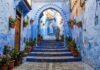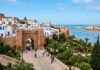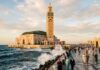

Marrakech is Morocco’s primary tourism center, serving as both an imperial cultural hub and the departure point for overland routes south into the High Atlas Mountains and the Sahara Desert. Founded in 1062 by the Almoravid dynasty, the city is defined by its enclosed pink-clay medina, active artisan guilds, historical palaces, and the open gathering space of Jemaa el-Fna.
For first-time visitors, Marrakech can feel intense. Navigating the car-free alleys requires dodging motorbikes and pack donkeys, street merchants negotiate every transaction, and historic riads sit hidden behind nondescript wooden doors. This guide breaks down the essential logistics: neighborhood breakdowns, monument admission costs, public transportation, scam avoidance, and practical day-trip options.
Marrakech Fast Facts for Travelers
- Airport: Marrakech Menara Airport (RAK), located 6 km southwest of the medina center
- Currency: Moroccan Dirham (MAD). Roughly 10 MAD = $1 USD / 11 MAD = €1 EUR
- City Taxi Color: Ochre / reddish-brown Petit Taxis
- Recommended Stay: 3 to 4 days for the city; 5 to 7 days if taking day trips to the mountains or coast
- Best Seasons: March to May (Spring) and September to November (Autumn)
Where to Stay in Marrakech: Neighborhood Breakdown
| Neighborhood | Character & Vibe | Best Suited For | Transit Accessibility |
|---|---|---|---|
| The Medina | Historic walled core, traditional riads, narrow pedestrian alleys, active souks | First-timers, architecture lovers, cultural immersion | Pedestrian only; luggage carts required from drop-off gates |
| Gueliz (Ville Nouvelle) | French colonial grid layout, sidewalk cafes, contemporary art galleries, international dining | Business travelers, digital nomads, nightlife, easy taxi access | Wide paved streets, ample parking, abundant Petit Taxis |
| Hivernage | Spacious upscale district with wide tree-lined boulevards and luxury hotels | High-end leisure travelers, luxury spa seekers | 5–10 minute taxi ride to the medina; very accessible |
| Palmeraie | Semi-rural palm oasis enclave 15 minutes north of the city center with walled villa estates | Resort guests, golf travelers, families seeking quiet pools | Requires private car or dedicated taxi for all trips |
Key Historical Landmarks & Monument Costs
1. Ben Youssef Madrassa
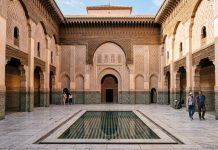
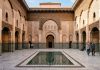
Originally founded in the 14th century and expanded by the Saadian dynasty in 1565, this Islamic college once housed over 900 religious and law students across 130 compact second-story dorm rooms. The central courtyard features extraordinary geometric zellij tilework, carved stucco calligraphy, and hand-chiseled Atlas cedar beams.
- Admission: 50 MAD (~$5.00 USD).
- Timing Tip: Arrive at 9:00 AM sharp when the doors open. Large tour bus groups typically arrive between 10:30 AM and 1:00 PM.
2. Bahia Palace
Commissioned in the late 19th century by Grand Vizier Si Moussa and expanded by his son Ba Ahmed, the Bahia Palace (“Palace of the Brilliant”) spans eight hectares of reception halls, private residential quarters, and fragrant courtyards planted with bitter orange and cypress trees. While the rooms are unfurnished, the painted cedar ceilings and intricate plasterwork remain exceptional.
- Admission: 70 MAD (~$7.00 USD).
- Duration: Allow 60 to 90 minutes to tour the complex.
3. Saadian Tombs
Constructed during the golden reign of Sultan Ahmad al-Mansur (1578–1603), this royal necropolis features sixty members of the Saadian dynasty buried beneath marble tombs. The centerpiece is the Chamber of the Twelve Pillars, adorned with imported Italian Carrara marble columns and gilded honeycomb muqarnas ceilings. Sealed off by the rival Alaouite dynasty to obscure their predecessors’ memory, the site remained hidden until uncovered by French aerial surveys in 1917.
- Admission: 70 MAD (~$7.00 USD).
- Location: Directly adjacent to the Kasbah Mosque in the southern medina.
4. Jardin Majorelle & Yves Saint Laurent Museum
Situated in the modern district of Gueliz, this two-and-a-half-acre botanical garden was established by French Orientalist painter Jacques Majorelle in the 1920s, featuring cobalt-blue villa walls (now known as “Majorelle Blue”) and over 300 plant species from five continents. French fashion designer Yves Saint Laurent and Pierre Bergé purchased and restored the garden in 1980.
- Admission: 150 MAD for Jardin Majorelle; combined ticket with the Pierre Bergé Museum of Berber Arts and Musée Yves Saint Laurent is 220–300 MAD.
- Important: Tickets are no longer sold at the gate. You must purchase timed-entry digital tickets in advance via the official website (jardinmajorelle.com).
Navigating Jemaa el-Fna & The Souks
The beating heart of the medina is Jemaa el-Fna, recognized by UNESCO as a Masterpiece of the Oral and Intangible Heritage of Humanity. The square shifts personality dramatically throughout the day:
- Morning & Afternoon: Freshly squeezed orange juice stalls (5–10 MAD per glass), dried fruit and nut merchants, and traditional apothecaries selling herbal remedies and black cumin.
- Dusk & Night: Dozens of open-air numbered food grills set up long benches serving steaming bowls of harira, spiced grilled kefta, lamb sausages, and fried fish. Storytellers, Berber musicians playing gnawa rhythms, and card players draw local crowds.
Jemaa el-Fna Survival Advice
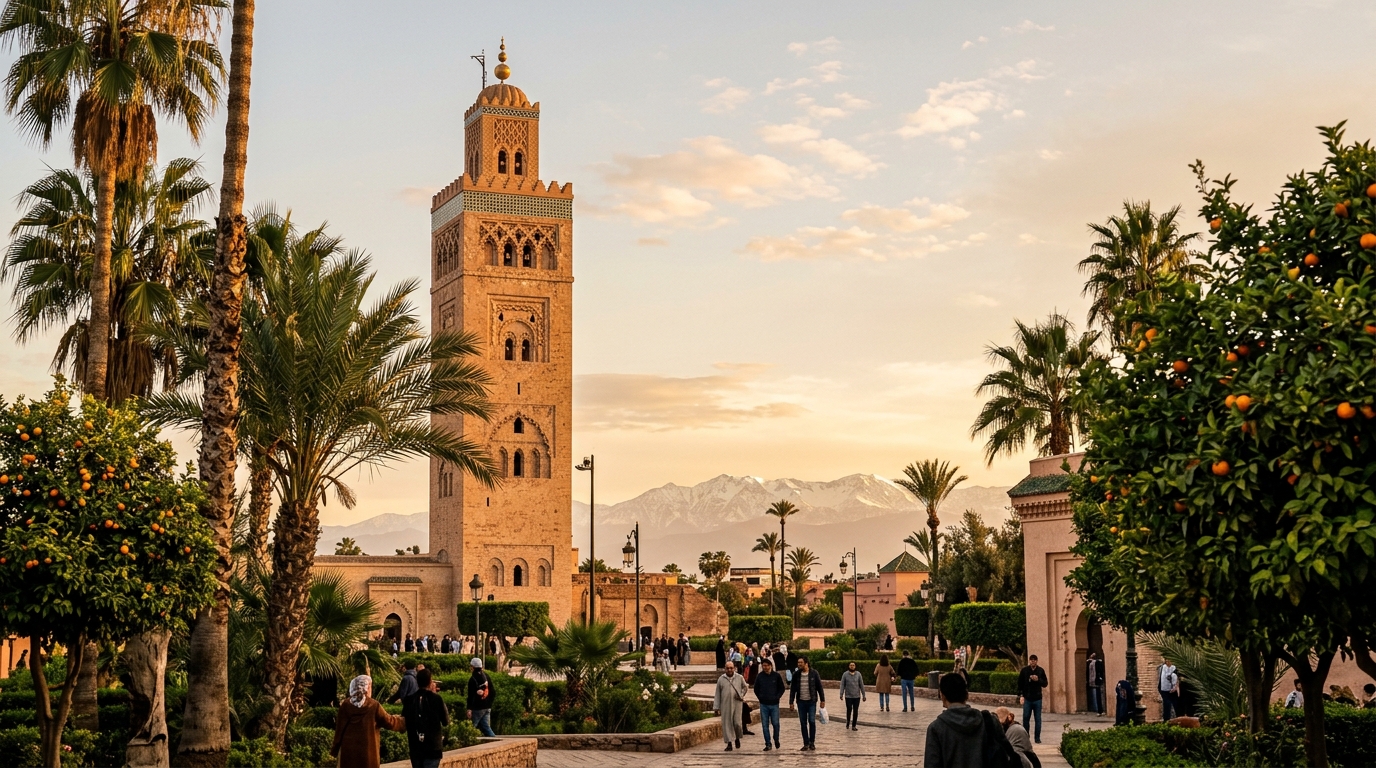
- Rooftop Vantage Points: For the classic panoramic photograph of the square at sunset with the Koutoubia minaret in the background, head up to the terrace of Café de France or Le Grand Balcon du Café Glacier. You will need to buy a drink (typically 20–30 MAD for soda or mint tea) to access the balcony.
- Street Food Stalls: Eating in the square is a classic Marrakech experience. Look for stalls crowded with local Moroccan families—high turnover ensures food is fresh and hot off the charcoal coals. Clarify prices on the printed menu card before ordering to avoid unrequested add-ons.
- Animal Touts: Do not photograph Barbary macaques on chains or snake charmers unless you are prepared to pay 50 to 100 MAD. If someone places an animal on your shoulder uninvited, step back immediately, keep your hands in your pockets, and say “Non, merci.”
Transportation in Marrakech
Airport Transfers (RAK to City)
- Line 19 Airport Bus: Operates every 20–30 minutes between Menara Airport, Jemaa el-Fna, and the ONCF rail station. Fare is 30 MAD one-way (or 50 MAD round-trip valid for two weeks). Board directly outside the arrivals terminal.
- Official Airport Taxi: Official flat rates are posted on a large signboard at the taxi rank outside the terminal: roughly 100 to 150 MAD for a standard daytime transfer to the medina or Gueliz. Confirm the rate with the taxi marshal before entering the vehicle.
Getting Around Town
- Petit Taxis (Ochre City Cabs): Cabs can carry a maximum of 3 passengers and are required by municipal law to use the mechanical meter (le compteur). The daytime flag drop is roughly 2.50 MAD, with a minimum trip fare of 7.50 MAD. A daytime ride between the medina and Gueliz costs between 15 and 25 MAD on the meter. At night (after 8:00 PM), a 50% legal meter surcharge applies.
- Inside the Medina: Foot travel is the only option. Wear rubber-soled shoes with solid traction; stone flagstones are polished slick from foot traffic.
Top Day Trips from Marrakech
Marrakech makes an exceptional staging ground for exploring the varied geography of southern Morocco:
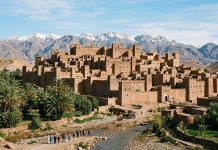
- Imlil & The High Atlas (90 minutes): Escape the heat to the trailhead village of Imlil (1,740 meters) at the base of Mount Toubkal. Hike along terraced apple orchards and walnut groves to the Amazigh village of Aroumd for lunch overlooking the valley. Accessible via Grand Taxi from Bab er-Rob taxi stand.
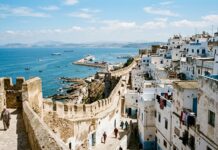
- Essaouira (3 hours): Take the morning Supratours bus directly from Marrakech rail station to the Atlantic coast. Enjoy cool ocean breezes, walk the 18th-century stone ramparts, and sample grilled sardines along the harbor.
- Agafay Desert (45 minutes): A stark, stony desert plateau south of the city. While it lacks the giant sand dunes of Erg Chebbi, it offers sunset camel rides, quad biking, and starlit luxury dinners against a desert backdrop without a 9-hour drive.
- Ourika Valley (60 minutes): A scenic river valley running into the Atlas foothills, leading to the small cascading waterfalls of Setti Fatma. Popular with local families on weekends.
Next Steps for Trip Planning
To prepare your budget, review our detailed Morocco trip cost breakdown and packing tips in what to wear in Morocco. If you plan to travel beyond Marrakech, explore our flagship 10-day Morocco itinerary connecting Marrakech to the Sahara Desert and Fes.