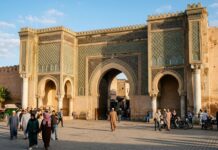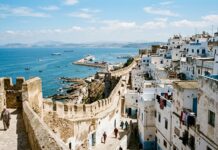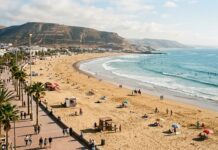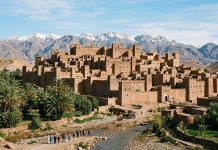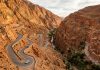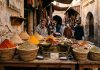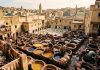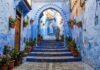

First-time visitors often assume Morocco is small enough to see in a quick week. In reality, the country spans over 700,000 square kilometers, separated by three distinct mountain chains and vast desert basins. Selecting where to go requires understanding travel logistics: some hubs connect in two hours by high-speed rail, while others demand a nine-hour overland drive through High Atlas mountain passes.
This guide profiles Morocco’s top 12 destinations with practical transit information, recommended lengths of stay, and direct advice on which spots make sense to combine on a single itinerary.
Overview: Destinations at a Glance
| Destination | Primary Focus | Recommended Stay | Transit Access |
|---|---|---|---|
| Marrakech | Imperial palaces, historic medina, souks | 3–4 days | Airport (RAK), direct train from Casablanca |
| Fes | Medieval architecture, craft guilds, tanneries | 2–3 days | Airport (FEZ), direct train from Rabat/Casablanca |
| Chefchaouen | Blue-washed medina, Rif Mountain trails | 1–2 days | CTM bus from Tangier (2.5h) or Fes (4h) |
| Sahara (Merzouga) | Erg Chebbi dunes, camel treks, desert camps | 2–3 days | Overland drive or Supratours bus (9h from Marrakech/Fes) |
| Essaouira | Coastal ramparts, fishing harbor, windsurfing | 2 days | Supratours bus from Marrakech (3h) |
| High Atlas (Imlil) | Mountain trekking, Mount Toubkal, Berber valleys | 1–3 days | Grand taxi or private car from Marrakech (1.5h) |
| Tangier | Strait of Gibraltar, historic kasbah, cafes | 1–2 days | Al Boraq high-speed train, ferry from Spain |
| Rabat | Capital monuments, coastal kasbah, museums | 1–2 days | Al Boraq train (50 min from Casablanca) |
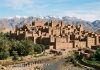
| Ouarzazate & Ait Ben Haddou | Earthen kasbah architecture, film studios | 1–2 days | Bus or rental car across Tizi n’Tichka (4h from Marrakech) |
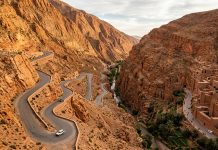
| Dades & Todra Gorges | Limestone canyons, valley road trips, oasis walks | 1–2 days | Rental car along Route N10 from Ouarzazate |
| Casablanca | Hassan II Mosque, art deco architecture, dining | 1 day | Primary flight gateway (CMN), Al Boraq rail hub |
| Taghazout & Agadir | Point-break surfing, sandy beaches, coastal stays | 3–5 days | Airport (AGA), CTM bus from Essaouira or Marrakech |
1. Marrakech: The Primary Tourism Gateway
Marrakech remains the standard entry point for international travelers. Founded in 1062, its walled medina centers around the expansive open square of Jemaa el-Fna, where open-air food stalls operate nightly alongside street performers and orange juice vendors.
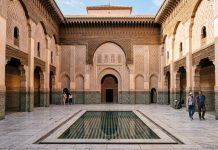
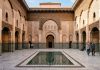
Key sites include the 16th-century Ben Youssef Madrassa (one of North Africa’s finest examples of Islamic stucco and zellij tilework), the Bahia Palace, and the Saadian Tombs. Beyond sightseeing, Marrakech functions as the primary transport junction for desert tours heading south and day trips into the Ourika Valley.
- Time needed: 3 days for the city; add extra days for excursions.
- Logistics: Serviced by Marrakech Menara Airport (RAK) and frequent ONCF rail connections to Casablanca and Tangier.
- Best for: First-timers, architecture enthusiasts, and shoppers.
2. Fes: Morocco’s Cultural and Intellectual Core
While Marrakech has adapted significantly to modern tourism, Fes retains an older, more conservative character. Its historic district, Fes el-Bali, is the world’s largest contiguous car-free urban zone, containing over 9,000 alleys navigated entirely on foot and by pack mule.
The city’s landmark attraction is the Chouara Tannery, where leather hides are cured in stone vats using natural dye methods that have operated continuously since the 11th century. Fes also houses the University of al-Qarawiyyin, recognized by UNESCO as the oldest continuously operating higher-education institution in the world.
- Time needed: 2 to 3 full days.
- Logistics: Direct rail links from Rabat (2h 45m) and Casablanca (3h 45m). Fes-Saïss Airport (FEZ) connects to major European budget carriers.
- Best for: Travelers interested in Islamic history, craft traditions, and architectural preservation.
3. Chefchaouen: The Blue Mountain Enclave
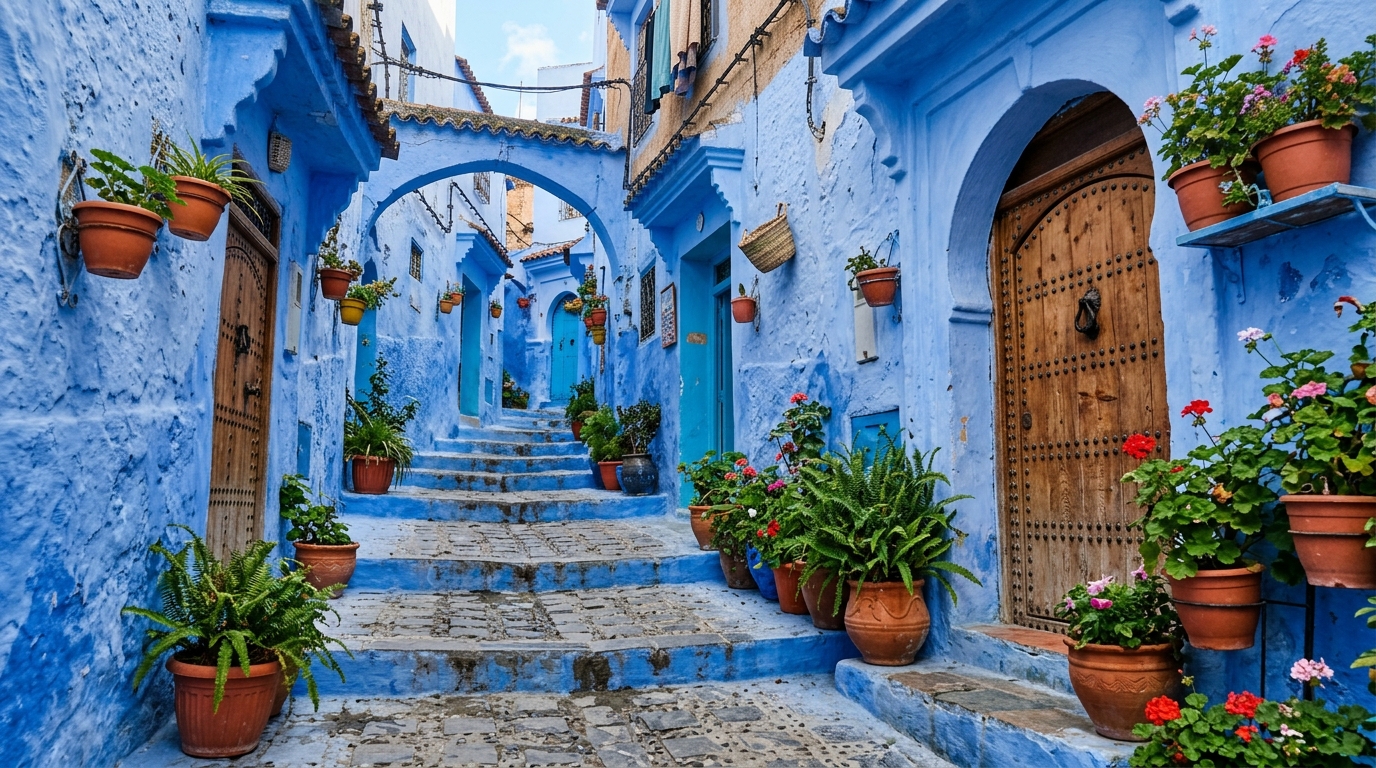
Built into the folds of the Rif Mountains in northern Morocco, Chefchaouen was founded in 1471 as a small fortress to defend against Portuguese invasions. Today, it is recognizable worldwide for its medina walls painted in varied shades of cobalt, sky blue, and indigo—a practice introduced by Jewish refugees in the 1930s.
Chefchaouen is substantially smaller and quieter than Marrakech or Fes. Aggressive touting is minimal, making it an ideal destination to decompress between visits to larger cities. Short hikes lead to the Spanish Mosque overlooking the valley, or further into the waterfalls of Akchour within Talassemtane National Park.
- Time needed: 1 to 2 days.
- Logistics: No train access. Reached via CTM bus from Tangier (2.5 hours) or Fes (4 hours).
- Best for: Photographers, relaxed walking, and mountain air.
4. The Sahara Desert: Erg Chebbi and Merzouga
The image most visitors associate with Morocco—sweeping, knife-edge sand dunes rising hundreds of feet into clear desert sky—is found at Erg Chebbi, situated beside the oasis settlement of Merzouga near the Algerian border.
Most desert itineraries involve a late-afternoon camel trek or 4×4 transfer into a semi-permanent desert camp among the dunes, followed by an overnight stay and sunrise viewing. Accommodations range from basic Berber tents to luxury camps featuring private en-suite bathrooms with hot showers and electricity.
- Time needed: Minimum 3 days / 2 nights round-trip from either Marrakech or Fes. Do not attempt a 2-day trip; driving one-way takes 9 to 10 hours.
- Logistics: Renting a car gives the greatest flexibility; scheduled Supratours buses depart Marrakech and Fes daily for Merzouga.
- Best for: Stargazing, landscape photography, and off-grid adventure.
5. Essaouira: The Atlantic Port Town
Located on the Atlantic coast three hours west of Marrakech, Essaouira (formerly Mogador) offers an immediate contrast to the heat of the inland plains. Its historic medina is enclosed by 18th-century stone seawalls mounted with Dutch and French brass cannons overlooking a working fishing harbor.
The city’s constant trade winds (the alizé) prevent extreme heat year-round and make Essaouira an international hub for kitesurfing and windsurfing. The town is known for argan oil cooperatives, fresh grilled sardine stalls along the port, and a thriving artisan community carving thuya wood.
- Time needed: 2 days (or a long day trip from Marrakech).
- Logistics: Hourly Supratours and CTM buses run direct from Marrakech (approx. 3 hours, 80–110 MAD).
- Best for: Seafood, temperate coastal weather, and art galleries.
6. The High Atlas: Imlil and Mount Toubkal
Rising south of Marrakech, the High Atlas range features the highest peaks in North Africa, topped by Mount Toubkal at 4,167 meters (13,671 feet). The trailhead village of Imlil serves as the base camp for both serious multi-day summit treks and gentle day hikes through terraced walnut orchards and earthen Amazigh (Berber) villages.
Hiring a licensed local guide is mandatory for higher alpine routes following safety regulations implemented in recent years. For casual day trippers, walking between Imlil and the neighboring village of Aroumd provides mountain panoramas without technical climbing.
- Time needed: 1 day for a mountain day trip; 2 to 3 days for the Mount Toubkal summit.
- Logistics: Shared Grand Taxis run from Marrakech’s Bab er-Rob taxi stand to Asni/Imlil (approx. 90 minutes).
- Best for: Hikers, active travelers, and cultural insight into Berber rural life.
7. Tangier: Gateway on the Strait
Tangier occupies the northernmost tip of Morocco where the Mediterranean meets the Atlantic. Once a bohemian international zone in the mid-20th century, Tangier has undergone substantial redevelopment with a modernized marina, high-speed rail terminal, and restored kasbah quarter.
Key highlights include the Kasbah Museum housed in the former Sultan’s Palace, the historic Grand Socco square, and scenic coastal excursions to Cap Spartel and the limestone caverns of the Caves of Hercules.
- Time needed: 1 to 2 days.
- Logistics: Terminal station for the Al Boraq high-speed rail line (2h 10m to Casablanca). Passenger ferries arrive regularly from Tarifa, Spain (1 hour crossing).
- Best for: Travelers crossing from Spain, history buffs, and literary heritage.
8. Rabat: The Understated Capital
Unlike the high-pressure sales environments of Marrakech and Fes, Morocco’s administrative capital is clean, organized, and relaxed. Rabat offers significant historic architecture alongside spacious coastal promenades and green parks.
The 12th-century Kasbah of the Udayas features whitewashed residential alleys overlooking the Bou Regreg river mouth and the Atlantic Ocean. Nearby stands the Hassan Tower, an unfinished red sandstone minaret commissioned under the Almohad Caliphate, opposite the marble Mausoleum of Mohammed V.
- Time needed: 1 to 2 days.
- Logistics: Direct stop on the Al Boraq high-speed rail corridor (50 minutes from Casablanca, 1 hour 20 minutes from Tangier).
- Best for: Hassle-free sightseeing, coastal walks, and architectural monuments.
How to Choose Your Route: 3 Classic Combinations
Option A: The Imperial Cities (7–10 Days)
Route: Casablanca → Rabat → Fes → Meknes → Marrakech
Connected entirely by ONCF train lines. Eliminates the need for a rental car or long bus rides. Ideal for travelers focused on architecture, museums, and historical landmarks.
Option B: Southern Desert & Kasbah Circuit (8–10 Days)
Route: Marrakech → Ait Ben Haddou → Dades Valley → Merzouga (Sahara) → Midelt → Fes
The classic overland crossing connecting southern Morocco’s mountain passes and red dunes with the northern imperial core. Best done with a rental car or reliable tour driver.
Option C: Northern Coast & Mountains (5–7 Days)
Route: Tangier → Tetouan → Chefchaouen → Asilah
A compact regional circuit featuring Mediterranean influence, mountain hiking, and relaxed medinas. Accessible for travelers arriving by ferry from Spain.
Next Steps for Planning
Once you narrow down your destination list, verify the practical travel logistics before booking lodging. Review our comprehensive Morocco Travel Guide for entry requirements, seasonal transit schedules, and realistic budget calculations.