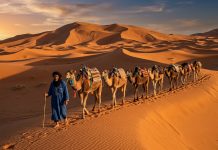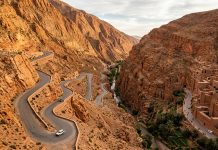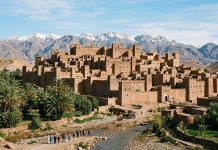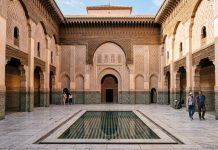

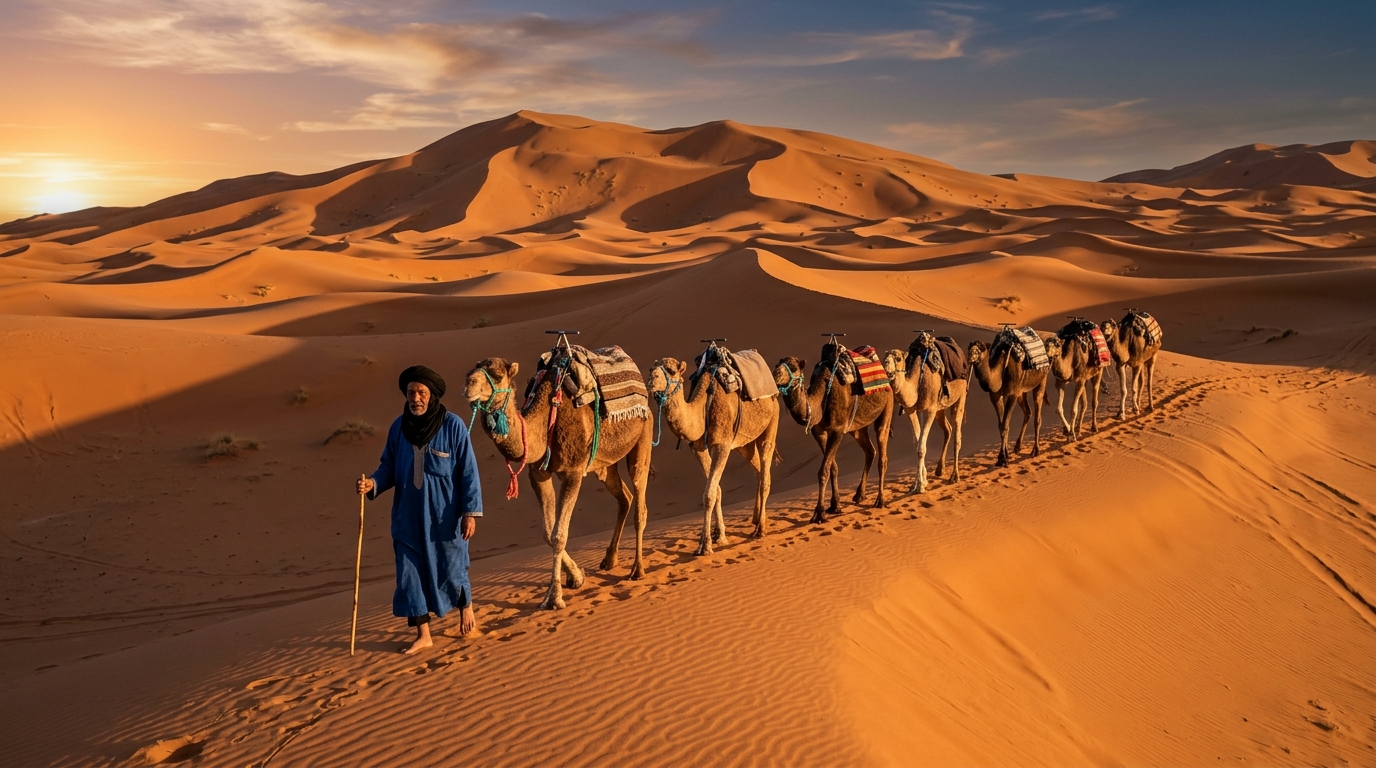
Visiting the Sahara Desert is one of Morocco’s defining travel experiences, but the logistics can be overwhelming for first-time visitors. The journey requires crossing hundreds of kilometers of rugged mountain terrain, managing long driving days, and choosing between dozens of tour operators, rental car agencies, and desert camps.
To plan a smooth desert excursion, you need to understand the three primary ways to reach the dunes, the critical pacing rules that prevent travel exhaustion, and how to spot misleading tour listings.
The 3 Ways to Reach the Sahara
Option 1: The Self-Drive Rental Car (Maximum Flexibility)
Renting a vehicle and driving yourself is straightforward and increasingly popular among independent travelers. The entire route from Marrakech or Fes to Merzouga (Erg Chebbi) is fully paved on standard two-lane national highways (the N9, N10, and N13).
- Vehicle Type Needed: A standard two-wheel-drive compact sedan (such as a Dacia Logan or Renault Clio) is completely adequate for Erg Chebbi. You only need a 4×4 if you intend to tackle off-road tracks into Erg Chigaga or deep backcountry trails.
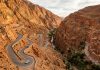
- Advantages: Complete control over your departure times, roadside photography stops, meal selections, and side detours like Ait Ben Haddou or the Dades switchbacks.
- Disadvantages: You must navigate high mountain passes (Tizi n’Tichka at 2,260m), heavy truck traffic, winding descents, and regular royal gendarmerie radar checkpoints.
Option 2: Private Driver / Tailor-Made Tour (Best Balance)
Hiring a licensed private transport vehicle with an experienced local driver gives you the freedom of a road trip without the fatigue of driving 8 to 10 hours through winding mountain topography.
- Cost: Typically costs between 3,500 and 6,500 MAD ($350 to $650 USD) total for a 3-day / 2-night journey for two to four passengers, depending on vehicle class and season.
- Advantages: Stress-free travel, door-to-door luggage handling, local cultural insights, and customizable stops along the route.
- Disadvantages: Higher cost than group excursions, though competitive when split across a small family or group of three or four travelers.
Option 3: Shared Group Tours (Lowest Cost)
Dozens of small booking agencies lining the streets around Jemaa el-Fnaa in Marrakech sell seats on shared 14-to-17-passenger Mercedes Sprinter minibuses.
- Cost: 900 to 1,400 MAD ($90 to $140 USD) per passenger for a 3-day / 2-night package.
- Advantages: The most economical way for solo travelers on a shoestring budget to reach the dunes.
- Disadvantages: Rigid itineraries, cramped legroom, mandatory 45-minute stops at overpriced tourist restaurants and cooperative shops, and basic camp accommodations.
The Golden Pacing Rule: Avoid the 2-Day / 1-Night Trap
One of the most common mistakes travelers make is booking a 2-day / 1-night desert tour from Marrakech to Merzouga. Do not do this.
Marrakech to Merzouga is approximately 560 kilometers. Crossing the High Atlas Mountains via the Tizi n’Tichka pass and navigating southern regional routes requires at least 9 to 10 hours of pure driving time, excluding fuel stops and meal breaks. Attempting this round trip in two days means spending 18 to 20 hours strapped into a vehicle over 48 hours, arriving at the dunes after dark, sleeping for six hours, and immediately turning around at 7:00 AM for another grueling 10-hour drive back.
Recommended Timeframes:
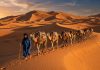
- 3 Days / 2 Nights (The Minimum Standard): Spend Night 1 in the Dades Valley or Skoura Oasis, breaking the mountain drive in half. Travel to Merzouga on Day 2, arriving with ample time for the sunset camel trek. On Day 3, either complete the full return drive to Marrakech or continue north through the Ziz Valley and Middle Atlas to Fes.
- 4 Days / 3 Nights (The Ideal Pace): Allows two full nights at the desert camp or an extra day to explore the Todra Gorge and ancient ksour of the Draa Valley without feeling rushed.
The Two Classic Desert Routes
Route 1: Marrakech to Merzouga (Erg Chebbi)
The standard southern circuit travels along the historic “Road of a Thousand Kasbahs”:
- Cross the High Atlas via the modern paved N9 over Tizi n’Tichka.
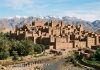
- Visit the fortified village of Ksar Ait Ben Haddou (UNESCO World Heritage Site).
- Pass Ouarzazate and traverse the Skoura palm groves and Kelaat M’gouna (Valley of the Roses).
- Overnight in Dades Gorge or Tinghir.
- Hike the limestone cliffs of Todra Gorge.
- Drive east through Erfoud and Rissani to reach Merzouga.
Route 2: Fes to Merzouga (The Direct Transit)
If starting or ending in Fes, the route follows the N13 directly south:
- Depart Fes, climbing into the Middle Atlas via the alpine resort town of Ifrane.
- Pass the cedar forests of Azrou, home to native Barbary macaque monkeys.
- Cross the high plains of Midelt between the Middle and High Atlas ranges.
- Descend through the dramatically carved canyon and palm ribbon of the Ziz Valley.
- Arrive in Erfoud and continue south to Merzouga.
This drive takes roughly 7.5 to 8.5 hours. Combining both routes—departing Marrakech and finishing in Fes via Merzouga—is the most efficient way to link Morocco’s major imperial cities without backtracking.
How to Choose a Reputable Desert Camp
When booking a desert camp online or through an agency, verify these specific details before paying a deposit:
- Camp Location: Ensure the camp is situated inside the dunes rather than on the flat dirt plains behind Merzouga village. Authentic camps require at least a 30-minute camel trek or 4×4 transfer from the asphalt road.
- Bathroom Configuration: Clarify whether the tent features an en-suite bathroom (private flush toilet and shower inside the tent structure) or shared communal facilities.
- Meal Inclusions: Verify that both dinner and breakfast are included. Clarify whether bottled drinking water is provided or billed separately at inflated rates.
- Activity Costs: Quad biking, buggy rentals, and sandboarding are usually separate add-ons. Standard rental rates for quads run 400–600 MAD ($40–$60 USD) per hour.
Step-by-Step Sahara Planning Checklist
| Timeline | Action Item |
|---|---|
| 6–8 Weeks Before | Select Erg Chebbi vs Erg Chigaga based on route and travel companions. |
| 4 Weeks Before | Book desert camp accommodation or confirm private driver agreement. |
| 1 Week Before | Withdraw sufficient cash in Marrakech, Ouarzazate, or Fes (ATMs in Merzouga are frequently empty). |
| Day of Departure | Pack a dedicated overnight daypack; leave primary luggage locked in vehicle. |
For more advice on packing appropriate clothing for dramatic desert temperature swings, read our guide to what to pack for Morocco and our comprehensive overview of Fes.