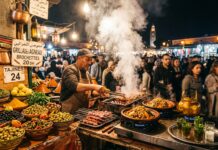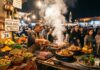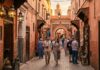

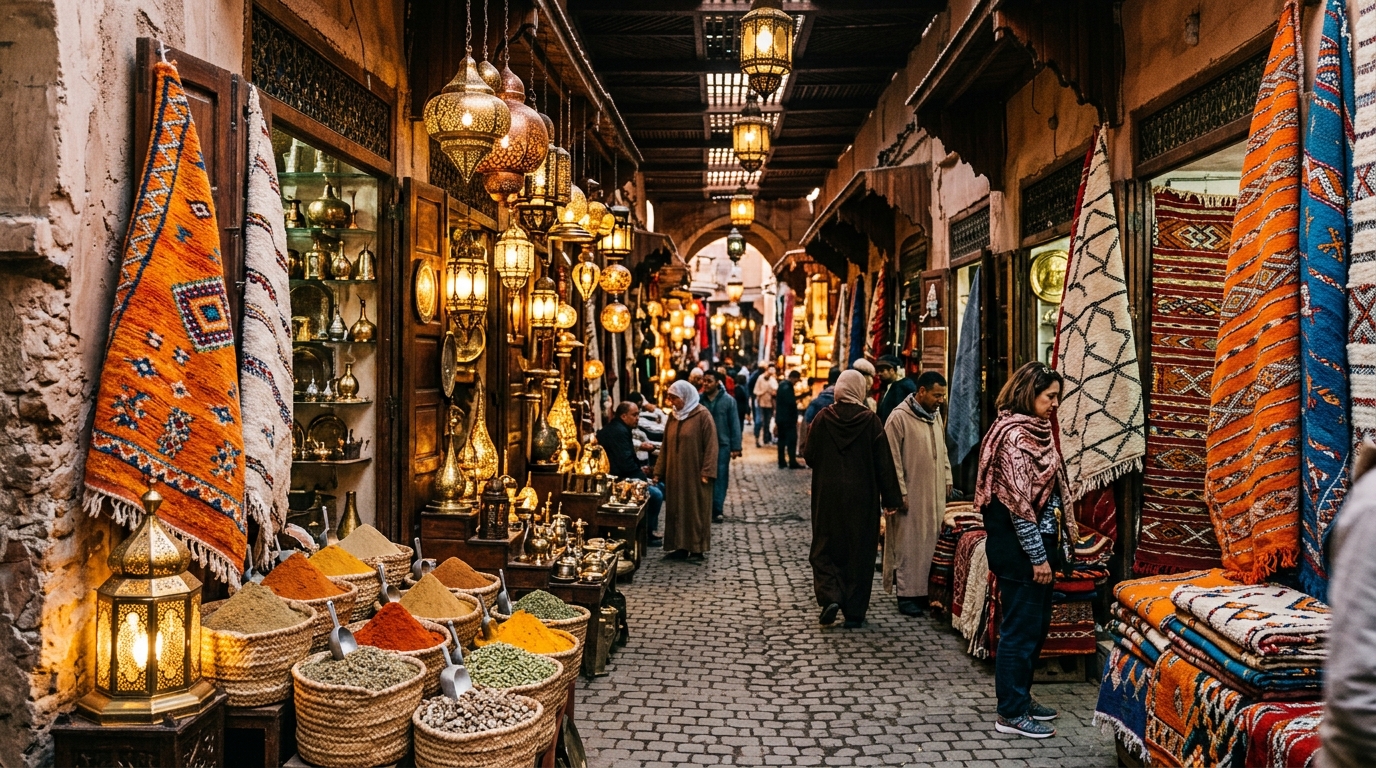
The souks of Marrakech are an exhilarating labyrinth of sensory overload: the aroma of ground cumin and dried orange blossom, the rhythmic clinking of brass lampsmiths, and vaulted alleys cascading with jewel-toned berber rugs. Yet for many travelers, entering the market maze turns into disorienting anxiety within twenty minutes.
Getting lost in Marrakech’s souks is practically a rite of passage. But with the right mental map, offline tools, and negotiation mindset, exploring the medina becomes the highlight of your Moroccan journey.
Anatomy of the Souks: The Key Artisan Quarters
Spreading northward from Jemaa el-Fna, Marrakech’s markets are historically organized into distinct artisanal trade guilds:
- Souk Semmarine: The grand main bazaar boulevard. Wide, covered with iron trelliswork, and lined with high-end shops selling carpets, babouche slippers, leather bags, and antiques. Prices here are the highest in the city.
- Souk el-Attarine: The perfumers’ and spice merchants’ street. A sensory wonderland of saffron, ras el hanout spice blends, argan oil, and amber crystals.
- Souk Sebbaghine (Dyers’ Souk): Narrow alleys hung with vibrant skeins of freshly dyed wool and silk drying in the hot desert breeze.
- Souk Haddadine: The ironworkers’ and blacksmiths’ enclave. The air rings with hammer strikes shaping wrought-iron lanterns and decorative grillwork.
- Souk Cherratine: The leatherworkers’ quarter, where craftsmen hand-stitch belts, poufs, bags, and traditional leather babouche.
- Rahba Kedima (Spice Square): An open, sunlit square surrounded by spice stalls, woven wicker basket weavers, and lively rooftop cafés like Café des Épices.
How to Navigate Without Losing Your Mind
1. Master the Offline Map Strategy
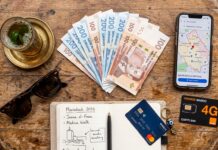
Google Maps frequently struggles beneath covered medina canopies and often attempts to route tourists down private residential cul-de-sacs (derbs). Before stepping out, download Maps.me or Organic Maps with the offline Morocco map pack. These OpenStreetMap-based apps accurately map minor alleys, water fountains, and medina gates.
2. The Golden Landmark Rule
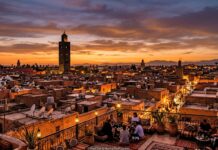
Always keep your orientation anchored to two towering landmarks: the minaret of the Koutoubia Mosque to the southwest and the central open expanse of Jemaa el-Fna. Whenever you want to exit the maze, look for signs saying “Place Jemaa el-Fna” or simply follow the heaviest pedestrian traffic flow—it almost universally leads back toward the main square.
3. Asking for Directions the Right Way
If you need directions, never ask idle young men lingering on corners. Instead, step inside a settled shop where the merchant is seated behind a till, approach an older shopkeeper, or ask inside a riad or pharmacy. A shopkeeper with a permanent business will give you honest directions with a smile.
The Art of Haggling (Derrir): Rules of Engagement
In Moroccan souks, bargaining is not a confrontation—it is a cherished social custom and an exchange of hospitality. Approaching it with humor, friendliness, and respect ensures both you and the merchant leave happy.
- Never Show Immediate Enthusiasm: If a merchant sees your eyes light up over a handwoven kilim rug, your starting price just doubled. Browse casually, inspect multiple items, and let the merchant initiate the quote.
- The 40–50% Counter-Offer Rule: When the merchant quotes an opening price, counter with approximately 40% to 50% of their initial figure. Expect to meet somewhere around 60% to 70% of the original asking price.
- Only Negotiate If You Are Ready to Buy: Haggling is considered a verbal commitment to purchase once an agreeable number is reached. Do not begin bargaining over an item you have no intention of taking home.
- The Power of the Polite Walk-Away: If negotiations stall and the price remains higher than your budget, smile warmly, say “Shukran bzaf, c’est trop pour mon budget” (Thank you very much, that is over my budget), and slowly walk away. In eight cases out of ten, the shopkeeper will call you back with a final reduced quote.
Fair Price Benchmarks in Moroccan Dirhams (MAD)
| Souvenir Item | Realistic Medina Price Range | Quality Notes |
|---|---|---|
| Leather Babouche Slippers | 70 – 120 MAD ($7 – $12 USD) | Check for real leather soles and clean stitching; avoid synthetic plastic soles. |
| Handcrafted Brass Lantern | 150 – 500 MAD ($15 – $50 USD) | Price depends on size and intricate fretted metalwork. Real brass is heavier than tin. |
| Decorative Ceramic Tagine | 40 – 100 MAD ($4 – $10 USD) | Lead-glazed glazed decorative tagines are for serving only, not for stovetop cooking. |
| Authentic Argan Oil (250ml) | 120 – 180 MAD ($12 – $18 USD) | Culinary argan oil has a distinct toasted nutty smell; cosmetic oil is odorless or faintly grassy. |
| Medium Handwoven Wool Rug | 800 – 2,500 MAD ($80 – $250 USD) | Perform the burn test on fringe threads: real wool smells like burning hair, synthetics melt like plastic. |
Frequently Asked Questions
Are credit cards accepted in Marrakech souks?
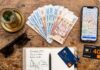
Most small souk stalls, spice merchants, and leather stalls accept cash only in Moroccan Dirhams (MAD). Higher-end carpet cooperatives, antique galleries, and jewelry boutiques accept Visa and Mastercard, often with a 3% to 5% card processing fee.
What time do Marrakech souks open and close?
Souks typically come to life between 9:30 AM and 10:00 AM and remain bustling until 8:30 PM or 9:00 PM. On Fridays (the Muslim holy day), many artisan workshops and stalls close between 12:00 PM and 3:30 PM for congregational prayers.
How do I know if argan oil in the souks is real?
Pure argan oil should feel smooth without being overly sticky, absorbs quickly into the skin, and has a slight golden-amber hue. Avoid cheap roadside bottles labeled in Arabic and French that lack certification stickers.
Can I take photos of artisans in the souks?
Always ask permission before photographing artisans at work (say: “Mumkin soura?” in Darija or “Une photo, s’il vous plaît?”). Many will happily agree, especially if you purchase an item or tip 5 to 10 MAD.