
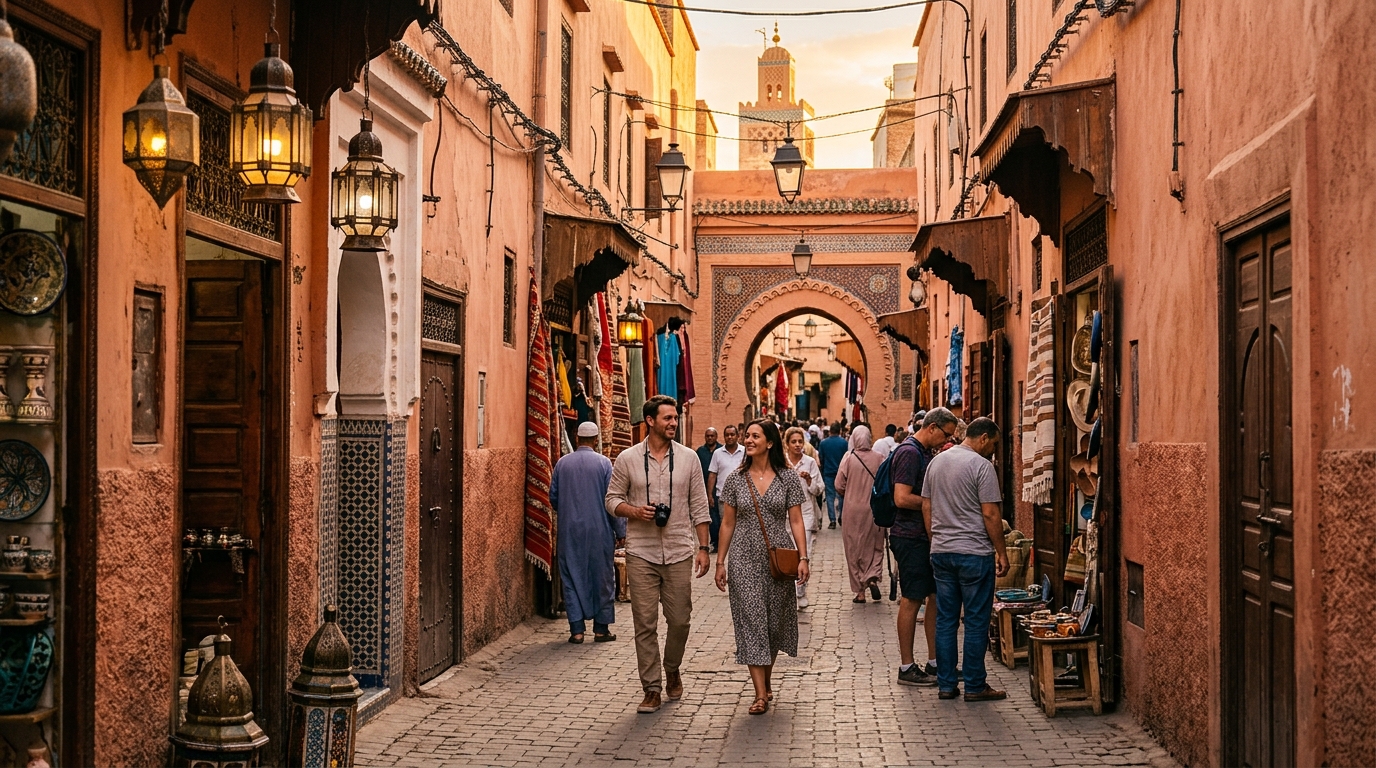
Is Marrakech safe? For most visitors, the answer is a resounding yes—violent crime against tourists is extraordinarily rare, and the city is heavily monitored by Morocco’s dedicated Brigade Touristique. However, navigating the historic medina requires mental stamina. You will encounter persistent touts, deliberate misdirection, and classic market hustles designed to separate first-timers from their dirhams.
Having spent weeks walking every alley from Bab Doukkala to the Jewish Mellah, our team has documented the most common scams in Marrakech, how they operate, and the exact French and Darija phrases to shut them down politely and firmly.
The 6 Most Common Scams in Marrakech (And How to Deflect Them)
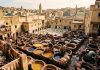
1. The Tannery Scam (“The Tanneries are Closing Today”)
This is by far the most persistent trap in northern and eastern medina alleys. A friendly young man will approach you and claim: “The tanneries are only open today for the Berber market,” or “Big market today, after that it’s closed for a month!”
The Trap: They walk alongside you under the guise of being helpful, lead you deep into Bab Debbagh (the tannery district), and hand you over to an aggressive “guide.” After handing you a sprig of fresh mint to mask the ammonia smell of pigeon droppings and lime pits, they demand an exorbitant fee (often 200–500 MAD, or $20–$50 USD) for a five-minute tour, blocking the doorway until you pay.
The Defense: Tanneries are active year-round except during major Islamic holidays. If someone mentions the tanneries unprompted, smile, shake your head, and say firmly: “Non merci, je sais où je vais” (No thank you, I know where I am going) or in Moroccan Darija: “La, Shukran” (No, thank you). Keep walking without breaking your stride.
2. The Directional Trick (“The Street / Mosque is Closed”)
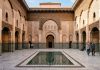
As you stroll toward Ben Youssef Madrasa or Bahia Palace with your phone in hand, someone on a scooter or street corner will announce: “Attention! C’est fermé!” (Closed! Prayer time!)
The Trap: The street is almost certainly not closed. If you stop, they will offer to show you “the real way,” which conveniently leads to an artisan cooperative or rug shop where an uncle awaits.
The Defense: Check monument opening hours beforehand. Never accept directional advice shouted from across the street. If you are genuinely disoriented, step inside a brick-and-mortar café, riad reception, or pharmacy to check your map in peace.
3. Jemaa el-Fna Photo Traps: Snakes, Monkeys, and Water Sellers
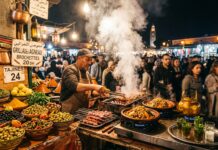
Marrakech’s central square is a UNESCO-recognized open-air theater, but it requires strict spatial awareness during daylight hours.
The Trap: Men with chained Barbary macaques or snake charmers with coiled cobras will thrust an animal onto your shoulder or hand before you have registered what is happening. Once you touch the animal, or take a picture from several meters away, three men will materialize demanding 200 to 400 MAD.
The Defense: Keep your hands in your pockets or close to your body when walking through the center of the square. If an animal is thrust toward you, take two steps back immediately with your hands up and say a clear, assertive “No!”. Never photograph performers, traditional water sellers (guerab), or performers unless you have agreed on a small tip (10–20 MAD) beforehand.
4. The Aggressive Henna “Gift”
Along the perimeter of Jemaa el-Fna and the entrance to Rue Semmarine, women with binders of henna designs sit on small plastic stools.
The Trap: A woman will grab your wrist playfully, compliment you, and begin applying black chemical dye before you can pull away, claiming it is a “free Berber welcome.” Within two minutes, she will demand 200 to 300 MAD.
The Defense: Keep a closed fist or keep your arms tucked in when passing the henna stations. Never let anyone touch your hand. Note also that “black henna” often contains PPD (p-phenylenediamine), an industrial chemical dye that can cause severe allergic blistering. For safe, natural red/brown henna, visit established studios like the Henna Cafe near Bab Doukkala.
5. Unmetered Petit Taxis
Marrakech’s small yellow taxis (Petit Taxis) are legally required to use their meter (le compteur). Outside train stations, luxury hotels, and the perimeter of Jemaa el-Fna, drivers will routinely refuse.
The Trap: A driver quotes a flat rate of 100 MAD ($10 USD) for a short 3-kilometer trip from the train station to the medina, which should legally cost 15 to 25 MAD on the meter.
The Defense: Before getting in, lean through the window and ask: “Le compteur, s’il vous plaît?” If they refuse, make a flat gesture and walk to the next taxi in line. Between 8:00 PM and 6:00 AM, a legal 50% nighttime surcharge applies to the meter fare.
6. The “Helpful” Luggage Porter at Medina Gates
Because the medina is largely pedestrianized, your taxi cannot drop you at your riad door. As soon as you exit your cab, handcart pushers (koussa) will offer to wheel your heavy suitcases through the labyrinth.
The Defense: This service is genuinely helpful on cobblestones, but you must agree on the price before your luggage touches the cart. Standard rates are 20 to 30 MAD per cart for a short medina walk (up to 50 MAD for complex 15-minute walks). If you do not negotiate first, you may be asked for 150 MAD at your riad doorstep.
Is Marrakech Safe for American and Solo Travelers?
Yes. Morocco was the first nation to recognize the United States in 1777, and Moroccan people are exceptionally welcoming to American and international visitors. Violent crimes, muggings, and armed assaults are almost non-existent in tourist zones.
For solo female travelers, catcalling and unwanted verbal attention do occur, particularly in crowded souks. Wearing modest clothing (covering shoulders and knees) and wearing sunglasses significantly reduces eye contact and casual banter.
Emergency Contacts and Safe Zones
- Tourist Police (Brigade Touristique): Stationed directly at the south entrance of Jemaa el-Fna (near Rue Riad Zitoun el-Kedim). They take scams and tourist harassment very seriously; mentioning “La police touristique” resolves most disputes immediately.
- National Police (City Emergency): Dial 19 (from Moroccan SIM) or 112 (from international mobile).
- Ambulance / Fire (Protection Civile): Dial 15.
Frequently Asked Questions
Is Marrakech safe to walk at night?
Main medina thoroughfares, illuminated shopping streets, and the lively Jemaa el-Fna are very safe and bustling until midnight. However, dimly lit residential dead-end alleys (derbs) should be avoided late at night. If returning to your riad after 10:00 PM, ask your riad host to meet you at the nearest taxi drop-off point.
How do I report a scam or taxi overcharging in Marrakech?
Take note of the taxi’s registration number (painted on the driver door or roof placard) and report it to the Tourist Police office located directly on Jemaa el-Fna. The brigade takes swift action against unlicensed operators.
Are Americans welcome in Marrakech?
Americans are warmly received throughout Morocco. English is increasingly spoken by younger Moroccans, hotel staff, and merchants, alongside Moroccan Arabic (Darija) and French.
Should I carry cash or credit cards in Marrakech?
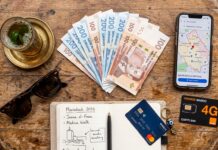
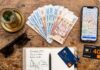
Carry Moroccan Dirhams (MAD) in small denominations (20, 50, and 100 MAD notes) for daily medina spending, taxis, and tips. Use credit cards for high-end dining, riad balances, and certified government-run handicraft complexes like the Complexe Artisanal on Avenue Mohammed V.