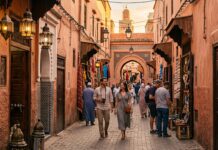
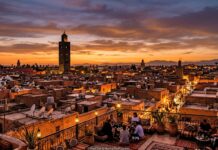
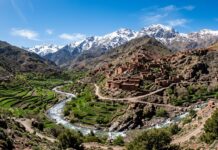
Planning your first trip to Morocco can feel like stepping across an invisible threshold between Europe and North Africa. In less than a three-hour flight from Madrid or London, modern airport terminals give way to centuries-old labyrinths of ochre ramparts, the scent of crushed cedarwood and roasting cumin, and the rhythmic call to prayer echoing against the snow-streaked High Atlas mountains.
Yet for all its allure, Morocco frequently catches first-time travelers off guard. Navigating medieval medinas without street signs, distinguishing between licensed guides and friendly touts, negotiating taxi fares, and managing closed-currency cash withdrawals require practical preparation. This guide provides a verified, step-by-step master blueprint for anyone preparing to travel to Morocco in 2026—covering visa rules, regional climates, intercity transit, authentic riad stays, money logistics in Moroccan Dirhams (MAD), cultural etiquette, and realistic itineraries.
Morocco Quick Travel Snapshot (2026)
- Capital: Rabat | Largest City: Casablanca | Top Tourism Hubs: Marrakech, Fes, Chefchaouen
- Visa: Visa-free entry for up to 90 days for US, Canadian, UK, EU, and Australian passport holders.
- Currency: Moroccan Dirham (MAD). Closed currency (~10 MAD ≈ $1.00 USD / €0.92 EUR).
- Official Languages: Darija (Moroccan Arabic) and Amazigh (Berber); French widely spoken; English common in tourism.
- Plugs & Power: Type C & E (European standard 220V, 50Hz).
- Prime Travel Months: March to May (Spring) and September to November (Autumn).
- Local Transport: ONCF rail network & Al Boraq high-speed train, CTM buses, licensed private chauffeurs.
1. Entry Requirements, Visas & Customs (2026 Rules)
Entering the Kingdom of Morocco is straightforward for most international vacationers, but specific customs regulations can catch unsuspecting travelers with heavy fines or luggage confiscations at border control.
Passport Validity & Visa Exemptions
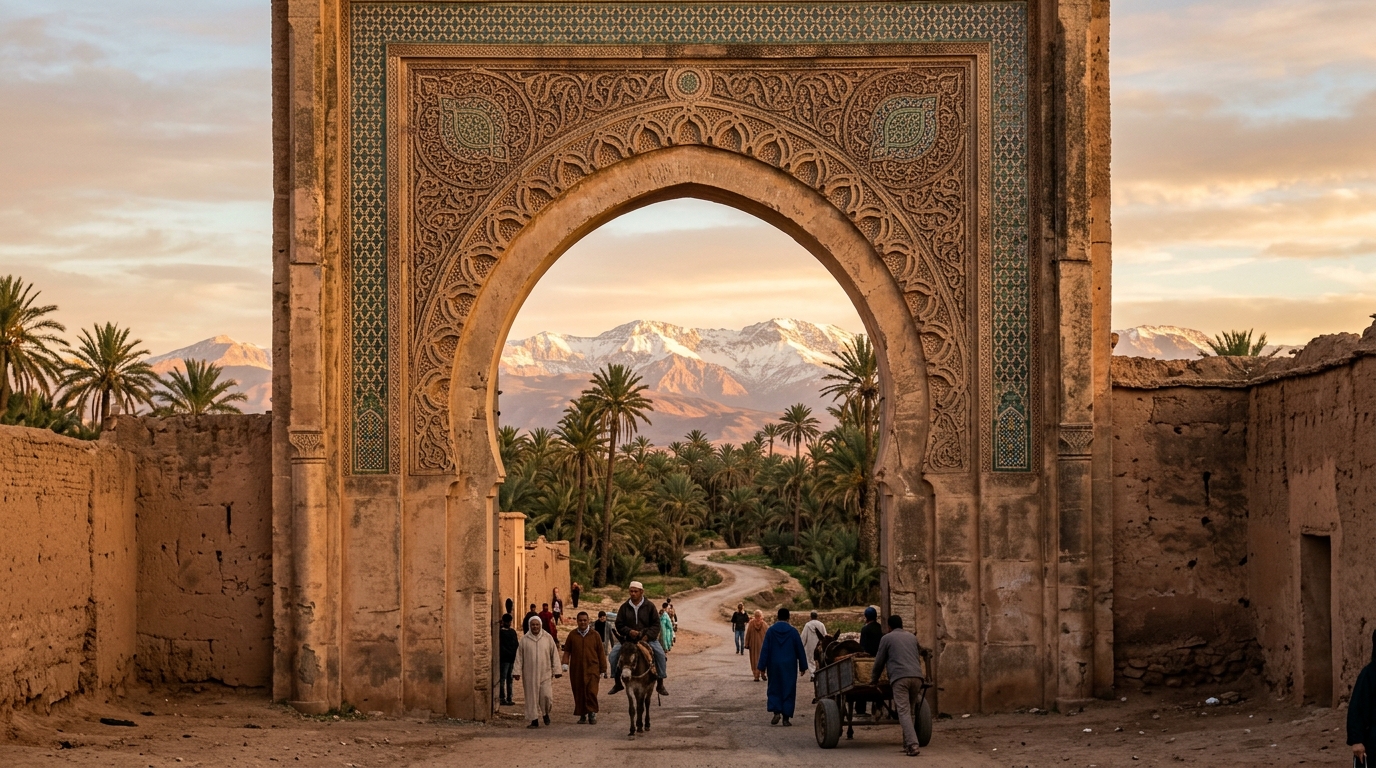
Passport holders from the United States, Canada, the United Kingdom, European Union member states, Australia, New Zealand, and Japan do not require a tourist visa for stays of up to 90 days. However, your passport must be valid for at least six months beyond your planned date of departure from Morocco.
Upon arrival at any Moroccan international airport or ferry port, border police will stamp your passport with an individual Numéro d’Entrée (entry number). Ensure this stamp is clear and legible, as riads and hotels across the country are legally required to record this number on official police registration cards (fiches de police) during check-in.
Crucial Customs Warning: Drones Are Strictly Prohibited
Do not bring consumer or commercial camera drones into Morocco under any circumstances. Moroccan customs officials operate high-resolution baggage scanners at all airport terminals and ferry docks. Unpermitted drones are confiscated immediately on arrival, subject to steep customs storage charges, administrative paperwork, and potential confiscation upon departure. Only authorized commercial film productions with prior ministerial permits are exempt.
Prescription Medications
If you take prescription medication—especially codeine, psychotropic medications, ADHD treatments, or strong analgesics—keep them in their original pharmacy-labeled containers. Always carry a signed letter from your doctor or a matching prescription translated into French or English to avoid delays at airport customs checkpoints.
2. Best Time to Travel to Morocco & Weather by Region
Morocco is a country of intense geographic diversity. Within a single day’s journey, you can move from the Atlantic coast breeze across 4,000-meter Alpine passes in the High Atlas, and descend into the arid dunes of the Sahara Desert. Timing your trip depends on the regions you intend to explore.
| Season | Months | Weather Overview | Best Regions to Visit |
|---|---|---|---|
| Spring (Peak) | March – May | Pleasant 20°C to 28°C (68°F–82°F); blooming valleys and green Atlas foothills. | Nationwide: Marrakech, Fes, Sahara Desert, Chefchaouen, Atlas trekking. |
| Autumn (Peak) | Sept – November | Clear skies, warm days, dropping desert night temperatures. | Sahara dunes (Merzouga & Erg Chigaga), Imperial Cities, Dades & Todra Gorges. |
| Winter | Dec – February | Crisp, sunny days (15°C–20°C / 59°F–68°F); sub-zero freezing nights in desert and mountains. | Marrakech, Agadir, Taroudant, Casablanca. (Pack heavy layers for desert riads). |
| Summer | June – August | Extreme heat exceeding 42°C to 46°C (108°F–115°F) in inland plains and desert. | Atlantic coastal cities: Essaouira, Taghazout, Tangier, and Asilah. |
Understanding Ramadan Travel
Visiting during the holy month of Ramadan offers a unique cultural perspective, but it alters the daily rhythm of the country. During daylight hours, many cafes, street stalls, and smaller medina shops close or operate reduced hours. Museums and monuments frequently close earlier in the afternoon. At sunset (Maghrib), cities briefly fall silent as families gather for Iftar (breaking the fast), followed by lively night markets, vibrant cafes, and bustling squares until the early morning hours. If you travel during Ramadan, be discreet about eating or drinking in public streets during fasting hours.
3. Arrival Gateways & Getting Into Morocco
Most international travelers enter Morocco through four primary points of entry:
- Casablanca Mohammed V International (CMN): The nation’s primary long-haul gateway with non-stop flights from North America (Royal Air Maroc from New York, Washington, Montreal, Miami) and the Middle East. CMN has an underground train station directly beneath Terminal 1, connecting travelers to Casa-Voyageurs station every hour for roughly 50 MAD ($5.00 USD).
- Marrakech Menara Airport (RAK): Ideal if your itinerary focuses on southern Morocco, the Atlas Mountains, or desert routes. Extensively served by European carriers (British Airways, Air France, Lufthansa, Transavia, easyJet, Ryanair). Located just 6 km southwest of the historic medina.
- Fes-Saïss (FEZ): The best arrival airport for travelers exploring northern Morocco, Meknes, Volubilis, and Chefchaouen directly.
- Tangier Ibn Battouta (TNG) & Tanger Ville Ferry Port: The primary crossing point from southern Spain. High-speed passenger catamarans from Tarifa to Tangier Ville take only 60 minutes across the Strait of Gibraltar.
Airport Exit Strategy: Avoiding Arrival Chaos
Stepping outside the arrivals terminal at Marrakech or Casablanca can be jarring. You will be greeted by dozens of unofficial drivers offering rides at 300 to 500 MAD. At Marrakech Menara, walk directly to the official taxi queue where fixed city rates are posted on an electronic board (typically 70–100 MAD daytime to the Medina or Gueliz), or catch the ALSA Airport Express Bus (Line 19) for 30 MAD. If arriving late with heavy luggage, pre-booking a private driver through your riad or a dedicated service like Morocco Luxury Taxi ensures a driver holding a name sign greets you at the terminal doors and coordinates your luggage transfer directly to your riad alley.
4. Money, ATMs, Currency Exchange & Tipping in Morocco
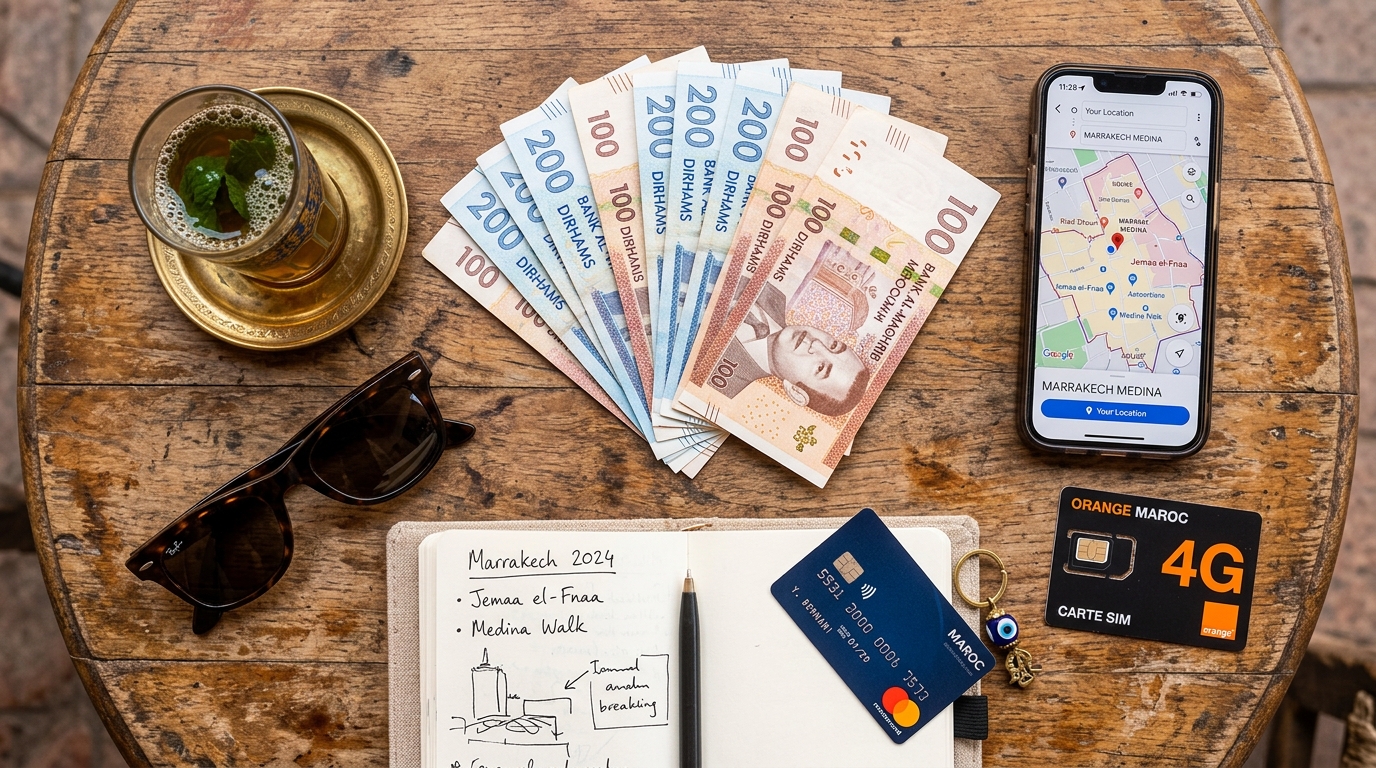
Understanding currency dynamics is vital for a smooth trip. The Moroccan Dirham (MAD) is an officially regulated, closed currency. This means you cannot legally buy or exchange substantial amounts of Dirhams outside of Morocco.
Cash vs. Credit Cards
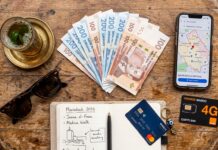
While high-end hotels, upscale restaurants, and major chain stores accept Visa and Mastercard, cash remains king across 80% of your daily interactions. Small cafes, street food vendors, petit taxis, hammams, and artisan stalls in the souks operate exclusively in cash. Always carry smaller denominations (20, 50, and 100 MAD notes) rather than large 200 MAD bills, which market vendors often struggle to break.
Which ATMs to Use
Avoid standalone, third-party ATMs (such as Euronet machines located in tourist plazas), which tack on 40 to 60 MAD operator fees alongside unfavorable dynamic currency conversion (DCC) exchange rates. Instead, withdraw money directly from ATMs physically attached to major commercial bank branches:
- Attijariwafa Bank
- Banque Populaire (Chaabi Bank)
- BMCE Bank of Africa
- Société Générale Maroc
When the ATM prompts you to choose between being charged in your home currency or in Moroccan Dirhams (MAD), always choose Moroccan Dirhams. This allows your domestic bank at home to calculate the mid-market interbank exchange rate, saving you 4% to 8% in conversion markups.
Tipping Customs (Pourboire)
Tipping is deeply embedded in Moroccan service culture. While not legally mandatory, it constitutes a critical portion of take-home income for hospitality workers:
- Casual cafes and tea salons: Round up the bill or leave 2 to 5 MAD.
- Sit-down restaurants: 5% to 10% of the total bill in cash on the table, even if paying the bill with a card.
- Medina luggage porters (handcart drivers): 20 to 30 MAD per heavy cart to your riad door.
- Riad housekeeping staff: 50 to 100 MAD per room per night, left in the room or handed to the manager at check-out.
- Official city tour guides: 150 to 250 MAD for a half-day private walking tour.
- Day trip or private drivers: 100 to 200 MAD per day for attentive service.
5. Getting Around Morocco: Trains, Buses, Driving vs Chauffeurs
Morocco boasts some of the most modern transit infrastructure on the African continent, making cross-country exploration remarkably efficient if you select the right transport mode for each leg.
1. High-Speed Al Boraq & ONCF Trains
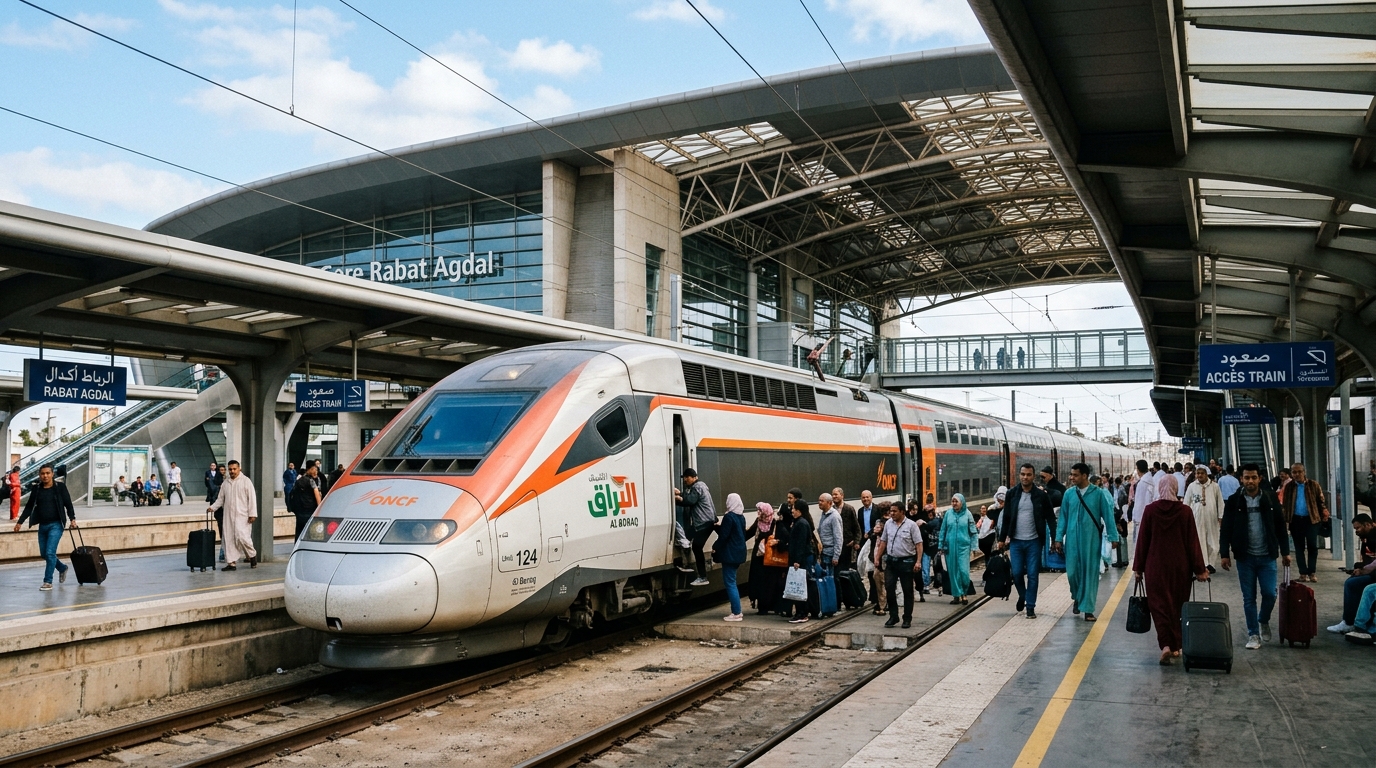
Morocco’s national rail company, ONCF, operates the flagship Al Boraq—Africa’s first true high-speed rail line. Cruising at 320 km/h (200 mph), it cuts the journey between Tangier and Casablanca down to just 2 hours and 10 minutes (compared to nearly 5 hours previously), stopping at Kenitra and Rabat along the way. First-class tickets are exceptionally affordable (typically 180 to 250 MAD / $18–$25 USD) and include reserved ergonomic seating, power sockets, and luggage racks. For complete ticket booking tips and route breakdowns, read our detailed Morocco Train Travel Guide.
Conventional electric trains (Atlas lines) connect Casablanca and Rabat southward to Marrakech (approx. 2 hours 45 mins from Casa-Voyageurs) and eastward to Meknes and Fes. Trains are clean, comfortable, and punctual.
2. Long-Distance Buses (CTM & Supratours)
For destinations without direct rail links—such as the blue mountain city of Chefchaouen, the coastal haven of Essaouira, or the desert gateway of Ouarzazate—comfortable air-conditioned coach buses are your best public option:
- CTM (Compagnie de Transports au Maroc): Operates dedicated, modern terminals in major cities with online seat reservation via the CTM app.
- Supratours: An ONCF subsidiary designed specifically to coordinate directly with arriving trains (e.g., train to Marrakech + Supratours coach to Essaouira).
3. Petit Taxis vs. Grand Taxis
Within urban boundaries, small colored sedans known as Petit Taxis handle short trips. Their colors differ by municipality: bright red in Casablanca and Fes, ochre-yellow in Marrakech, sky-blue in Tangier, and blue in Rabat. By law, drivers must activate the dashboard meter (le compteur). If a driver refuses to turn it on, politely ask “Khddem l-compteur, afak” or step out and flag the next cab. For local city navigation advice, see our guide on getting around Marrakech.
Grand Taxis (larger sedans and passenger vans) operate on fixed regional routes between neighboring towns, departing once all six passenger seats are filled unless you purchase the remaining seats for private use.
4. Self-Driving vs. Private Chauffeurs
While renting a car offers flexibility for coastal driving, self-driving through Morocco’s mountainous interior or crowded city centers poses real challenges. Mountain passes like the Tizi n’Tichka feature steep drop-offs, sudden blind curves, slow-moving overloaded trucks, and frequent radar speed traps operated by the Royal Gendarmerie.
For cross-country family journeys, high-profile business visits, or stress-free journeys between cities (such as Casablanca to Marrakech or Fes to Chefchaouen), booking a dedicated private driver through a professional provider like Morocco Luxury Taxi Chauffeur Service eliminates the anxiety of road navigation, fuel stops, and medina parking regulations, providing air-conditioned comfort and professional local knowledge.
6. Where to Stay: Riads vs. Modern Hotels
One of the most memorable elements of traveling to Morocco is staying inside a traditional riad. Understanding the architectural differences between historic riads and modern city hotels will ensure your expectations match reality.
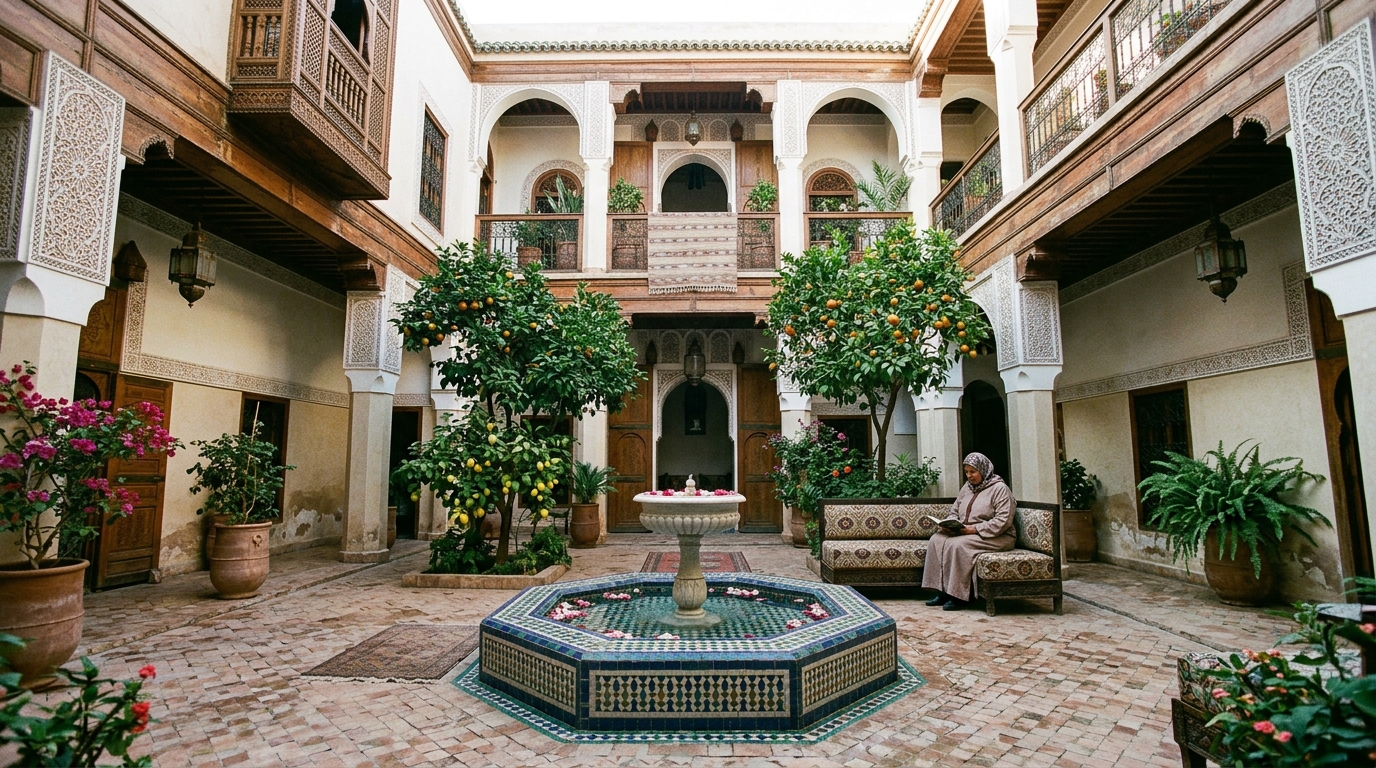
What Makes a Riad Unique?
Historically built as private family townhouses for wealthy merchants, riads are designed around an interior central courtyard (often with a tiled fountain, fruit trees, or small plunge pool) with zero exterior windows facing the street. This inward-facing Islamic architectural style ensures absolute privacy, temperature insulation, and a quiet haven away from the roaring medina alleyways just outside the front door.
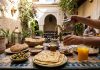
Riads typically offer only 4 to 10 guest bedrooms, guaranteeing highly personalized hospitality. Breakfasts—featuring fresh orange juice, warm msemen pancakes, goat cheese, fresh olives, and honey—are served on rooftop terraces overlooking city minarets. For a comprehensive breakdown of neighborhoods and booking tips, explore our guide on Riads vs Hotels in Marrakech.
Practical Riad Considerations
- Medina Accessibility: Riads sit deep within car-free alleys. Taxis cannot drop you at the doorstep. You will need to walk from the nearest city gate (Bab) with a luggage porter.
- Acoustics: Because rooms open inward onto a tiled courtyard, sound travels easily. If you are a light sleeper, carry quality earplugs.
- Stairs: Most historic riads have steep, narrow stairs and do not have elevators. If you have mobility concerns, request a ground-floor suite when booking.
7. Health, Water & Food Safety Essentials
Moroccan gastronomy is celebrated worldwide—from slow-simmered lamb tagines with caramelised prunes to fragrant Friday couscous steamed over savory broth. Maintaining simple food and water hygiene habits will keep your digestive system comfortable throughout your travels.
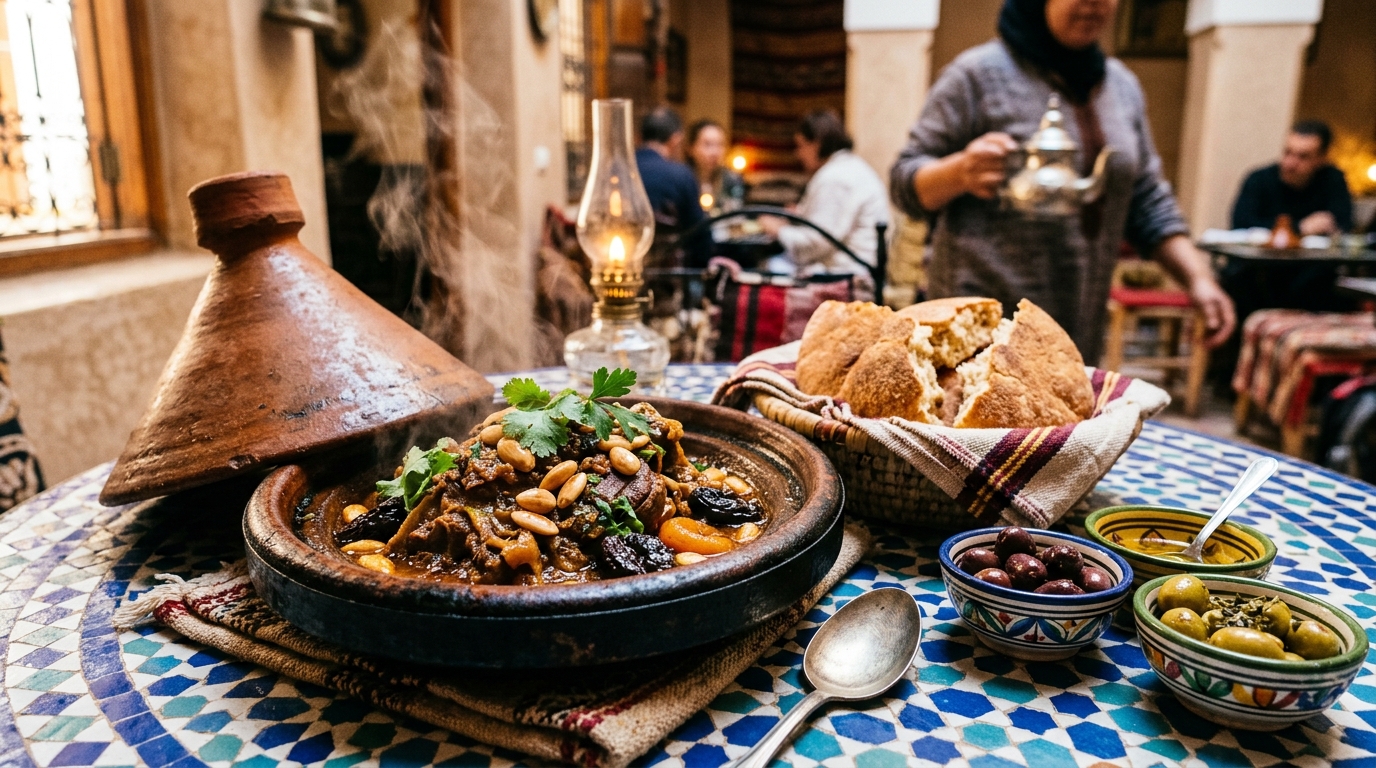
Tap Water Caution
While municipal tap water in major cities like Casablanca, Rabat, and Marrakech is chemically treated and safe for local residents, its mineral and microbial balance differs significantly from Western standards. To avoid traveler’s diarrhea, do not drink unboiled tap water. Use sealed bottled water (popular local brands include Sidi Ali, Ain Saiss, and Ain Ifrane) or carry an insulated bottle with a reliable micro-filtration purifier (such as LifeStraw or Grayl). Use bottled water for brushing your teeth if you have a sensitive stomach.
Street Food Safety Rules
Street food is an integral pillar of authentic Moroccan travel culture. You should not shy away from it, but follow these basic field rules:
- Follow the local crowds: Stalls packed with Moroccan families and local workers have rapid turnover, meaning ingredients are fresh and never sit out at ambient temperatures.
- Watch the grill: Stick to items cooked piping hot directly in front of you—such as grilled kefta skewers, merguez sausages, roasted vegetables, and freshly baked khobz bread.
- Peel it or leave it: Consume fresh fruits that you peel yourself (oranges, bananas, pomegranates). Skip roadside salads that may have been washed in raw tap water.
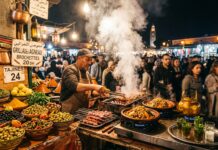
- Try iconic specialties: In Marrakech, sample slow-roasted Mechoui (pit-roasted lamb) or Tanjia Marrakchia cooked in clay urns in the furnace of the local neighborhood hammam. For more recommendations, read our complete Moroccan Food Guide.
Pharmacies in Morocco
Moroccan pharmacies (identified by illuminated green cross signs) are exceptionally well-stocked and staffed by trained pharmacists who speak French and Arabic (and frequently English). Pharmacists can dispense high-efficacy treatments over the counter for common traveler ailments without needing a prior doctor’s appointment.
8. Cultural Etiquette, Safety & Scams to Dodge
Morocco is hospitable, family-centric, and generally very safe for international tourists, with violent crime rates against travelers remaining exceptionally low. However, adapting to local social norms and recognizing common medina hustle techniques will make your daily interactions far more enjoyable.
Dress Code & Modesty
Morocco is an Islamic nation with conservative traditional values, especially outside major modern boulevards. While beachwear and shorts are common in resort compounds and hotel pools, walking through historic medinas, rural villages, and holy sites calls for respectful coverage:
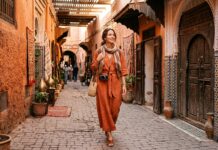
- For Women: Loose, breathable clothing covering shoulders, cleavage, and knees (linen trousers, midi skirts, maxi dresses, light kimonos). Carrying a lightweight scarf in your daypack is handy for visiting religious sites or shading from the midday sun. For specific packing advice, see our dedicated guide on what to wear in Marrakech and Morocco.
- For Men: Light cotton trousers, chinos, or longer Bermuda shorts. Walking through medina streets or residential neighborhoods shirtless is considered disrespectful.
Non-Muslim Access to Mosques
Unlike Turkey or Egypt where tourists can freely enter working mosques outside prayer times, non-Muslims in Morocco are strictly prohibited from entering operational mosques. The single famous exception is the colossal Hassan II Mosque in Casablanca, which offers guided architectural tours for international visitors outside daily prayer hours.
Common Medina Scams & How to Deflect Them
- “The road is closed / Today is a Berber holiday”: A friendly young man will inform you that the street ahead is blocked or that a specific gate is closed, offering to guide you to an “open alternative” that inevitably ends up at an uncle’s carpet shop or leather tannery. Response: Smile, say “La, choukran” (No, thank you), and continue confidently in your intended direction using offline GPS maps.
- Unsolicited Navigation: If you stop looking lost on a medina corner, someone will quickly offer to walk you to your riad. Once you arrive, they will demand 50 to 100 MAD for the service. Response: If you truly need directions, step inside an active shop or pharmacy and ask the seated shopkeeper rather than people lingering on corners.
- Aggressive Henna & Animal Photo Touts: On Jemaa el-Fna square in Marrakech, performers with monkeys or snakes, and henna artists will attempt to place an animal on your shoulder or quickly begin drawing on your hand without asking, subsequently demanding exorbitant sums. Response: Keep your hands near your pockets, keep walking, and never photograph street performers unless you are prepared to give a small tip (10–20 MAD).
Essential Darija Phrases
| Darija Phrase | Pronunciation | Meaning & Context |
|---|---|---|
| Salam Alaykum | sah-LAHM ah-LAY-koom | Peace be upon you (standard polite greeting). |
| Choukran | shook-RAHN | Thank you. |
| La, choukran | lah shook-RAHN | No, thank you (your most valuable boundary phrase). |
| Bikheir | bee-KHAIR | Good / well (in response to Labas? – How are you?). |
| Bslama | b-SLAH-mah | Goodbye. |
| Balak! | bah-LAHK | Look out / make way! (Shouted by cart-pushers and mule drivers in narrow souks; step immediately to the right wall). |
9. Recommended First-Timer Itineraries (7, 10 & 14 Days)
The single most frequent mistake first-time visitors make is packing too many distant destinations into a tight timeframe. Morocco’s rugged topography means that road journeys between southern oasis valleys and northern imperial capitals require full days of transit. Choose a route matched to your trip length:
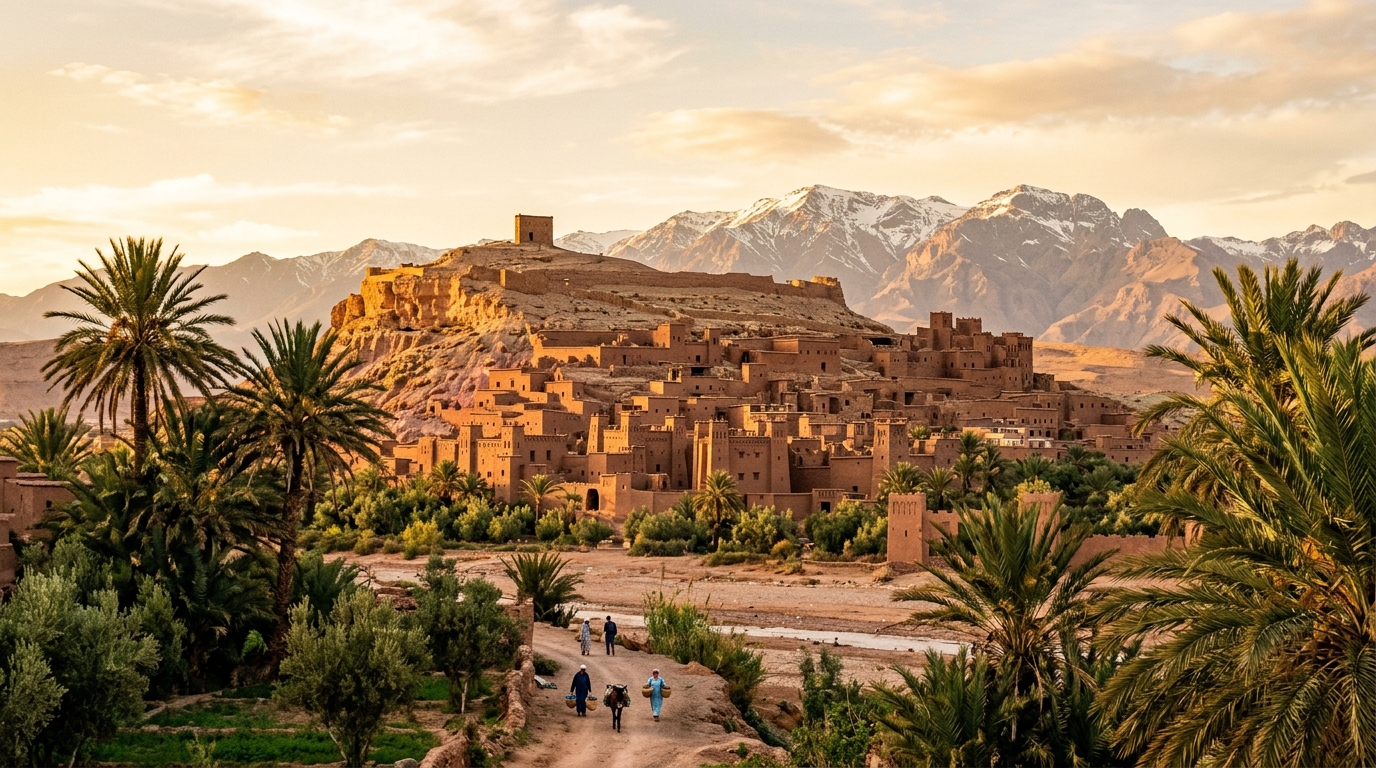
Option 1: The 7-Day Express Route (Marrakech & The High Atlas)
If you have only one week, focus on southern Morocco without rushing. Spend 3 days experiencing the palaces, souks, and gardens of Marrakech (check our recommendations for top things to do in Marrakech), take a scenic mountain excursion into the Ourika Valley or Imlil in the High Atlas, and finish with a relaxing 2-day coastal side trip to Essaouira. Review our complete 7 Days in Morocco Itinerary for day-by-day maps.
Option 2: The 10-Day Classic Loop (Imperial Cities & Sahara Desert)
The quintessential Moroccan adventure connecting historic medinas with the sweeping golden dunes of Erg Chebbi:
- Days 1–2: Casablanca & Rabat. Land at CMN, visit the Hassan II Mosque, and take the train to Rabat to explore the Kasbah of the Udayas.
- Days 3–4: Fes. Ride the rail line to Fes; explore the world’s largest car-free urban area, the Chouara Tannery, and ancient madrasas.
- Days 5–6: High Atlas to Merzouga (Sahara Desert). Travel through Midelt and the Ziz Valley to Merzouga. Embark on a sunset camel trek or 4×4 transfer to a desert luxury camp under the stars. For camp standards and packing, read our Morocco Sahara Desert Guide.
- Day 7: Dades Valley & Todra Gorge. Drive past sheer limestone canyon walls and ancient earthen kasbahs.
- Day 8: Ait Benhaddou to Marrakech. Cross the scenic Tizi n’Tichka pass over the High Atlas into Marrakech.
- Days 9–10: Marrakech. Explore Bahia Palace, Jardin Majorelle, and the bustling souks before departure. Read our step-by-step 10 Days in Morocco Itinerary.
Option 3: The 14-Day Grand Expedition (North to South)
With two weeks, add the northern jewel of Chefchaouen (the famous Blue City), the Roman ruins of Volubilis, and unwind along the Atlantic surf coastline around Taghazout and Agadir.
10. Packing Checklist & Tech Prep
Before packing your suitcase, make sure you have these essentials checked off:
- Mobile Connectivity: While you can purchase an international roaming package, purchasing a local SIM card at the airport terminal (Maroc Telecom or Orange) is far cheaper. A 20 GB prepaid 4G/5G data package costs approximately 100 to 150 MAD ($10–$15 USD). Alternatively, install an Airalo or Holafly Morocco eSIM before boarding your flight.
- Navigation Apps: Google Maps often struggles within the covered, tight alleys of the Fes and Marrakech medinas. Download Maps.me or Organic Maps and cache the entire Morocco offline map before departure—its crowd-sourced footpath data tracks medina alleys with remarkable precision.
- Footwear: Historic medina cobbles are polished smooth by centuries of foot traffic and can be remarkably slick. Pack comfortable, closed-toe walking shoes or supportive sneakers with rubber grip soles.
- Power & Chargers: Morocco uses European standard Type C and Type E two-round-pin plugs at 220V. Bring a universal plug adapter and a compact portable power bank (10,000–20,000 mAh) for long road trips through the mountains and desert.
- Cash Envelope: Keep a discreet travel wallet or concealed neck pouch for your passport, bank cards, and emergency MAD reserves.
Frequently Asked Questions
Is it safe to travel to Morocco right now?
Yes, Morocco is widely recognized as one of the safest and most politically stable nations in North Africa. Violent crime against foreign travelers is extremely rare. Tourism police (Brigade Touristique) operate actively across major historical medinas in Marrakech, Fes, and Rabat. The primary concerns travelers encounter are petty pickpocketing in crowded markets, persistent street touts offering unsolicited guiding services, and taxi meter disputes. By practicing standard urban awareness, keeping valuables zipped in secure bags, and politely declining unsolicited street offers, visitors can travel with confidence.
How much does a trip to Morocco cost per day?
Morocco caters comfortably to a wide spectrum of travel budgets. Budget backpackers staying in hostel dorms, using public trains and buses, and dining at local street stalls can travel comfortably for 350 to 500 MAD ($35–$50 USD) per day. Mid-range travelers enjoying authentic boutique riads, sit-down courtyard restaurants, and guided city tours typically spend 1,000 to 1,800 MAD ($100–$180 USD) per day for two people. Luxury travelers staying in five-star palace hotels, hiring private licensed chauffeurs, and dining in fine culinary venues should expect daily budgets of 3,500 to 7,000 MAD ($350–$700 USD) and above.
Can you drink alcohol in Morocco?
Yes, alcohol is legal in Morocco, though its sale and consumption are regulated under Islamic cultural norms. While you will not find alcohol served in traditional medina cafes or casual family diners, it is widely available in licensed tourist restaurants, rooftop lounges, international hotels, and dedicated supermarket liquor sections (such as Carrefour). You should avoid consuming alcoholic beverages openly in public streets, parks, or outside designated licensed premises.
What is the dress code for tourists in Morocco?
There is no legal dress requirement for foreign tourists in Morocco, but dressing modestly demonstrates cultural respect and significantly reduces unwanted street attention. In medinas, towns, and rural mountain communities, both men and women should aim to keep their shoulders and knees covered with loose, breathable fabrics like linen or lightweight cotton. Modern resort areas, private riad pools, and international beach towns like Taghazout and Essaouira are far more relaxed regarding swimwear and summer attire.
Is bargaining expected in Morocco?
Bargaining is expected in traditional souks and artisan workshops where items lack fixed price tags (such as handwoven carpets, leather goods, spices, babouche slippers, and pottery). It is considered a friendly social interaction rather than an adversarial argument. A good rule of thumb is to counter with roughly 40% to 50% of the vendor’s initial opening quote, eventually settling around 60% to 70%. In grocery stores, modern pharmacies, supermarkets, and restaurants, prices are strictly fixed.
Do I need cash in Morocco, or are credit cards widely accepted?
You definitely need cash. While major hotels, car rental agencies, and upscale restaurants in Casablanca, Rabat, and Marrakech accept Visa and Mastercard, everyday Moroccan transactions remain cash-driven. Souk vendors, street food stalls, petit taxis, and tipping require Moroccan Dirhams (MAD). Withdraw cash using bank-affiliated ATMs rather than standalone third-party machines to avoid excessive ATM fees and poor exchange rates.
What language is spoken in Morocco, and will English be understood?
The primary spoken language across Morocco is Darija (Moroccan Arabic), alongside Amazigh (Berber) languages spoken natively across the Atlas Mountains and southern regions. French serves as the primary language of commerce, government, and higher education, and is spoken fluently by hospitality workers. In major tourist centers such as Marrakech, Fes, Chefchaouen, and Tangier, English is widely understood by hotel staff, tour guides, shopkeepers, and younger Moroccans.
What is the easiest way to travel between cities in Morocco?
The most convenient and comfortable way to travel between major cities (such as Tangier, Casablanca, Rabat, Fes, and Marrakech) is via the ONCF national rail system, particularly the high-speed Al Boraq line. For cross-country scenic routes without rail connections—such as journeys through the High Atlas Mountains into the Sahara Desert or transfers to Chefchaouen—booking a licensed private chauffeur service or taking modern CTM long-distance coaches provides the safest and most relaxing experience.